general warns more
| | |

US General warns more warships are needed to defen…

A senior US military commander has reportedly warned the Pentagon that without additional naval resources, the United States may be forced to prioritize its own national defense over the defense of Israel. The reported warning underscores the growing strain on American military capabilities amid the ongoing conflict involving Iran.

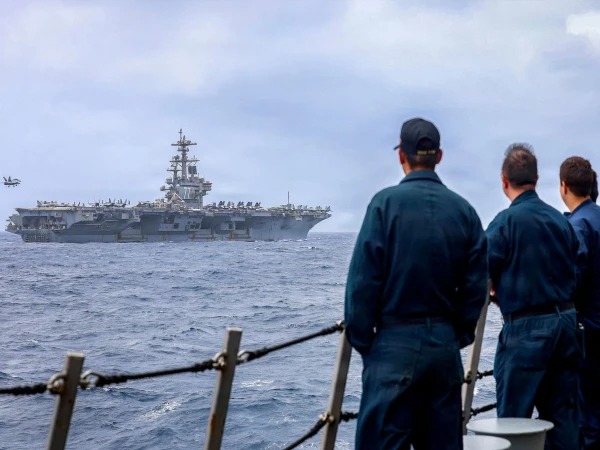
According to a report by The Washington Post, General Alexus Grynkewich, the top US military commander in Europe, informed Pentagon officials this week that the number of US Navy destroyers currently available is insufficient to continue defending Israel against ballistic missile threats while maintaining broader US security commitments.

The report states that General Grynkewich submitted a written assessment to senior Pentagon leaders, warning that unless another guided-missile destroyer is assigned to his command, he may have no choice but to give priority to defending the United States rather than supporting Israel’s missile defense.

US defense officials quoted in the report said the message reflects a long-standing military practice in which commanders notify the Pentagon when operational demands begin to exceed available resources. Such assessments are intended to help civilian and military leaders make decisions about force allocation and strategic priorities.

The reported warning comes as the conflict involving Iran has placed increasing pressure on US military assets over the past several months. Continuous naval operations, missile defense missions, and regional security responsibilities have stretched the availability of key warships and other defense resources.

US Navy destroyers stationed in the eastern Mediterranean have played a significant role in supporting Israel’s defense by helping intercept ballistic missiles and other aerial threats. Equipped with advanced radar systems and missile defense capabilities, these vessels have also been used to counter attacks launched by Iran-backed Houthi forces operating from Yemen.

The report noted that US European Command is responsible for coordinating military operations across Europe and the Mediterranean while also maintaining readiness to respond to potential security challenges involving NATO allies. Balancing these commitments with operations in the Middle East has become increasingly difficult as demand for naval assets continues to grow.

Despite plans to expand the US naval presence in Europe with an additional destroyer later this year, officials reportedly remain concerned about maintenance requirements and operational fatigue affecting the existing fleet. The report also said additional US naval forces, including aircraft carriers and multiple destroyers, remain deployed in the Arabian Sea and the Red Sea to support regional operations and safeguard commercial shipping routes.

The reported warning highlights the strategic challenges facing US defense planners as they seek to balance commitments to allies with broader national security priorities amid rising tensions in the Middle East

Similar Posts

  • | |

    Pakistan plans $500 million export-oriented auto z…

      A major initiative has been announced to establish an automotive zone on 150 acres of land at Port Qasim in Karachi, with the government expecting the project to create new opportunities for exports and generate significant foreign exchange for Pakistan. The announcement was made during a meeting of the Port Qasim Authority Board, chaired by Federal Minister for Maritime Affairs Junaid Anwar Chaudhry. The meeting reviewed plans aimed at strengthening Pakistan’s maritime infrastructure and promoting industrial and export-related activities through the country’s major port facilities. Speaking at the meeting, Federal Minister Junaid Anwar Chaudhry said the proposed auto zone would cover approximately 150 acres at Port Qasim. He said the project was expected to generate around $500 million in annual exports, while contributing approximately $200 million in foreign exchange earnings each year According to the minister, the auto zone will provide a range of facilities linked to the automotive industry. These will include refurbishment facilities, display areas and spare-parts services. The development is expected to support businesses involved in the import, refurbishment and export of automotive products and components. The minister said the project would create new export opportunities for Pakistan’s automotive sector and help the country strengthen its position in international markets. He described the proposed auto zone as an integrated framework that would bring together automobile imports, refurbishment and exports at a single location. The initiative is also expected to encourage greater investment in the automotive sector by providing businesses with dedicated infrastructure and facilities. By bringing different stages of automotive-related activities together, the project could help improve efficiency and create opportunities for companies seeking to expand their operations in Pakistan. Port Qasim’s strategic importance as one of Pakistan’s major ports could further support the project. The location provides access to maritime transportation and international trade routes, potentially making it easier for automotive businesses to handle imported vehicles, spare parts and other related products before exporting refurbished or finished products to overseas markets. The government expects the auto zone to contribute to the country’s broader efforts to increase exports and generate foreign exchange. Pakistan has been seeking new avenues to expand its export base and reduce pressure on its foreign exchange reserves. In this context, the proposed automotive zone could provide a platform for developing value-added activities rather than relying solely on the import and sale of automotive products. The inclusion of refurbishment facilities is particularly significant because it could allow imported vehicles and automotive components to be repaired, upgraded or prepared for resale and export. Similarly, dedicated spare-parts facilities could support both local businesses and export-oriented automotive operations. The project is therefore being presented as more than a conventional industrial development. It is intended to establish an integrated automotive ecosystem connecting imports, refurbishment, display, spare parts and exports. If implemented as planned, the Port Qasim auto zone could attract investment, support businesses associated with the automotive industry, create employment opportunities and increase Pakistan’s export earnings. The government believes that the project will open new avenues for growth in the automotive sector while contributing to the country’s overall foreign exchange generation and export expansion efforts.

  • |

    Pakistan squad arrives in England for Test series

    Pakistan’s Test squad has arrived in England for a three-match series, with the team set to begin preparations ahead of the opening Test on August 19. The national side reached England after drawing their recent Test series in the West Indies 1-1. The upcoming tour will present another demanding challenge, particularly with England’s conditions expected to test Pakistan’s batters and bowlers. The Pakistan squad will take a short break on August 8 and 9 before returning to training. The team is scheduled to begin its first practice session on August 10 at the County Ground in Beckenham. Training is scheduled to start at 9:30am local time as the players begin adapting to the English conditions. Before the Test series gets underway, Pakistan will have an important opportunity to fine-tune their combinations during a four-day practice match against a Select XI. The warm-up fixture is scheduled to take place from August 12 to 15. The practice game is expected to help the team management assess players ahead of the first Test while allowing the squad to adjust to the pace, movement and weather conditions in England. Pakistan and England will then begin their three-Test series on August 19. The visitors will be hoping to carry lessons from their West Indies campaign into the tour and make a strong start in England. For Pakistan, the series will also provide an important test of their red-ball depth, with both experienced players and younger members of the squad expected to play key roles. With training, a four-day practice match and the opening Test all lined up, Pakistan’s preparations are now officially underway. The team will be eager to use the coming days wisely before the real contest begins on August 19, when Pakistan and England resume their battle in the longest format of the game.

  • | |

    US, Russian envoys congratulate Pakistan on Indepe…

    ISLAMABAD: Pakistan’s 79th Independence Day brought messages of goodwill from two major international partners, with the United States and Russia extending warm greetings to the Pakistani people and expressing hopes for continued peace, prosperity and stronger bilateral ties. US Chargé d’Affaires Natalie A. Baker and the US diplomatic mission in Pakistan conveyed their Independence Day wishes to Pakistanis on Friday, marking the country’s 79th year as an independent nation. In its message, the US Embassy recalled the long history of relations between the two countries, noting that the United States was among the early countries to recognise Pakistan after its creation in 1947. The embassy said that Pakistan-US friendship had grown stronger over the decades, highlighting the enduring ties between the two countries and their peoples. “Over the past 80 years, the friendship between Pakistan and the United States has grown stronger,” the message said, while extending wishes for peace, happiness and prosperity to the people of Pakistan. The greeting comes as Islamabad and Washington continue to maintain engagement across several areas, including trade, investment, security, education and people-to-people ties. Russia highlights Pakistani resilience Russia’s ambassador to Pakistan also extended Independence Day greetings, describing the occasion as a reflection of the courage, determination and strong national spirit of the Pakistani people. In his message, the Russian envoy praised the resilience demonstrated by Pakistanis and expressed confidence that cooperation between Moscow and Islamabad could continue to expand. The ambassador said both countries would work together to strengthen mutual understanding and broaden their partnership in areas of shared interest. The message underscored Moscow’s interest in developing closer relations with Islamabad at a time when Pakistan is seeking to expand its diplomatic and economic partnerships. Messages arrive amid wider diplomatic engagement The messages from Washington and Moscow came as Pakistan marked Independence Day with nationwide celebrations, flag-raising ceremonies and tributes to the country’s founding leaders and those who sacrificed for independence. For Pakistan, such diplomatic messages carry significance beyond traditional greetings. They reflect the country’s longstanding relationships with major global powers and its continuing efforts to maintain engagement with partners across different regions. As Pakistan entered its 80th year since independence, the messages from the United States and Russia shared a common theme: a desire for peace, prosperity and stronger cooperation. While the two countries have different strategic relationships with Islamabad, their Independence Day messages highlighted the importance of continued engagement and mutual understanding. For Pakistanis celebrating the day, the greetings added an international dimension to the occasion, with both Washington and Moscow signalling their desire to see Pakistan move forward with stability, prosperity and deeper partnerships.

  • | |

    Transport crisis threatens to disrupt economic act…

    The economists and business experts have warned that the nationwide suspension of goods and oil transportation could create serious disruptions across Pakistan’s supply chains if the dispute is not resolved quickly, adding that prolonged interruption in cargo movement would increase operating costs, disrupt industrial production and put further pressure on exports. Experts said the ongoing situation should not be viewed merely as a dispute between transporters and the government, as the uninterrupted movement of goods is essential for manufacturing, agriculture, wholesale and retail trade, imports, exports and the distribution of essential commodities. They said the suspension of a large portion of the country’s freight fleet could create a chain reaction across the economy. Factories dependent on regular supplies of imported and locally produced raw materials could face interruptions, while manufacturers with completed consignments could experience difficulties in moving goods to ports, warehouses and domestic markets. According to economic experts, any prolonged disruption in freight movement could raise costs at multiple stages of the supply chain, ultimately increasing prices for businesses and consumers. They urged the government to give immediate priority to negotiations with transport representatives and ensure restoration of normal cargo movement, while simultaneously addressing the structural issues that have contributed to growing tensions in the transport sector. Experts said the introduction of daily petroleum price adjustments had added another layer of uncertainty to an already difficult operating environment. Fuel represents a major component of freight costs, and daily changes make it difficult for transport operators to determine charges for journeys that may take several days. The resulting uncertainty also affects manufacturers and traders because businesses cannot accurately forecast the cost of moving raw materials and finished products. For exporters, the issue is particularly significant as freight costs are often incorporated into orders and contracts agreed weeks or months before shipment. Economists said Pakistan needed a petroleum pricing framework that reflected international market movements while providing sufficient predictability for businesses. They noted that frequent changes in fuel prices could complicate production planning, inventory management and commercial contracting. They further cautioned that heavy reliance on petroleum taxes and levies could become counterproductive if it substantially increased transportation and production costs. Higher fuel prices raise the delivered cost of raw materials, machinery, food products and finished goods and also increase the cost of moving agricultural inputs and crops between production areas and markets. According to experts, the current disruption has also exposed weaknesses in Pakistan’s logistics infrastructure. The country needs better freight facilities, rationalised toll charges, adequate parking for heavy vehicles around ports and industrial zones, streamlined licensing procedures and a taxation framework that does not place excessive pressure on formal transport operators. They stressed that logistics costs should be considered an integral part of Pakistan’s export strategy. Export competitiveness depends not only on the cost of manufacturing a product but also on the expense and reliability of moving raw materials to factories and finished goods to ports. Experts said Pakistani exporters already face intense competition from regional economies where supply chains are becoming more efficient and predictable. Any additional increase in domestic transportation costs could further reduce the price competitiveness of Pakistani products in international markets. They recommended establishing a permanent consultation mechanism involving transporters, chambers of commerce, manufacturers, exporters, oil-sector representatives and relevant government agencies. Such a platform could identify emerging problems and develop solutions before individual disputes escalate into economy-wide disruptions. Economists also called for a review of withholding tax arrangements affecting goods transporters, saying the taxation system should encourage formalisation, investment and expansion of the logistics sector rather than create additional working-capital pressures. They said all transport-related taxes, tolls, fees and regulatory charges should be reviewed collectively to determine their overall impact on freight costs.

  • | | |

    PM orders digital overhaul of oil sector

    Prime Minister Shehbaz Sharif on Friday directed the Oil and Gas Regulatory Authority (Ogra) to implement a modern digital monitoring system across Pakistan’s oil and gas sector to improve transparency, eliminate hoarding and curb profiteering. The directive was issued during a high-level meeting chaired by the prime minister to review Ogra’s institutional reforms and measures aimed at strengthening the regulator’s performance. The prime minister said the government was committed to protecting public money and would not allow anyone to exploit consumers or manipulate the country’s energy system for personal gain. He instructed authorities to accelerate Ogra’s reform process and ensure that the government’s institutional reform agenda was implemented effectively across the organisation. Shehbaz Sharif also directed officials to develop a comprehensive digital tracking mechanism for fuel movement, using the Federal Board of Revenue’s modern tracking system as a model. He said the system should closely monitor the transportation of petroleum products from ports and refineries to fuel stations across the country. The prime minister stressed that digital oversight of the entire fuel supply chain would help improve transparency, reduce irregularities and strengthen regulatory enforcement. To improve Ogra’s institutional capacity, he called for the induction of qualified professionals from the private sector with strong reputations and relevant expertise. He also ordered the restructuring of the authority, saying appointments to all positions should be made through a transparent and merit-based process. Shehbaz Sharif assured officials that the federal government would provide all necessary professional and technical support to ensure the successful implementation of Ogra’s reform and restructuring programme. During the meeting, the Ogra chairman briefed participants on the regulator’s current performance, key challenges and the progress of its reform agenda. The meeting was attended by Deputy Prime Minister Ishaq Dar, Law Minister Azam Nazeer Tarar, Petroleum Minister Musadik Malik, Planning Minister Ahsan Iqbal’s representative Ahad Cheema, Information Minister Attaullah Tarar, IT Minister Shaza Fatima Khawaja, Minister Ali Pervaiz Malik, Special Assistant to the Prime Minister Tariq Bajwa and other senior government officials.

  • | |

    Hobbit Heroes reunite for dinner in Cambridge

    Nearly two decades after The Lord of the Rings trilogy brought them together on screen, four of Middle-earth’s most beloved hobbits have reunited for an evening of food, drinks and friendship. Elijah Wood, Sean Astin, Dominic Monaghan and Billy Boyd, who famously portrayed Frodo Baggins, Samwise Gamgee, Merry Brandybuck and Pippin Took, respectively, gathered at La Royal restaurant in Cambridge, Massachusetts, on August 8. The longtime friends spent the evening enjoying dinner, drinks and lively conversation, giving fans another glimpse of the enduring bond formed during the making of Peter Jackson’s acclaimed fantasy trilogy. Astin shared a selfie from the gathering on social media, writing, “The band’s all here,” alongside a photo of the four actors. Monaghan also documented the reunion, jokingly captioning his own post: “Four Halflings. Three cocktails. Two desserts. ONE great night of conversation!” The playful posts quickly delighted fans, many of whom have continued to follow the actors’ friendship long after the final chapter of the original trilogy reached theaters. Their regular reunions have become a nostalgic reminder of the close relationships that developed behind the scenes while filming The Lord of the Rings. The quartet last appeared together as their iconic characters in 2003’s The Lord of the Rings: The Return of the King, the Oscar-winning conclusion to Jackson’s trilogy. The film became a landmark in modern cinema and cemented Frodo, Sam, Merry and Pippin as some of fantasy’s most recognizable characters. The reunion also arrives as excitement continues to build around the wider Lord of the Rings universe. Wood is set to return to Middle-earth as Frodo in the upcoming film The Lord of the Rings: The Hunt for Gollum, once again connecting him with the franchise that transformed his career. For fans, however, the Cambridge dinner was about more than a famous film series. The photographs offered a warm glimpse of four actors whose friendship has endured long after their journey through Middle-earth ended. From the Shire to Cambridge, the hobbits may have left the screen years ago, but their friendship clearly remains an adventure worth celebrating. https://www.instagram.com/p/DbxAfQKp3RN/?igsh=ZzdnOHNuYXI4cDEy

Leave a Reply

Your email address will not be published. Required fields are marked *