|

Strong earthquake shakes Naples area causing outages and transport disruption

A magnitude 4.7 earthquake struck the Campi Flegrei area near the southern Italian city of Naples on Friday evening, causing power outages, disrupting public transport and damaging several buildings. Authorities said there were no immediate reports of serious injuries, but the tremor prompted widespread concern among residents.

According to Italy’s National Institute of Geophysics and Volcanology, the earthquake occurred at 7.46 pm local time. The epicentre was located in the Campi Flegrei volcanic area west of Naples at a depth of around three kilometres, making the shaking strongly felt across nearby communities.

The Italian fire service reported minor structural damage to buildings in and around Naples. Emergency crews carried out inspections following the earthquake but said they had not received urgent requests to rescue trapped residents or respond to major incidents.

As a safety measure, local authorities temporarily suspended rail and metro services while infrastructure was inspected for possible damage. Power outages were also reported in several areas as utility crews worked to restore electricity.

Italian media described the earthquake as one of the strongest recorded in the Campi Flegrei region in recent years. Many residents rushed outdoors after feeling the powerful tremors, with videos shared on social media showing people gathering in open spaces while officials assessed the situation.

Campi Flegrei is a large volcanic caldera that covers much of western Naples and is home to hundreds of thousands of people. The area has experienced increasing seismic activity over the past few years, leading the Italian government to strengthen monitoring and emergency preparedness.

Although smaller earthquakes occur regularly in the region, stronger tremors have raised fears of a repeat of the seismic crisis that affected Campi Flegrei in the early 1980s. During that period, continuous earthquakes forced thousands of residents to leave their homes and caused widespread disruption across the area.

Italy is one of Europe’s most earthquake prone countries because of its location along major geological fault lines. The country has experienced several devastating earthquakes over the past decades, many of which caused heavy loss of life and widespread destruction.

One of the most destructive disasters in recent history occurred in central Italy in 2016, when a series of powerful earthquakes struck parts of Lazio, Umbria and the Marche regions. Around 300 people were killed and many towns suffered severe damage.

The deadliest earthquake in modern Italian history occurred in November 1980, when a magnitude 6.9 quake struck the Irpinia region in southern Italy. The disaster claimed about 2,700 lives and destroyed or severely damaged hundreds of towns and villages.

Officials continue to monitor seismic activity around Campi Flegrei following Friday’s earthquake, while inspections of buildings and transport infrastructure remain underway to ensure public safety.
Similar Posts

  • | |

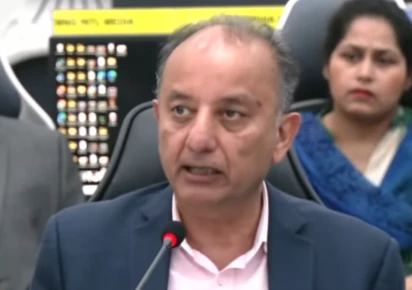
    Musadik Malik calls for smarter water management

    Climate Minister Musadik Malik has called for a major shift in Pakistan’s water management strategy, saying the country must focus not only on storing water but also on regulating its supply throughout the year. Speaking at a briefing at the National Disaster Management Authority (NDMA), Malik said effective water management was essential for protecting food supplies, supporting agriculture and reducing the impact of climate-related disasters. His remarks came as Pakistan faces another difficult monsoon season. At least 107 people have died and 297 others have been injured since the current rainy season began on June 26, according to disaster management authorities. The Pakistan Meteorological Department has forecast another strong spell of monsoon rains from July 29. Heavy rainfall could trigger urban flooding, flash floods and landslides in several parts of the country. Malik said Pakistan needed different climate strategies for different regions instead of relying on a single nationwide approach. Plans are being developed for cities facing extreme heat, northern areas vulnerable to floods and landslides, and agricultural regions where changing weather patterns are threatening food production. He stressed that water must be available when farmers need it during the Rabi and Kharif seasons. According to the minister, simply allowing large quantities of floodwater to escape without regulating or storing it creates serious risks for agriculture and food security. Malik described water infrastructure as a national security issue. He said the government would focus on improving water regulation, telemetry and storage systems. It would also work with provincial governments to improve zoning and construction standards in disaster-prone areas. National Food Security Minister Rana Tanveer Hussain said Pakistan would require greater water storage capacity in the coming years. He said the country faced two linked challenges: controlling floods and dealing with water shortages. Tanveer said climate change was already changing crop cultivation and sowing patterns. He stressed that agriculture would need to adapt to shifting weather conditions to protect food supplies. The minister said Pakistan was among the countries most vulnerable to climate change, with agriculture facing some of the strongest impacts. He recalled the huge economic losses caused by the 2022 floods but said the country’s disaster response capabilities had improved since then. He said the government had started modifying crop cycles and cultivation patterns in response to changing climatic conditions. Authorities are also working on a broader strategy to strengthen agricultural resilience. Tanveer highlighted several major water projects. He said the Diamer-Bhasha Dam would provide around 6.4 million acre-feet of additional storage capacity, while the Mohmand Dam would add nearly one million acre-feet. He also mentioned progress on the Dasu project and expressed hope that the K-IV water supply project for Karachi would be completed by the end of this year or early next year. Finance Minister Muhammad Aurangzeb described climate change and population growth as major long-term challenges for Pakistan. He called for a coordinated response involving all parts of the government. Aurangzeb said the country was now better prepared financially to respond to natural disasters. He said the government had decided to use domestic resources for rescue and relief operations instead of relying primarily on international assistance. He said Pakistan had launched a $2 billion programme aimed at strengthening climate resilience and reducing environmental risks. Around $700 million annually has also been allocated for disaster management, vulnerability reduction and protection of lives and infrastructure. The finance minister said Pakistan’s disaster financing approach had changed significantly since the 2022 floods. The country had previously relied heavily on international commitments, but authorities are now increasing domestic funding for climate adaptation and emergency response. Information Minister Attaullah Tarar said preparations for the current monsoon season had started before the rains arrived. He credited NDMA’s National Emergencies Operation Centre (NEOC) with improving forecasting and early warning capabilities. Tarar said the system had helped authorities issue timely alerts about dangerous weather events. He urged citizens to follow official warnings and take precautions during periods of heavy rainfall. Meanwhile, flooding continues in parts of Punjab and other regions. The Provincial Disaster Management Authority said water levels in the Chenab River had shown some improvement, while low-level flooding persisted at several locations along the Indus.

  • | |

    New provinces needed to improve governance: speake…

    Speakers at a seminar on the creation of new provinces in Pakistan have said that establishing new administrative units could directly benefit the public. The seminar was organised by the Sustainable Development Policy Institute (SDPI) in Islamabad. MQM leader Mustafa Kamal, PPP leader Qamar Zaman Kaira and PTI Secretary General Salman Akram Raja addressed the gathering. The speakers described the creation of new provinces as necessary to address public problems. They also stressed the need for a strong and empowered local government system. The participants said Pakistan needs new administrative units to improve governance and ensure that resources are distributed at the grassroots level. Mustafa Kamal said the existing system had failed to ensure effective accountability of governments. He added that even if new provinces were created, a strong local government system would remain necessary. PPP leader Qamar Zaman Kaira suggested that the debate over creating new provinces should take place within the constitutional framework. He also called for strengthening the local government system. PTI Secretary General Salman Akram Raja said that even after the creation of new provinces, some provinces would still have populations running into millions. The speakers agreed that administrative reforms were necessary to improve governance and ensure a more effective distribution of resources among the people.

  • | | | |

    Russia, COMSTECH seek stronger cooperation in scie…

    Russia and the Organisation of Islamic Cooperation’s Standing Committee on Scientific and Technological Cooperation (COMSTECH) have discussed new opportunities to expand collaboration in science, technology and higher education. Russian Ambassador Albert P. Khorev received a COMSTECH delegation on August 12. The delegation was led by COMSTECH Coordinator General Professor Dr M. Iqbal Choudhary. The meeting focused on strengthening cooperation between Russia and COMSTECH, particularly in areas of scientific research and academic development. Russia participates in the OIC as an observer state. Professor Iqbal Choudhary highlighted existing cooperation between COMSTECH and Russian institutions. He specifically mentioned collaboration with Kazan Federal University and the Russian Association of Earthquake Engineering and Protection against Natural and Man-Made Hazards. The participants identified considerable potential for expanding academic links between the two sides. They discussed stronger partnerships between universities, increased scholarship opportunities and joint research projects in fundamental sciences. Both sides also stressed the need to speed up implementation of initiatives previously agreed upon under their bilateral working mechanism. These initiatives were discussed during the first meeting of the Working Group on Cooperation between COMSTECH and the Russian Federation in science, technology and higher education. The meeting was held in Kazan on May 13, 2026, on the sidelines of the international economic forum Russia–Islamic World: KazanForum. Ambassador Khorev reaffirmed Moscow’s interest in expanding its engagement with the OIC and Muslim-majority countries. He also highlighted the importance of cooperation with Pakistan. The participants noted that stronger scientific and academic links between Russia and COMSTECH could also contribute to closer Russia-Pakistan relations, particularly through education, research and technological cooperation. The two sides agreed to maintain regular communication and provide necessary support for implementing joint initiatives and projects.

  • |

    Justin Greaves’ unbeaten fifty lifts West Indies to 239-5 against Pakistan

    PORT OF SPAIN: Justin Greaves produced a composed unbeaten half-century to guide the West Indies to 239-5 at stumps on the opening day of the second Test against Pakistan, putting the hosts in a strong position after rain and fading light curtailed play. Greaves remained unbeaten on 64, while experienced all-rounder Roston Chase was solid on 36 not out, with the pair steering the Caribbean side through the closing stages after Pakistan struck at regular intervals. Earlier, Brandon King laid the foundation for the innings with an impressive 46, helping the West Indies recover from early setbacks before narrowly missing out on a well-deserved half-century. Pakistan’s bowlers worked hard on a surface that offered occasional assistance but struggled to build sustained pressure as partnerships frustrated the visitors throughout the day. Fast bowler Mohammad Ali emerged as Pakistan’s most successful bowler, claiming two wickets with disciplined line and length. Ubaid Shah, Ali Usman, and veteran spinner Sajid Khan picked up one wicket each, ensuring Pakistan stayed in the contest despite West Indies’ steady progress. The opening day’s play was interrupted by rain and poor light, limiting action to just 74 overs instead of a full day’s schedule. The frequent stoppages disrupted the rhythm of both teams and prevented Pakistan from fully capitalising whenever they gained momentum. With five wickets still in hand, the West Indies will look to extend their first-innings total beyond 350 when play resumes on Tuesday. Greaves and Chase will be aiming to convert their unbeaten partnership into a match-defining stand. Pakistan, meanwhile, will target an early breakthrough on the second morning to expose the lower order and prevent the hosts from taking complete control of the contest. The second day’s opening session is expected to play a crucial role in shaping the direction of the Test, with both teams aware that a strong first-innings performance could prove decisive in the battle for series momentum.

  • | | |

    British soprano wins Pakistani hearts with national anthem

    Pakistan cricket fans in Leeds were treated to an unexpected musical moment before Wednesday’s match against England when British soprano Laura Wright delivered a soulful a cappella rendition of Pakistan’s national anthem. Her performance quickly attracted attention beyond the stadium after it was broadcast to viewers around the world. Pakistani fans took to social media to praise Wright’s voice and the emotion she brought to the anthem. Some viewers said the performance was so moving that it brought them to tears. Others jokingly suggested that Wright should be granted Pakistani citizenship and issued a national identity card immediately. While many fans focused on the singer’s impressive vocal performance, some supporters had a more immediate concern — Pakistan’s performance on the cricket field. The discussion also prompted fans to look ahead to England’s next tour of Pakistan. Several social media users suggested that Pakistani singers should return the gesture by performing the British national anthem when England next plays in Pakistan. Among the names suggested by fans were Aima Baig and Sahir Ali Bagga. The emotional performance came on a difficult day for Pakistan’s cricket team. Pakistan were dismissed for 171 in their first innings, leaving England with a relatively modest target to chase. England made a strong start in response, reaching 112 for two by the end of the opening day and putting themselves in a commanding position. Despite the disappointing start with the bat, the national anthem performance provided Pakistani supporters with a memorable moment before the action began. Wright’s rendition was widely appreciated for its simplicity and powerful vocals, with fans praising the decision to perform the anthem without musical accompaniment. For many Pakistanis watching from home, the performance became one of the highlights of the day, even as they hoped the national team would produce a stronger response on the field. The warm reaction showed how a musical performance can create a moment of connection between supporters, regardless of nationality, particularly during an international sporting contest.

  • | | |

    Aurangzeb reviews Pakistan’s economic progress i…

    Finance Minister Muhammad Aurangzeb held a series of high-level meetings with senior officials of the International Monetary Fund (IMF) in Washington to review Pakistan’s economic performance and discuss the progress of the country’s reform agenda. The meetings included discussions with IMF First Deputy Managing Director Dan Katz, Deputy Managing Director Nigel Clarke, Middle East and Central Asia Department Director Jihad Azour, and IMF Mission Chief for Pakistan Iva Petrova. During the talks, the finance minister presented an overview of Pakistan’s recent macroeconomic performance. He highlighted improvements in fiscal management, stronger external accounts, higher foreign exchange reserves, record inflows of overseas workers’ remittances, and a healthier current account position. He also noted that the government had met its revenue collection targets, which he said reflected the positive impact of ongoing economic reforms. The discussions also focused on Pakistan’s progress under the IMF-supported Extended Fund Facility (EFF) and the Resilience and Sustainability Facility (RSF). Both sides reviewed measures aimed at strengthening economic stability and ensuring long-term, sustainable growth. Aurangzeb briefed IMF officials on reforms in taxation, the energy sector, public debt management, tariff rationalisation, and the government’s privatisation programme. He also discussed efforts to broaden financing sources, improve the investment climate, and restore Pakistan’s access to international capital markets. The meetings further covered issues related to human capital development, increasing women’s participation in the economy, addressing demographic challenges, encouraging technology-led growth, and promoting private sector investment and export-driven development. The finance minister reaffirmed the government’s commitment to maintaining fiscal discipline and implementing structural reforms. He said Pakistan would continue pursuing policies aimed at strengthening economic stability, improving investor confidence, and achieving long-term economic transformation. During his visit to Washington, Aurangzeb also met John Jovanovic, President and Chairman of the Export-Import Bank of the United States, to discuss expanding economic cooperation between the two countries. The meeting focused on financing long-term development projects and increasing bilateral trade in agricultural commodities, including cotton and soybeans, as well as cooperation in the hydrocarbons sector. The two sides also explored opportunities to facilitate greater access to US financing, technology, equipment, and services for priority projects in Pakistan. Officials agreed to identify short-term investment opportunities, appoint focal persons from both sides, and prepare a strategic cooperation framework. The proposed framework is expected to be finalised and signed on the sidelines of the United Nations General Assembly session in September 2026.

Leave a Reply

Your email address will not be published. Required fields are marked *