renowned mountaineer nirmal
| |

Renowned mountaineer Nirmal Purja among 10 killed …

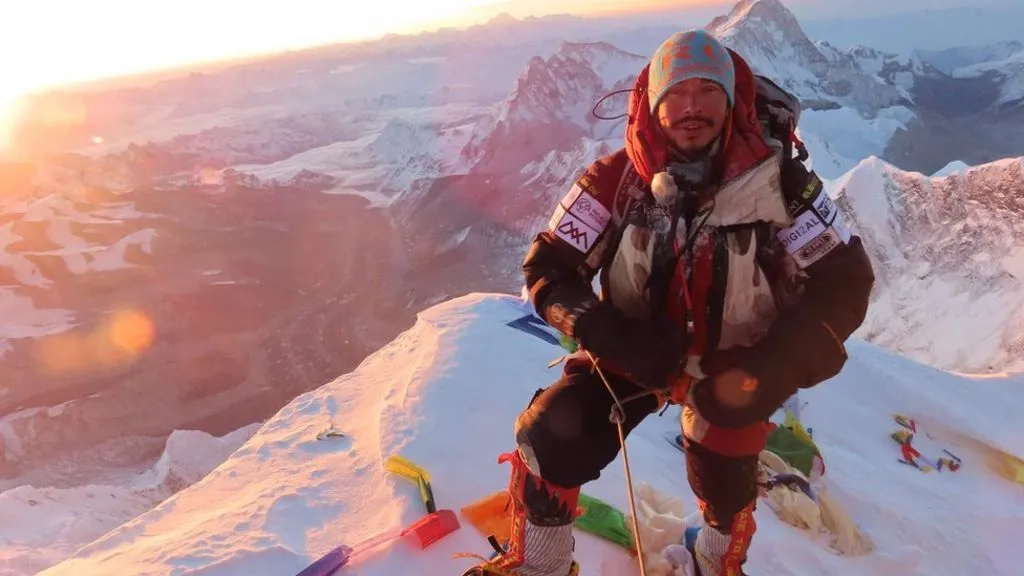
British Nepali mountaineer Nirmal Purja has died along with nine other climbers in an avalanche on Broad Peak in Pakistan, according to his expedition company.

Elite Expeditions confirmed the death of the 43 year old climber on social media, saying the news came with profound sadness and heartbreak following Thursday’s avalanche. Purja, who was born in Nepal and later served in the British army, had earned global recognition for climbing the world’s 14 highest peaks in just over six months in 2019.

Pakistani officials had earlier reported the recovery of the bodies of three other climbers from the same expedition, identified as American Mallory Geis, Nadhira Ahmed Abdullah Al Harthy from Oman and Pur Bahadur Gurung from Nepal.

Nepal’s Prime Minister Balendra Shah also confirmed Purja’s death, saying the loss of six Nepali climbers and four foreign climbers, including world record holder Purja, in Pakistan’s Karakoram range had shocked the nation. Shah said the climbers’ courage and contributions would continue to inspire others.

Naila Kiani, a spokesperson for the Alpine Club of Pakistan, which is coordinating rescue operations, told a British broadcaster that Purja had led numerous expeditions she had personally taken part in and described him as an extremely experienced and fearless climber with strong leadership skills. Kiani said the Alpine Club would only formally confirm his death once his body has been recovered, though she acknowledged rescuers fear all members of the group have died. She said search teams have spotted some bodies but have not yet been able to reach them.

Rescue teams in Pakistan have been searching for the missing climbers on the world’s 12th highest peak following the avalanche, which struck the 8,047 meter summit in the Karakoram mountain range. Purja was leading the multinational climbing group at the time.

Also known as Nims, Purja rose to international fame in 2019 after climbing all 14 of the world’s peaks above 8,000 meters in 189 days, breaking the previous record by more than seven years. His achievement later became the subject of a Netflix documentary titled 14 Peaks: Nothing Is Impossible. At the time of his historic climb, he described the effort as grueling but humbling, and said he hoped to show that determination, self belief and positivity could make anything possible.

Purja served in the British military for 16 years, including a decade in the special forces, and received an MBE from the late Queen in 2018 in recognition of his extreme high altitude mountaineering achievements. He lived in Hampshire in southern England with his wife and three year old daughter, and was also known as the first Gurkha soldier to climb Everest while still serving in the British military.

In his final social media post, shared on Monday, Purja wrote that he had not originally planned to climb Broad Peak. He said his trip had initially been focused solely on Gasherbrum II, another peak in the Karakoram range, but that he realized shortly before departing for Pakistan that summiting Broad Peak as well would leave him needing just one more mountain to become the first person in history to climb all 14 peaks above 8,000 meters twice without supplemental oxygen. He described the added goal as something that emerged unexpectedly rather than as part of a plan, writing that opportunities tend to present themselves quietly to those already putting in the work. He added that he was asking Broad Peak for nothing more than safe passage up and back down, saying he never took any mountain for granted.

Broad Peak is widely regarded as one of the more difficult peaks for climbers to summit. The mountain was first successfully climbed in 1957 by an Austrian expedition, and while many climbers have reached its summit since then, dozens have died attempting the ascent. One of its deadliest recorded years was 2013, when at least six climbers lost their lives on the mountain.
Similar Posts

  • | |

    PM orders aid for rain and flood victims

    LAHORE: Prime Minister Shehbaz Sharif has ordered the immediate provision of financial assistance to families affected by recent monsoon rains and floods across Pakistan, while directing authorities to speed up relief and rehabilitation efforts. Chairing a meeting in Lahore on Saturday to review the ongoing response, the prime minister instructed that compensation be provided to families who lost loved ones and to owners of houses that were completely or partially damaged by the severe weather. Shehbaz also called for the swift restoration of electricity transmission networks and roads in affected areas. Federal ministers and senior officials were directed to personally visit impacted regions, assess the damage and oversee rehabilitation work. The prime minister further ordered authorities to accelerate the delivery of food and other essential relief supplies to areas that remain difficult to access. The National Disaster Management Authority (NDMA) and provincial disaster management authorities were told to maintain full preparedness as more rain and flooding are forecast. Officials briefed the meeting that around 615 tonnes of relief supplies had already been dispatched to monsoon-hit areas, with additional consignments being arranged. Authorities also reported that flood-affected residents had been moved to safer locations across all affected areas. Restoration efforts are underway in Punjab, Sindh, Balochistan, Khyber Pakhtunkhwa, Gilgit-Baltistan and Azad Jammu and Kashmir, while disaster management teams remain on standby for any further emergencies. The meeting was also informed that early warning systems in the northern areas are operational and have helped authorities evacuate residents to safer locations ahead of potential flooding.

  • | |

    Canada’s pushback against Trump tests bounda…

    Two days before trade negotiations between the United States and Canada collapsed dramatically over the weekend, Vice President JD Vance told an audience at a private fundraiser that Canadian Prime Minister Mark Carney was, in his words, a very sweet guy. According to a private audio recording obtained by a Canadian news outlet, Vance went on to describe Carney as someone who talks tough and claims he can out tough Donald Trump, before ultimately backing down on major issues, a pattern Vance called hilarious. Those remarks, which drew significant attention across Canada, may not have directly caused Carney’s negotiating team to walk away from the table, but they certainly did not help matters. Carney’s decision abruptly ended talks over a new trade agreement and triggered a fresh round of tariffs between two countries that conduct more than 872 billion dollars in annual bilateral trade. The deepening rift, paired with Vance’s comments, offers the latest example of an American administration willing to apply pressure against both allies and adversaries alike, underscoring how such tactics can produce unpredictable consequences on the world stage. If Trump anticipated that Canada would eventually yield to American pressure, following a pattern seen among other US allies over the past year and a half, that assumption may prove mistaken, and the fallout could shape the remainder of his presidency. Tension between Washington and Ottawa did not begin this weekend. It traces back to the first Trump administration and the negotiations that produced the USMCA, the agreement that replaced the original 1990s era North American Free Trade Agreement. Personal friction between Trump and former Canadian Prime Minister Justin Trudeau complicated those earlier talks. As Trump prepared to return to office in late 2024, he mockingly referred to Trudeau as governor and to Canada as America’s 51st state. Behind those remarks sat a broader worldview in which the United States positions itself as the dominant power within its own hemisphere, entitled to shape political, military and economic outcomes across the region, Canada included. Administration officials have argued that Canada contributes too little to regional defense spending while benefiting disproportionately from trade with its southern neighbor. Within Trump’s framework, where economic and national security are treated as inseparable, Canada and Mexico, two of America’s largest trading partners, emerged as early targets. Drew DeLong, head of corporate statecraft at the Kearney Foresight think tank, said officials across the State, Treasury and Commerce departments frequently repeat the phrase that economic security equals national security. By early this year, as North American trade talks moved forward unevenly, Trump’s focus shifted away from Canada toward military interventions in Venezuela and later the Middle East. Even so, the central thread running through Trump’s foreign policy approach has remained consistent, treating the United States as a dominant power capable of imposing its will for national advantage. That power has limits, however, and Trump’s second term has repeatedly tested where those limits lie. Despite the obvious differences between an active conflict with Iran and a trade dispute with Canada, the underlying dynamics share similarities. In both cases, the United States confronts a counterpart with far less overall power but still capable of retaliation. Iran has leaned on its ability to threaten US allies and disrupt global commerce through chokepoints like the Strait of Hormuz. Canada, meanwhile, has begun testing its own capacity to inflict economic pressure, with this week’s targeted tariffs marking an initial step. Future Canadian measures could include limiting American access to Canadian energy and critical minerals, alongside consumer boycotts targeting US products. DeLong said that as the broader global landscape shifts toward economic security concerns, countries increasingly search for chokepoints and leverage across global supply chains, adding that such opportunities exist for nations willing to look for them. For now, clear paths toward resolution remain limited. Trump has escalated his public rhetoric, repeatedly accusing Canada of ripping off the United States, while Ontario Premier Doug Ford responded sharply, telling the American president to kiss his ass. Imran Bayoumi, deputy director of the GeoStrategy Initiative at the Atlantic Council, said that pushing allies and partners away tends to incentivize them to seek new relationships rather than comply with American demands. Room still exists for tensions to ease. Canada’s new tariffs take effect in two weeks, while the most significant American countermeasure, a 50 percent tariff on Canadian built vehicles and auto parts, will not take effect until early 2027. Escalation cycles in economic or military conflicts can be difficult to reverse, but the several month gap before the next round of US tariffs gives both sides room to potentially resume negotiations, which had shown signs of progress before talks collapsed Friday night. A more immediate deadline looms in November’s US midterm elections. Democratic gains in Congress could limit Trump’s authority significantly, while unexpected Republican success could strengthen his position further. Ottawa currently appears to be betting on the former scenario, calculating that concern over midterm losses in industrial swing states like Michigan and Ohio will pressure Trump to soften his stance before voters head to the polls. Bayoumi said he does not see the kind of internal political division within Canada that the Trump administration may have anticipated, adding that Carney has considerable political room to negotiate a favorable outcome for Canada rather than settle for less. Carney has also raised another possibility publicly since Trump returned to office, suggesting Canada may continue drifting away from the United States altogether and deliberately widen the distance between the two nations. Carney has said Canada cannot depend on traditional alliances now that the rules of engagement have fundamentally shifted. While geographic proximity guarantees the two countries will remain connected in some form, the deeply integrated economic relationship built over recent decades may be approaching its end. This stands in contrast to Mexico, which appears to be pursuing closer economic integration with the United States rather than distancing itself. Meanwhile, other global trading partners, including US allies across Europe and Asia, are closely watching Canada’s assertive stance

  • | | |

    Nawaz Sharif summons PML-N meeting in Murree to di…

      President of the ruling Pakistan Muslim League-Nawaz (PML-N), Nawaz Sharif, has summoned an important party meeting in Murree on Saturday, August 15, to discuss the formation of a new government in Azad Jammu and Kashmir (AJK). According to party sources, the meeting will focus primarily on the political situation in AJK and the formation of the government following the recent elections to the AJK Legislative Assembly. Senior PML-N leaders are expected to hold detailed consultations on the party’s strategy and discuss possible arrangements for forming the government in the region. Prime Minister Shehbaz Sharif, Punjab Chief Minister Maryam Nawaz, former Punjab Chief Minister and senior PML-N leader Hamza Shehbaz, federal ministers and other senior party leaders are expected to attend the meeting in Murree. All nine newly elected PML-N members of the Azad Jammu and Kashmir Legislative Assembly have also been invited to participate in the meeting, according to sources. Their presence is expected to be particularly important as the party leadership considers its options for government formation and seeks their input on the political situation in AJK. The meeting is likely to provide the PML-N leadership with an opportunity to assess the election results and discuss the next political steps. Party leaders are expected to deliberate on potential candidates for key positions and determine how the party will proceed with its government-formation efforts. Nawaz Sharif, as president of the PML-N, is expected to lead the consultations and seek the views of senior party figures as well as the newly elected AJK assembly members. The participation of Prime Minister Shehbaz Sharif and Punjab Chief Minister Maryam Nawaz also indicates the importance the party leadership is attaching to developments in Azad Jammu and Kashmir. The political situation in AJK has gained significant attention following the elections, with political parties assessing their positions in the newly elected legislative assembly. The formation of the next government will depend on the numerical strength of the parties and the political alliances that emerge following the election results. The PML-N’s leadership meeting in Murree is therefore expected to play an important role in determining the party’s immediate political strategy in AJK. Discussions may also focus on maintaining coordination between the federal leadership, the Punjab government and the party’s elected representatives in Azad Jammu and Kashmir. Sources said the meeting would involve consultations rather than a routine party gathering, with the leadership expected to carefully examine the political developments before reaching decisions on government formation. The participation of all newly elected PML-N members from AJK is also expected to help the central leadership understand the ground situation and political dynamics within the region. Their recommendations could contribute to the party’s decision-making process as it moves toward forming the next government. The Murree meeting on August 15 is consequently being viewed as a significant gathering for the PML-N, as the party leadership prepares to determine its course of action in Azad Jammu and Kashmir and coordinate its political strategy with its elected representatives.

  • | |

    Katie Holmes makes rare comment about boyfriend Ja…

    Katie Holmes has offered a rare glimpse into her personal life by publicly acknowledging her relationship with New York-based artist Jason Bard Yarmosky. Known for keeping her private life away from the spotlight, the actress surprised fans by making one of her first public comments about her boyfriend after the couple recently stepped out together in New York City. (people.com⁠) The Dawson’s Creek alum, who has long maintained a low-profile approach to romance, spoke warmly about Yarmosky while attending a recent event. Although Holmes kept her remarks brief, she described the artist as someone she deeply admires and appreciates. Her comments quickly caught attention because the actress rarely discusses her relationships publicly. (people.com⁠) Holmes and Yarmosky were first linked earlier this year after they were photographed together on several occasions around New York City. The pair later made public appearances at art-related events, fueling speculation that their connection had grown stronger. Despite increased public interest, Holmes has largely remained silent about the relationship, choosing instead to focus on her career and family life. (usmagazine.com⁠) Jason Bard Yarmosky is a contemporary artist known for his emotional and thought-provoking paintings and mixed-media works. Based in New York, he has exhibited his art in galleries across the United States and has earned recognition for exploring themes of identity, family, and human connection. His artistic background appears to align with Holmes’ own passion for creativity and storytelling. (jasonbardyarmosky.com⁠) Holmes has always preferred to keep her personal relationships private, especially after years of intense media attention. Since her highly publicized marriage and divorce from Tom Cruise, the actress has carefully balanced her public career with her private life. In past interviews, she has emphasized the importance of protecting her personal space and maintaining a sense of normalcy for her daughter, Suri Cruise. (people.com⁠) Fans have praised Holmes for finding happiness while staying true to her values. Her recent remarks about Yarmosky, though brief, offered a rare and genuine insight into a relationship that appears to be built on mutual respect and shared interests. As Holmes continues to work on new acting and directing projects, her subtle acknowledgment of Yarmosky suggests that she is comfortable letting the public see a small part of her personal happiness. For admirers of the actress, it was a refreshing moment that highlighted a softer, more personal side of one of Hollywood’s most private stars.

  • 19-Year-Old Russian Woman Escapes Suspected Scam Gang in Myanmar

    CHIANG RAI – A 19-year-old Russian woman made a desperate escape from Tachileik, Myanmar, into Thailand late on Sunday evening. She successfully fled across the border river from Tachileik, Myanmar, to escape severe physical abuse. The young victim is now resting safely under the protection of Thai authorities. According to Mae Sai Police, the woman […]

  • | |

    China stands firm on economic strategy ahead of ke…

    BEIJING: China has intensified its defence of its state-led economic model as it prepares for crucial trade discussions with the European Union and the United States, signalling that it is unlikely to make major policy concessions despite mounting international criticism. Beijing has repeatedly argued that its development strategy, which prioritises investment in advanced manufacturing and technology, remains essential for long-term economic growth. Chinese leaders maintain that the country’s industrial policies have helped strengthen innovation and global competitiveness, rejecting accusations that they distort international trade. The latest policy statements from China’s leadership indicate a commitment to maintaining its current economic direction. While officials acknowledge challenges such as weak domestic demand and excess production capacity, they continue to favour targeted policy support instead of broad consumer-focused stimulus measures. Chinese authorities have also dismissed Western claims of industrial overcapacity, describing such criticism as politically motivated. They argue that China’s manufacturing success reflects its stage of economic development and benefits global consumers through affordable, high-quality products. Ahead of expected meetings between President Xi Jinping and US President Donald Trump later this year, as well as upcoming negotiations with the European Union, Beijing has adopted a more confident tone in defending its economic policies. Analysts believe the messaging is intended to establish clear limits on what China is willing to negotiate while encouraging greater understanding of its development model. China has also sought to counter warnings of a new “China shock” by portraying its industrial expansion as an opportunity for global economic growth. However, many Western economists argue that China’s reliance on exports, combined with subdued domestic consumption, continues to create imbalances that affect international markets. Although Beijing has slowed public investment by tightening oversight of local government spending, officials acknowledge that supply and demand remain uneven. Authorities have pledged to reduce destructive price competition among manufacturers and have reiterated their intention to strengthen consumer demand, though without announcing sweeping structural reforms. Chinese policymakers have also recognised that the country’s traditionally low household consumption cannot remain a permanent feature of its economy. While official publications describe the existing model as historically appropriate, they also suggest gradual adjustments will be necessary to ensure sustainable long-term growth. Despite these acknowledgements, Beijing remains cautious about implementing rapid reforms, fearing that abrupt policy changes could undermine economic stability. International studies continue to raise concerns over China’s economic practices. Recent research suggests that government subsidies have played a significant role in boosting the global market share of many Chinese companies, while other reports attribute much of China’s export growth to weak domestic consumption and industrial overcapacity. Analysts also note that China continues to invest in productive assets at a much faster pace than Europe and the United States, even though returns on those investments have declined. Many experts believe Beijing’s increasingly assertive defence of its economic model reflects growing confidence that it can manage trade tensions with Western partners without fundamentally changing its industrial strategy.

Leave a Reply

Your email address will not be published. Required fields are marked *