punjab orders crackdown
| |

Punjab orders crackdown on professional begging ma…

LAHORE: The Punjab government has ordered a province-wide crackdown against organized professional begging networks, with Lahore set to become the first “Beggar-Free City” under a coordinated enforcement campaign.

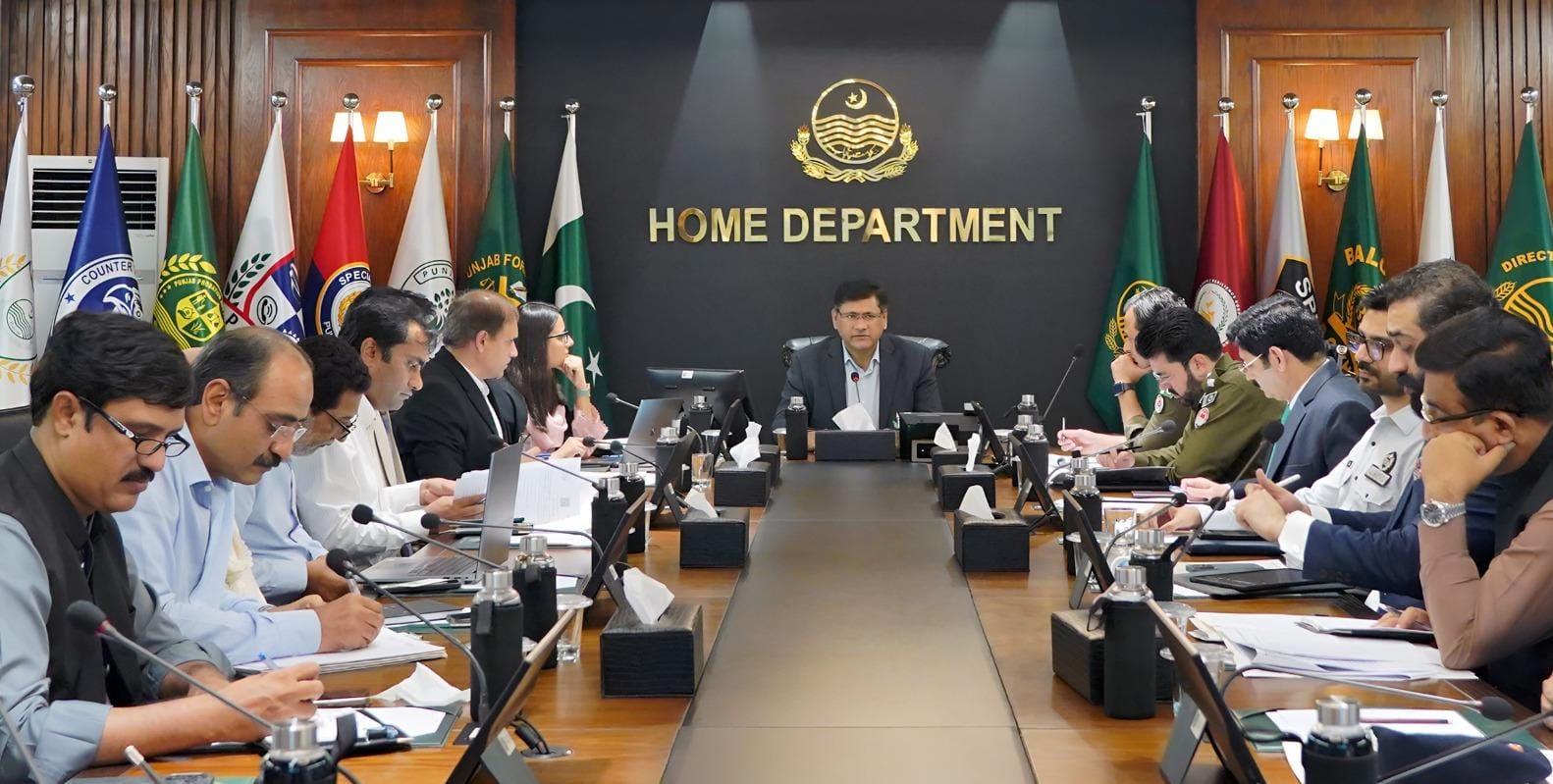
The decision came during a meeting chaired by Punjab Home Secretary Dr Ahmed Javed Qazi at the Home Department. Authorities directed relevant departments to develop a joint strategy to identify professional beggars, expose the networks operating behind them, and take action against those who force vulnerable people into begging.

The Punjab Safe Cities Authority and traffic police have received special assignments to help identify and dismantle the begging mafia’s network. Officials will use modern technology, surveillance tools and human intelligence to locate key hotspots and track repeat offenders.

Dr Qazi stressed that authorities must take strict action against handlers who exploit children, women and elderly people for begging. He said the government had introduced legal amendments to increase penalties and fines and discourage organized begging networks.

Under the amended Punjab Vagrancy Ordinance 1958, forcing someone to beg constitutes a non-bailable offence. The home secretary directed authorities to ensure strong prosecution of arrested members of the begging mafia so that cases result in effective convictions.

The meeting also called for the creation of a centralized database of professional beggars who face repeated arrests. Officials will also maintain updated records of needy and destitute people who seek assistance at welfare homes.

Dr Qazi instructed authorities to identify begging hotspots across Lahore and conduct targeted operations at these locations. He further emphasized the need for close coordination among all relevant departments to eliminate organized begging networks.

The government also plans to strengthen welfare homes and turn them into support centers for vulnerable members of society. Officials will improve arrangements for food, healthcare and accommodation while providing education to children staying at these facilities.

The welfare homes will also offer vocational training to help deserving individuals develop skills and achieve financial independence instead of relying on begging. Dr Qazi urged civil society organizations to play an active role in supporting vulnerable communities.

The home secretary appealed to citizens to report professional begging networks to police at 15. He assured the public that the authorities would keep the identities of informants confidential.

The meeting was attended by Social Welfare Secretary Saira Umar, Special Secretary Home Zainab Khan, Director General Social Welfare Dr Shahenshah Faisal, Director General Probation and Parole Shahid Iqbal, Additional Secretary Prisons Roman Burana, Additional Secretary Judicial Abdul Rauf, Lahore Chief Traffic Officer Syed Abdul Rahim Shirazi, AIG Sarfraz Warak, Deputy Prosecutor General Dr Usman Iqbal, Civil Defence Director Tasneem Ali Khan, along with officials from the Punjab Safe Cities Authority, FIA, School Education Department and Health Department.

Similar Posts

  • Austrian Expatriate Sentenced To 1,673 Years In Thailand

    NAKHON RATCHASIMA, Thailand — An Austrian national has been sentenced to 1,673 years in prison by a Thai court for the prolonged sexual abuse of his daughter, a case that has drawn attention to international cooperation in prosecuting child exploitation crimes. Police arrest Thai man for repeatedly raping 12 year old daughter The 54-year-old man, […]

  • | | |

    Punjab introduces new vehicle scrapping law for un…

    The Punjab government has introduced a new law for vehicle scrapping, allowing unusable and damaged vehicles to be legally disposed of through registered scrapping facilities. The move aims to regulate the disposal of old vehicles and remove unfit vehicles from roads across the province. According to reports, Punjab Governor Saleem Haider issued the Motor Vehicles Amendment Ordinance, which provides a legal framework for scrapping vehicles that are no longer fit for use. Under the new ordinance, vehicles without valid fitness certificates may also be sent for scrapping. The law includes vehicles that have been severely damaged in accidents or destroyed by fire and are considered beyond repair. The new regulations allow vehicle owners to voluntarily apply for scrapping if they no longer want to keep their vehicles. However, the process must only be completed through officially registered vehicle scrapping facilities to ensure proper disposal and prevent misuse. Officials believe the new system will help improve road safety by reducing the number of unsafe vehicles operating on roads. Old and poorly maintained vehicles can contribute to accidents, environmental pollution, and increased risks for drivers and passengers. The ordinance also introduces a more organized approach to vehicle disposal, ensuring that scrapped vehicles are handled through approved channels rather than informal methods. Registered scrapping facilities will be responsible for carrying out the process according to legal requirements. Transport experts have welcomed measures aimed at removing dangerous vehicles from circulation, saying that proper vehicle inspection and disposal systems are essential for safer roads and better environmental management. The implementation of the new law is expected to impact owners of old, damaged, and unfit vehicles across Punjab. Vehicle owners will now have a legal option to dispose of vehicles that are no longer economically repairable or safe to operate. The government is expected to issue further guidelines regarding the registration of scrapping facilities and the detailed procedure for vehicle owners in the coming days. The new vehicle scrapping ordinance represents a significant change in Punjab’s transport regulations, with authorities focusing on road safety, environmental protection, and better management of end-of-life vehicles.

  • | |

    Ride-hailing driver reveals final journey of Waffl…

      The ride-hailing driver who transported Wafflix owner Mir Raza Ali shortly before his death has shared details of the young man’s final journey, describing how Ali personally guided him through several roads in Karachi before being dropped outside a bank in Gulistan-e-Johar. Ali, 25, was allegedly abducted from the PECHS area before his body was discovered in bushes near a wedding hall in Gulistan-e-Johar. Police initially suspected that he may have been tortured before being shot. The circumstances surrounding his death remained unclear for some time, including speculation over whether he had been murdered or had died by suicide. However, a second post-mortem reportedly strengthened his family’s claim that Ali had been killed. In a video statement released on Wednesday, the driver, Ehsanullah, recalled accepting Ali’s ride during the early hours of the morning. He said the booking came through at around 3:57am. After accepting it, he reached the pickup location at approximately 4:06am and called Ali a minute later to inform him that he had arrived. According to the driver, Ali asked him to wait for a couple of minutes before coming outside. Ehsanullah said Ali arrived around 4:09am, after which the journey began. The driver said they initially left the street and headed towards Khalid bin Waleed Road. He recalled that when he was about to take a turn, Ali stopped him and instructed him to use another route towards a one-way road leading towards Imtiaz and Tariq Road. During the journey, Ali reportedly asked whether the vehicle had Bluetooth or a speaker. After connecting his mobile phone, he played music while continuing to guide the driver. Ehsanullah said he relied on the navigation system while also following Ali’s instructions. The route reportedly took them from Tariq Road to Bahadurabad and then towards Aga Khan Hospital, Stadium Road, Millennium Wall and Perfume Chowk. They subsequently travelled through Johar Mor, Mosamiyat and Samama before reaching Continental Bakery. The driver said Ali then directed him to take another turn and continue ahead before eventually asking him to stop. Ehsanullah said he dropped Ali outside a bank and then left the area. Meanwhile, Sindh Inspector General of Police Javed Alam Odho acknowledged shortcomings in the investigation into Ali’s death. Speaking at a ceremony at the Sindh Bar Council, he said the case was being reassessed following a new medico-legal report. Odho described Ali’s death as tragic and said a new investigation team had been instructed to conduct a transparent and independent inquiry. He acknowledged that there had been lapses, particularly concerning the medico-legal process, and said the shortcomings would be addressed. Ali’s body was discovered on July 29 with a gunshot wound. Investigators later recovered a .30-bore pistol casing from the crime scene on August 6, although the firearm itself had not been found. Following concerns raised by Ali’s family and evidence suggesting he had been shot from behind, the previous investigation team was dissolved. A new team, headed by DIG Investigation and Crime Amir Farooqi, was formed. The family’s lawyer, Jibran Nasir, had previously called for an impartial investigation and alleged that the family had been pressured to accept a suicide explanation. A judicial magistrate in Karachi’s East district has also directed police to submit a progress report in the case by August 15 as the renewed investigation continues.

  • | |

    Sindh government spokesperson accuses Hafiz Naeem …

      Sindh government spokesperson Sadia Javed has accused Jamaat-e-Islami Pakistan Emir Hafiz Naeem ur Rehman of distorting the context of what she described as sincere national agreements reached in the past. In a statement issued from Karachi, Sadia Javed said that Hafiz Naeem was presenting previous national agreements in a misleading manner. She criticised the Jamaat-e-Islami leader for allegedly attempting to portray past understandings between political stakeholders in a way that did not reflect their original spirit or context. She questioned Hafiz Naeem’s position on electricity generated from Thar coal, asking why he remained silent about what she described as some of the cheapest electricity being produced through the country’s indigenous coal resources. “Why is Hafiz Naeem silent on the inexpensive electricity generated from Thar coal?” she questioned, while responding to his criticism of the Sindh government and the Pakistan Peoples Party (PPP). Sadia Javed also strongly rejected what she described as allegations against the Sindh government, saying that Hafiz Naeem had no justification for issuing what she termed “mafia certificates” to others. She challenged the Jamaat-e-Islami leader to examine his own political record before making accusations against others. According to her, political leaders should first reflect on their own actions and positions before questioning the credibility or performance of others. The Sindh government spokesperson further defended the provincial government’s policies and highlighted the importance of Thar coal in meeting Pakistan’s energy requirements. She suggested that criticism of the provincial government should be based on facts and a complete understanding of the agreements and projects under discussion. Another Sindh government spokesperson, Ghanhor Khan, also criticised Jamaat-e-Islami and Hafiz Naeem, accusing them of making allegations based on what he described as political hypocrisy. Ghanhor Khan said that making accusations against the PPP over the issue of Independent Power Producers (IPPs) was part of what he called Jamaat-e-Islami’s unsuccessful political strategy. He argued that the party was attempting to use the controversial issue of IPPs to create political pressure against the PPP and the Sindh government. The dispute comes amid renewed political debate over Pakistan’s electricity sector, particularly the cost of power generation, agreements with IPPs and the role of domestic energy resources. Political parties have frequently criticised successive governments over electricity prices, power-sector contracts and energy policies. The Sindh government has continued to highlight Thar coal as an important component of its energy strategy, while its political opponents have raised questions about governance, transparency and the broader impact of energy-sector agreements. The exchange between the Sindh government and Jamaat-e-Islami reflects growing political tensions over energy policy and the interpretation of past agreements. While Hafiz Naeem has criticised the government’s handling of the power sector, Sindh government representatives have rejected his allegations and questioned the consistency of his political position. Both sides have continued to defend their respective positions, with the Sindh government emphasising its energy initiatives and Jamaat-e-Islami maintaining its criticism of the power-sector policies.

  • | |

    Government cuts petrol price by Rs3.19, diesel by …

    The federal government has announced a reduction in petrol and high-speed diesel (HSD) prices for August 7, providing limited relief to consumers amid continued fluctuations in international oil markets. According to a notification issued by the Ministry of Petroleum, petrol prices have been reduced by Rs3.19 per litre, bringing the new price to Rs329.82 per litre. Meanwhile, the price of high-speed diesel has been lowered by Rs1.50 per litre and will now be available at Rs382.36 per litre. The latest adjustment comes just one day after the government increased petrol prices by Rs4.45 per litre while reducing HSD prices by Rs2 per litre for August 6. The frequent revisions reflect the country’s newly introduced fuel pricing mechanism, which allows daily adjustments based on international market movements. The government introduced the daily fuel price review system on July 17 in response to volatility in global oil prices following renewed tensions in the Middle East. Under the new mechanism, domestic fuel prices are calculated using a seven-day average of international petroleum rates in line with global pricing practices. Pakistan remains highly dependent on imported petroleum products, making domestic fuel prices vulnerable to changes in international crude oil markets. According to the Pakistan Economic Survey 2024-25, petroleum products represent one of the country’s largest import categories. Any rise in global oil prices increases Pakistan’s import bill, puts pressure on foreign exchange reserves, and contributes to inflation. In previous years, fuel prices were managed through government subsidies and administrative controls. While such measures provided short-term relief for consumers, they also increased financial pressure on the national budget, oil marketing companies, and refineries. Higher subsidies contributed to fiscal challenges and increased public borrowing. Global factors continue to influence oil prices, including decisions by oil-producing nations, conflicts in energy-producing regions, sanctions, and disruptions in major shipping routes such as the Strait of Hormuz and the Red Sea. International crude prices recently moved higher after reports that an Iranian parliamentary committee was considering measures affecting shipping through the Strait of Hormuz. Brent crude futures increased by more than $3 per barrel, while US West Texas Intermediate (WTI) futures also recorded gains. Market analysts said traders remain focused on geopolitical developments and negotiations involving major oil-producing countries. Since a significant portion of global energy supplies previously moved through the Strait of Hormuz, any disruption in the route could immediately affect crude prices and fuel costs worldwide. The latest reduction in Pakistan’s fuel prices is expected to offer temporary relief to motorists and businesses, although future adjustments will continue to depend on international oil market trends.

  • Seven Dead and At Least 15 Injured in Nonthaburi School Shooting

    NONTHABURI, Thailand – A tragic school shooting unfolded on the morning of August 7, 2026, in the Bang Kruai district of Nonthaburi, leaving seven people dead and at least 15 others injured. The sudden burst of violence sent shockwaves through the educational institution, triggering immediate alarm and panic among students, teachers, and administrative staff. Massacre […]

Leave a Reply

Your email address will not be published. Required fields are marked *