echoes 1971 pakistans
|

Echoes of 1971 in Pakistan’s Kashmir policy

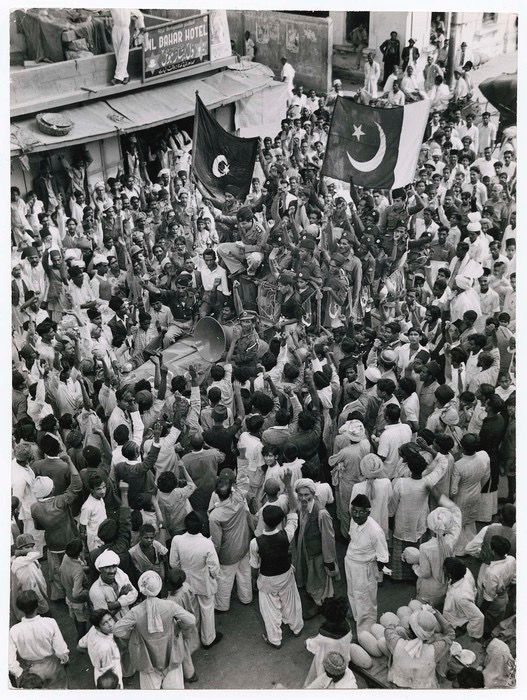
History rarely repeats itself in exact terms, but it frequently rhymes through patterns of power, dissent and state responses. In Pakistan, analysts and political observers are increasingly highlighting the parallels between historical missteps. It is specifically the events leading up to the loss of East Pakistan in 1971 and the contemporary public grievances in Pakistan-administered Kashmir.

The Cost of Ignoring Electoral Mandates

In 1970, General Yahya Khan permitted general elections across Pakistan. The Awami League in East Pakistan secured a decisive democratic victory by winning 162 out of 300 national seats. However, rather than facilitating a peaceful transfer of power, military leaders stalled negotiations in Dhaka through early 1971.

This breakdown in dialogue culminated in Operation Searchlight, a military crackdown targeting intellectuals, students, and Bengali civilians. The resulting violence triggered a massive refugee crisis. Approximately ten million people were sent to India. A war that ultimately led to the creation of Bangladesh.

Pakistan’s own Hamoodur Rahman Commission concluded that political failure and operational excess by military leadership were central to the catastrophe.

Despite these official findings, the report remained suppressed for decades, leaving fundamental lessons about the dangers of military overreach largely unexamined within state institutions.

 Unrest in Pakistan-Controlled Kashmir

Today, army leadership under General Asim Munir continues to champion strong nationalistic rhetoric regarding Kashmir. He has been asserting it as the nation’s core and a willingness to fight further conflicts over Indian-administered territory. Yet, a  different internal dynamic has been evolving since 2025 within the territories Pakistan actually controls.

Local populations have mobilized in widespread demonstrations driven by clear economic and political grievances. Unmanageable costs for basic essential goods. Disproportionately high pricing for local power distribution. Legislative structures that assign disproportionate authority to mainland administrators rather than local residents.

State institutions responded with heavy-handed measures rather than operating for meaningful negotiation. The organizing groups were banned, communication blackouts were implemented and arrests occurred. Security forces deployed live fire against demonstrators  and caused dozens of civilian casualties.

The Danger of Ignoring Unheard Grievances

  1. The concern raised by historians is not that history will reproduce the exact outcome of 1971, but that the state is relying on the same flawed logic. State is again attempting to suppress domestic economic and political grievances through state force.

When state policy prioritizes coercion over political engagement, it risks alienating populations. The lingering question for Pakistan’s establishment is whether the lessons of past governance failures will finally be integrated, or whether suppressed grievances will once again lead to deep institutional crises.

 

Similar Posts

  • My traumatic transformation into a Lassi (butter milk) hydration unit

    So, once I tagged along with a buddy to his sister’s place in this super rural village. Lovely folks, honestly—total heart-eyes. My buddy’s brother-in-law? Instant BFF. We vibe) We arrive at the house … “Lassi lao!” We chill for a bit… Lassi lao!” Evening rolls in. My new friend goes, “Yo, let’s hit up the dera (aka Cow Central).” We get to the dera… “Lassi lao!” We wander around, side-eyeing cows and buffaloes like city tourists. Sit back down… “Lassi lao!” Dinner time? “Lassi lao!” Morning alarm: sunrise. Breakfast spread: butter, desi ghee (clarified butter) — fried parathas, eggs, village chicken — the whole “we’ll clog your arteries” buffet. Finish eating … “Lassi lao!” Me, finally snapping: “BRUH. TURN OFF THE LASSI TAP. I BEG YOU.” “Fine. Chai lao!” I bark. Brother-in-law, grinning: “Shah Ji, why you mad, bro? Lassi lao’s our Shah ji ritual!” (Shah ji = imaginary VIP? Idk. Village things.) Friend suddenly remembers I’m a city slicker. Whispers to his sister: “Y’all got… tea leaves?” Sister, deadpan: “We don’t ‘do’ tea leaves here. It’s never on the ration list.” They somehow scrape up tea leaves. I sip the chai… and immediately slam the cup down: “LASSI LAO!” The breakfast table ERUPTS. Everyone’s howling, chanting: “Lassi lao, oye! Lassi lao!”

  • Stay safe this monsoon

    The monsoon season brings cool weather fresh air and beautiful rainfall making it a favorite time of the year for many people. However it also comes with several risks. In Pakistan especially in cities like Karachi heavy rain can cause water to collect on roads making travel dangerous and increasing the risk of accidents. Experts say that following a few simple safety tips can help prevent serious incidents during the rainy season. One of the biggest dangers during rain is electricity. Never touch fallen power lines or electrical equipment with bare hands.  Parents should also teach children to stay away from broken or exposed electric wires. It is also a good idea to unplug electrical appliances that are not in use during heavy rain. Drivers should avoid parking vehicles under power poles or overhead electric wires as strong winds and heavy rain can damage them and create dangerous situations. People walking outdoors should be careful as well. Whenever possible use dry sidewalks and avoid walking through standing water. Flooded roads may hide open drains or fallen electric wires making them extremely dangerous. If you need to go outside while it is raining, carry an umbrella or wear a raincoat to stay dry and reduce the risk of catching seasonal illnesses. Health experts also recommend keeping a basic first aid kit at home so that minor injuries or emergencies can be treated quickly until medical help is available. Rainwater that remains stagnant for several days can become a breeding ground for mosquitoes increasing the risk of diseases such as dengue malaria and skin infections. To stay safe make sure rainwater does not collect around your home or in  nearby streets. Experts say that taking these simple precautions can help protect lives and allow people to enjoy the beauty of the monsoon season more safely.

  • Daily multivitamins may boost heart health in older adults

    A new medical study suggests that taking multivitamins every day may help older adults maintain better health as they age. As people grow older their physical and mental abilities naturally begin to decline. Researchers from Augusta University in the United States studied how daily multivitamin use affects the health of older people. The study analyzed data from more than 16,000 adults aged 60 and above. At the start of the research all participants were free from heart disease. They were divided into groups. one group received daily multivitamin supplements another received cocoa extract supplements a third used both and the fourth group received a placebo. The study continued for three years. During this time researchers regularly checked participants daily activities health conditions and signs of heart problems. After three years researchers found that people taking multivitamins showed better heart related health and had a lower risk of some serious health issues. The supplements were also linked with a reduced risk of narrowing in a major artery that carries blood from the neck to the brain. Scientists believe multivitamins may help by filling small gaps in essential minerals supporting cell functions and improving blood vessel health. Researchers said the findings suggest that daily multivitamin use may help older adults maintain heart health and improve their quality of life. However they also noted that more research is needed to understand the exact reasons behind these benefits. Multivitamins are widely used around the world especially by people who want to support fitness overall health and reduce the risk of long term diseases.

  • | | |

    Reason, passion and desire

    We often like to view ourselves as unified, consistent individuals guided by singular motives. Yet, almost everyone has experienced an intense internal conflict. It’s wanting to spend on a impulse buy while knowing it defies financial logic. Or feeling overcome with regret immediately after giving in to a temptation. Over two millennia ago, the ancient Greek philosopher Plato set out to explain this psychological friction in Book IV of his masterwork, the Republic. Plato proposed that our psyche is composed of three distinct yet interacting forces rather than treating the human mind or psuche (soul) as a monolithic entity. Plato developed the concept of the tripartite soul. Further, he offered a framework that remains remarkably relevant to modern understandings of human behavior, self-control and moral choice. The Three Components of the Psyche Plato divides the human mind into three primary elements, each responsible for different aspects of our drives and behavior. 1. The Appetitive Element (To Epithumetikon) The appetitive part is the largest and most primal component of human nature. It encompasses our basic instinctual desires, including physical appetites for food, drink, comfort, and sensual pleasure, as well as material wants. Because these cravings are immediate and self-interested, the appetitive drive is inherently impulsive. Left unchecked, it seeks gratification regardless of long-term consequences. 2. The Spirited Element (To Thumoeides) The spirited element represents our emotional drive, passion, and sense of honor. It is the source of courage, pride, and righteous indignation when we witness or experience injustice. Unlike raw bodily appetite, the spirited part is closely tied to our moral identity and self-image. When functioning healthily, spirit acts as an ally to reason. It generates feelings of shame or self-directed anger when we surrender to harmful appetitive urges. 3. The Rational Element (To Logistikon) The rational element is the calculating and reflective mind. It seeks truth through logic, forethought, and critical reflection. What sets rationality apart from the other two components is its scope. While appetite and spirit focus on fulfilling specific, immediate goals, the rational mind evaluates what is best for the entire person in the long run. The Conflict Within: Why the Soul Divides To demonstrate that these three elements are truly distinct, Plato relies on an early formulation of the principle of non-contradiction: a single entity cannot simultaneously move in opposite directions in the exact same respect. Therefore, when a person experiences contradictory impulses such as feeling an intense thirst yet consciously choosing not to drink due to illness or health concerns, different parts of the mind must be in opposition. A classic illustration of this psychological war is the story of Leontius. While walking, Leontius felt a compulsive curiosity to look at execution corpses lying on the ground. Simultaneously, he felt disgust and moral repulsion. Eventually, his base appetite won out, causing him to rush over while angrily cursing his own eyes. This reaction demonstrates the spirited part of the soul becoming angry at the appetitive part for overriding rational judgment. From Conflict to Harmony Plato’s goal was not to suggest that humans should eradicate desire or emotion altogether. Instead, he argued that mental health and moral integrity, what he called justice of the soul, require a proper hierarchy. Reason must govern, serving as the wise leader that understands the big picture. Spirit must protect and enforce reason’s guidance with courage and conviction. Appetite must operate within temperate limits established by reason.   When these three components function in balance, an individual achieves psychological harmony. Conversely, when base desires or untamed emotions usurp the throne, inner turmoil and destructive behaviors follow. Plato’s tripartite framework ultimately serves as a timeless reminder that self-mastery is not about suppressing who we are, but about bringing our competing drives into a balanced, reason-guided unity.

  • Viral video highlights risky school route in India

    Millions of children around the world go to school every day but for some simply reaching the classroom can be a dangerous journey. In India a viral video has raised concerns after showing schoolchildren taking a highly risky route to get to school in Madhya Pradesh’s Vidisha district. The students reportedly have to jump across a river embankment to reach their school while strong water flows below. The dangerous journey has shocked people on social media and raised serious questions about the safety of the children. Parents and local residents say there is no safe route for the children to reach school forcing them to take the dangerous path every day. The situation becomes even more risky during the rainy season when the water level and flow increase. Locals have urged the authorities to inspect the area immediately and provide a safe and permanent route for the students instead of waiting for a tragic accident to happen.

  • Don’t throw away coriander stems

    Many people use only the leaves of fresh coriander (cilantro) while cooking and throw away the stems. However food and nutrition experts say the stems are packed with flavor and nutrients and can be a valuable part of many meals. Coriander stems contain vitamins A, C and K along with fiber which helps support healthy digestion. They also contain natural plant compounds that may support heart health and help the body function properly as part of a balanced diet. Instead of throwing them away here are some easy ways to use coriander stems in your kitchen. Add them to curries. Finely chop the stems and cook them with onions garlic and spices. As they soften they blend into the gravy and give the dish a richer flavor and fresh aroma. •Use them in soups and broths Wash the stems well and add them to vegetable or chicken soup while it cooks. They add extra flavor and nutrients to the broth. •Mix them into lentils and vegetables Add chopped coriander stems to the tempering with cumin garlic and other spices. This simple step can make lentils and vegetable dishes taste even better. Use them in marinades Blend the stems with ginger, garlic yogurt and spices to make a marinade for chicken fish meat or paneer. They help add a fresh herbal taste to the food. •Add them to chutneys and yogurt dips Blend coriander stems with mint garlic yogurt or roasted chickpeas to make a thick and flavorful chutney or dip that goes well with snacks and meals. If you have extra coriander stems wash and dry them then chop and store them in an airtight container or freezer bag. They can stay fresh in the freezer for several weeks and can be added directly to cooked dishes whenever needed. Experts say using coriander stems is a simple way to reduce food waste save money and add more flavor and nutrients to everyday meals.

Leave a Reply

Your email address will not be published. Required fields are marked *