major breakthrough mir
| |

Major breakthrough in Mir Raza Ali murder case as …

Police have made significant progress in the murder investigation of IBA student Mir Raza Ali, who was abducted and later found dead in Karachi. Authorities have recovered the victim’s mobile phone and other evidence from the crime scene while denying reports that the body showed signs of torture or burning.

According to police officials, the investigation into the killing of Mir Raza Ali, a resident of PECHS Society, is ongoing. The young student’s body was found on Wednesday from a hilly area in Gulistan-e-Johar Block 1 after he went missing during the night between Tuesday and Wednesday.

Police said Mir Raza Ali had left his residence through an online taxi service before disappearing. Following the discovery of his body, a special investigation team and crime scene experts visited the area to collect evidence and determine the circumstances behind the murder.

During the search operation, police recovered the victim’s iPhone from behind Nasir Tower Apartments, located around 200 metres away from the crime scene. The mobile phone is reportedly password-protected, and investigators are making efforts to access its data for further clues.

Police also recovered a weapon cover, believed to be linked to the firearm used in the incident. Authorities have obtained the victim’s call data record (CDR) and are preparing a route map to track his movements before the murder.

The police surgeon stated that Mir Raza Ali was shot once in the chest from the front. The bullet passed through his body, but officials found no evidence of physical torture or burning on the victim’s body.

A team comprising SSP District East Zubair Nawaz Sheikh, SP Gulshan-e-Iqbal Ghulam Shabbir Saraki, SHO Ferozabad Adeel Afzal, and other investigation and crime scene experts inspected the site and surrounding areas.

Investigators are currently examining approximately 50 phone numbers identified through the call data record. Police officials have claimed that around 50 percent of the case investigation has been completed and further developments are expected as evidence is analyzed.

The recovered mobile phone, weapon-related evidence, and digital records are being considered important parts of the investigation. Police officials have assured that all available resources are being used to identify those responsible for the killing and bring them to justice.

Similar Posts

  • | |

    Lahore declares August 4 public holiday

    The Lahore district administration has declared Tuesday, August 4, as a public holiday across the district to facilitate devotees attending the annual Urs celebrations of the revered Sufi saint Hazrat Data Ganj Bakhsh. According to an official notification, the holiday will remain effective only within the limits of Lahore district, allowing worshippers to participate in the religious events without disruption. The 983rd annual Urs officially commenced with a traditional chadar-laying ceremony and the inauguration of a milk sabeel at the shrine. The opening ceremony was attended by Deputy Prime Minister Senator Ishaq Dar, who paid tribute to the great Sufi saint and highlighted his enduring message of peace, tolerance, and unity. The Urs is observed over three days and attracts thousands of devotees from across Pakistan. Religious scholars, spiritual leaders, and followers gather at the shrine to offer prayers, recite the Holy Quran, and take part in various religious and spiritual activities held throughout the celebrations. Hazrat Data Ganj Bakhsh, also known as Hazrat Ali Hajveri, was an 11th-century Persian Sufi scholar born in Ghazni. He later settled in Lahore, where he dedicated his life to spreading the teachings of Islam, compassion, and brotherhood through Sufism. His shrine has since become one of the most significant spiritual landmarks in the region. Data Darbar is widely regarded as South Asia’s largest Sufi shrine and receives millions of visitors every year.

  • | | |

    No date finalised for renewed US-Iran talks, sources say

    Efforts to revive direct negotiations between the United States and Iran are continuing through diplomatic channels, but no date or venue has been finalised for the next round of talks, according to informed sources. The sources said discussions are ongoing with the help of mediators from Pakistan and Qatar, who are working with both Washington and Tehran to arrange a fresh round of negotiations aimed at reducing tensions and restoring dialogue after months of conflict. Officials familiar with the process said there is currently no scheduled meeting between American and Iranian negotiators in Islamabad. They added that both Islamabad and Doha remain possible venues for future talks, although no final decision has been made. According to the sources, Pakistan’s Interior Minister Mohsin Naqvi is expected to visit Tehran in the coming days to discuss diplomatic efforts and explore ways to help restart negotiations between the two countries. Diplomatic contacts between the two sides have reportedly continued despite recent hostilities, with mediators exchanging messages in an effort to revive dialogue under the Islamabad Memorandum of Understanding signed earlier this year. The sources said both countries are expected to begin with indirect discussions through mediators before moving to direct negotiations. The initial phase is likely to focus on maintaining the current reduction in hostilities and building mutual confidence rather than addressing Iran’s nuclear programme. One of the main issues expected to dominate future discussions is the Strait of Hormuz, a strategically important waterway through which a significant share of the world’s oil supply passes. Mediators are reportedly working on proposals to ensure safe maritime navigation and reduce tensions in the Gulf. Meanwhile, Iran’s Foreign Ministry said there are currently no direct negotiations taking place with the United States. Iranian officials confirmed that Tehran is engaged in discussions with Oman regarding a temporary maritime route through the Strait of Hormuz but stressed that these talks should not be interpreted as an agreement to fully reopen the strategic waterway. Iran also maintained that any broader agreement would depend on changes in the regional security situation and an end to what it described as continued US pressure. Regional tensions remained high as Iranian media reported that the country’s Revolutionary Guard had shot down a US MQ-9 Reaper drone over the Strait of Hormuz. Separately, several oil tankers reportedly changed their shipping routes to avoid potential security threats near the Bab al-Mandab Strait, increasing transportation costs for energy shipments. At the same time, Israel launched military exercises involving naval and ground forces, saying the drills had been planned in advance. Israeli forces also continued military operations in southern Lebanon, while cross-border tensions remained elevated despite an existing ceasefire. US President Donald Trump recently said he had postponed a planned military strike against Iran after receiving requests from regional countries to allow more time for diplomacy. He expressed hope that negotiations could eventually lead to agreements on the Strait of Hormuz and broader regional security issues.

  • | |

    US report urges Pakistan to open up budget and deb…

    WASHINGTON: Pakistan needs to improve transparency in its public finances and give Parliament and citizens earlier access to key budget and debt information, according to a new US State Department assessment. The department’s 2026 Fiscal Transparency Report said Pakistan had made progress in making financial information publicly available but still faced important gaps, particularly in the timely release of its proposed budget and disclosure of government liabilities. The report noted that Pakistan’s approved budget and year-end financial reports were easily accessible to the public, including online. However, it found that the government did not release its executive budget proposal within a reasonable timeframe. According to the assessment, publishing the proposed budget earlier would give lawmakers and the public more time to examine the government’s spending and revenue priorities before the document is formally approved. The report also raised concerns over limited public information about government debt, especially liabilities linked to major state-owned enterprises. Greater disclosure, it said, would help provide a clearer picture of the country’s financial position and allow Parliament to better assess potential fiscal risks. Despite these shortcomings, the US assessment acknowledged that Pakistan’s publicly available budget documents contained substantial information on planned government revenues and expenditures, including income from natural resources. Pakistan’s auditing system also received a largely positive assessment. The report said financial information was generally reliable and subject to review by the country’s supreme audit institution, which it found to have an appropriate level of independence under international standards. Audit findings were also made available to the public within a reasonable period. The report found that Pakistan had established legal procedures for awarding natural resource extraction contracts and licences and appeared to follow those rules in practice. It also noted that information on public procurement contracts was accessible and described the legal framework governing the country’s sovereign wealth fund as sound. The State Department identified three major areas where Pakistan could further strengthen fiscal transparency: releasing the executive budget proposal on time, providing more detailed information about government debt, including state-owned enterprise liabilities, and bringing military and intelligence budgets under adequate parliamentary or civilian oversight. Overall, the report did not portray Pakistan’s financial system as broadly opaque. Instead, it recognised several areas of progress while calling for stronger parliamentary scrutiny and greater disclosure of information that could help lawmakers and the public understand the country’s fiscal risks.

  • | |

    Field Marshal Asim Munir,  Iranian Momeni hold ke…

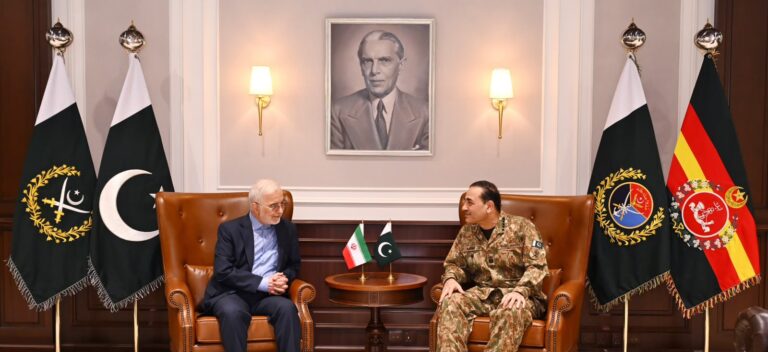
    Iranian Interior Minister Eskandar Momeni called on Field Marshal Syed Asim Munir, Chief of Army Staff and Chief of Defence Forces, at the General Headquarters (GHQ) in Rawalpindi on Tuesday to discuss regional security and bilateral cooperation. The meeting focused on issues of mutual interest, including regional security, defence cooperation and effective border management between Pakistan and Iran. Both sides exchanged views on the evolving regional security environment and stressed the importance of maintaining close coordination to address common security challenges and strengthen bilateral relations. The Iranian interior minister appreciated Pakistan’s diplomatic efforts in promoting regional peace and stability. He acknowledged the country’s role in encouraging dialogue, reducing tensions and supporting peaceful solutions to regional disputes. The two sides also underscored the importance of continued cooperation to improve border security and strengthen mechanisms aimed at preventing cross-border threats while promoting stability in the region. The meeting concluded with a shared commitment to enhancing cooperation and maintaining regular coordination in support of regional peace, security and mutual prosperity.

  • | |

    From Glasgow to the heart of UK power

    How Anas Sarwar challenged a Prime Minister, reshaped Labour politics and rose to become a UK minister Anas Sarwar’s journey from a young Scottish politician carrying the weight of a famous political surname to one of the most senior ministers in the British government has reached a defining moment. His appointment as Minister of State for Business, Innovation, Science and Trade, alongside his elevation to the House of Lords, marks one of the most significant political achievements by a British politician of Pakistani heritage in recent decades. The appointment also underlines the confidence Prime Minister Andy Burnham has placed in Sarwar, entrusting him with a department central to the government’s ambitions for economic growth, scientific research, innovation and international trade. A FAMILY THAT MADE HISTORY Politics has long been part of the Sarwar family story. Anas Sarwar is the son of Mohammad Sarwar, who made British political history in 1997 by becoming the first Muslim and the first MP of Pakistani origin elected to the House of Commons. Mohammad Sarwar later went on to serve as Governor of Punjab, Pakistan’s largest province, giving the family a unique political legacy spanning both Britain and Pakistan. Although his father’s achievements opened doors for greater representation of British Pakistanis in politics, Anas Sarwar has spent much of his career building his own political identity through perseverance, resilience and leadership. A POLITICAL CAREER BUILT ON RESILIENCE A qualified dentist by profession, Sarwar entered Parliament after winning Glasgow Central in 2010. His political career has been shaped by both success and setbacks. Following Labour’s electoral collapse in Scotland in 2015, Sarwar emerged as one of the party’s most recognisable figures during one of its darkest periods. He served as Deputy Leader of Scottish Labour before unsuccessfully contesting the party leadership. Rather than retreating from frontline politics, he rebuilt his standing within the party and was elected Leader of Scottish Labour in 2021. Tasked with reviving a party that had suffered years of decline, Sarwar focused on rebuilding Labour’s organisation, reconnecting with voters and restoring its credibility as Scotland’s principal opposition party. THE MAN WHO FIRST CHALLENGED STARMER Sarwar’s reputation as an independent political figure was cemented during Labour’s leadership crisis when he became the first senior Labour politician to publicly call for Keir Starmer to resign. At a time when many senior figures remained publicly loyal, Sarwar openly argued that Labour required a change in leadership. Political observers viewed his intervention as a turning point that encouraged wider debate within the party over Starmer’s future. In the weeks that followed, pressure on the Prime Minister intensified, ultimately culminating in Starmer’s resignation and the election of Andy Burnham as Labour leader and Prime Minister. Today, the politician who first publicly challenged Starmer has become one of the key members of Burnham’s ministerial team—an illustration of how dramatically Labour’s political landscape has changed. A KEY ROLE IN GOVERNMENT Sarwar’s appointment as Minister of State for Business, Innovation, Science and Trade places him at the centre of one of the government’s most important departments. His responsibilities will include supporting business investment, promoting innovation, advancing scientific research, strengthening Britain’s industrial strategy and expanding international trade—areas regarded as crucial to the UK’s long-term economic future. His elevation to the House of Lords enables him to take up ministerial office while bringing his tenure as Leader of Scottish Labour to an end, triggering a contest to choose his successor. POLITICAL SIGNIFICANCE Political commentators believe the appointment carries significance far beyond a routine cabinet reshuffle. For Prime Minister Andy Burnham, it brings an experienced political strategist into a department central to delivering economic growth. For Scottish Labour, it marks the departure of the leader who steadied the party during a challenging period and leaves a significant leadership vacancy. For Britain’s Pakistani community, Sarwar’s promotion represents another landmark in the growing influence of British Pakistanis at the highest levels of national politics. COLLEAGUES SEE A RESILIENT LEADER Labour colleagues have publicly described Sarwar as a disciplined and pragmatic politician who remained committed to rebuilding Scottish Labour despite difficult electoral circumstances. Political observers argue that his appointment reflects years of persistence, resilience and organisational leadership rather than a sudden political promotion. Critics, meanwhile, have questioned his move from frontline Scottish politics to the unelected House of Lords, arguing that Scottish Labour loses one of its most experienced leaders at a crucial political moment. A NEW CHAPTER Anas Sarwar now moves from leading Labour in Scotland to helping shape Britain’s economic future from the heart of government. His appointment completes a political journey that began in Glasgow, was forged through years of electoral battles and internal party struggles, and has culminated in one of the most influential ministerial positions in Westminster. From following in the footsteps of his father, Mohammad Sarwar, to becoming the first senior Labour figure to challenge Keir Starmer’s leadership and now joining Andy Burnham’s Cabinet, Anas Sarwar’s rise reflects one of the most remarkable political stories in contemporary British politics.

  • | |

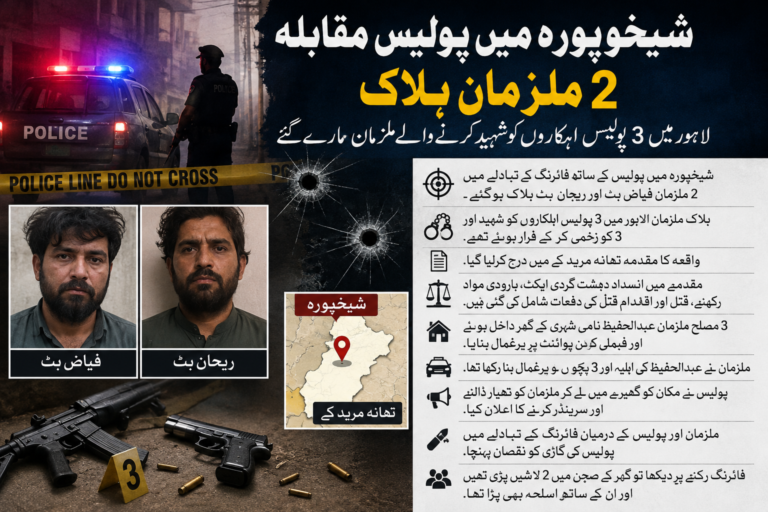
    Two suspects, who killed cops in Lahore. killed in…

      Two suspected criminals, identified as Fayyaz Butt and Rehan Butt, were killed during an exchange of fire with police in Sheikhupura. A case has been registered at Muridke Police Station in connection with the incident, according to police officials. According to the First Information Report (FIR), the two deceased suspects were allegedly involved in a previous attack in Lahore in which three police personnel were killed and three others were injured. The FIR includes charges under the Anti-Terrorism Act, possession of explosives, murder and attempted murder. The incident occurred after three armed suspects allegedly entered the house of a citizen identified as Abdul Hafeez. According to the FIR, the suspects took the family hostage at gunpoint after forcibly entering the residence. The FIR stated that Abdul Hafeez’s wife and their three children were among those held hostage by the armed men. The situation prompted police to launch an operation to secure the house and rescue the hostages. Police surrounded the house and announced that the suspects should lay down their weapons and surrender. However, according to the FIR, the suspects did not surrender and an exchange of gunfire subsequently took place between the police and the armed men. During the exchange of fire, the police vehicle was also damaged. Police personnel remained positioned around the house while attempting to control the situation and prevent the suspects from escaping. According to the details contained in the FIR, the firing eventually stopped. When police officers entered the premises and inspected the area, they found two bodies lying in the courtyard of the house. Weapons were also found near the bodies. The deceased suspects were subsequently identified as Fayyaz Butt and Rehan Butt. Police officials said the two suspects had allegedly fled from Lahore after the deadly attack on police personnel. The FIR registered in Muridke includes several serious charges, reflecting the nature of the allegations against the suspects. The charges include provisions of the Anti-Terrorism Act, along with sections relating to murder, attempted murder and possession of explosive material. The case will now form part of the investigation into the suspects’ alleged activities and their involvement in the earlier Lahore incident. The hostage situation also raised concerns regarding the safety of the family inside the residence. According to the FIR, the police operation was carried out after the armed suspects allegedly took the family members hostage and refused to surrender. The authorities are expected to investigate the circumstances surrounding the encounter, including the sequence of events leading to the exchange of fire and the deaths of the two suspects. The incident highlights the challenges faced by law enforcement agencies when dealing with armed suspects accused of serious crimes. Police personnel are required to respond quickly in such situations, particularly when civilians are being held hostage. Further details regarding the identities and alleged criminal backgrounds of the suspects, as well as the investigation into the Lahore attack, may emerge as authorities continue their inquiry. The case registered at Muridke Police Station will provide the legal basis for investigating the incident and the allegations against the deceased suspects. Police officials will also examine the weapons recovered from the scene and other available evidence to establish the exact circumstances of the encounter. Authorities have yet to provide further details regarding the condition of the hostages following the operation. The investigation is expected to determine the full sequence of events and establish the suspects’ alleged links to the earlier attack on police personnel in Lahore.

Leave a Reply

Your email address will not be published. Required fields are marked *