lpg becomes costlier
| | |

LPG becomes costlier from August

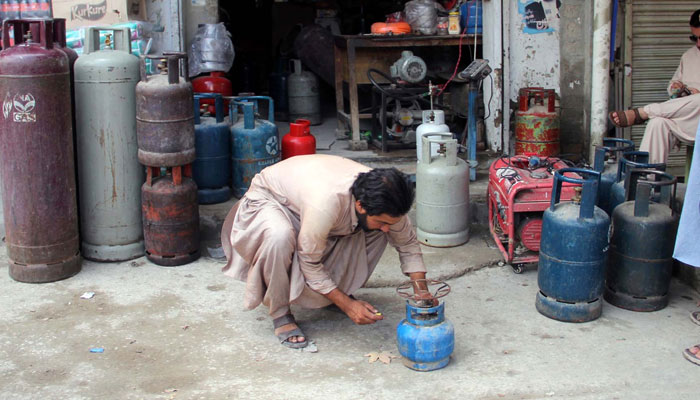
The Oil and Gas Regulatory Authority (Ogra) has increased the price of liquefied petroleum gas (LPG) for August, raising the cost for both domestic and commercial consumers across Pakistan.

According to an official notification issued by Ogra, the price of LPG has been increased by Rs12.89 per kilogram, taking the new official rate to Rs254.32 per kg for the month of August.

The regulator also revised the price of the standard 11.8-kilogram domestic LPG cylinder, which will now cost Rs3,000.92 following the latest increase.

The revised prices will come into effect for the entire month of August under Ogra’s monthly pricing mechanism.

The increase is expected to place an additional financial burden on households that rely on LPG for cooking and heating, particularly in areas without access to natural gas. Commercial users, including restaurants, hotels and small businesses that depend on LPG, are also likely to face higher operating costs.

Ogra reviews LPG prices every month based on prevailing market conditions and other relevant pricing factors before issuing revised rates through official notifications.

Consumers are expected to pay the updated prices from the beginning of August unless further revisions are announced by the regulator.

Similar Posts

  • | |

    President approves Nishan-i-Imtiaz for Strategic C…

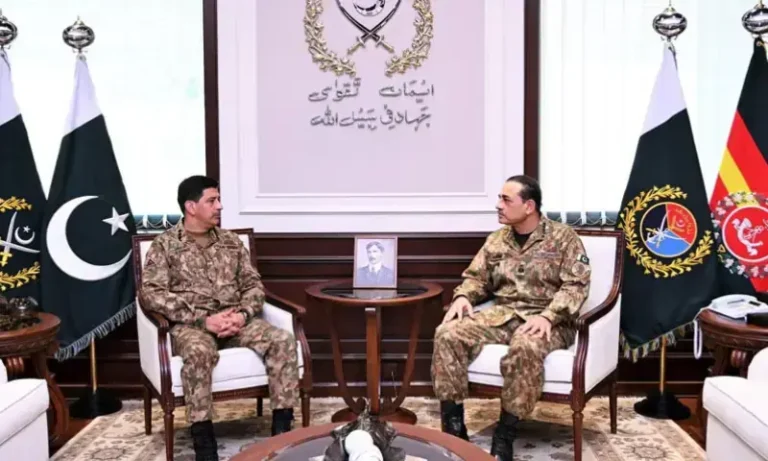
    President Asif Ali Zardari has approved the conferment of the Nishan-i-Imtiaz (Military) on General Syed Aamer Raza, the newly appointed Commander of the National Strategic Command (NSC). The announcement was made by the President’s Secretariat through a post on X, stating that the country’s highest civilian office had endorsed the prestigious military honour for General Raza in recognition of his distinguished service. General Raza has previously received the Hilal-i-Imtiaz (Military) and the Sitara-i-Basalat, reflecting a career marked by operational leadership and professional excellence. His latest recognition comes shortly after his promotion to the rank of four-star general and appointment as Pakistan’s first Commander of the National Strategic Command. The position was created as part of the sweeping reforms introduced under the 27th Constitutional Amendment, which reshaped the country’s higher defence structure. Under the new framework, the office of the Chairman Joint Chiefs of Staff Committee was abolished and replaced by the position of Chief of Defence Forces, a role currently held concurrently by Field Marshal Asim Munir as Chief of Army Staff. The National Strategic Command serves as the unified operational headquarters for Pakistan’s strategic forces, bringing together the strategic commands of the Army, Navy and Air Force under one command. Despite this restructuring, the National Command Authority, chaired by the prime minister, remains the country’s highest decision-making body on nuclear policy and strategic employment. General Raza was appointed to the post by Prime Minister Shehbaz Sharif on the recommendation of the Chief of Defence Forces. As provided under the amended Army Act, the appointment carries a three-year tenure. Before assuming his new responsibilities, General Raza served as Chief of General Staff, where he supervised key operational planning and played a central role in implementing military reforms introduced after the constitutional changes. He also oversaw organisational restructuring following last year’s conflict with India, including the establishment of the Army Rocket Force Command. Commissioned into the 6th Lancers in 1988 after graduating from the Officers Training School (OTS), General Raza has held several important command and staff appointments throughout his military career. These include commanding an armoured regiment, an armoured brigade, an infantry brigade in South Waziristan, an infantry division and Lahore’s IV Corps. He has also served as Chairman of Heavy Industries Taxila, Director General Weapons and Equipment, and Chief of Staff at II Corps.

  • Thailand Braces For Severe Weather

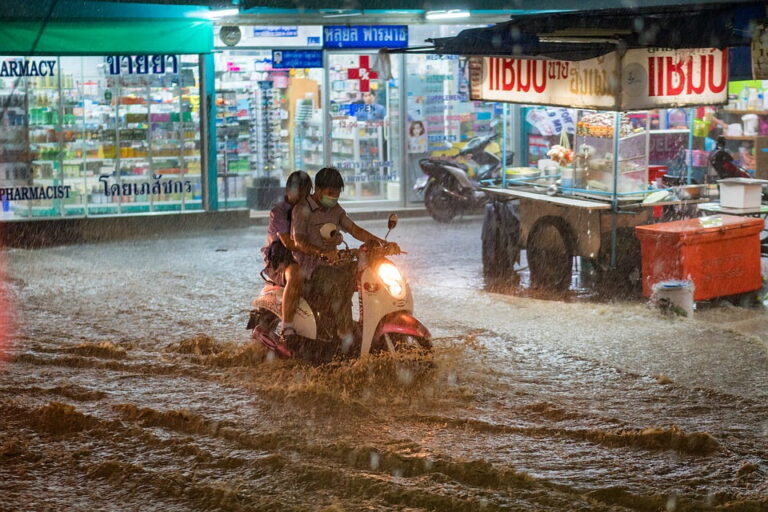
    BANGKOK, Thailand — The Thai Meteorological Department has issued severe weather warnings, forecasting very heavy rainfall across the northern and upper northeastern regions of the country, which carries a high risk of flash flooding and dangerous water runoff in several provinces. Meteorological Department Issues Storm Alert For Multiple Regions The department reported on Sunday that […]

  • Thailand and Cambodia to Hold Ceasefire Talks This Wednesday

    BANGKOK – Diplomatic efforts to halt deadly border clashes advanced as Thailand and Cambodia agreed to hold a meeting this Wednesday to negotiate a potential ceasefire. The development followed a special ASEAN foreign ministers’ meeting in Kuala Lumpur, where differing demands initially stalled an immediate truce. U.S. Hopes for Thai-Cambodian Ceasefire by Early Next Week, […]

  • | |

    Elizabeth Hurley reveals what she really thought o…

    Elizabeth Hurley has opened up about her relationship with Miley Cyrus, revealing that she admired the singer long before she began dating Miley’s father, country music star Billy Ray Cyrus. The actress shared that while she had never met Miley before her romance with Billy Ray, she already felt she knew the Grammy-winning star thanks to her son, Damian Hurley.  Speaking during an appearance on SiriusXM’s Andy Cohen Live, Hurley explained that Damian was a huge fan of Hannah Montana and Miley’s music while growing up. As a result, she became very familiar with the pop icon’s career and personality long before their families became connected. “I always knew who she was,” Hurley said, adding that her son frequently played Miley’s music and watched her videos. She joked that she had seen the music video for “Wrecking Ball” countless times because of Damian’s enthusiasm. Looking back, Hurley admitted she had a feeling she would get along with Miley if they ever met—and that prediction turned out to be true.  The Bedazzled actress described Miley as “adorable” and said she genuinely enjoys spending time with her. Hurley’s comments offer a glimpse into the positive relationship developing within the blended family since she and Billy Ray Cyrus confirmed their romance in early 2025.  Hurley and Billy Ray first crossed paths while filming the 2022 holiday movie Christmas in Paradise. Although they remained friends for some time, their relationship eventually blossomed into romance, which they made public in April 2025. Since then, the couple has frequently spoken about how much they enjoy each other’s company and the peaceful lifestyle they share between Tennessee and the English countryside.  Miley has also publicly expressed support for both of her parents finding happiness following their separation. Reports indicate that she has welcomed Hurley warmly, helping create a positive atmosphere within the extended family. Hurley and Billy Ray even attended the London premiere of Miley’s visual album in 2025, showing their support for the singer’s career.  Hurley’s heartfelt remarks suggest that her admiration for Miley began years before her romance with Billy Ray. Rather than seeing Miley only as a global superstar, the actress remembers her through the joyful memories she shared with her son. Now that their paths have crossed personally, Hurley says her first impression was right—she always believed she would like Miley, and today, she says that feeling has only grown stronger. 

  • | |

    Press freedom across South Asia

    Press freedom across South Asia faces significant structural constraints. Media environments throughout the region share a common historical legacy often relying on inherited colonial-era penal codes alongside modern cybersecurity legislation. However, the legal frameworks and regulatory instruments used to govern the press vary across neighboring countries. Comparative Analysis by Country  Pakistan Pakistan Electronic Media Regulatory Authority (PEMRA), Prevention of Electronic Crimes Act (PECA), and administrative policy frameworks like the Foreign Media Facilitation Guidelines. Media regulation in Pakistan relies heavily on administrative controls, licensing restrictions, and broad content advisories prohibiting coverage of sensitive political or national security subjects. While constitutional protections exist under Article 19, exceptions based on glory of Islam, national defense, and public order give authorities broad latitude to issue blackout orders, manage foreign correspondents’ mobility through No Objection Certificates (NOCs), and impose structural pressure on broadcast networks.  India Information Technology Rules (2021), Digital Personal Data Protection (DPDP) Act, and the Unlawful Activities Prevention Act (UAPA). While India possesses a large and diverse private media market, journalists increasingly face legal scrutiny under broad national security and anti-terror legislation. Amendments to digital media laws allow central authorities to demand the takedown of online content deemed harmful to state interests. Furthermore, criminal defamation suits and restrictions on access to conflict areas (such as Jammu & Kashmir) remain common mechanisms of regulatory pressure. Bangladesh Cyber Security Act (CSA)—which replaced the controversial Digital Security Act (DSA) and state information ministry directives. For years, non-bailable clauses in cybersecurity statutes were widely criticized by media watchdogs for chilling investigative reporting on corruption or state officials. Following recent political transitions, draft media reform policies have been introduced, though press operations remain tightly monitored during periods of political volatility and public unrest.  Sri Lanka Online Safety Act, Prevention of Terrorism Act (PTA), and Official Secrets Act. Sri Lanka’s regulatory framework expanded significantly with the passage of the Online Safety Act, which created a government-appointed commission with sweeping powers to classify online content as false statements and order its removal. Critical reporting regarding state response to economic crises or wartime history continues to face legal and physical friction in sensitive provinces. Nepal: Press Council Act and National Mass Communications Policy. Nepal consistently ranks highest in South Asia on global press freedom indices, supported by a constitution that explicitly guarantees press rights without prior restraint. However, challenges persist regarding local government transparency, criminal defamation provisions, and proposed social media regulation bills that civil society groups fear could introduce licensing hurdles for digital outlets.  Afghanistan Direct directives issued by the Ministry for the Propagation of Virtue and the Prevention of Vice and the Ministry of Information and Culture. Following the political shift in 2021, independent journalism in Afghanistan has faced near-total suppression. Women journalists are largely banned from broadcasting, international news services face widespread blocking, and all local reporting is subject to strict pre-publication censorship. Common Trends Across the Region Across South Asia, governments are increasingly shifting control from traditional print/broadcast regulators toward cybersecurity, online safety, and data protection laws to monitor digital newsrooms and independent creators. Constitutional guarantees of free speech throughout South Asia uniformly contain broad public order and national defense exceptions, which states routinely cite to enforce reporting restrictions during regional crises. Beyond direct legal action, states across the region frequently utilize non-judicial levers such as withholding state advertising funds, slow-walking accreditation, or requiring special travel permits to shape editorial stances.

Leave a Reply

Your email address will not be published. Required fields are marked *