indonesias youth reviving

Indonesia’s youth are reviving leaf weaving art

Across the tropical islands of Java and Bali, coconut and palm leaves have bound together daily life and spiritual practice for centuries. They include janur (young, pale yellow coconut fronds) and slepan (mature green fronds). These pliable natural fibers have traditionally been folded, sliced, and pinned into delicate ritual offerings. They are a part of canang sari, ornate wedding arches, and festive penjor poles that line village streets.

For decades, this intricate craft was widely viewed as a transient household chore or a necessity of ceremonial duty. It was something crafted quickly, admired briefly, and discarded once dried. As younger generations moved toward urban centers and sought modern corporate or tech jobs, the deep knowledge of palm foliage design faced the quiet threat of stagnation.

Today, a vibrant revival is underway. A new generation of Indonesian artisans, designers, and environmentalists is taking up leaf weaving. These crafties are reimagining this ancestral skill not merely as a folk tradition, but as a medium for sustainable architecture. The shift began when forward-thinking young crafters began asking a simple question.

What if the humble palm leaf could transcend its flat, two-dimensional boundaries?

Artisans such as Balinese weaver Ida Bagus Gede Ari Artana (famously known as Gus Ari) began pushing the physical limits of palm leaves. He experimented with twisting, interlacing, and tension-weaving techniques. Crafters transformed flat sheets (klangsah) into expansive 3D installations. As a result, collaborations like Make a Scene Bali, co-founded by Gus Ari and British stage designer Chloe Quinn happened. They brought international theatrical design principles into harmony with native Javanese and Balinese weaving traditions.

Instead of tiny ritual baskets, young weavers are now constructing colossal mythological creatures, archways, floating pavilion interiors, stage backdrops, and even high-fashion wearable art and jewelry crafted from dried lontar leaves. These breathtaking installations have graced international platforms. For instance, the G20 Summit held in Bali, where sustainable leaf sculptures of native sea turtles and dragons greeted world leaders. Beyond aesthetic innovation, the youth-driven resurgence of leaf weaving is rooted in environmental activism. Over recent decades, the event and hospitality industries in Southeast Asia grew increasingly dependent on single-use plastics, styrofoam, and non-recyclable synthetic decorations.

The movement to revive leaf weaving offers a completely biodegradable, zero-waste alternative. Young coconut fronds are harvested sustainably from local trees without harming the palm. The raw material is renewable, abundant, and locally sourced. Once an event or exhibition concludes, the entire installation can be composted back into the soil. The activism embodies a circular design ethos that resonates with modern eco-conscious consumers and international art curators alike.

Perhaps the most significant impact of this movement is economic and cultural. Historically, local crafters have struggled to command fair compensation for traditional foliage work because the raw material was viewed as inexpensive. Now, there’s a promotion of leaf weaving to structural art and luxury event design. Young creative studios are proving that the value resides in the artisan’s vision, precision, and hours of practiced labor. This shift has boosted local earning potential and inspired young men and women across rural communities to remain in their homelands. They are earning sustainable livings while keeping their heritage alive.

The palm frond art captures global attention. Alongside, Indonesia’s younger generation is demonstrating that tradition does not have to be frozen in a museum. Rather, it can grow, adapt, and weave a sustainable future for art and community.



Similar Posts

  • Danger signs your air conditioner needs repair

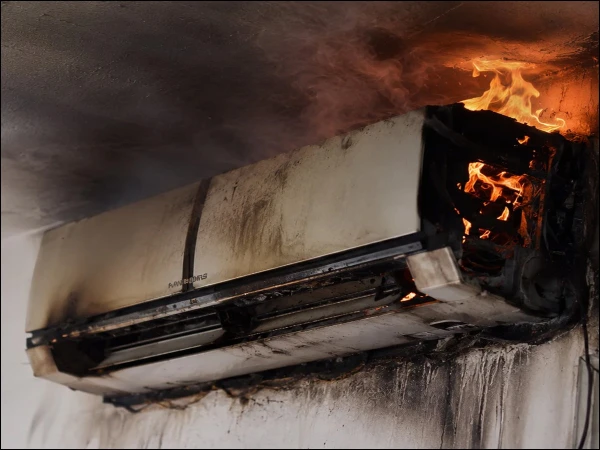
    As temperatures rise many people buy old or low cost air conditioners to save money. However experts warn that aging AC units can become dangerous if problems are ignored.  Small faults may turn into serious issues including electrical short circuits fires or costly damage. According to experts older air conditioners often develop worn out wiring damaged electrical parts faulty motors and overheating. These problems may seem minor at first but can become dangerous if they are not repaired in time. One of the biggest warning signs is a burning smell or the odor of melted plastic when the AC is switched on. Experts say this could mean the internal wiring motor or insulation has been damaged increasing the risk of fire.  If this happens turn off the unit immediately and have it checked by a qualified technician. Unusual sounds such as rattling grinding or loud noises are also signs that something is wrong. These noises may be caused by a loose part a damaged fan or a compressor problem.  Ignoring them could lead to a complete system failure. If the air conditioner becomes unusually hot while running it may indicate an electrical fault inside the unit.  Overheating can increase the risk of a short circuit or fire making immediate inspection and repair important. Experts also advise not to ignore weak cooling. Reduced cooling may be caused by low refrigerant a faulty compressor or a clogged air filter.  These issues usually mean the AC needs servicing or repairs. Another serious warning sign is seeing sparks near the voltage stabilizer or electrical wires. This may indicate loose connections or damaged wiring, which can quickly become a fire hazard if not fixed. Experts recommend turning off the air conditioner immediately if you notice any of these warning signs and contacting a qualified technician for a full inspection. Timely repairs can help prevent bigger damage and keep your home and family safe. They also advise that if an air conditioner keeps breaking down and needs frequent repairs replacing it with a newer safer and more energy efficient model may be a smarter and more cost effective choice.

  • China tests giant fusion magnet

    China has successfully tested the world’s largest fusion magnet weighing 582 tons marking a major step toward developing an “artificial sun.” The technology aims to produce clean safe and nearly unlimited energy through nuclear fusion in the future. The giant D-shaped superconducting magnet was developed by the Institute of Plasma Physics under the Chinese Academy of Sciences. It is designed to control extremely hot plasma using powerful magnetic fields which is one of the most important parts of the nuclear fusion process. The magnet measures 21 meters long and 12 meters wide and has been built for the world’s largest fusion reactor. Reports say it is about 1.3 times larger than a similar magnet used in an international fusion project and can store three times more energy. It is capable of containing plasma at temperatures of up to 100 million degrees Celsius allowing scientists to recreate the same fusion process that powers the Sun. Chinese officials said most of the materials and manufacturing were completed within China reducing the country’s reliance on foreign technology and supplies. China hopes to generate electricity from fusion energy by around 2030. Scientists say an “artificial sun” is a nuclear fusion reactor that copies the natural process used by the Sun to produce energy. If successful this technology could provide the world with a reliable source of clean and almost unlimited electricity in the future.

  • Blood treatment removes forever chemicals

    A new study suggests that a blood cleaning treatment used to lower cholesterol may also help remove harmful “forever chemicals” from the body. The treatment called apheresis is mainly used for people whose high cholesterol cannot be controlled with medication.  During the procedure blood is taken from one arm and passed through a special filter that removes excess fats. The cleaned blood is then returned to the body through the other arm. At the Technical University of Dresden in Germany, home to one of the world’s largest apheresis centers around 10,000 of these treatments are performed each year. For the study researchers examined used filter bags from the apheresis machines to see what substances had been removed along with cholesterol. They wanted to find out whether the filters could also remove harmful forever chemicals toxic substances that remain in the environment and the human body for a very long time as well as tiny plastic particles known as microplastics. The researchers say the early findings are promising. If future studies confirm these results apheresis could become a useful way to reduce the amount of certain harmful pollutants in the body in addition to lowering cholesterol.

  • The Cost of Carelessness

    Through the columns of your newspaper, I would like to draw attention to the growing problem of carelessness in our society. Many accidents and difficulties could be prevented if people and authorities took their responsibilities seriously. Careless driving, ignoring traffic rules, poor road conditions, and negligence by concerned departments are putting innocent lives at risk. People often drive at high speed, use mobile phones while driving, or ignore traffic signals. At the same time, damaged roads and a lack of proper safety measures make the situation worse. The cost of such carelessness is very high. Families lose their loved ones, people suffer injuries, and society faces unnecessary financial and emotional burdens. These problems cannot be solved unless everyone understands their responsibility. I urge the authorities to strictly enforce traffic rules, improve road conditions, and take action against negligence. Citizens should also follow safety rules and act responsibly.

  • Quitting tobacco and cutting salt may delay dementia

    Health experts say that quitting tobacco and reducing salt intake can help lower the risk of dementia, a condition associated with cognitive decline and memory loss. According to experts, these measures can help keep blood pressure within a healthy range and maintain stable blood sugar levels which may contribute to dementia prevention. A new study conducted in the United States found that if people adopt three healthy habits during middle age — maintaining normal blood pressure, keeping blood sugar levels under control and avoiding smoking — the onset of dementia could potentially be delayed by around 13 years. Researchers at New York University also found that dementia tends to develop later in women than in men regardless of their risk factors. More than 900,000 people in the United Kingdom are currently living with dementia. The condition is among the leading causes of death in the country accounting for more than 74,000 deaths every year. Most cases of dementia occur in people over the age of 65 while the risk of developing the condition approximately doubles every five years after the age of 65. However, growing scientific research suggests that dementia is not necessarily an inevitable part of ageing and that it can be prevented to a significant extent. Adopting a healthy lifestyle, such as exercising regularly, eating a balanced diet and maintaining a healthy body weight, can reduce the risk of dementia by more than 45%. A recent study by scientists at NYU Langone Health further suggests that if people maintain key health markers during middle age, they may be able to delay the onset of dementia by more than a decade.

  • |

    Robot phone launch date announced for August 12

    Beijing – A Chinese company is set to introduce what is being described as the world’s first robot phone and its unique feature is likely to surprise many people. Robots are gradually becoming part of everyday human life and now a Chinese company has announced the launch of its first robot phone. According to foreign media reports, the company will launch the phone in China on August 12. Its most distinctive feature is its camera which is not fixed like the camera on a conventional smartphone. The phone features a unique robotic camera system that can rotate while recording videos offering movements similar to those of a professional camera. In addition, a special camera module is installed on the top of the phone. It can pop out when needed and rotate in different directions. The phone’s camera system does more than simply move. It also uses artificial intelligence (AI) to automatically track a person or object in front of it. Similarly, if someone is walking or recording a video, the camera can automatically follow their movements. This can make video recording smoother and give the footage a more cinematic appearance. The Chinese company has confirmed that the robot phone will feature a triple rear-camera setup. Its primary camera will have a resolution of 200 megapixels. This means the phone will not only be capable of taking high-resolution photos but will also be able to capture better images of objects from a distance.

Leave a Reply

Your email address will not be published. Required fields are marked *