six nonlocal workers
| |

Six non-local workers killed in Kech

Six non-local workers have been killed by militants linked to Fitna al-Hindustan in the Nasirabad area of Kech district, Balochistan, according to security sources.

The sources said militants initially abducted six workers and killed another worker, identified as Javed, on July 27. The attackers later killed all six abducted workers, bringing the total number of victims in the incident to seven.

The deceased workers have been identified as Muhammad Arshad, Muhammad Taimur, Muhammad Parvez, Muhammad Wazir, Muhammad Amjad and Muhammad Yahya. According to security officials, four of the victims came from Punjab, while two belonged to Khyber Pakhtunkhwa.

The workers had reportedly been employed on development projects in Balochistan. Their deaths have raised fresh concerns about the security of workers from outside the province who travel to Balochistan for employment and infrastructure projects.

Security sources also recalled a separate incident in Mashkel, Balochistan, where militants recently killed five non-local workers. The victims in that attack were also reportedly working on development-related projects.

The latest killings come amid continued security challenges in parts of Balochistan, where militants have repeatedly targeted civilians, security personnel and workers involved in development activities. Security forces have been conducting operations against militant groups in various parts of the province.
Similar Posts

  • | |

     K-P CM denies ‘Imran Khan Rehai Force’ exist…

      Khyber-Pakhtunkhwa Chief Minister Sohail Afridi has told the Federal Constitutional Court (FCC) that no organisation called the “Imran Khan Rehai Force” has ever been formed, notified or made operational. In a statement submitted through K-P Advocate General Shah Faisal Uthmankhel, Afridi said no armed group, militant organisation, coercive structure or paramilitary setup exists or has ever been planned under that name. The statement came in response to a petition filed by Islamabad-based lawyer Malik Zaheer Ahmed through Advocate Ali Nawaz Kharal. The petition asked the court to declare any attempt to form or mobilise such a private force or militia illegal and unconstitutional under Articles 5, 17 and 256 of the Constitution and the Private Military Organisations (Abolition and Prohibition) Act, 1973. The FCC had sought Afridi’s response on April 1 and directed him to submit it within 10 days. The case will return for hearing on July 29 before a three-member FCC bench headed by Chief Justice Amin-ud-Din Khan. Afridi clarified that the initiative referred to as a “force” is actually the Imran Khan Rehai Aman Movement, which he described as a peaceful, unarmed and voluntary civic-political campaign. According to the statement, the movement seeks to raise public awareness about due process and the state’s responsibility to ensure fairness in criminal proceedings. Afridi maintained that the campaign supports the release of the PTI founder through lawful, democratic and constitutional means and has no connection with force, militancy or coercion.

  • | |

    Afridi to lead PTI march on Islamabad, says ‘no …

    HANGU: Khyber-Pakhtunkhwa Chief Minister Muhammad Sohail Afridi has announced that he will personally lead Pakistan Tehreek-e-Insaf (PTI) workers during the party’s planned long march to Islamabad on September 27, insisting that the date is final and the movement will continue until its demands are met. Speaking during a visit to Hangu on Saturday, Afridi addressed PTI gatherings at Hangu Bazaar Chowk and Abu Bakr Siddique Chowk as part of preparations for the party’s street movement. PTI provincial president Junaid Akbar Khan, provincial ministers and other party leaders and workers were also present. Afridi called on party supporters to begin full preparations for the march, saying there would be no retreat. He told workers that he would lead them to Islamabad and expressed confidence that the movement would return with success. The chief minister also criticised what he described as the failure to implement a Supreme Court directive concerning PTI founder Imran Khan’s medical treatment. Afridi claimed that a three-member bench had ordered arrangements for Khan’s treatment at Shifa International Hospital, but the directive had not been carried out despite time being granted for implementation. He accused the authorities of applying court orders selectively, alleging that decisions involving PTI and its supporters were enforced quickly while the order concerning Khan’s treatment remained unimplemented. Afridi urged the judiciary to ensure that laws and court decisions were applied equally, arguing that the country could not operate under separate standards for different groups. Turning to the economy, the chief minister claimed that Pakistan’s public debt had climbed to Rs97 trillion while inflation and financial pressures continued to affect ordinary citizens. He also alleged that industrial investment was shifting abroad and that farmers were facing increasing difficulties. Afridi portrayed Imran Khan as a unifying national figure and argued that his return would help rebuild public trust in state institutions and contribute to political stability. He also criticised government policies that he said were contributing to loss of life while benefiting a limited section of society. Appealing particularly to young Pakistanis, Afridi urged them to take an active role in the September 27 movement. He said the youth make up a major share of PTI’s supporters and argued that they should play a decisive role in determining the country’s political future.

  • | |

    Pakistan rejects India’s statements at UN securi…

      ISLAMABAD: Pakistan has strongly rejected India’s remarks at the United Nations Security Council (UNSC) concerning the Indus Waters Treaty (IWT) and allegations of terrorism, describing them as an attempt to misrepresent facts and divert attention from issues raised by Pakistan. The response came after India’s Permanent Representative to the United Nations, Ambassador Harish Parvathaneni, accused Pakistan of supporting cross-border terrorism and suggested that the issue had affected bilateral cooperation under the Indus Waters Treaty. Pakistan dismissed these allegations during the UNSC’s High-Level Open Debate on “Natural Resource Governance: The Foundation of Peace, Security and Prosperity.” Speaking in a right of reply, Pakistan’s First Secretary to the UN, Ansar Shah, said India’s statement was misleading and represented a futile effort to distort the facts surrounding the treaty and regional security issues. He maintained that the Indus Waters Treaty remains legally valid and binding, rejecting India’s claim that the agreement could be placed in abeyance through unilateral action. Shah stated that the treaty contains no provision allowing either party to suspend or set it aside on its own. He referred to the Court of Arbitration’s August 2025 award, which, according to Pakistan, reaffirmed that the treaty continues to remain fully in force along with its dispute resolution mechanisms. He argued that India’s unilateral approach violated the terms of the agreement as well as established principles of international law. Pakistan also accused India of using shared water resources as a political tool. Shah said any attempt to weaponise water for political pressure or to restrict water access would amount to a serious breach of international legal obligations and norms. He added that such actions could undermine regional stability and pose risks to international peace and security, making the issue relevant to discussions at the Security Council. Responding to India’s allegations regarding terrorism, Shah rejected the accusations and instead claimed that India was attempting to conceal its own involvement in activities that Pakistan says have contributed to terrorism within its borders. He alleged that militant groups such as the Tehreek-e-Taliban Pakistan (TTP), the Balochistan Liberation Army (BLA), and the Majeed Brigade had been responsible for attacks that claimed the lives of thousands of Pakistani civilians and security personnel, including women and children. Pakistan reiterated its long-standing allegation that India supports and finances these groups, a claim India has consistently denied. Shah also referred to reports of alleged extraterritorial operations involving India, saying such incidents had raised international concerns. He further argued that India could not portray itself solely as a victim of terrorism while ignoring accusations directed against it. Addressing the situation in Indian Illegally Occupied Jammu and Kashmir, Shah said the people of the region continue to be denied their right to self-determination. He maintained that the territory remains internationally recognised as disputed and asserted that no unilateral measures could alter its legal or historical status. He also urged India to fulfil its obligations under the UN Charter and implement relevant UN Security Council resolutions. Earlier in the debate, Pakistan’s Permanent Representative to the United Nations, Ambassador Asim Iftikhar, reaffirmed that the Indus Waters Treaty remains effective and legally binding. He called on the UN Security Council to remain vigilant against the misuse or weaponisation of natural resources and encouraged greater use of preventive diplomacy, peaceful dispute resolution, monitoring mechanisms, and other international measures to prevent disputes over shared resources from escalating into broader conflicts.

  • | |

    Security forces foil suicide attack in South Wazir…

    Pakistan security forces have foiled a suicide attack on a checkpost in South Waziristan district of Khyber Pakhtunkhwa, killing four terrorists, including the suicide bomber, the Inter-Services Public Relations (ISPR) said. According to a statement issued by the military’s media wing, terrorists attempted to attack a security forces checkpost by driving an explosives-filled vehicle toward the installation. However, the attack was stopped due to the quick and effective response of security personnel. The ISPR said that the explosives-laden vehicle was engaged and destroyed before it could reach the checkpost, killing the suicide bomber inside. The failed attack caused no damage to the security installation and no casualties were reported among security forces. Following the initial attack attempt, troops engaged other militants who tried to enter the area. According to the statement, three terrorists were forced into a nearby compound and were later killed during a targeted clearance operation carried out by security forces. The military said a sanitisation operation was also launched in the surrounding area to search for any remaining militants and ensure the security of the region. The ISPR reiterated that counter-terrorism operations under the “Azm-i-Istehkam” initiative will continue with full commitment to eliminate terrorism and prevent attacks against the country. The operation is part of ongoing efforts by security forces and law enforcement agencies to tackle militant threats. The incident comes a day after a terrorist attack on a joint police checkpost in Tank district of Khyber Pakhtunkhwa resulted in the deaths of 15 people, including security personnel. Officials said the attack highlighted the continuing security challenges faced by the province. Khyber Pakhtunkhwa has witnessed an increase in militant activities over the past year, with security forces conducting frequent operations against armed groups operating in the region. Security officials have stated that intelligence-based operations and targeted actions will continue to counter militant networks and protect civilians and security personnel. The latest operation in South Waziristan reflects the ongoing security efforts aimed at preventing attacks and maintaining stability in areas affected by terrorism.

  • |

    Govt increases petrol by Rs1.09, HSD by Rs2.42

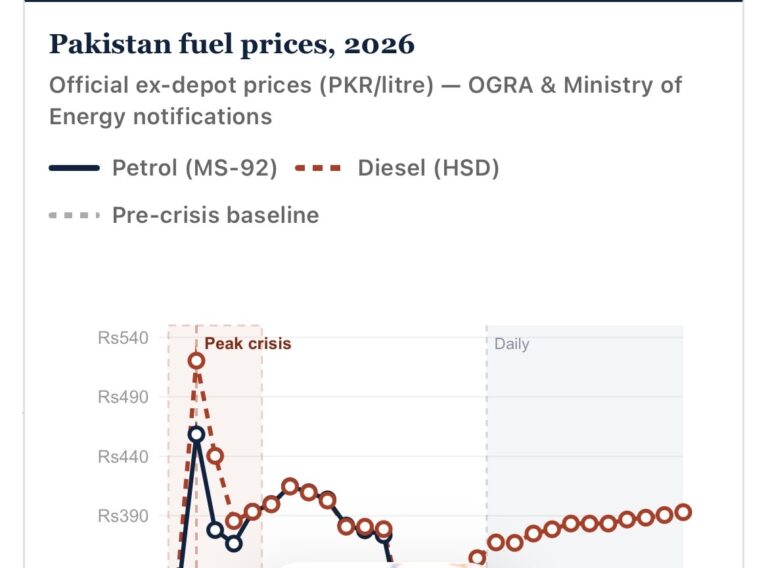
    The government on Thursday increased the prices of petrol and high-speed diesel (HSD) by Rs1.09 and Rs2.42 per litre, respectively, passing on the impact of fluctuating global oil prices amid ongoing Middle East tensions. Following the revision, petrol will retail at Rs336.15 per litre, while HSD will cost Rs393.04 per litre. The government continues to levy Rs110 per litre in taxes and duties on petrol and Rs96 per litre on diesel. The Petroleum Division’s notification said the new prices would be applicable for July 31 (Friday). The diesel price has come down from a peak of Rs520.35 recorded on April 3, after beginning its upward trajectory from Rs281 per litre when the US-Iran war broke out on February 28. Similarly, petrol had peaked at Rs458.41 on April 3 after rising from Rs266 in the first week of March. Earlier, Petroleum Minister Ali Pervaiz Malik announced that fuel prices would now be fixed on a daily basis due to fluctuations in international market prices following renewed hostilities between Iran and the US. The government had been announcing weekly revisions since early March, alongside conservation measures amid possible oil supply disruptions due to the ongoing conflict in the Middle East. In April, the federal government also announced targeted relief measures to provide subsidised fuel. The petroleum minister stated that the cabinet and the prime minister had decided to give the Oil and Gas Regulatory Authority (OGRA) the responsibility of deciding fuel prices on a daily basis based on international market trends. The daily pricing decision was rejected by the All Pakistan Dealers Association, which said it would consider a protest plan this week. Petrol is mainly used in private transport, small vehicles, rickshaws and two-wheelers, and changes in its price affect the middle and lower-middle classes. Similarly, diesel price changes impact the public at large, as it is primarily used in the heavy transport sector, power plants and large generators. Petrol and HSD are the major revenue earners, with monthly sales of about 700,000 to 800,000 tonnes, compared to just 10,000 tonnes of monthly demand for kerosene.

  • | | |

    FBR starts fiscal year strong with rs810 billion t…

    ISLAMABAD: Pakistan’s Federal Board of Revenue (FBR) kicked off the new fiscal year on a positive note by surpassing its July tax collection target, although a shortfall in income tax receipts and the government’s decision to reject a key enforcement proposal highlighted the challenges that lie ahead. According to provisional figures, the FBR collected Rs810 billion in July, exceeding its monthly target by Rs30 billion. The collection also marked a 7% increase compared to Rs757 billion collected during the same month last year. The strong performance was largely driven by robust sales tax collections, which reached Rs358 billion, surpassing the target by Rs53 billion and recording an 18% year-on-year increase. A significant 78% of total sales tax, amounting to Rs275 billion, was collected at the import stage, where tax compliance is generally higher. However, income tax collection remained below expectations. The FBR collected more than Rs300 billion in income tax, falling Rs23 billion short of the target. Analysts attributed the shortfall to advance tax collections made in June to meet last fiscal year’s revised revenue goals, along with reduced withholding tax rates for salaried individuals and property transactions introduced in the latest federal budget. Meanwhile, customs duty collection stood at Rs105 billion, matching the target, while federal excise duty generated Rs48 billion, slightly exceeding expectations. The July performance marks the beginning of a crucial fiscal year in which the government has committed to collecting Rs15.263 trillion in taxes under an agreement with the International Monetary Fund (IMF). Meeting the annual target is considered essential for securing future IMF loan disbursements and creating fiscal space for development, defence and water resource projects. The FBR also reported encouraging progress in tax compliance, receiving around 227,000 income tax returns during July after updated tax return forms became available. Additionally, the authority issued Rs98 billion in tax refunds, approximately Rs13 billion more than in the same period last year. Despite the positive revenue performance, the federal cabinet declined an FBR proposal to activate restrictions on high-value purchases by individuals with insufficient declared assets. Had the proposal been approved, it would have limited the purchase of luxury vehicles, expensive properties, large stock investments and major cash withdrawals by non-compliant taxpayers. Economic observers say the government’s ability to sustain monthly revenue growth will be closely watched, as consistent tax collection remains critical to maintaining fiscal stability and meeting commitments under Pakistan’s economic reform programme.

Leave a Reply

Your email address will not be published. Required fields are marked *