
devastating russian ballistic
|

Devastating Russian ballistic missile strikes claim lives across Ukraine following presidential warning

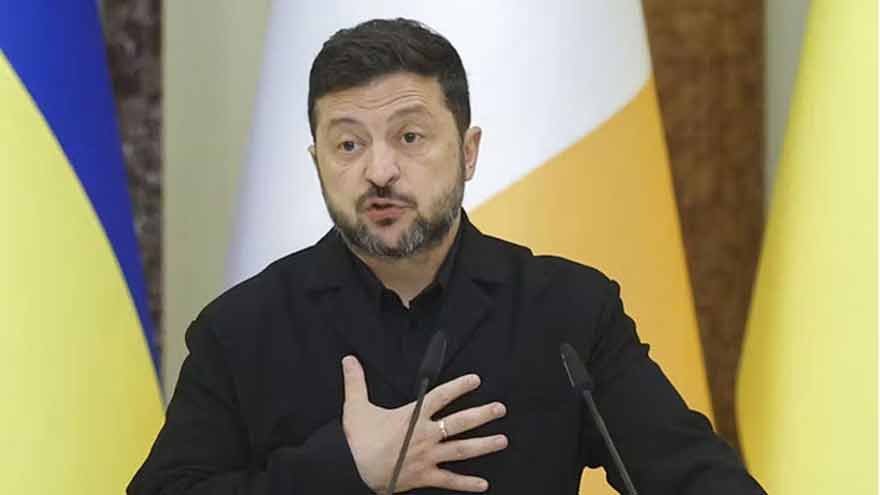
Russian forces executed a coordinated overnight barrage of ballistic missiles targeting several Ukrainian urban centres, resulting in multiple civilian casualties and extensive structural damage shortly after President Volodymyr Zelenskyy issued a national safety alert.

A direct hit from an Iskander-M ballistic missile destroyed a family home on the outskirts of Kryvyi Rih, killing six people, including two young girls aged five and twelve, and leaving at least eight others wounded.

In the capital city of Kyiv, emergency services confirmed one death alongside widespread fires across several municipal districts, whilst residential buildings in the western city of Lviv also sustained damage during the bombardment.

The severe escalation prompted neighbouring Poland to scramble fighter jets and activate ground-based air defence systems to secure its own national airspace. In response to the wave of destruction, President Zelenskyy renewed his urgent appeal to international allies for additional air defence missiles to replenish depleted stockpiles and protect civilian infrastructure.

Meanwhile, in Russia’s western Penza region, a Ukrainian retaliatory drone strike set fire to a large commercial warehouse, injuring one individual and forcing the emergency evacuation of approximately two hundred workers.

Similar Posts

  • | |

    Bar Council backs SC order on Imran’s treatment

    Eight members of the Pakistan Bar Council have criticised the federal government over what they described as a deliberate failure to comply with the Supreme Court’s order regarding the medical treatment of PTI founder Imran Khan. In a joint statement issued on Saturday, the lawyers said the Supreme Court’s August 18 directive was clear and binding. They alleged that the executive had disregarded the order by not transferring Imran Khan to Shifa International Hospital as directed. The statement was signed by PBC members including PTI Secretary General Salman Akram Raja, Abid Shahid Zuberi, Muhammad Maqsood Buttar, Shafqat Mehmood Chauhan, Munir Ahmed Kakar, Abdul Sattar Khan, Salahuddin Ahmed and Qazi Muhammad Arshad. The members argued that the executive does not have the authority to ignore a binding judicial order. They said such conduct could undermine the authority of the judiciary, weaken the rule of law and damage the constitutional system of checks and balances. They also expressed concern that ignoring a court order could put fundamental rights at risk. According to the statement, judicial orders provide an important constitutional safeguard against arbitrary actions by state institutions. The lawyers further pointed out that the Supreme Court had already addressed the consequences of non-compliance in its August 18 order. They maintained that the government was aware of its obligations under the ruling. The PBC members also rejected the argument that filing a review petition could suspend the Supreme Court’s directive. They said a review petition does not automatically stop the implementation of an existing court order. They called for those responsible for the alleged violation to be identified and for appropriate legal proceedings to be initiated against them. The statement also raised questions about the impact of recent constitutional amendments on the judiciary and the rule of law. The lawyers argued that no constitutional amendment, political consideration or executive decision could provide legal protection for ignoring a binding Supreme Court order. They further questioned whether the constitutional rights to life, health, dignity and medical treatment were being applied equally to political leaders. The controversy follows the Supreme Court’s August 18 interim order directing authorities to transfer Imran Khan to Shifa International Hospital within two days. The court had ordered his examination and treatment by a multidisciplinary medical board. The bench, headed by Justice Shahid Waheed and comprising Justice Naeem Akhtar Afghan and Justice Ishtiaq Ibrahim, was hearing petitions seeking hospitalisation, access to personal doctors and family members, and access to Imran’s medical records. The court had also directed that Dr Uzma Khan and Dr Faisal Sultan, Imran’s personal physician, be present during the medical examination. The government subsequently challenged the hospital-transfer order through a review petition. However, the Supreme Court returned the petition after raising objections over the preparation of the documents and the accompanying paper book. Security arrangements were later made around Shifa International Hospital, creating expectations that Imran would be shifted there. However, authorities subsequently took him to the Pakistan Institute of Medical Sciences for a medical examination before returning him to prison. Information Minister Attaullah Tarar said the decision was linked to security concerns allegedly created by PTI workers near the hospital. The Pims administration later said specialists from Shifa International Hospital had participated in Imran’s eye assessment, while other examinations were conducted by Pims specialists. The medical issue has been under discussion since Imran was diagnosed with right central retinal vein occlusion, an eye condition, earlier this year.

  • | |

    Olivia Culpo reveals birth plan for second baby as…

    Olivia Culpo is opening up about the realities of preparing for baby number two, offering fans an honest glimpse into her birth plan while husband Christian McCaffrey gears up for another demanding NFL season. The former Miss Universe, who is currently in her third trimester, admitted that this pregnancy feels very different from her first as she navigates motherhood alongside her husband’s football commitments.  In a recent TikTok “Get Ready With Me” video, Culpo shared that she has been feeling especially emotional as McCaffrey prepares to return to training camp with the San Francisco 49ers. While many fans associate the NFL season with September kickoffs, Culpo pointed out that players report for training camp in late July, meaning the family’s routine changes well before the regular season begins.  The 34-year-old model also revealed that she will deliver her second child via a scheduled C-section. Having undergone a cesarean delivery with her first child, daughter Colette Annalise McCaffrey, last year, Culpo explained that a vaginal birth after cesarean (VBAC) is not an option for her. As a result, she and McCaffrey carefully planned the procedure around one of the NFL star’s lighter workdays, allowing him to be present for the birth before returning to his team shortly afterward.  Although the arrangement is bittersweet, Culpo remains optimistic. She admitted that knowing McCaffrey will head back to football soon after the baby’s arrival makes this experience very different from welcoming their first child. Still, she expressed gratitude for the strong support system surrounding her, saying she is thankful for her family, friends, and those helping her through the transition.  Culpo and McCaffrey have been together since 2019 and tied the knot in June 2024. They welcomed their first daughter, Colette, in July 2025 before announcing in May 2026 that they were expecting their second child. Their pregnancy announcement, shared on Culpo’s birthday, featured heartfelt family photos and sonogram images, delighting fans across social media.  As the couple prepares to expand their family, Culpo’s candid update has resonated with many parents who understand the challenge of balancing family milestones with demanding careers. Despite the emotional adjustments ahead, she remains focused on welcoming her newest addition while celebrating the unwavering support she shares with McCaffrey, proving that teamwork extends well beyond the football field.   

  • | |

    SC orders full medical record of Imran Khan

    The Supreme Court has ordered authorities to submit the complete medical record of Pakistan Tehreek-e-Insaf founder Imran Khan and provide detailed information about his meetings with his sisters over the past three years. A three-member bench led by Justice Shahid Waheed heard petitions concerning Imran’s access to his family, personal doctors and medical records. During the hearing, the court was informed that Imran’s sisters had met him 48 times during the last three years. The judges sought the complete record of these meetings. The court also asked authorities to provide details of telephone calls between Imran and his children. Justice Shahid Waheed questioned why Islamabad High Court orders concerning meetings with Imran had not been implemented. The court summoned why  officials from Adiala Jail and directed them to explain the situation at the next hearing. The court was particularly concerned about Imran’s medical information. Justice Waheed directed the Islamabad advocate general to submit the complete medical record instead of a summary. The judge questioned why the full record could not be provided to the court. Justice Naeem Akhtar Afghan also raised questions about a recommendation for Imran to undergo angiography. He asked whether the procedure could be carried out while Imran remained in jail. The Islamabad advocate general replied that the procedure could be performed at a hospital outside the prison. Justice Waheed expressed concern over the medical reports presented before the court. He observed that the reports indicated problems with Imran’s pulse and heart and suggested that some of his vital organs could be affected. The court also discussed the importance of family meetings for Imran’s health. Justice Waheed made it clear that meetings with Imran’s sisters should not be treated as a concession. “Meeting his sisters is not a favour; it is their fundamental right,” the judge observed. Imran’s sister, Uzma Khanum, was present during the proceedings. However, Justice Afghan stopped her from addressing the court directly and advised her to speak through her lawyer. Her counsel, Uzair Bhandari, assured the court that Imran’s sisters would not hold a media briefing outside Adiala Jail after meeting him. He also requested that Imran’s personal physician, Dr Asim Yusuf, and Uzma Khanum be allowed to meet the PTI founder. The court further sought comprehensive details about the legal cases against Imran. Authorities were asked to clarify the number of cases in which he is facing trial, the cases resulting in convictions and those in which his sentences have been suspended. The proceedings came after a medical board recommended greater interaction between Imran and his immediate family. The board said regular family contact could help manage his anxiety and blood pressure. According to the medical information presented to the court, Imran has experienced fluctuating blood pressure, palpitations, headaches, restlessness and anxiety. A cardiologist at the Pakistan Institute of Medical Sciences examined him on August 1. His blood pressure was recorded at 140/100mmHg. The doctor recommended measures to reduce mental stress, including increased family interaction and access to reading material. A four-member medical board examined Imran again on August 10. His blood pressure was recorded at 140/80mmHg. The board recommended daily walking and relaxation. It also suggested more frequent interaction with his immediate family and spouse to help control his anxiety and blood pressure. The medical report stated that Imran had undergone at least 39 medical examinations since his imprisonment. Jail doctors were also reportedly checking him three times a day. The report said his ECG was normal. It also stated that his eyesight had improved significantly after treatment for an eye condition. The PTI has challenged the completeness and authenticity of the medical information. The party has demanded examinations by Imran’s personal doctors, Dr Asim Yusuf and Dr Faisal Sultan, as well as an independent medical board. The government, however, has rejected allegations that Imran is being denied proper medical care. Government officials maintain that he is receiving treatment from qualified specialists and that his medical care and meetings are being managed according to the law and court orders.

  • |

    US military faces growing strain as Iran conflict tests support for Israel

    A senior American military commander has warned that the United States could soon struggle to maintain its support for Israel while also protecting its own military interests across the Middle East. The warning reflects increasing concern inside the Pentagon that the ongoing conflict with Iran is placing heavy pressure on US naval forces and missile defence resources. According to reports from The Washington Post and other international media outlets, General Alexus Grynkewich, who leads US European Command, has told Pentagon officials that American naval assets in the region are becoming overstretched. He reportedly said that unless another US Navy destroyer is deployed, military commanders may eventually have to choose between defending American personnel and continuing missile defence operations in support of Israel. His assessment has drawn attention because it comes from one of the senior officers directly responsible for overseeing US military operations rather than from outside analysts. It suggests that the growing demands on American forces are becoming a serious concern at the highest levels of military planning. US Navy destroyers equipped with the Aegis combat system have played a major role in helping defend Israel from Iranian missile attacks. These warships are capable of detecting incoming ballistic missiles and intercepting them using advanced SM-3 and SM-6 missile systems. However, these destroyers are also critical to American security operations around the world. They are needed in the Indo-Pacific to counter China’s growing military presence, in Europe to support NATO allies, and across the Middle East to protect US military bases and key shipping routes. Sending more of these ships to one conflict reduces the military’s ability to respond quickly to other global crises. The conflict has also placed significant pressure on America’s stockpile of advanced missile defence systems. Pentagon assessments reported by The Washington Post indicate that US forces have fired more than 200 THAAD interceptors during the fighting with Iran, which is believed to be nearly half of the country’s available inventory. In addition, US Navy ships have launched more than 100 missile interceptors. Although Israel also relied on its own defence systems, including the Arrow and David’s Sling missile shields, American support proved essential during the most intense phases of the missile exchanges. Military experts say the challenge goes beyond the number of missiles used. Advanced interceptors are highly sophisticated weapons that require considerable time and resources to manufacture. Replacing depleted stockpiles cannot happen quickly, raising concerns about America’s ability to sustain long conflicts while remaining prepared for new security threats elsewhere. Defence planners have warned that prolonged military operations could leave the United States with reduced inventories of some of its most important air defence weapons. For many years, US military strategy has been based on the ability to respond to several major conflicts at the same time. The country maintains security commitments across Europe, the Middle East, and the Indo-Pacific, requiring a constant supply of military equipment and personnel. The latest warning from US European Command suggests those assumptions are now being tested as growing global tensions demand the same resources in multiple regions. An analysis by the Center for Strategic and International Studies, cited by CNN, estimates that the US has already used a large share of its advanced missile inventory in recent weeks. The report suggests that around half of the country’s THAAD and Patriot interceptors have been consumed, while substantial numbers of Precision Strike Missiles, Tomahawk cruise missiles, Joint Air-to-Surface Standoff Missiles, and SM-3 and SM-6 interceptors have also been used. The findings highlight a broader challenge facing the US military. Although it remains one of the world’s strongest armed forces, modern warfare is consuming advanced weapons at a pace that is difficult for defence industries to match. As conflicts continue across different regions, Washington may increasingly face difficult decisions about where to deploy its military resources.

  • | | |

    Tank terrorist attack: 15 martyred including 14 se…

    Khyber Pakhtunkhwa: A terrorist attack on a joint police checkpost in Khyber Pakhtunkhwa’s Tank district has resulted in the martyrdom of 15 people, including 14 security personnel, according to the Inter-Services Public Relations (ISPR). The military’s media wing said the attack took place early Friday and was carried out by militants identified as Fitna-al-Khawarij, a term used by authorities for members of the banned Tehreek-i-Taliban Pakistan (TTP). ISPR said the attackers attempted to breach the checkpost’s perimeter, but their efforts were swiftly stopped by security forces. The personnel deployed at the post responded with courage and professionalism, engaging the attackers and killing 15 militants. According to the statement, after the failed attempt to enter the checkpost, the attackers rammed an explosive-laden vehicle into the perimeter wall. The powerful blast caused severe damage to the infrastructure and resulted in the martyrdom of 15 individuals, including 12 soldiers, two police officers, and a government official from the former forest department. A sanitisation operation is currently underway in the area to locate and eliminate any remaining terrorists. ISPR said security forces and law enforcement agencies will continue counterterrorism operations under the Azm-e-Istehkam strategy to eliminate terrorism from the country. The military’s media wing paid tribute to the sacrifices of security personnel, stating that their sacrifices strengthen Pakistan’s resolve to protect the nation. The attack comes amid increased militant activity in parts of Khyber Pakhtunkhwa. Security forces have recently conducted operations in Bannu and surrounding areas, where several militants were killed during intelligence-based operations. Authorities say efforts are continuing to dismantle terrorist networks and prevent further attacks against security personnel and civilians.

  • |

    Eight Muslim nations condemn Al-Aqsa incursion

    Eight Arab and Muslim-majority countries have jointly condemned the large-scale entry of Israeli settlers and far-right political figures into the Al-Aqsa Mosque compound in occupied East Jerusalem, describing the incident as a serious provocation that threatens regional stability and religious harmony. In a joint statement, the foreign ministers of Egypt, Indonesia, Jordan, Pakistan, Qatar, Saudi Arabia, Türkiye and the United Arab Emirates expressed deep concern over the incident. They said the entry of thousands of Israeli settlers into the mosque compound, accompanied by far-right Israeli ministers and protected by Israeli security forces, violated the longstanding historical and legal status of the holy site. The ministers warned that such actions could inflame tensions, encourage extremism and undermine international efforts aimed at achieving a just and lasting peace based on a two-state solution. They stressed that the current status of Jerusalem’s religious sites must be respected and preserved. According to Palestinian officials, more than 4,200 Israeli settlers entered the Al-Aqsa compound during the Jewish religious observance of Tisha B’Av, making it one of the largest such incursions this year. Israeli National Security Minister Itamar Ben-Gvir also visited the site under heavy police protection. Palestinian authorities said Israeli security forces imposed strict restrictions on access to the mosque, preventing many Palestinian worshippers and students from entering the compound. They also alleged that several people were assaulted during the operation. The eight countries called on Israel to immediately remove restrictions on access to Al-Aqsa Mosque and respect the existing arrangements governing the site. They reaffirmed that the Islamic and Christian holy places in Jerusalem must be protected and that any unilateral measures altering their status are unacceptable. The joint statement also urged the international community to take a firm position against actions that violate the sanctity of religious sites and to press for an end to measures that could further escalate tensions in the occupied city. Al-Aqsa Mosque is one of Islam’s holiest sites and is administered by the Jerusalem Islamic Waqf under a long-standing arrangement. The compound remains one of the most sensitive religious and political flashpoints in the Israeli-Palestinian conflict, with repeated incidents at the site often triggering wider regional tensions.

Leave a Reply

Your email address will not be published. Required fields are marked *