alleged thieves fail
| |

Alleged thieves fail to steal tube well


A unique and unusual theft case has been registered in Pakistan’s Punjab province after a resident alleged that suspected thieves, who failed to steal a tube well from his agricultural land, fled the scene with his pet dog instead.

According to the police, the incident took place in Kot Addu district, where the complainant reported that unknown suspects entered his farmland during the night with the apparent intention of stealing a tube well. Tube wells are commonly used in Pakistan’s agricultural sector to pump underground water for irrigation and are considered valuable equipment by farmers.

The complainant stated that he became aware of the presence of the suspected thieves while they were attempting to carry out the theft. Upon realizing that intruders had entered his property, he reacted immediately by releasing his pet dog in an effort to chase and stop them.

However, according to the complaint filed with the police, the dog never returned after being sent after the suspects. The owner believes that the alleged thieves took the animal with them when they fled the scene after failing to steal the tube well.

The complainant expressed suspicion that the suspects, unable to accomplish their original objective, decided to take the pet dog instead. He requested the police to investigate the incident and recover the missing animal.

Police officials confirmed that a formal First Information Report (FIR) has been registered based on the complainant’s statement. Investigators have launched an inquiry into the unusual case and are working to identify the individuals allegedly involved in the incident.

Authorities said they are examining all available evidence and gathering information from the surrounding area to determine what exactly happened on the night of the alleged theft. At this stage, police have not confirmed whether the dog was actually stolen or wandered away during the chase. The investigation remains ongoing, and officials say further details will emerge once the inquiry is completed.

The incident has attracted attention because of its unusual nature. While cases involving the theft of agricultural machinery, livestock, and farm equipment are relatively common in rural parts of Pakistan, allegations involving the theft of a pet dog after an unsuccessful attempt to steal a tube well are highly uncommon.

Residents in agricultural communities often rely on watchdogs to protect their farms and livestock from theft. Such dogs are considered valuable companions and play an important role in safeguarding rural properties, especially during nighttime.

Police have appealed for any information that could help locate the missing dog and identify the suspects. Officials emphasized that the investigation will continue until all aspects of the case are examined.

The unusual complaint has sparked curiosity among local residents, but authorities have urged the public not to speculate about the incident while the investigation is in progress. Police say they will proceed in accordance with the law and take appropriate action if the allegations are supported by evidence.

Similar Posts

  • |

    Sonu Nigam admits he uses auto-tune, explains why it matters now

    Sonu Nigam has admitted to using auto-tune on some of his songs. The confession comes as a surprise, given how often the technology gets associated with less skilled singers. Speaking on the “Game Changers” podcast, the 53-year-old explained why the tool has become genuinely necessary in today’s music landscape. He didn’t shy away from addressing the topic directly. Nigam acknowledged that the rise of auto-tune has brought major changes to the industry. He said people often criticise it, but he personally believes whatever has happened has ultimately been for the good. He recalled that singers of his generation had to perform without auto-tune in earlier years. According to Nigam, that experience gave them the advantage of training their voices the traditional way, without relying on digital correction. Despite that background, he was clear about his own practices today. Nigam admitted he does use auto-tune on certain songs, depending on the requirements of the track. He explained that most modern music now follows a rigid digital pitch, unlike the live instrumentation of earlier decades. Nigam said musicians once played live sarangi and strings, which allowed some natural flexibility in vocal pitch. Now, he explained, everything is digitised and follows an exact tonal line, making raw vocals more likely to sound off. He said singers previously adjusted their voice around live musicians, but today’s productions demand more precision. Nigam did add an important caveat to his comments. He stressed that auto-tune shouldn’t be used as a way to fix the voices of people who genuinely can’t sing. He explained that the responsible use of the tool means enhancing an already strong performance, not creating one artificially. According to him, giving 99% effort and refining it to 100% with auto-tune is very different from relying on it entirely. Nigam added that many actors use auto-tune while pursuing music, which he said is completely fine for personal enjoyment. However, he made clear that trained singers still can’t be replaced by the technology. On the work front, Nigam recently lent his voice to the track “Tabassum” for Rajkumar Santoshi’s “Batwara 1947,” composed by AR Rahman and written by Javed Akhtar. The film stars Sunny Deol, Preity Zinta and Shabana Azmi in lead roles.

  • | |

    Russia and Ukraine trade overnight strikes as thre…

    Russia and Ukraine launched a fresh wave of overnight strikes against each other on Saturday, leaving three people dead and ten injured across multiple regions on both sides of the border, according to officials from both countries. Kyiv suburb bears the brunt of Russian strikes Three people died and three others suffered injuries when Russian forces struck three separate locations in the Brovary district on the outskirts of Kyiv, said Tymur Tkachenko, head of the Kyiv City Military Administration, in a statement posted on Telegram. Falling debris from the strikes damaged a private residential building along with several outbuildings and parked cars, while a fire broke out at a nonresidential structure in the area, Tkachenko said. Emergency crews rushed to the scene to contain the damage and assist residents. “Rescuers and all necessary services are working on the ground,” Tkachenko said. “The elimination of the consequences is ongoing.” Russia’s Defence Ministry confirmed carrying out the strike on the Ukrainian capital, stating on Telegram that its forces had targeted a military-industrial facility along with a fuel and lubricants depot located in Kyiv. The ministry additionally claimed that two dry cargo ships, which it alleged were transporting weapons and military equipment bound for Ukrainian ports, came under attack from drones while passing through waters south and east of the port city of Odesa. Russian regions report drone damage and injuries On the Russian side, five people sustained injuries and a fire erupted at the Ilsky Oil Refinery in the Krasnodar region after debris from a downed drone fell onto the facility, regional authorities reported. The Krasnodar Operational Headquarters said on Telegram that the injured were receiving all necessary medical care while emergency and special services worked at the scene. Separately, two people were injured when a drone crashed in the Russian city of Zadonsk, according to Lipetsk Governor Igor Artamonov, who posted details of the incident on Telegram. The crash damaged four private homes, a vehicle and a power line, Artamonov said, adding that power workers had already begun restoration efforts in the affected area. In the Samara region further east, one of the area’s industrial enterprises came under attack from a Ukrainian drone, said regional Governor Vyacheslav Fedorishchev in a post on the Russian social media platform Max. Fedorishchev said authorities were currently working to address the aftermath of the strike but did not immediately provide further details on the extent of the damage. Moscow claims mass drone interception Russia’s Defence Ministry also announced that its air defence systems had shot down and destroyed 397 Ukrainian drones over the course of the strikes, with the interceptions occurring over Russian territory, annexed Crimea and the Sea of Azov. Independent verification of the claims made by both Moscow and Kyiv remains difficult given the ongoing conflict, and neither side’s figures on damage, casualties or intercepted drones could be confirmed through independent sources. Latest strikes reflect continuing pattern of cross-border attacks The overnight exchange adds to a long running pattern of tit-for-tat strikes between the two countries, with Ukraine frequently targeting Russian energy infrastructure, including refineries deep inside Russian territory, while Russia continues to strike Ukrainian cities and industrial sites. Both countries have increasingly relied on long-range drones to strike targets far from the front line, a tactic that has expanded the geographic scope of the war well beyond the immediate combat zones in eastern and southern Ukraine. The strikes come as diplomatic efforts to end the war have shown little sign of producing a breakthrough, with both Moscow and Kyiv continuing large-scale military operations even as international mediators push for a negotiated settlement. Attacks on energy facilities, in particular, have become a recurring feature of the conflict, with both sides accusing the other of deliberately targeting civilian infrastructure and disrupting fuel supplies ahead of the winter months. As the war grinds on, Saturday’s strikes underscore the continued volatility along multiple fronts, from Kyiv’s outskirts to refineries deep inside Russian territory, with civilians on both sides bearing the brunt of the ongoing hostilities.

  • |

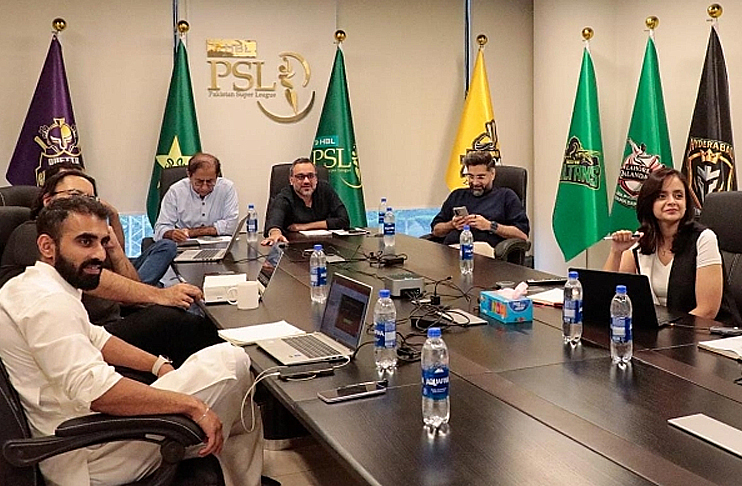
    PSL wraps up season 11 review, sets sights on edition 12

    The Pakistan Super League management met with all eight franchise owners this week and the purpose behind it was simple. They wanted to review how season 11 went, and to look ahead at what comes next. PCB Chairman Mohsin Naqvi led the session. Several key officials joined him. These included PSL CEO Salman Naseer and PCB CFO Javed Murtaza. PSL Director Usman Wahla was also present. So were Senior Manager Hijab Zahid and Manager Operations Usman Tasleem, along with a few others. The meeting was not just about looking back. It also became a space for brainstorming. Officials discussed several off-season and pre-season activities. The goal is to keep fans engaged during the break. A big part of the discussion focused on what made season 11 special. Officials pointed to new additions in broadcast and fan engagement. They also praised the overall quality of cricket across all 44 matches. Viewership numbers came up too. The season saw strong engagement across social media, streaming platforms and television. More specific numbers are expected to be released soon. Planning for the future took up a large chunk of the meeting as well. Stakeholders discussed the playing window for PSL 12. They also touched on early scheduling ideas. However, full details will likely only be revealed after the PSL Governing Council meets in late August. The group also reflected on how far the league has come. Two new franchises joined this season. At the same time, three existing teams changed ownership. The tournament was held at just two venues this year, a decision made under unusual circumstances. It also ran in a new scheduling window for the second year running. Looking ahead, PSL confirmed a new initiative. It plans to launch a merchandise platform alongside the franchises. This will let fans, both at home and abroad, buy official gear. That includes merchandise from all eight participating teams. To keep the momentum going, more workshop sessions have now been planned. These will focus on finalising the schedule. Player retentions and direct signings will also be discussed. So will a fresh review of playing conditions for the next season. With season 11 now wrapped up, all eyes are already on what comes next. Officials say the goal is to build on this year’s success. The aim is to make PSL 12 an even bigger draw for fans everywhere.

  • | | |

    One missed bill enough for Lesco to pull the plug?…

    The month of July brings heat and humidity to Lahore. It also brings frequent power cuts, mainly from weather related issues. When it rains, and the atmosphere is muggy, power breakdown occurs and people expect that power will return soon after it goes. But there is a different kind of fear. This fear grows when a house sits dark while every other house on the street still has light. This means the power meter has been disconnected. Recent reports say that field staff of the Lahore Electric Supply Company (LESCO), have been harassing consumers. These reports say that officials are disconnecting power for people who have missed just one month of bill payment. This goes against the normal rule. Under the normal rule, a meter can only be disconnected after two months of non-payment. LESCO spokesperson Rabia Qadir has denied these reports. She said the company has not received any complaint about this issue. She said that rules made by the National Electric Power Regulatory Authority (Nepra), protect the rights and safety of consumers. Under these rules, a meter cannot be disconnected simply because one month of bill payment was missed. She also said that Lesco has not received any formal complaint against any sub-divisional officer, executive engineer, or lineman of any of its circle regarding such incidents. However, she said that some linemen may try to scare or pressure consumers. These linemen may threaten to disconnect a meter if the consumer does not pay the outstanding bill right away. She said this could happen in some cases and this was not the company’s policy. But she stressed that Lesco has a consumer complaint cell. All complaints are recorded there. She said that according to these records, no such complaint has come in. The situation on the ground appears more complicated. This reporter visited the consumer cell at the office of the Lesco chief officer. Several consumers were present there. Their complaints were about different issues. Some wanted correction of industrial bills. Others reported broken meters. When asked about the reports of meters being cut for a single month of default, one officer gave an important detail. They said this practice usually happens in June or July. They said the ministry gives instructions during these months to speed up bill recovery. The goal is to reduce financial losses. Staff at the office suggested that a proper response should come from Lesco Chief Executive Officer Ramzan Butt or his public relations office. However, the public relations office said that Ramzan Butt was in Islamabad for a meeting at the time. This problem is not limited to LESCO areas. Similar reports have come from areas covered by the Multan Electric Power Company. In Muzaffargarh, consumers who missed one month of payment received strict warnings from field staff. These staff members told consumers to avoid another default. If they defaulted again, they were told, their meters would be disconnected. According to the rules, a power connection cannot be cut through meter removal unless bills for both the current and the previous month remain unpaid. Yet for several months now, Lesco teams have continued cutting connections even when only one month of payment was missing. Other than power severe threats, the other main issue people face is take notice of a major problem in the new electricity bill format. The Pakistan Hosiery Manufacturers and Exporters Association in a letter to the prime minister said the revised bill has removed a lot of information that consumers used to see. He said this makes it hard for people to check their meter readings, units consumed, tariff calculations and other charges on their own. They say the changes seem to have been made without following the proper process set by the National Electric Power Regulatory Authority, known as NEPRA. No formal request for changing the bill format was filed with NEPRA and that consumers were never asked for their objections, nor were they given a chance to take part in a public hearing before the change was made. They say that bills are supposed to show the date when the connection or meter was installed, but this information is now missing. The removal of the meter reading snapshot is a serious problem, because consumers can no longer check if the reading used for their bill matches the actual reading at their home. Also, information about the meter reader, along with the date and time of the reading, has also disappeared. They say that when a meter is changed, the bill should show a snapshot of the final reading from the old meter, but distribution companies are not properly doing this. The new bills carry a QR code instead, but this cannot replace information that should be clearly printed on the bill itself. Many senior citizens, people living in rural areas, and low income households may not have smartphones or the internet access needed to scan a QR code. Economist and corporate lawyer Dr Ikramul Haq commented on this situation. He said that the conduct of power distribution companies is not simply a small technical mistake. He called it as a form of pressure against ordinary citizens. These citizens are already struggling with rising prices, high electricity rates, and falling purchasing power. He said that reports of field teams arriving at homes, treating consumers badly, and threatening immediate disconnection show the real human cost of this careless approach. He added that in some cases, meters were removed without any prior notice being given. Dr said explained that the legal position on this matter is very clear. Under the revised Consumer Service Manual issued by Nepra, electricity cannot be disconnected only because the bill for the current or previous month remains unpaid. A notice of seven days must be given along with the bill for the second month of default. Only after this notice period passes, and the default continues, can disconnection take place. He said that removing a meter involves even more safeguards under the rules. He

  • | |

    Three accused in doctor Akash murder case eliminat…

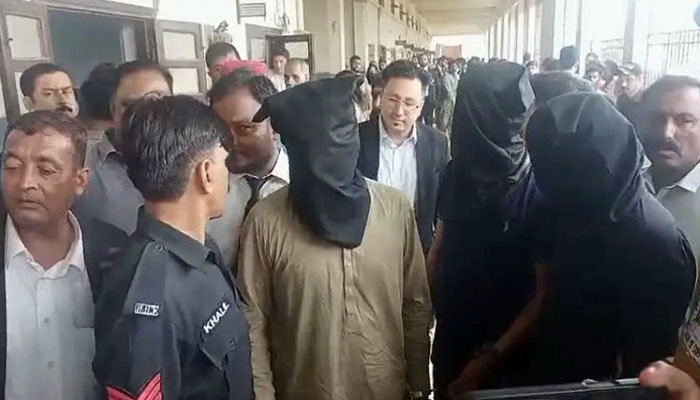
    Three suspects arrested in the murder case of young doctor Akash were killed during a police operation in Karachi after an alleged exchange of fire between law enforcement officials and criminal suspects. According to the Special Investigation Unit (SIU), the incident took place in Umar Brohi Goth area of Gulshan-e-Maymar. Police officials said the arrested suspects had provided information about their escaped accomplices, following which a raid was carried out to arrest the remaining members of the group. During the operation, the alleged criminals opened fire on police teams. Officials said a police officer was also injured in the firing. The SIU claimed that the three suspects already arrested in connection with Dr Akash’s murder were killed after being hit by bullets fired by their own accomplices during the clash. The case relates to a robbery incident in Karachi’s Clifton area on July 13. Dr Akash was killed when armed suspects opened fire outside a bank during a cash-snatching attempt. Police said the suspects had targeted people carrying large amounts of cash. During the incident, the criminals allegedly took away Rs25 million from a total amount of Rs50 million withdrawn from the bank. Investigators later found that the suspects arrested in the case were allegedly involved in other criminal activities, including robberies outside banks and attacks on traders in Karachi. The police investigation also revealed the possible involvement of an unidentified woman in the robbery case. Officials said further investigation was being carried out to determine her role and identify other members of the criminal network. Authorities said efforts are continuing to trace the remaining suspects linked to the gang. The police have vowed to take action against individuals involved in organised street crimes and cash robbery incidents across the city.

  • |

    Sonu Nigam explains why he will not discuss NEET protests publicly

    Sonu Nigam has addressed his decision to stay silent on the NEET protests, after a video of his reaction went viral online. The clip had sparked mixed reactions among fans and critics alike. Back in July, a video circulated showing Nigam being asked about the ongoing student protests during a media interaction. He appeared visibly uncomfortable, responding briefly before stepping away from the question entirely. The moment triggered widespread discussion on social media, with some users questioning why he chose not to comment. Nigam has now clarified his reasoning in a new interview with Bombay Times. He explained that every discussion has its own appropriate time and setting. According to Nigam, he has followed one clear rule throughout his career, staying focused strictly on the purpose of whatever event he’s attending. He said that after three decades of working in Mumbai, he’s learned to always stick to the agenda of a given occasion. Nigam added that he avoids letting conversations drift toward unrelated topics during press interactions. At the time of the viral video, Nigam was attending an event honouring the late singer Pankaj Udhas. He felt discussing an unrelated political issue there would have been inappropriate given the occasion’s purpose. He said bringing up politics during a tribute dedicated to his mentor felt disrespectful to him personally. For Nigam, staying on-topic was not avoidance, but a matter of basic professional etiquette. Nigam also revealed a personal commitment he’s made regarding public commentary. He said he promised his father he would never comment on issues he doesn’t fully understand or have proper knowledge of. He clarified that this does not mean he avoids speaking up altogether. Nigam pointed to past instances where he’s taken clear public stances, including issues like loudspeaker regulations at religious sites and royalty rights for performing artists. He said he has taken plenty of stands throughout his career and has played a role in pushing for real systemic changes. Nigam maintained that silence on one particular issue doesn’t reflect indifference, but rather a conscious choice about when and where to speak. Reactions to his explanation have remained divided, with some praising his restraint and others still critical of his initial response.

Leave a Reply

Your email address will not be published. Required fields are marked *