mh370 families renew
|

MH370 families renew search for answers as Beijing court hears appeal

Twelve years after Malaysia Airlines Flight MH370 disappeared without a trace, relatives of Chinese passengers returned to a Beijing court seeking answers they say they have been denied for more than a decade. The families insist that financial compensation alone cannot resolve their pain and are urging the court to focus on establishing the truth behind one of aviation’s greatest unsolved mysteries.

The appeal comes after a Beijing court ruled in December that Malaysia Airlines should pay compensation of 2.9 million yuan to each of eight Chinese families. While the ruling acknowledged their loss, two families challenged the decision, arguing that it failed to address the airline’s responsibility or explain what happened to the aircraft and the 239 people on board.

Flight MH370, a Boeing 777 travelling from Kuala Lumpur to Beijing on March 8, 2014, disappeared from radar with 239 passengers and crew members. Nearly two thirds of those on board were Chinese nationals. Despite years of international search operations across the Indian Ocean, investigators have never located the aircraft’s main wreckage or recovered its flight recorders, leaving the fate of those on board unknown.

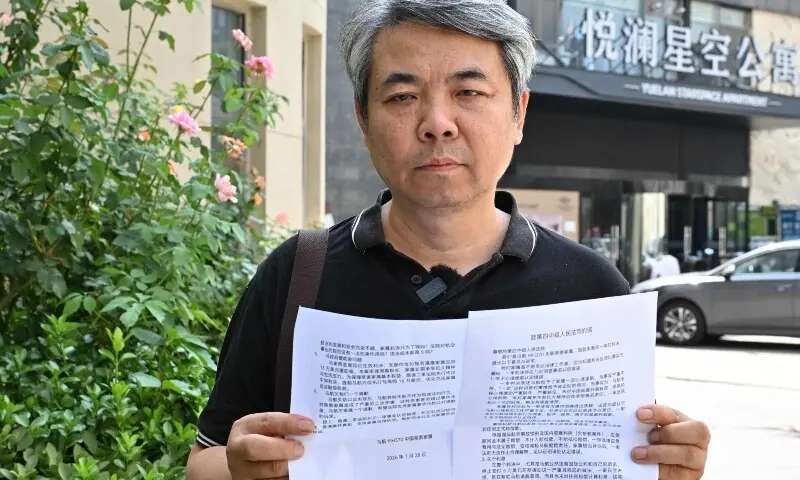
The latest court hearing in Beijing was held behind closed doors, but family members gathered outside to express their frustration. Li Eryou, whose son was among the passengers, said the original court ruling left him feeling insulted because it focused only on financial compensation while ignoring the deeper questions surrounding the disappearance.

Li said no one had apologized to the families during the past 12 years and argued that the case deserved to be treated as an international tragedy rather than a routine legal dispute. He believes the compensation awarded by the lower court does not reflect the seriousness of the disaster or the emotional suffering experienced by relatives who continue to live without closure.

Over the years, aviation experts have proposed several possible explanations for the disappearance. Theories have included deliberate actions by the pilot, hijacking, a missile strike or a technical failure. Another widely discussed possibility suggests that a fire involving electronic equipment may have filled the cabin with smoke, causing everyone on board to lose consciousness before the aircraft continued flying on autopilot until it ran out of fuel and crashed into the Indian Ocean.

However, none of these theories has been confirmed because investigators have never recovered enough evidence to determine exactly what happened. The absence of definitive findings has continued to fuel uncertainty and speculation, leaving many families convinced that important questions remain unanswered.

Jiang Hui, whose mother was on the missing aircraft, said the appeal is not primarily about receiving more money. Instead, he said the families want the court to establish the facts surrounding the case and examine whether Malaysia Airlines responded appropriately after the aircraft disappeared. According to Jiang, determining responsibility and uncovering the truth are far more important than the compensation itself.

People from 14 different countries were on board Flight MH370, including 50 Malaysian passengers and crew members. While legal proceedings continue in China, there are currently no similar cases pending against the airline in Malaysia.

Last month, the Malaysian government announced that the search for MH370 would continue until June next year. The renewed operation is being carried out by private exploration company Ocean Infinity, which has previously led several unsuccessful search missions in the southern Indian Ocean. Although earlier efforts failed to locate the aircraft, relatives remain hopeful that new technology and expanded search areas could finally provide long awaited answers.

Jiang welcomed Malaysia’s decision to extend the search and urged authorities to allow families to organize their own independent search missions alongside official efforts. For many relatives, discovering what happened to Flight MH370 remains their greatest priority, believing that only the truth can finally bring closure after more than a decade of uncertainty.

Similar Posts

  • | |

    Pakistan exports rise 13.1% to $3.94 billion in Ju…

    ISLAMABAD: Pakistan’s exports of goods and services rose by 13.1 percent year-on-year to $3.94 billion in July 2026, providing an encouraging start to the new fiscal year and signalling continued improvement in the country’s external sector. Federal Minister for Planning, Development and Special Initiatives Ahsan Iqbal shared the figures on Saturday while presenting the Monthly Development Update for August 2026. He said exports stood at $3.48 billion in July 2025, meaning the latest increase reflects stronger performance across several major export categories. According to the minister, merchandise exports increased by 9.4 percent to around $3 billion in July 2026 from $2.8 billion a year earlier. When services exports are included, the combined figure reached approximately $3.9 billion, compared with $3.5 billion in July last year. Key export sectors show growth Ahsan Iqbal said the improvement in exports was supported by higher shipments across several important sectors. Surgical goods recorded the strongest growth among the highlighted export groups, increasing by 16.3 percent. Food exports rose by 8 percent, while leather goods registered growth of 7.8 percent. Textile exports, one of Pakistan’s largest sources of foreign exchange, also increased by 3.9 percent during the month. The minister said the figures indicated that Pakistan’s external sector had started the new fiscal year on a positive trajectory, although maintaining this momentum would require continued reforms, improved competitiveness and greater diversification of export products and markets. Manufacturing sector stages strong recovery The positive external-sector performance coincided with a broad-based recovery in domestic industrial activity. According to Ahsan, Large-Scale Manufacturing (LSM) expanded by 5 percent during fiscal year 2025-26, reversing a 0.74 percent contraction recorded in the preceding fiscal year. He said the recovery was spread across the industrial sector, with 16 of the 22 LSM sectors registering positive growth. The automobile sector posted the highest increase at 57.8 percent, followed by transport equipment at 42.4 percent. Electrical equipment production grew by 14.3 percent, tobacco by 12.6 percent and food manufacturing by 7 percent. The figures, he said, reflected an improvement in industrial activity and could provide support to investment, employment and overall economic growth if the recovery remains sustained. FBR collection, remittances improve The government also reported improvement in tax revenues at the beginning of FY2026-27. Federal Board of Revenue tax collection increased by 8.4 percent to Rs820.9 billion in July 2026, according to the minister. He said stronger revenue mobilisation, together with fiscal discipline, was helping improve the country’s overall financial position. Workers’ remittances also remained a major source of support for Pakistan’s external account. Remittance inflows reached $3.63 billion in July 2026, up 13 percent from approximately $3.2 billion in the same month of 2025. Ahsan said the latest increase followed record remittances of $41.6 billion received during the previous fiscal year. He noted that remittances not only strengthened Pakistan’s foreign exchange position but also provided direct financial support to millions of households across the country. Current account deficit remains contained Despite continued pressure on the external account, the current account deficit remained relatively contained. The deficit stood at $328 million in July 2026, compared with $529 million during the same month of the previous year. The minister described the development as another indication of improved external-sector stability. He also highlighted the growing contribution of Pakistan’s technology sector. Information and Communication Technology exports reached $417 million in July 2026, underlining the increasing role of digital services in generating foreign exchange. The government has been seeking to expand technology exports as part of a broader strategy to diversify Pakistan’s sources of external earnings beyond traditional sectors such as textiles and agricultural products. Inflation moderates Ahsan Iqbal also pointed to a moderation in consumer price pressures at the start of the new fiscal year. Consumer Price Index inflation eased to 9.2 percent in July 2026, compared with 11.7 percent in May 2026. The minister said the decline suggested that inflationary pressures were beginning to moderate. He added that changes in the year-on-year inflation rate were also influenced by base effects as well as the impact of international food and energy prices. The government is aiming to maintain price stability while supporting economic activity and protecting the purchasing power of households. Fiscal position strengthens The planning minister said Pakistan’s fiscal position had also improved significantly during FY2025-26. The fiscal deficit narrowed to 2.6 percent of GDP from 5.4 percent in FY2024-25. According to Ahsan, this represented the lowest fiscal deficit recorded in two decades. He said stronger fiscal management would remain essential during FY2026-27 as the government seeks to maintain macroeconomic stability while creating room for development spending and economic expansion. Development spending and job creation Public investment is another major component of the government’s economic strategy. Projects approved during July 2026 are expected to create around 7,851 direct jobs and 14,053 indirect employment opportunities across different sectors. The minister said employment generation would remain an important objective of development planning, particularly as the country seeks to create greater opportunities for its young population. He said Pakistan had undergone a difficult period of economic adjustment and that the stability achieved in recent years had required significant effort. Under the government’s URAAN Pakistan initiative, the next phase would focus on converting macroeconomic stability into long-term economic transformation, with exports positioned as a key driver of growth. According to Ahsan, higher exports could help generate employment, increase household incomes, expand opportunities for young people and improve living standards. Rs211.3 billion authorised for development projects The Ministry of Planning authorised Rs211.327 billion, equivalent to 21.1 percent of the relevant allocation, during July 2026 to facilitate timely financing for priority development projects. The minister said the move was aimed at ensuring that strategically important schemes received funding without unnecessary delays. During July, the Central Development Working Party (CDWP) also reviewed a number of development proposals. It approved nine projects, three position papers and one concept clearance proposal, while nine projects were recommended for consideration by the Executive Committee of the National Economic Council (ECNEC). Three projects were deferred, while

  • | |

    Quranic moments steal spotlight in dramas

    Acclaimed Pakistani writer Umera Ahmed is once again receiving widespread appreciation from television audiences as her latest dramas have drawn praise for incorporating Quranic recitation and Islamic values into their storylines. Known for blending spirituality with emotional storytelling, Umera Ahmed has returned to television with new projects that have quickly captured viewers’ attention. Audiences have particularly appreciated the way faith has been woven naturally into the narratives. In one of the dramas, the opening scene features a character reciting verses from the Holy Quran, setting a reflective and spiritual tone for the story. In another production, a character asks her mother to recite Surah Ar-Rahman, believing that listening to the Quran will bring comfort and peace during a difficult emotional period. These scenes have resonated strongly with viewers, many of whom praised the meaningful portrayal of Islamic teachings in mainstream entertainment. Social media platforms were filled with positive reactions, with users describing the moments as touching, inspiring and emotionally powerful. Several viewers said the Quranic recitation added depth to the stories and distinguished the dramas from conventional television productions. Others commented that such scenes encouraged positive values while remaining relevant to modern audiences. Fans also appreciated Umera Ahmed’s consistent approach to writing stories that explore faith, morality, patience and personal growth. Many described her work as a refreshing alternative that combines strong storytelling with meaningful religious themes. The positive response reflects growing appreciation among audiences for television content that addresses spiritual and ethical values without compromising on entertainment. Viewers expressed hope that more writers and producers would include similar themes in future productions.

  • | |

    NDMA issues flood alert until July 24

    Islamabad: Pakistan’s National Disaster Management Authority (NDMA) has issued a nationwide flood and landslide alert until July 24, warning residents of possible flash floods, rising river levels, and dangerous weather conditions caused by ongoing monsoon rains. According to the NDMA spokesperson, heavy rainfall is expected to increase water flow in rivers, seasonal streams, and mountain channels across several parts of the country. Authorities have advised the public to avoid unnecessary travel, stay away from flood-prone areas, and follow official safety instructions. The alert highlights a significant risk of flash flooding in Gilgit-Baltistan, particularly in the districts of Hunza, Shigar, and Ghanche. Rivers including Shimshal, Hunza, Chapursan, Shigar, Shyok, and Hushe are expected to experience a rapid rise in water levels. In Azad Jammu and Kashmir (AJK), water levels may increase in the Jhelum, Neelum, Poonch, and Mahl rivers, as well as Betar Nullah, Bhimber Nullah, Kanshi River, and several tributaries connected to the Jhelum and Poonch river systems. The NDMA has also warned of possible flash floods in Khyber Pakhtunkhwa, affecting the Chitral, Kabul, Swat, and Panjkora rivers. Local streams in Khyber, Kurram, Orakzai, Kohat, Bannu, Karak, Hangu, Lakki Marwat, North and South Waziristan, Bajaur, Mohmand, Mansehra, Buner, and Swabi are also at risk due to intense monsoon rainfall. In Punjab, flood threats remain high in the hill torrents of Dera Ghazi Khan, the Soan River, and the Potohar region. Similar conditions are expected in northeastern Balochistan. The NDMA further warned of high-level flooding in the Chenab River near Marala and the upper reaches of the Jhelum River near Mangla. Several seasonal streams, including Dora, Dota, Dwara, Bhimber, Halsey, Aik, Plakhoo, Bein, Basantar, Dek, and Sukhi Nullah, may also experience sudden increases in water flow. The authority also noted that any release of water from India’s Thein, Pong, and Bhakra dams could significantly increase water levels in the Ravi and Sutlej rivers, potentially worsening flood conditions downstream. The NDMA has urged citizens to stay informed through official weather updates, avoid crossing flooded roads or streams, and cooperate with local authorities to ensure public safety during the ongoing monsoon season. This version is optimized for search engines while remaining clear, informat

  • |

    Bangladesh make history, overtake India in WTC table

    DARWIN: Bangladesh’s stunning nine-wicket victory over Australia in Darwin has not only delivered a landmark moment for the team but also lifted them above India in the ICC World Test Championship 2025-27 standings. Bangladesh secured their first-ever Test victory over Australia, doing so on Australian soil in a result that sent a strong message across the Test cricket world. The win also produced a significant shift in the World Test Championship points table. Australia remain at the top despite suffering their second defeat of the current cycle, holding a points percentage of 77.78. South Africa are second with 75 per cent, while New Zealand sit third on 72.22 per cent. Bangladesh have now climbed to fourth place with an impressive 66.67 per cent, moving ahead of India, who are fifth with 48.15 per cent. The result gives Bangladesh an important boost as they continue their WTC campaign and adds even greater significance to their historic success in Darwin. Sri Lanka occupy sixth position with 41.67 per cent, followed by England on 24.36 per cent. Pakistan are eighth with 22.22 per cent, while the West Indies remain ninth on 20.83 per cent. For Bangladesh, the victory represents more than just two points or a rise in the rankings. It marks their first Test triumph against Australia and could become one of the defining results of their current World Test Championship campaign. WTC Standings Details Bangladesh Position: 4th place Bangladesh Points Percentage: 66.67% (3 wins from 5 matches) India Position: 5th place India Points Percentage: 48.15% (4 wins from 9 Tests) Historic Milestone: Marked Bangladesh’s first Test win on Australian soil.

  • | |

    Israeli court halts Ben-Gvir plan to place crocodi…

    An Israeli court has temporarily blocked National Security Minister Itamar Ben-Gvir’s plan to install crocodiles around Ketziot Prison in southern Israel’s Negev desert, where Palestinian detainees from Gaza are being held, according to Israeli media reports on Monday. Israeli authorities had already begun digging trenches around the section of the prison holding Palestinians detained from Gaza over alleged involvement in the events of October 7, 2023. Under the plan championed by Ben-Gvir, crocodiles would be placed inside these trenches as a security measure. Israel’s public broadcaster reported that the Jerusalem District Court issued a temporary injunction on Sunday evening after the animal rights group Let the Animals Live filed a legal petition challenging the plan, which has the backing of the National Security Ministry and the Israel Prison Service. Judge Avraham Rubin ordered authorities to halt any action based on a decision by Environmental Protection Minister Idit Silman to classify crocodiles as tended wild animals, a legal designation that would have permitted their transfer to and use at the prison facility. According to the broadcaster, the ruling followed an administrative petition the organization filed against Silman, Ben-Gvir and the Israel Prison Service just hours earlier. The temporary order will stay in place until authorities file their formal response, which the court expects by mid August. The dispute centers on a decision Silman made on July 15 that was designed to allow crocodiles to serve as what officials described as a deterrent and security measure inside prisons. The petition filed against the plan argues that the decision effectively strips crocodiles of protections normally applied to wild animals by removing the licensing and oversight mechanisms that would otherwise govern their care and control. Let the Animals Live told the broadcaster that the Israel Prison Service had already started infrastructure work, including digging a canal around the prison, and said the National Security Ministry had set aside 21 million shekels, or roughly 6.9 million dollars, to fund the pilot project. The group said the decision was made without adequate legal authority and disregarded expert and legal warnings about risks to the animals themselves, to the public and to the surrounding environment. Officials have not yet submitted the government’s formal position to the court, though a response is expected as part of the proceedings tied to the injunction request. Representatives from Let the Animals Live and the Environmental Justice and Animal Rights Clinic at Tel Aviv University said the court’s order prevents irreversible construction work from moving forward for now and protects the animals’ welfare while they continue pursuing a permanent cancellation of the plan. Since taking office in late 2022, Ben-Gvir has overseen a broader tightening of detention conditions for Palestinian prisoners, including measures involving food deprivation, denial of medical care, mistreatment and prolonged isolation. Palestinian and Israeli human rights organizations report that approximately 9,500 Palestinian prisoners, including women and children, are currently held in Israeli facilities under harsh conditions, with dozens reported to have died as a result of starvation, mistreatment and medical neglect.

  • |

    Former Chinese premier Zhu Rongji dies at 97

    BEIJING: Former Chinese Premier Zhu Rongji, a key figure in the country’s economic transformation during the 1990s, has died at the age of 97. Zhu was known for his direct speaking style and his strong support for economic reform. His tenure was marked by major changes aimed at restructuring China’s state-dominated economy and opening it further to global markets. He served as China’s vice premier from 1991 to 1998 before becoming premier, a position he held until early 2003. Zhu’s political career began decades earlier. He graduated from Tsinghua University and joined the Communist Party in 1949. During the Cultural Revolution, he was sent to work in the countryside and experienced a period of political hardship. He was later rehabilitated and gradually returned to senior government positions. In 1987, Zhu became mayor of Shanghai. During his tenure, he helped guide the city through early economic reforms and development that eventually contributed to its emergence as a major international financial centre. He moved to Beijing in 1991 after joining the central government. As vice premier and later premier, Zhu became closely associated with efforts to tackle economic overheating, inflation and financial instability. His government introduced wide-ranging reforms to state-owned enterprises. Many inefficient state companies were closed, restructured or privatised, while large numbers of workers were laid off. Zhu also strengthened the central government’s control over taxation and introduced reforms that encouraged private home ownership. Those changes played a major role in reshaping China’s housing market. One of his most significant achievements was helping China secure membership of the World Trade Organization in 2001, following years of difficult negotiations. China formally joined the organisation in December that year. The WTO accession accelerated China’s integration into the global economy and helped expand international trade and investment. However, Zhu’s reform programme also had critics. Some observers argued that changes to agricultural policy, tax arrangements and state-owned enterprises created difficulties that later governments had to address. Despite those criticisms, Zhu remained widely regarded as one of the most influential economic reformers in modern Chinese history. His reputation for blunt remarks became particularly prominent after a collection of his speeches was published in 2011. The books contained unusually candid assessments of corruption, government debt, banking problems and weaknesses in public administration. The speeches attracted significant public attention because they addressed many of the economic and social challenges facing China at the time. Zhu warned about corruption, inequality and problems created by local officials. His comments continued to attract interest among reform-minded officials, academics and members of the public long after he left office. His death marks the passing of a leader who played a central role in one of the most consequential periods of China’s economic development. Zhu’s legacy is closely linked to the difficult reforms of the 1990s, when China moved towards a more market-oriented economy while maintaining the political control of the Communist Party.

Leave a Reply

Your email address will not be published. Required fields are marked *