saudi forces launch

US and Saudi forces launch joint precision strikes on Iranian-backed targets in eastern Iraq

Joint military operations between United States fighter jets and the Saudi Arabian Armed Forces targeted multiple logistics and weapons facilities belonging to Iranian-aligned armed groups across eastern Iraq, US Central Command confirmed in an official statement.

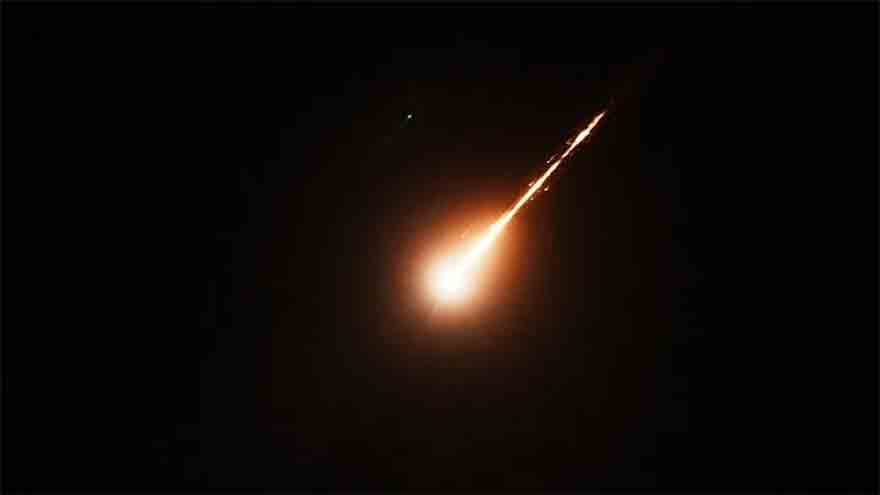
The coordinated air raids were conducted in direct retaliation to more than thirty Iranian-directed aerial drone attacks launched over a seventy-two-hour period. Central Command specified that the targeted militia groups acted under the explicit direction of Iran’s Islamic Revolutionary Guard Corps to strike American troop installations and Saudi energy infrastructure.

While American military officials confirmed that recent strikes against US assets were successfully defended without casualties, the Saudi Ministry of Defense cited international self-defence provisions under Article 51 of the United Nations Charter, noting that the aerial campaign directly addressed drone incursions originating from Iraqi territory against petroleum facilities in eastern Saudi Arabia and Riyadh.

The joint intervention signals a notable strategic escalation for Saudi Arabia, which had previously sought to limit direct military involvement despite recurring proxy threats along its borders and maritime trade corridors.

Central Command noted that Iranian-backed militias in Iraq attempted over six hundred attacks against US personnel and facilities between February and April alone, warning that failure to cease offensive operations would trigger further military action.

In response to the bombings, representatives for Iraq’s Popular Mobilization Forces reported casualties and structural damage across several headquarters, condemning the strikes as a severe violation of Iraqi national sovereignty.

Similar Posts

  • | |

    Rubio and Bessent stayed aboard decoy jet as Trump…

    Two members of President Donald Trump’s cabinet remained aboard a decoy aircraft after Trump quietly departed the plane and boarded a different flight while in Turkey last month, according to a US television network report. Secretary of State Marco Rubio and Treasury Secretary Scott Bessent stayed on what was widely believed to be Air Force One and did not join the alternate flight arranged for Trump due to security concerns tied to Iran. Trump boarded Air Force One on July 8 alongside both officials as well as members of the traveling press before slipping away via a catering truck, which transported him discreetly to a separate military aircraft. Because the designation “Air Force One” applies to whichever plane the president occupies, the original aircraft retained the call sign even after Trump had already left it, effectively turning it into the decoy. According to the report, Rubio and Bessent remained on the first aircraft in order to preserve the presidential line of succession in case anything happened to Trump during the flight. Under that line of succession, Vice President JD Vance would assume power if the president died or became incapacitated, followed by the Speaker of the House and the President Pro Tempore of the Senate. The Secretary of State ranks next in the order, followed by the Treasury Secretary. Others who stayed aboard the original aircraft designated as Air Force One included White House Deputy Chief of Staff Stephen Miller and White House communications director Steven Cheung. The second aircraft that carried Trump out of Ankara also included Defense Secretary Pete Hegseth, according to separate US media reports. Speaking to reporters Monday night, Trump said the decision to carry out the plane switch came from the US military and the Secret Service, who he said wanted him to travel on a different aircraft. He did not provide specifics about the nature of the security threat, saying only that he regularly receives numerous threats and that any consequential president faces the same. A request for comment sent to the White House had not been answered as of publication.

  • |

    US official insists Gaza peace plan remains active despite Netanyahu’s rejection

    A Board of Peace official confirmed on Monday that US President Donald Trump’s Gaza peace framework remains operative, despite public pushback from Israeli Prime Minister Benjamin Netanyahu. Netanyahu rejected any withdrawal of Israeli forces until the Palestinian militant group Hamas is genuinely disarmed. His remarks came as the Israeli military  halted offensive operations in Gaza following pressure from Washington. The Board of Peace official emphasized that the initiative relies on phased implementation and verification on the ground, ensuring Israel makes no irreversible security concessions prior to confirmed compliance. Under the plan announced last month, Israeli forces would withdraw as Hamas disarms, paving the way for an International Stabilisation Force to partner with a newly formed Palestinian police unit. Negotiation roadmaps are being coordinated between the Board of Peace and Hamas while bilateral discussions with Israeli leadership continue.

  • | | |

    US, China, Russia hail Pakistan on Independence Da…

    ISLAMABAD: Pakistan received warm Independence Day greetings from the United States, China, Russia, the European Union and several other countries on Friday, as the nation marked its 79th Independence Day with ceremonies, prayers and patriotic celebrations. US Secretary of State Marco Rubio congratulated the people of Pakistan on behalf of the United States and highlighted the growing cooperation between the two countries. He said Washington and Islamabad were working together in areas including trade and investment, energy, critical minerals, counterterrorism, cultural heritage and regional mediation. Rubio said the two countries were turning their shared capabilities into practical progress and reaffirmed the longstanding friendship between the American and Pakistani peoples. He also expressed confidence that bilateral cooperation would continue to expand. Russian President Vladimir Putin also conveyed his greetings to President Asif Ali Zardari and Prime Minister Shehbaz Sharif. He said relations between Moscow and Islamabad were developing positively, with both sides cooperating in political, economic, trade and humanitarian fields. Putin said Russia and Pakistan were also working together on important regional and international matters. He expressed confidence that the two countries would continue strengthening their partnership in the interests of their peoples and international stability, while wishing Pakistan peace and prosperity. China also extended its traditional goodwill to Pakistan. Chinese Ambassador to Pakistan Jiang Zaidong conveyed congratulations to the Pakistani leadership and people, reaffirming the close and longstanding relationship between the two countries. The European Union congratulated Pakistan on its 79th Independence Day and described the occasion as a celebration of unity, freedom and national solidarity. The bloc also expressed its commitment to further strengthening its friendship and partnership with Islamabad. France similarly conveyed its greetings to the Pakistani people and expressed its desire to deepen bilateral cooperation across areas of mutual interest. Azerbaijan also extended heartfelt wishes to Pakistan, describing the Pakistani people as brothers and reaffirming its friendly ties with the country. The United Kingdom sent Independence Day greetings to Pakistanis living in Pakistan, Britain and around the world, while Gulf countries also joined the celebrations. The United Arab Emirates conveyed congratulations to Pakistan’s leadership, while Qatar’s Amir sent greetings to President Asif Ali Zardari. Oman’s Sultan Haitham bin Tarik also sent a congratulatory message to the Pakistani president. Meanwhile, Pakistan marked the national day with traditional celebrations across the country. A 31-gun salute was held in Islamabad and 21-gun salutes were conducted at provincial headquarters. Special prayers were offered for the country’s peace, unity and prosperity. Flag-hoisting ceremonies were organised at government offices and public institutions, while streets, buildings and markets were decorated with national flags, buntings and lights. Pakistan’s embassies abroad also marked the occasion. The Pakistan Embassy in Tajikistan held a flag-hoisting ceremony where messages from the president, prime minister and deputy prime minister/foreign minister were read out.

  • |

    Houthi Red Sea blockade threat raises fears of wider global energy disruption

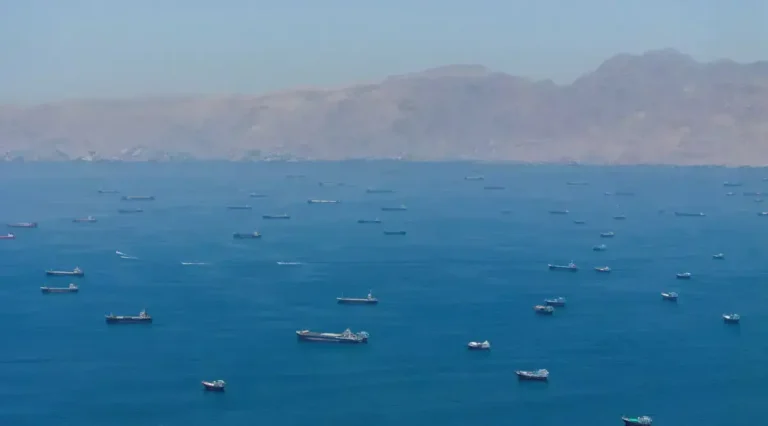
    A new threat by Yemen’s Houthi movement to impose a maritime blockade on Saudi Arabia has raised concerns about global energy supplies as tensions across the Middle East continue to escalate. The announcement comes at a time when shipping through the Strait of Hormuz has already been disrupted, increasing fears that two of the region’s most important oil routes could be affected at the same time. The Iran aligned Houthi group said it plans to target Saudi Arabia through a blockade in the Red Sea. While the group has not explained how it intends to enforce the measure, the warning has intensified concerns over the security of international shipping and energy exports. The Bab el Mandeb Strait at the southern entrance to the Red Sea is one of the world’s most important maritime routes. It connects the Red Sea with the Gulf of Aden and serves as a key passage for oil shipments travelling between the Middle East, Europe and Asia. Since disruptions in the Strait of Hormuz, Saudi Arabia has redirected much of its crude oil exports to its Red Sea port of Yanbu. From there, shipments bound for Europe pass through the Suez Canal, while cargo heading to Asian markets travels south through the Bab el Mandeb Strait. Industry data shows that oil exports from Yanbu have increased sharply over the past year, making the Red Sea an increasingly vital route for global energy markets. Millions of barrels of petroleum now pass through the Bab el Mandeb every day, helping to stabilise international oil supplies despite ongoing tensions elsewhere in the region. Analysts warn that any serious disruption in the Red Sea could significantly affect global energy prices by restricting another major export route from the Gulf. Saudi Arabia is reportedly considering expanding its pipeline network to the Red Sea coast to reduce dependence on vulnerable sea lanes. The Houthis have been involved in conflict with Yemen’s internationally recognised government for more than a decade and have previously launched missile and drone attacks against Saudi Arabia. Although a truce reached in 2022 reduced fighting, tensions have risen again following recent military strikes around Sanaa. The latest escalation began after Yemen’s recognised government said it had targeted Sanaa airport to prevent an Iranian aircraft from landing. The Houthis blamed Saudi Arabia for the attack and responded by firing missiles towards Abha airport in southern Saudi Arabia. A senior Houthi official later warned that continued escalation could lead to the closure of the Bab el Mandeb Strait. Although the Houthis maintain that they make their own military decisions, the United States has long accused Iran of supplying the group with weapons, funding and training. The Houthis reject claims that they act as an Iranian proxy. The movement previously disrupted international shipping after the outbreak of the Gaza war in late 2023. It launched attacks on commercial vessels in the Red Sea, saying the operations were intended to support Palestinians. Those attacks forced many major shipping companies to reroute vessels around southern Africa, increasing transport costs and delaying deliveries worldwide. Although Red Sea traffic had begun recovering after attacks eased, shipping through the Suez Canal remains well below previous levels. The latest Houthi threat has renewed fears that instability could once again disrupt one of the world’s busiest trade routes. During the recent conflict involving Iran, the Houthis played a more limited military role than other armed groups aligned with Tehran. However, their latest announcement suggests they may now be prepared to increase pressure on regional rivals, raising fresh concerns over the security of global energy supplies and international trade.

  • | |

    Iran, Oman reach deal on Strait of Hormuz shipping routes

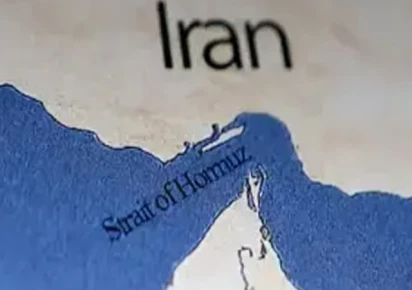
    Iran and Oman have reached an agreement on a proposed shipping route map for the strategically important Strait of Hormuz following weeks of technical negotiations, Iranian officials said on Saturday. Iranian Foreign Ministry spokesman Esmaeil Baghaei said the two countries had made significant progress in talks aimed at establishing safer navigation routes through the waterway. The negotiations began around three months ago under an agreement signed in June. Baghaei said the proposed route was developed through coordination between Iran’s foreign ministry and its defence, security and environmental authorities. He added that Tehran and Muscat were still discussing some remaining issues, including the wording of a joint statement. The spokesman stressed that the arrangement was a bilateral agreement between Iran and Oman and was intended to facilitate the safe movement of commercial vessels while respecting the sovereignty of both countries. However, Tehran has made clear that the full restoration of normal shipping through the Strait of Hormuz depends on broader developments involving the United States. Baghaei said Iran wanted an end to what it described as US military threats, naval restrictions and violations of previous commitments before normal commercial traffic could fully resume. Iranian Foreign Minister Abbas Araghchi separately said negotiations with Oman over the waterway were continuing. He described the discussions as separate from the wider diplomatic dispute between Tehran and Washington. Araghchi also rejected the description of an earlier agreement as a simple 60-day ceasefire. He said the understanding was aimed at ending the war, while the 60-day period was intended for negotiations toward a final settlement. He said Qatar and Pakistan were continuing to exchange messages with Iran but stressed that Tehran had not yet decided to resume direct negotiations with Washington. Iranian Deputy Foreign Minister Kazem Gharibabadi also rejected claims that the United States could take control of the Strait of Hormuz. He said Iran remained in charge of decisions concerning the waterway and dismissed statements suggesting that the strait could become US territory. The Strait of Hormuz is one of the world’s most important energy corridors, connecting the Persian Gulf with the Gulf of Oman. A prolonged disruption to shipping through the waterway has raised concerns over global energy supplies and fuel prices. The latest developments come amid continuing tensions between Iran, the United States and Israel. Shipping through the strait remains significantly below normal levels, while diplomatic efforts to end the wider conflict have yet to produce a lasting settlement. US President Donald Trump has meanwhile urged Americans to accept higher fuel prices while the conflict continues, arguing that confronting Iran was necessary to prevent it from obtaining a nuclear weapon. The dispute has already pushed global oil prices higher, while rising fuel costs in the United States have added to inflationary pressures.

Leave a Reply

Your email address will not be published. Required fields are marked *