741 dangerous buildings
| |

741 dangerous buildings identified across Sindh

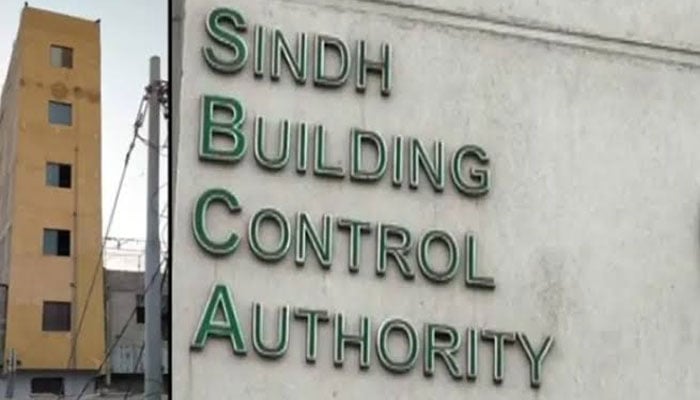
The Sindh Building Control Authority (SBCA) has identified 741 dilapidated and dangerous buildings across the province.

The disclosure was made during a meeting of the Sindh Assembly’s Public Accounts Committee (PAC) in Karachi. The meeting was chaired by PAC Chairman Nisar Khuhro.

According to an official statement, the SBCA briefed the committee about the condition of buildings across Sindh. The authority said a large number of unsafe structures were located in Karachi.

Of the 741 dangerous buildings identified across the province, 588 are situated in Karachi. The figure includes 444 buildings classified as heritage structures.

The SBCA also informed the committee about steps taken to deal with buildings that pose risks to residents and the public.

According to the authority, approval has been granted to evacuate 59 dilapidated buildings. Permission has also been given to demolish 39 structures considered dangerous.

The issue of heritage buildings also came under discussion during the meeting.

The Public Accounts Committee decided to summon the Heritage Committee at its next session. It also sought a detailed report on buildings constructed illegally around the Mazar-i-Quaid.

The committee expressed concern over unauthorised construction in important areas of Karachi. It directed the relevant authorities to provide complete details of such structures.

The meeting also discussed illegal housing schemes operating in Karachi. The committee was informed about 58 unauthorised housing schemes in the city.

The PAC directed authorities to take steps to prevent people from investing in these illegal schemes. It also ordered action against individuals and groups involved in operating them.

The committee further directed officials to identify and disclose the names of people involved in the illegal housing projects.

The latest disclosure has raised concerns over the safety of residents living in old and structurally weak buildings across Sindh.

The authorities are now expected to take further measures to identify unsafe structures, evacuate residents where necessary and remove buildings that pose an immediate threat.

The issue is particularly significant in Karachi, where hundreds of old and heritage buildings are located in densely populated areas.

Similar Posts

  • | |

    Pakistan, Norway discuss counterterrorism and regi…

    ISLAMABAD: Interior Minister Mohsin Naqvi and Norwegian Foreign Minister Espen Barth Eide held talks on Friday and reviewed bilateral relations, regional security and cooperation against terrorism. The meeting focused particularly on security concerns linked to Afghanistan. Naqvi told the Norwegian minister that militant groups were continuing to use Afghan territory for attacks inside Pakistan. The two sides agreed to strengthen cooperation in counterterrorism and other security-related areas. They also discussed preventing illegal immigration, police training and mutual legal assistance. The Afghan situation was another key issue during the meeting. Pakistani officials briefed the Norwegian side about activities of banned organisations operating from Afghan territory and their alleged involvement in terrorism in Pakistan. Naqvi stressed the need for coordinated international efforts to eliminate terrorism. He said Pakistan was playing an important role in preventing terrorist threats from spreading beyond the region. Eide praised Pakistan’s role in the ongoing US-Iran conflict and described its approach as constructive and active. Illegal migration to Europe was also discussed. Naqvi said Pakistan had introduced strict measures against illegal migration and that these efforts had resulted in a 47 per cent decline in illegal migration from Pakistan to Europe. He said Pakistan had adopted a zero-tolerance approach towards illegal migration. He added that encouraging legal migration was essential to address the issue effectively. According to Pakistani officials, the European Union had also recognised Islamabad’s measures against illegal migration. The two ministers also discussed broader steps to improve relations between Pakistan and Norway. Eide appreciated the contribution of the Pakistani community in Norway, particularly its role in politics, healthcare and other sectors. Naqvi described Eide’s visit as an important opportunity to strengthen bilateral ties and expand cooperation between the two countries. Eide is on a two-day visit to Pakistan. His trip is the first visit by a Norwegian foreign minister to the country in around a decade. During his engagements on Thursday, Eide met senior Pakistani civilian and military officials. Discussions covered trade, investment, technology, climate resilience, maritime cooperation, skilled labour and security. Both sides also exchanged views on developments in the region and explored areas where Pakistan and Norway can further expand cooperation.

  • | |

    Quetta connectivity outage disrupts routine life

    QUETTA: A sudden suspension of mobile phone and internet services has disrupted daily activities across Quetta, leaving residents struggling to communicate, conduct business and access essential online services. The connectivity shutdown affected a wide range of people, including students, healthcare professionals, traders, delivery workers and journalists. Many residents were unable to make calls, send messages or use internet-based services. Students were among those facing major difficulties. Those relying on online classes and digital learning platforms could not access study material or communicate with teachers and classmates. The disruption also affected students preparing assignments and completing other academic tasks online. The outage created problems for healthcare workers as well. Doctors, medical staff and patients often depend on mobile phones and internet services for communication. The interruption made it harder to coordinate with colleagues, contact patients and exchange important medical information. Businesses and traders also faced disruptions. Many shops and small businesses now depend on digital payments, online orders and messaging applications. The suspension affected their ability to communicate with customers and manage routine transactions. Delivery riders were particularly affected because they rely heavily on mobile applications and phone calls to receive orders, locate customers and coordinate deliveries. The loss of connectivity made these routine tasks considerably more difficult. The shutdown also created challenges for journalists reporting from Quetta. Reporters faced difficulties contacting sources, verifying information and sending updates from the field. The lack of reliable communication can slow down coverage, particularly when events are developing quickly. For ordinary residents, the disruption meant difficulty staying in touch with family members, friends and colleagues. People who depend on mobile services for work and other essential activities were forced to deal with additional inconvenience.

  • Former Bangkok Post Editor And Broadcaster Dave Kendall Dies At 63

    BANGKOK, Thailand — Dave Kendall, a respected British-born journalist, former sub-editor at the Bangkok Post, and the beloved host of the publication’s “Deeper Dive” podcast, has died at the age of 63. His passing marks the loss of a versatile media professional who left a lasting impact on both the international music broadcasting scene and […]

  • | |

    Sindh schools adopt facial recognition attendance

    The Sindh government has approved the introduction of a Facial Recognition Attendance Monitoring and Evaluation System (FRAMES) in public schools as part of a broader effort to improve governance, transparency and accountability in the education sector. The decision was taken during a meeting of the School Education Department chaired by Chief Minister Murad Ali Shah. The meeting was attended by Education Minister Sardar Ali Shah, the chief secretary and other senior government officials. During the meeting, the education minister gave a detailed briefing on the proposed system and informed participants that all technical preparations for its implementation have been completed. He said the project is designed to introduce data-driven governance and improve monitoring of teachers and non-teaching staff across government schools. According to the briefing, the first phase of the project will begin in six districts, with one district selected from each division of Sindh. Registration of teachers and non-teaching employees in these districts has already been completed, paving the way for the system’s launch. Chief Minister Murad Ali Shah announced that the new attendance system will become operational in the selected districts from August 17. If the pilot phase is successful, it will be expanded gradually to all districts across the province. Under the FRAMES system, attendance of teachers and school staff will be recorded through facial recognition technology. Officials said the system will automatically record employees’ arrival and departure times, creating a secure, accurate and tamper-proof attendance record. The education department also informed the meeting that geo-tagging of government schools has been completed. Officials said the system has been designed to function effectively even in remote areas with weak internet connectivity, ensuring uninterrupted monitoring throughout the province. Murad Ali Shah said improving teachers’ attendance is essential for raising educational standards and ensuring quality education for students. He said every child has the right to receive quality education, and achieving that goal requires teachers and school staff to perform their duties regularly and responsibly. The chief minister emphasized that the use of modern technology would strengthen accountability and improve discipline within the education system. He said digital monitoring would help eliminate irregularities, increase transparency and provide education authorities with reliable data for decision-making. He directed officials to establish an effective support and monitoring mechanism during the initial implementation phase. He also instructed the education department to provide schools with all necessary technical assistance and training to ensure the smooth operation of the new system. Officials said information collected through the facial recognition platform will help education authorities evaluate attendance patterns, improve administrative oversight and identify areas requiring further reforms. They added that the initiative is expected to enhance institutional discipline, strengthen governance and improve the overall performance of public schools.

  • | | | |

    US strikes Iran for 13th night as Trump escalates threats

    The United States carried out fresh air strikes on Iran for the 13th consecutive night, further intensifying the military confrontation between the two countries. The latest attacks came as US President Donald Trump warned that Washington is prepared to launch even larger military operations if Iran continues targeting American interests and regional allies. According to the US military, the strikes targeted facilities linked to Iran’s Islamic Revolutionary Guard Corps (IRGC). Officials said the operation was intended to reduce Iran’s military capabilities and protect commercial shipping routes and US forces operating in the Middle East. Reports from Iran said explosions were heard in several parts of the country. Blasts were reported on Qeshm Island as well as in Khuzestan province. Missile strikes were also reported in the cities of Andimeshk and Omidiyeh. In the southern port city of Bandar Abbas, local media reported that attacks on a residential neighbourhood injured at least two civilians. Speaking earlier, President Trump said he was considering the largest military operation against Iran since the conflict began. He stated that preparations were complete and that a final decision could be taken soon if Iran continued its attacks on US allies and military assets in the region. The latest American strikes followed another round of Iranian missile and drone attacks on Bahrain, Kuwait and Jordan. Iranian military officials said the attacks targeted US military facilities stationed in those countries. Tehran described the strikes as retaliation for continued US attacks on Iranian territory and infrastructure. Iran also claimed responsibility for striking a telecommunications tower in Kuwait. Iranian officials said the attack was carried out in response to previous US strikes on communication facilities inside Iran. Kuwaiti authorities later confirmed that hostile drones also targeted the Abdali border crossing with Iraq, raising security concerns along the frontier. Iranian Foreign Minister Abbas Araghchi warned that the country would continue responding to every attack under an “eye for an eye” policy. Military officials said Iran’s retaliatory operations would continue for as long as American forces targeted Iranian infrastructure and coastal areas. The conflict has now spread beyond Iran and the United States, increasing fears of a wider regional war. Yemen’s Houthi movement claimed responsibility for attacks on two Saudi oil tankers in the Red Sea. The group warned that additional energy infrastructure could also become a target if the conflict continues. The growing violence has disrupted security across key maritime routes, including the Strait of Hormuz and the Bab al-Mandeb Strait, both of which are among the world’s most important oil shipping corridors. Continued attacks have increased risks to commercial shipping and raised concerns over global energy supplies. The worsening conflict has also pushed international oil prices above $100 per barrel, reflecting fears of prolonged supply disruptions. Analysts warned that further escalation could place additional pressure on the global economy by increasing fuel prices, disrupting trade and creating greater uncertainty in international energy markets.

  • | | | |

    US launches heavy strikes on Iran after missile at…

    The United States has resumed large-scale military operations against Iran, launching what officials described as a “heavy wave” of precision strikes after a five-night pause, dramatically escalating tensions across the Middle East and raising fresh concerns over the security of the Strait of Hormuz. According to the US Central Command (CENTCOM), the overnight operation targeted dozens of sites linked to Iran’s Islamic Revolutionary Guard Corps (IRGC), including military command centres, missile and drone facilities, coastal defence systems and maritime infrastructure. The strikes came in response to Iranian missile attacks a day earlier on American forces stationed at a US military base in Jordan. US President Donald Trump had warned that Washington would respond “very hard” to any attack on American troops, and the latest operation marked one of the most extensive US offensives since the conflict intensified earlier this year. Iranian state media reported that at least three civilians were killed in the strikes, including a couple and their two-year-old child after a residential building on Qeshm Island was hit. The IRGC also confirmed that three of its personnel were killed during the attacks. Explosions were reported across several southern Iranian cities, including Ahvaz, Abadan, Bushehr, Kazerun and Farashband. Iranian media said power outages affected parts of Ahvaz following strikes in the oil-rich Khuzestan province, while local officials confirmed that multiple locations in Abadan had also been targeted. The confrontation quickly spread beyond Iran. Jordan said its air defence systems intercepted five Iranian missiles launched toward its territory after Tehran targeted a US airbase and command headquarters inside the kingdom. No casualties were reported. Meanwhile, Kuwait confirmed that an Iranian strike hit a building belonging to a Chinese company in the country’s north, killing one worker and causing significant damage. Saudi Arabia condemned Iran’s attacks on Jordan, describing them as a violation of international law and regional stability. Despite the renewed fighting, diplomatic contacts continue behind the scenes. Pakistan’s Foreign Ministry said negotiations between Tehran and Washington remain active, particularly over the Strait of Hormuz and efforts to reduce tensions. Iranian officials also confirmed that discussions with Omani mediators regarding the future of the strategic waterway are continuing. The Strait of Hormuz remains at the heart of the crisis. Iran insists the waterway remains closed because of US military actions, while Washington accuses Tehran of threatening global shipping and using maritime pressure to strengthen the IRGC’s influence. Adding economic pressure, the US Treasury imposed fresh sanctions on two Iranian companies accused of supporting an IRGC-backed maritime insurance network. Security analysts say Washington now faces a critical decision: continue targeting Iran’s military infrastructure around Hormuz or expand attacks on key national infrastructure. While the latest strikes signal a tougher military posture, experts believe both sides still have incentives to leave the door open for diplomacy, even as the risk of a wider regional war continues to grow.

Leave a Reply

Your email address will not be published. Required fields are marked *