morocco names 655mile
|

Morocco names 655-Mile coastal highway


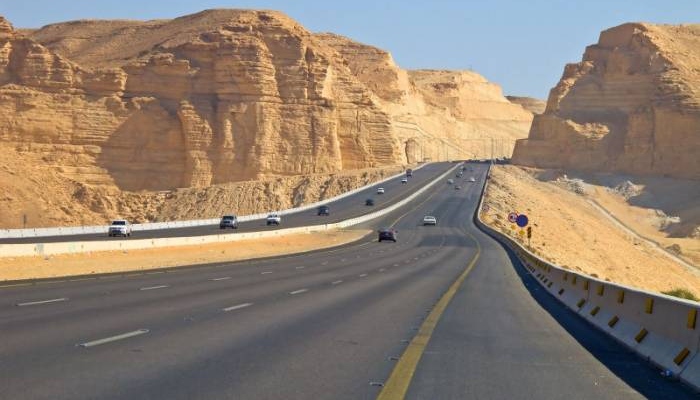
RABAT: Morocco has officially named its 655-mile (1,055-kilometer) coastal expressway after U.S. President Donald J. Trump, according to reports. The decision was announced through a royal decree issued by King Mohammed VI, recognizing the highway as the Donald J. Trump Expressway.

The expressway stretches from the city of Tiznit in southern Morocco to Dakhla, a strategically important city located in the country’s southern region. Previously known as the Tiznit–Dakhla Expressway, the highway is one of Morocco’s most significant infrastructure projects. It covers approximately 655 miles (1,055 kilometers) and was built at an estimated cost of around US$1 billion.

The project was designed to improve transportation and strengthen economic links between Morocco’s northern and southern regions. The expressway is expected to facilitate trade, encourage tourism, and provide easier access to remote areas. It also plays an important role in connecting communities and supporting regional development.

The decision to rename the highway reflects Morocco’s recognition of President Donald Trump’s contributions to strengthening relations between the United States and Morocco. The announcement has attracted international attention because of the symbolic significance of naming such a major national infrastructure project after a foreign leader.

In response to the announcement, U.S. President Donald Trump expressed his gratitude to King Mohammed VI. In a message, President Trump thanked the Moroccan monarch for what he described as a “great honor.” He said he deeply appreciated the gesture and praised the strong friendship between the two countries.

President Trump also stated that he hopes to have the opportunity to travel on the newly renamed expressway in the near future. He described the highway as an impressive achievement and said he looked forward to visiting Morocco again.

The Tiznit–Dakhla route is considered one of Morocco’s largest transportation investments in recent years. It was developed to improve road safety, reduce travel time, and support economic activity throughout the country’s southern provinces. The highway also serves as an important transportation corridor for commercial vehicles carrying goods between different regions.

Infrastructure projects of this scale are often viewed as symbols of national development and long-term economic planning. Renaming the expressway after President Trump has generated interest internationally and is likely to be seen as a diplomatic gesture highlighting the close ties between Morocco and the United States.

Morocco and the United States have maintained longstanding diplomatic relations, cooperating in areas such as trade, security, investment, and regional stability. The renaming of the expressway further underscores the importance both countries place on their bilateral partnership.

The announcement has been widely reported by regional media and has sparked discussion about the significance of honoring foreign leaders through national landmarks. Whether viewed as a diplomatic tribute or a symbolic act of friendship, the decision marks a notable moment in Morocco–U.S. relations and adds another chapter to the history of cooperation between the two nations.

Similar Posts

  • | | |

    Pezeshkian says Iran seeks peace, not wider conflict

    Iranian President Masoud Pezeshkian has said that Iran has no intention of prolonging the current conflict or expanding it beyond its existing scope. However, he made it clear that the country will continue to defend its sovereignty, territorial integrity and national interests against any threat. Speaking at a ceremony in Tehran, the president said Iran’s policy is based on protecting its borders while avoiding any unnecessary escalation. He stressed that the country does not seek war but will not hesitate to respond if its security or independence is challenged. Pezeshkian said maintaining national security is not only the responsibility of the armed forces but also depends on the unity and solidarity of the Iranian people. He urged citizens to set aside political and social differences and work together to strengthen the country during a difficult period. The president said internal unity is one of the strongest defenses against foreign interference. According to him, divisions within society can create opportunities for outside powers to influence domestic affairs. He added that a united nation is better equipped to face political, economic and security challenges. He emphasized the need to build a strong and stable society where people enjoy confidence in national institutions and where hostile elements cannot create unrest or weaken public trust. He said Iran must focus on strengthening its social fabric to prevent enemies from exploiting internal disagreements. Pezeshkian also called for greater national cooperation to overcome current challenges. He said every segment of society has a role to play in safeguarding the country’s future and preserving stability. The Iranian president reiterated that his government remains committed to protecting the country’s borders and national interests while pursuing policies that avoid a wider regional conflict. He said Iran’s priority is to maintain security, preserve national unity and prevent conditions that could lead to further instability.

  • |

    Netanyahu says social media is driving decline in US support for Israel

    Israeli Prime Minister Benjamin Netanyahu has acknowledged that public support for Israel has declined in the United States, attributing the shift largely to the influence of social media and online misinformation. His remarks came during an interview with ABC News, where he also discussed the war in Gaza, Iran’s nuclear programme, and Israel’s relationship with the United States. Netanyahu admitted that attitudes toward Israel among Americans have changed in recent years and said the trend was a matter of concern. He argued that the rapid growth of social media platforms, along with the use of coordinated online campaigns and automated accounts, has shaped public opinion against Israel. According to him, misleading portrayals of the conflict in Gaza have contributed significantly to the fall in support. Recent surveys suggest that American views of Israel have become increasingly critical. A July poll by the Pew Research Center found that unfavorable opinions of the Israeli people have risen compared with previous years, while support for the Israeli government has also declined. The findings reflect growing concern among Americans over Israel’s military operations in Gaza and the humanitarian impact of the conflict. During the interview, Netanyahu said he wanted Israel to continue receiving support from both major political parties in the United States. He described bipartisan backing as an important part of Israel’s national security and argued that the debate surrounding Israel extends beyond the Middle East. He claimed that those who oppose Israel often also oppose American interests and values. The Israeli leader also discussed Iran, saying Israel and US President Donald Trump share the same objective of preventing Tehran from developing nuclear weapons. He said Israel would support any approach that successfully ends Iran’s nuclear programme, whether through diplomacy, economic sanctions, or military action. However, he stressed that decisions regarding American policy ultimately rest with the US president. Netanyahu accused Iran of repeatedly acting in bad faith during previous negotiations, claiming its leaders have used talks to delay action while continuing their nuclear ambitions. Iran has previously rejected such accusations and argued that inconsistent policies and broken commitments by the United States have undermined diplomatic efforts. He also warned Iran against carrying out any future attacks on Israel, saying such actions would be met with a strong military response. Although he believes Iran’s leadership has become weaker in recent years, Netanyahu said the current government remains in power and predicted that it could eventually collapse. Addressing his relationship with President Trump, Netanyahu dismissed suggestions that either leader was directing the other. He described the two countries as close allies and said the United States remains the senior partner while Israel continues to work closely with Washington on security matters. The prime minister also rejected reports claiming he had underestimated the consequences or duration of military action against Iran. He insisted those reports misrepresented his earlier assessments and said President Trump independently viewed Iran’s nuclear ambitions as a serious threat. Netanyahu strongly denied allegations that Israel had committed war crimes or genocide during its military campaign in Gaza. He argued that Israeli forces had taken steps to reduce civilian casualties by issuing warnings through phone calls, text messages, and leaflets urging people to leave areas of fighting. He also accused Hamas of preventing civilians from evacuating. The Israeli leader again ruled out the creation of an independent Palestinian state, arguing that it would pose a security threat to Israel. His comments come despite ongoing international calls for a two state solution. The conflict remains under intense international scrutiny. In November 2024, the International Criminal Court issued arrest warrants for Netanyahu and former Defence Minister Yoav Gallant over allegations of war crimes and crimes against humanity linked to the Gaza conflict. Israel rejects the accusations, while military operations in the territory have continued despite a ceasefire agreement reached in October 2025.

  • | | |

    UK border crisis: new record as 230 migrants cross…

    The UK’s ongoing small boat crisis has come under renewed scrutiny after around 230 migrants crossed the English Channel and arrived in Britain, raising fresh questions about the government’s efforts to tackle irregular migration. The latest arrival comes just 17 days after 165 people crossed the Channel in a single day, according to reports. The new figure has added to growing political pressure on the UK government as ministers face continued challenges in preventing dangerous journeys across one of the world’s busiest shipping routes. Hundreds of people are believed to have reached the UK by small boats during the current week, with reports putting the number at more than 900. The continued crossings have become a major political issue, with the government under pressure to demonstrate that its border policies can reduce the number of people making the journey. People-smuggling networks are believed to charge migrants thousands of pounds for the dangerous passage. Critics say the criminal gangs running these operations make substantial profits while placing migrants’ lives at serious risk by using overcrowded and often unsuitable boats. The latest development follows an incident last week in which a small boat caught fire while attempting to cross the Channel. A total of 173 people were reportedly rescued following the incident, highlighting the dangers faced by those attempting the journey. Shadow Home Secretary Chris Philp criticized the French authorities over the continued crossings. He argued that French officials could have prevented boats of this size from entering deeper waters but failed to do so. The issue has also drawn strong criticism from Reform UK leader Nigel Farage. He has called for small boat crossings to be treated as a national security emergency, reflecting the increasingly prominent role of immigration in Britain’s political debate. The UK government has repeatedly pledged to tackle illegal immigration and disrupt the criminal networks responsible for organizing Channel crossings. However, the continued arrival of boats demonstrates the difficulty of stopping the journeys despite increased enforcement measures and cooperation with French authorities. The small boat crisis has become one of the most contentious issues in British politics, with politicians divided over how best to address irregular migration. While supporters of tougher policies argue that stronger border controls are urgently needed, others have stressed the need to address the criminal smuggling networks and the wider factors driving people to attempt dangerous crossings. With hundreds more people arriving in Britain, pressure on the government is likely to remain intense as it seeks to reduce Channel crossings and restore public confidence in its immigration strategy.

  • |

    Iran condemns Israeli minister’s remarks over Gaza killings

        Iran’s Deputy Foreign Minister Kazem Gharibabadi has strongly condemned remarks attributed to Israeli National Security Minister Itamar Ben-Gvir regarding the killing of Palestinians in Gaza, accusing him of openly advocating mass violence and the forced displacement of Palestinians. According to media reports, Gharibabadi said Ben-Gvir had set a daily target of killing between 30 and 40 people in Gaza. He described the remarks as further evidence of what Iran considers systematic violence against Palestinians and called for such statements to be preserved as evidence for possible future legal proceedings. Gharibabadi said that Israeli officials were openly discussing the expulsion of Palestinians from Gaza and the establishment or expansion of Jewish settlements in Palestinian territory. He argued that these statements should not simply be treated as political rhetoric but should be documented carefully because they could potentially become important evidence in future cases involving alleged violations of international law. “The statements and admissions made by Israeli officials should be preserved as evidence,” Gharibabadi said, according to the reports. He added that such evidence could be presented when Israeli officials are held accountable and legal proceedings are initiated against those accused of crimes against Palestinians. The Iranian official’s comments came in response to statements attributed to Ben-Gvir concerning Israel’s military campaign in Gaza. Media reports said the Israeli minister had spoken about killing between 30 and 40 people in Gaza every night. He was also reported to have said that the people of Gaza should not remain alive. Ben-Gvir, a far-right Israeli politician, has repeatedly faced international criticism over his statements and positions concerning Palestinians and the Gaza conflict. His remarks have frequently generated controversy, particularly when he has discussed military operations, Palestinian displacement and the future of Gaza. Gharibabadi’s response reflects Iran’s broader criticism of Israel’s military operations in Gaza. Iranian officials have repeatedly accused Israel of committing serious violations against Palestinians and have called for international action against Israeli leaders and officials. Tehran has also consistently supported the establishment of an independent Palestinian state and opposed the expansion of Israeli settlements in Palestinian territories. The issue of accountability has become increasingly prominent amid the continuing conflict in Gaza. Palestinian officials and international organizations have reported extensive civilian casualties and destruction in the territory since the outbreak of the war. Israel, meanwhile, has maintained that its military operations are aimed at Hamas and other armed groups and has defended its actions as necessary for national security and the release of hostages. The latest exchange between Iran and Israel comes amid continued regional tensions. Iranian officials have frequently used international forums and diplomatic statements to call attention to the humanitarian situation in Gaza and to demand accountability for alleged violations of international humanitarian law. Gharibabadi’s call to preserve statements made by Israeli officials highlights Iran’s argument that public comments by political and military figures could later be examined in legal proceedings. He suggested that remarks regarding killings, forced displacement and settlement expansion should be documented so they can potentially be used when questions of responsibility and accountability are considered. The controversy surrounding Ben-Gvir’s reported remarks is therefore likely to add to international scrutiny of Israel’s conduct in Gaza and the statements of its political leaders. As the conflict continues to generate diplomatic and legal debate, allegations concerning civilian killings, displacement and settlement policies remain major points of contention between Israel and its critics, including Iran.

  • | |

    Berlin Pride turns tragic as car hits crowd, 1 dea…

    BERLIN: A celebration that had drawn huge crowds to Berlin for Christopher Street Day ended in tragedy late Saturday when a vehicle drove into people near the event, killing one person and injuring at least 16 others. The incident happened shortly after 10pm local time in the Tiergarten area, near the route of the Pride celebrations. Emergency services rushed to the scene as police launched a major operation and ordered people to leave the area. According to police, the vehicle struck several people before the driver fled the scene. One person died, while 16 others were injured. Several victims were reported to be in serious or life-threatening condition, adding to the shock surrounding an event that had begun peacefully. Authorities quickly called off the remaining Christopher Street Day celebrations and urged visitors to stay away from the affected area. Police and rescue teams remained deployed around Tiergarten as investigators worked to establish exactly what happened and why. The incident also triggered an immediate search for the suspected driver. Police said they had identified a possible suspect but had not initially confirmed an arrest. German authorities were investigating the circumstances and motive behind the vehicle attack. Berlin Mayor Kai Wegner described the incident as an attack on the city’s free and cosmopolitan society, expressing sympathy for the victims and their families. He also praised emergency responders who arrived at the scene shortly after the incident. German Chancellor Friedrich Merz also condemned the incident and pledged that those responsible would face justice. The tragedy cast a dark shadow over one of Berlin’s biggest annual public celebrations. Christopher Street Day is both a major Pride gathering and a public demonstration for LGBTQ+ rights, equality and freedom. What had started as a day of colorful parades, music and crowds waving rainbow flags ended with emergency vehicles filling the streets and the celebration being abruptly abandoned. Police have urged members of the public to avoid the area while the investigation continues and to rely on official information rather than unverified reports circulating online.

  • |

    Arab and Palestinian groups urge global action to protect Jerusalem and Al Aqsa Mosque

    Fourteen Arab and Palestinian organisations have issued an urgent appeal calling for immediate international action to protect occupied East Jerusalem and the Al Aqsa Mosque, warning that recent Israeli measures are threatening the city’s religious heritage and historic identity. The groups said the situation has reached a critical stage and argued that stronger global intervention is needed to prevent further escalation. In a joint statement released on Wednesday, the organisations expressed concern over what they described as increasing Israeli actions aimed at changing the existing status of Jerusalem and its holy sites. They said recent developments have targeted not only Al Aqsa Mosque but also the Palestinian residents of Jerusalem and the city’s Arab, Islamic, and Christian character. Al Aqsa Mosque is considered Islam’s third holiest site. The same area is also revered by Jews as the Temple Mount, believed to be the location of two ancient Jewish temples. Israel captured East Jerusalem during the 1967 Arab Israeli war and later declared the entire city its capital in 1980, a move that has not been recognised by most of the international community. According to the appeal, Israeli authorities have allowed an increase in visits to the Al Aqsa compound by Jewish groups under police protection. The organisations claimed these actions, along with restrictions placed on Muslim worshippers, are attempts to alter the long standing arrangements governing access to the holy site. The statement also raised concerns about attacks on worshippers, restrictions placed on religious leaders, and measures targeting guards responsible for protecting the mosque. The groups argued that these actions undermine freedom of worship and threaten the historical and legal status of one of Islam’s most important religious landmarks. Beyond the mosque itself, the organisations accused Israel of expanding settlements, demolishing Palestinian homes, revoking residency rights, carrying out excavations around the Old City, and increasing pressure on both Islamic and Christian religious sites. They warned that these policies are changing the city’s demographic and cultural landscape while placing Jerusalem’s diverse religious heritage at risk. The appeal also highlighted concerns over the city’s Christian community. It said restrictions affecting churches, religious institutions, and Christian leaders threaten the long established Christian presence in Jerusalem and weaken the city’s multicultural identity. The organisations argued that international statements of concern are no longer enough to address the situation. They called for coordinated political, legal, and human rights efforts to stop actions they consider violations of international law. They also urged governments and international institutions to ensure accountability and prevent further changes to the city’s status. The statement specifically called on Jordan, which holds custodial responsibilities for Jerusalem’s Islamic and Christian holy sites, to intensify diplomatic efforts and encourage stronger international engagement. The groups said Jordan’s role remains essential in defending the religious and historical significance of the city’s sacred places. Describing Jerusalem as a shared historical, cultural, and religious responsibility, the organisations stressed that protecting the city requires practical measures rather than symbolic declarations. They said preserving the rights of its residents and safeguarding its holy sites should remain an international priority. The appeal was signed by several organisations, including the Popular Conference for Palestinians Abroad, the Al Quds International Institution, the Arab National Congress, the European Palestinian Conference, and the Islamic National Conference. The statement comes as tensions continue to rise across the occupied West Bank, where Israeli military raids and settler related violence have increased since the start of the Gaza conflict in October 2023. Palestinian officials say thousands of people have been injured or arrested during this period, while violence has intensified further following recent deadly clashes near Nablus involving Palestinians, Israeli settlers, and Israeli forces.

Leave a Reply

Your email address will not be published. Required fields are marked *