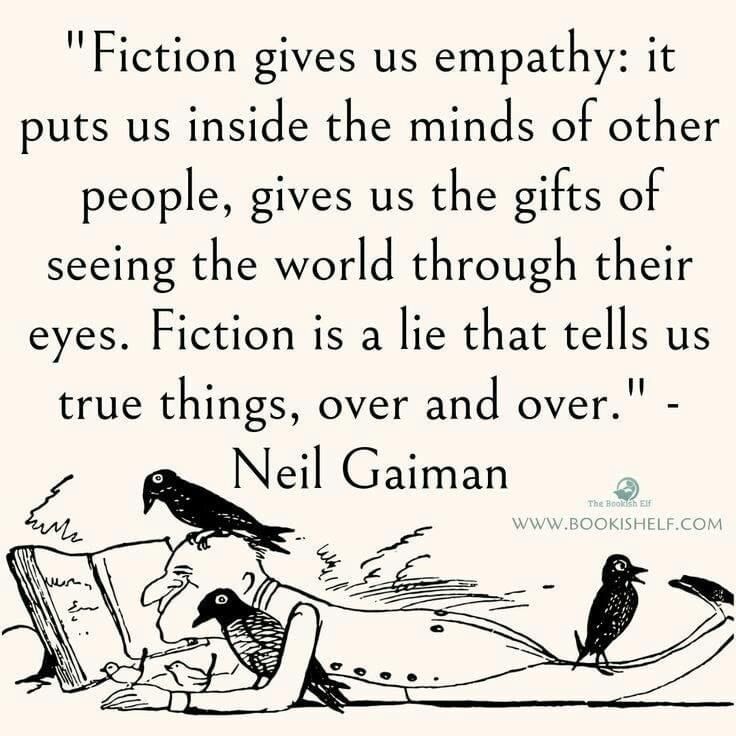
fiction braintrains compassion
|

How fiction brain-trains compassion

Empathy is the capacity to understand and share the feelings of another. It’s not merely an inherent personality trait; it is a cognitive muscle that requires exercise. While there are many ways to practice compassion in daily life, neuroscientists and psychological researchers have uncovered a uniquely powerful tool for training this mental capacity: reading deep, character-driven fiction.

For decades, society viewed reading literature as a purely intellectual or escapist hobby. However, recent scientific studies using functional magnetic resonance imaging (fMRI) have revealed that when we read a story, our brains process the experience in ways remarkably similar to real-world social interaction. When an author describes a character running through a dark forest, struggling with heartbreak, or feeling a sharp pang of injustice, the sensory and emotional centers in the reader’s brain light up as if the reader were experiencing those events directly. This neural simulation allows us to step entirely out of our own shoes and temporarily inhabit the subjective reality of someone else.

Psychologists often refer to this ability as theory of mind. It’s the cognitive skill that enables human beings to attribute mental states (beliefs, intents, desires, emotions, and knowledge) to themselves and others. Life only permits us to live a single, localized existence defined by our specific background, culture, and circumstance. Literary fiction breaks through those physical and social barriers. Through the pages of a novel, a reader living in a quiet suburban town can intimately experience the internal struggles of an immigrant navigating a new city, an incarcerated individual fighting for dignity, or a historic figure facing a agonizing moral dilemma.

Crucially, fiction tells us what people do. Also, it exposes why they do it. It grants us unprecedented access to the secret thoughts, doubts, and vulnerabilities that real people rarely reveal in public. By witnessing a character’s internal contradictions, readers learn that human behavior is rarely black-and-white. We develop a tolerance for ambiguity and a healthier skepticism toward snap judgments. When we close the book, that expanded perspective lingers in our conscious mind, subtly altering how we interact with co-workers, strangers, and loved ones.

Furthermore, reading fiction builds emotional stamina. It asks us to sit quietly with uncomfortable emotions like grief, fear, longing, and regret without fleeing into digital distractions. In doing so, it expands our capacity to hold space for others when they undergo difficult seasons in real life.

Literary fiction, therefore, is far more than entertainment. It is a quiet, radical act of bridge-building. Every time we turn a page and immerse ourselves in a stranger’s story, we perform a vital neurological exercise that softens our defenses, broadens our horizons, and reminds us of our shared humanity.

 

Similar Posts

  • The unforgettable legacy of Raja Mehdi Ali Khan

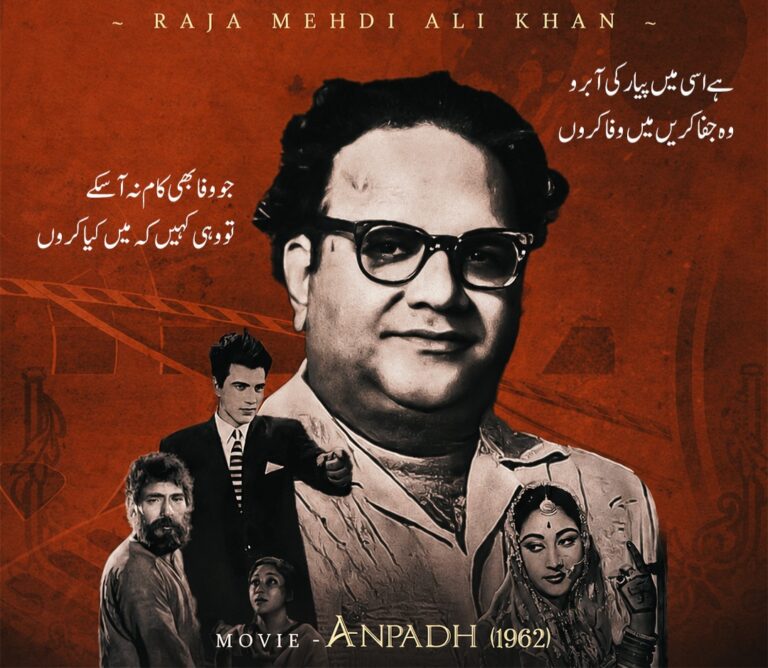
    Twentieth-century Urdu literature and Indian cinema was shaped by figures whose creativity crossed literary traditions and popular entertainment. Among these luminaries, Raja Mehdi Ali Khan stands out as a unique persona connecting high-art literary satire and immortal Bollywood melodies. This legend was born in 1915 in the historical town of Wazirabad. Khan was an observer of culture. He inherited a formidable poetic pedigree that caused him to be one of the most celebrated humorists and lyricists of his era. Raja Mehdi Ali Khan’s literary inclinations were virtually coded into his lineage. He was related to the renowned journalist and political figure Maulana Zafar Ali Khan. He was raised in an environment saturated with verse and socio-political commentary. Moreover, his mother was a recognized poetess in her own right. She taught him a deep reverence for language and rhythmic expression from an early age. This environment nurtured his inherent talent, allowing him to absorb classical Urdu poetic conventions while developing an understated wit that would define his future work. Before making a name for himself in the cinema, Khan began his journey in print journalism. He contributed prolifically to prominent periodicals and literary magazines of the era. The names included Monthly Alamgir, Weekly Khayyam, Tehzeeb-e-Niswan and Do Phool. His early journalistic writings allowed him to polish his observational skills. Whether analyzing social norms or painting witty portraits of everyday life, his prose stood out for its accessibility and warmth. Later, he transitioned into radio broadcasting. It’s considered a medium that further refined his sense of auditory storytelling and lyrical timing. He was driven by creative ambition. Later, Khan relocated to Bombay (now Mumbai) during a transformative era for Indian cinema. His entry into the film industry marked the beginning of a golden age for Hindi film music. He partnered with legendary music composers such as Madan Mohan. Khan penned lyrics that transcended simple movie themes, capturing profound emotional truths. His songs have proved to be timeless masterpieces, continuing to resonate across generations. Among his most iconic works are: hai isi mein pyaar ki aabru wo jafa karen main wafa karun jo wafa bhi kaam na aa sake to wahi kahen ki main kya karun Raja Mehdi Ali Khan, Anpadh (1962) His celebrated catalog includes evergreen classics. Lag Jaa Gale (Woh Kaun Thi?): Widely regarded as one of the greatest romantic ballads in Hindi cinema. Aapki Nazron Ne Samjha (Anpadh): A masterpiece of subtle expression and devotion. Jhumka Gira Re (Mera Saaya): A vibrant classic in popular culture. Tu Jahan Jahan Chalega (Mera Saaya): A hauntingly beautiful exploration of love and devotion. Agar Mujh Se Mohabbat Hai (Aap Ki Khaatir): A poignant reflection on romantic commitment. What set Raja Mehdi Ali Khan apart from many of his contemporaries was his dual identity.  Film audiences revered him for his deeply romantic and melancholic lyrics. On contrary, the literary world celebrated him as an exceptionally gifted humorist and satirist. Even amidst his demanding schedule in Bombay’s competitive cinematic landscape, Khan never abandoned his literary roots. His satirical essays and humorous poems were regularly featured in leading newspapers and journals across both India and Pakistan. His humor was rarely cynical. Instead, it offered a gentle, witty critique of human flaws, societal absurdities, and the complexities of modern living. Khan proved that high literary craft could flourish alongside popular music. Raja Mehdi Ali Khan passed away leaving behind a rich archive of literary contributions and cinematic songs that continue to be sung, reimagined, and loved today. His life journey from the quiet streets of Wazirabad to the recording studios of Bombay embodies the shared cultural heritage of the Indian subcontinent. His art remains vibrant and melodious whether delivered in a literary journal or sung by iconic playback singers.  

  • Monsoon may increase fungal infections

    During the monsoon season the number of people developing fungal infections between their toes often increases. Health experts say this is mainly because of extra humidity and sweat which create the perfect environment for fungus to grow. Contrary to popular belief rainwater itself does not cause fungal infections. The real problem is when the skin stays wet for a long time. Moist skin allows fungus to grow more easily. According to dermatologist people with diabetes obesity weak immune systems or excessive sweating are at a higher risk. In these individuals fungal infections may take longer to heal and are more likely to return. Fungal infections usually affect warm damp areas of the body including the armpits groin waist neck under the breasts between the fingers and toes feet and scalp. Common symptoms include itching, redness burning flaky skin and red rashes. Experts say wearing wet clothes staying in sweaty clothing for long periods using damp shoes or socks or wearing tight fitting clothes during the rainy season can greatly increase the risk of infection. Keeping the skin clean and dry is one of the best ways to prevent it. The scalp can also be affected during the monsoon. High humidity may keep the scalp damp for longer allowing fungus and bacteria to grow. This can lead to dandruff itching an oily scalp and in some cases hair loss. Doctors also warn against leaving hair wet after getting caught in the rain. It is best to rinse your hair with clean water and dry it completely to reduce the risk of scalp infections. Avoid self treatment health experts advise against buying anti itch or antifungal creams without consulting a doctor.  Some creams contain steroids that may temporarily reduce itching but can allow the fungal infection to spread further making it harder to treat later. Stopping treatment as soon as symptoms improve is another common mistake.  Doctors recommend completing the full course of medicine as prescribed to prevent the infection from coming back. Tips to prevent fungal infections •Keep your skin and scalp clean and dry. •Change sweaty clothes as soon as possible. •Avoid wearing wet shoes or socks for long periods. •Wear loose cotton clothing. Eat a balanced diet to support a healthy immune system. Do not use skin or hair creams without medical advice. Experts say early diagnosis proper treatment and good hygiene can help prevent fungal infections and reduce the chances of them returning.

  • Treasure hunt at Mayo landa in old Lahore

    Behind the 19th-century Victorian red-brick arches of Mayo Hospital exists one of Lahore’s most vibrant bazaars: Mayo Landa. First-time visitors might expect a simple fleece and jacket bazaar through the narrow lanes behind Mayo Hospital. However, it reveals something far richer. Mayo Landa has transformed into a bustling open-air ecosystem where global fashion, imported household goods, rare oddities, and genuine historic antiques intersect at prices that defy modern inflation. The word landa originates from the Punjabi term for roofless or uncovered. It usually refers to the early informal stalls that traders set up along open alleys without permanent shopfronts. The origins of Lahore’s landa market trace back to the pre-partition British colonial era. It is located strategically between the Lahore Railway Station and bustling medical hub of Mayo Hospital (established in 1871). The area naturally became a high-traffic junction for travelers, laborers, and rural migrants. Vendors began setting up wooden crates and blankets to sell low-cost textiles and goods to working-class families who could not afford stuff otherwise. Following the partition in 1947, the market expanded rapidly to accommodate millions of resettling families seeking affordable essentials. Over the decades, small family-run stalls grew into an organized nationwide wholesale network. Today, Mayo Landa operates as a major locality for imported pre-owned items. These are sourced globally from North America, Europe, Japan, South Korea, and Australia. While everyday apparel from heavy winter coats to designer sneakers remains a staple, the modern Mayo Landa experience goes far beyond clothing. Collectors regularly scour the market for genuine heavy-leather jackets, vintage denim, and retro sports gear that would cost hundreds of dollars internationally. Stalls feature everything from Japanese porcelain and European glassware to high-end kitchenware and functional electronics. Antique items are hidden within subtle corner stalls and old storerooms. Victorian brass lamps, mid-century mechanical clocks, classic cameras, old vinyl records, and hand-carved wooden artifacts. Prices are mostly negotiated through traditional haggling. Shoppers can frequently pick up valuable, high-grade collectibles at a fraction of their market value. What makes the backside of Mayo Hospital particularly captivating is its extraordinary cultural overlap and unique spatial atmosphere. Mayo landa alleyways & antique stalls. There roaming doctors & med students in scrubs. Then NCA art students searching for props across the area. Amongst, pashtun traders sorting bales. Hidden under the shade of century-old banyan trees behind the hospital compounds are secretive, multi-room vintage stores disguised as crumbling brick structures. Step inside, and you might find an operational 1920s gramophone playing vintage orchestra records right next to a pile of modern winter coats. Mayo Landa is more than just a flea market to the frequent visitors. It is a living archive of economic resilience, sustainable reuse, and cultural heritage. In a world dominated by fast fashion and mass-produced plastic, this historic corner of Old Lahore offers something rare. It’s the thrill of real discovery backed by over a century of history.  

  • New breakthrough against superbugs

    Bacteria that cause infections are becoming harder to treat because many of them no longer respond to common antibiotics. These bacteria known as superbugs have developed resistance to medicines that once killed them easily.  As a result infections that were once simple to treat are becoming much more dangerous. Health experts say that every year thousands of people die from antibiotic resistant infections. This growing problem also makes surgeries cancer treatments and many hospital procedures riskier because patients are more likely to develop infections that are difficult to cure. Now scientists have made a promising discovery that could help solve this problem. Instead of creating entirely new antibiotics researchers have found a way to make existing antibiotics work again. The new approach uses special compounds called antibiotic adjuvants. These compounds do not kill bacteria on their own. Instead they help antibiotics become effective again by weakening the bacteria’s defenses. Researchers at Cold Spring Harbor Laboratory (CSHL) in the United States discovered a compound called PGHI-4. When they combined it with the powerful antibiotic vancomycin it successfully killed bacteria that had already become resistant to vancomycin. Vancomycin is commonly used to treat serious bacterial infections including those caused by MRSA and Clostridioides difficile (C. diff.). Over time however some bacteria developed resistance to this important medicine making treatment much more difficult. During laboratory tests, scientists found that PGHI-4 blocks an important bacterial enzyme called SagA. Without this enzyme the bacteria’s protective cell wall becomes weaker allowing vancomycin to destroy the bacteria once again. The treatment was especially successful against drug resistant Enterococcus faecium a bacterium known for causing difficult hospital infections. Professor John Moses of Cold Spring Harbor Laboratory said the discovery was the result of years of chemistry research. He explained that the newly found compound blocks an enzyme that helps bacteria resist antibiotics opening the door to more effective treatments. The research team also used a modern chemical method called Diversity Oriented Clicking (DOC) to create a library of more than 150 chemical compounds. Scientists believe this technique could speed up the discovery of new medicines, not only for antibiotic resistant infections but also for diseases such as cancer. Experts say that if future studies confirm these results the same strategy could eventually help treat other dangerous drug resistant infections including tuberculosis (TB). Doctors also warn that the misuse and overuse of antibiotics have made antibiotic resistance much worse. They advise people to take antibiotics only when prescribed by a doctor and to always complete the full course of treatment. This helps reduce the chances of bacteria becoming resistant to medicines. Scientists say this research is an important reminder that many of the biggest medical breakthroughs begin in laboratories where new discoveries can lead to better treatments and save lives in the future.

  • Int Youth Day – concerns, challenges of Pakistani youth

    By Amir Ismaiel August 12 is observed around the world as International Youth Day. The day is observed on the recommendation of the United Nations to highlight the problems faced by young people, recognise their important role in economic and social development, and ensure their meaningful participation in decision-making. The theme of International Youth Day 2026 is “Different Contexts, Common Aspirations.” The theme recognises that young people live in different national, local and social conditions, but their basic hopes are almost the same everywhere. They want a dignified life, equal opportunities, good employment, quality education and a safe and secure future. Pakistan has 64% of those who are under the age of 30, out of the 64% half of the numbers are in educational institutions and rest of them are out with some of the reasons. We are among the countries that spend the least on education, allocating around 2% of its total budget to the education . India spends around 4% while Sri Lanka and Bangladesh allocate around 2% or less. The United Nations recommends that 4% should be allocated to education. Pakistan has more than 190 universities including private and government over 100 sub-campuses, with nearly two million students studying in higher education. Providing four to five million jobs for these students in the coming years will be essential. University students face many problems in their daily routine on campus, These include rising fees, low quality of education, a lack of research opportunities, shortage of hostels and transport, inequality and harassment. At the school level, more than 15 million children are still out of school, these stats are same for years . Poor educational facilities, shortage of furniture, lack of clean drinking water, shortage of teachers and limited funding are among the main reasons. The state of higher education is also worrying. Only one Pakistani public university, Quaid-i-Azam University is among the world’s top 500 universities, while around 10 Indian universities are included in the same list. These figures raise serious questions about government priorities and the gap between official claims and the actual condition of education. Theme of International Youth Day directly connects with the problems faced by Pakistani youth. Quality education, decent employment, mental health and meaningful participation in decision-making have remained major issues for young people for decades. These problems have also increased frustration, intolerance and extremism among youth . When an educated person fails to achieve his or her goals because of a lack of merit and fair opportunities frustration naturally grows. Unfortunately, youth in Pakistan still lack a clear vision for their future and meaningful government support. The Prime Minister’s Youth Programme has mainly focused on initiatives such as laptops and scholarships, but there is a need for a much broader plan covering employment, career development, mental health and future opportunities for youth . Holding one or two youth conferences during the year cannot be enough to address these issues.Climate change has become a major challenge for the world, but Pakistan still needs a stronger plan to involve young people in dealing with it. There is also a lack of awareness and practical programmes through which young people can contribute to tackling climate change. Mental health is another serious issue. The United Nations continues to highlight the importance of addressing mental health problems among young people, but in Pakistan the issue has not received the attention it deserves. In many countries, educational institutions have dedicated departments and support systems for students’ mental health and wellbeing. Pakistan needs similar facilities. Reports of serious mental health problems and suicides among students should be treated as a national concern. Today’s students wants to see solutions to its problems through its own participation and leadership. Across Asia, the growing role of Generation Z in political and government affairs has been remarkable. India, Bangladesh, Nepal and Sri Lanka have witnessed major youth movements in which youth have challenged governments and demanded political and social change. Youth are also important stakeholders in educational institutions. Around the world students participate in student unions and societies, which help them develop both academic and personal skills. Debates, dialogue, sports and other activities help students build confidence, leadership and communication skills. In countries such as the United States, the United Kingdom, Australia and Canada, students are generally allowed to form unions and societies in educational institutions. These organisations are supported by universities and provide students with opportunities to develop leadership and democratic skills. Many people who later become successful in medicine, science, social sciences, sports, politics and other fields gain valuable experience through such activities during their student years. The well-known historian Dr Mubarak Ali wrote in his book Tareekh Ke Naye Zaviye that when ideological politics began among young people in the subcontinent, nationalism was one of its early forms. Students became divided between the political right and left. However, this ideological debate also encouraged students to read and study different ideas. They began to understand society and its structure through different political and social perspectives. This process helped young people develop stronger intellectual and political awareness. Democratic societies recognise the right of students to participate in political and democratic activities. In Pakistan, however, student unions have faced restrictions for almost three decades. They were banned mainly because of allegations of political violence and clashes on campuses. As a result, universities lost an important platform for political discussion, debate on social issues and dialogue on national affairs.The culture of student unions in the 1990s are very different from the environment today. In the age of artificial intelligence, social media and digital communication, educational institutions can develop a new and more responsible model of student representation. Pakistan needs to create an environment where youth can discuss their problems through dialogue and democratic participation. Students should be represented in educational decision-making bodies and given a meaningful role in consultation. Instead of taking their problems to the streets, young people should have proper platforms where they can present their concerns directly to policymakers and

  • |

    Android 17 feature may help reduce motion sickness 

    Some people may suddenly experience nausea and dizziness while travelling by plane, train, ship or car. This condition is medically known as motion sickness and people affected by it may experience nausea, vomiting, dizziness and other symptoms. If you are also one of those people who experience dizziness or nausea while travelling in a moving vehicle, you are not alone. Many people around the world experience this problem. Generally, experts advise people suffering from motion sickness to avoid using their phones. However, Google has now introduced a new feature called Motion Assist for Android smartphone users. According to a report by Android Authority, Google has started gradually rolling out this feature. It is part of the Android 17 operating system and is being introduced first for Google Pixel phones. The feature is designed to help reduce the severity of motion sickness while travelling in a vehicle. What causes motion sickness? Motion sickness is a somewhat mysterious condition and its exact cause is not fully understood. However, experts have identified several possible reasons. One thing is clear: motion sickness can occur when our senses send conflicting signals to the brain. For example, if you are sitting on a swing that is moving up and down, your eyes may see one thing, your muscles may sense something else while your inner ear experiences something completely different. The brain may struggle to process these conflicting signals resulting in dizziness or nausea. Experts believe that the inner ear plays an important role in motion sickness because it helps control our sense of balance. The inner ear is part of a network known as the vestibular system which sends information about the body’s movement and surroundings to the brain. The brain combines information from different parts of the body to make sense of what is happening but sometimes these signals can become confusing. For example, while traveling on an airplane, you may feel movement but your eyes may tell your brain that you are sitting still. A similar situation can occur while travelling on a river or at sea. You may be sitting or standing on a stable surface while still experiencing a sensation of movement. Some passengers particularly those sitting away from the driver’s seat in a car can experience the same thing. All of these situations can result in motion sickness. What is Google’s new feature and how does it work? Google has been working on this feature for quite some time. The code for the feature was first spotted in December 2024 and development has continued since then. It has now become part of Android 17. Once the feature becomes available, users will be able to find it by going to Settings then Your Profiles and All Services. From there, users can access the Personal and Device Safety section and enable the feature. Once enabled, Motion Assist will automatically activate when the phone detects that it is inside a moving vehicle. Google will also provide a Motion Assist option in Quick Settings allowing users to manually turn the feature on or off. When the feature is active, users will have several customization options. They will be able to change the colour, appearance and other aspects of the motion indicators. During a journey, motion dots will appear on the screen to help reduce the feeling of nausea. It should be noted that the feature does not guarantee complete relief from motion sickness but it may still prove helpful. Are there other simple ways to prevent motion sickness? According to the U.S. Centers for Disease Control and Prevention (CDC), several simple measures may help reduce or prevent motion sickness. These include: Prefer sitting in the front seat of a car or bus. Choose a window seat on an airplane or train. If possible, lie down and close your eyes. Drink plenty of water and avoid tea or coffee. Avoid eating large meals before travelling. Avoid smoking. Distract yourself with activities such as listening to music but avoid reading. Take deep breaths to stay calm or close your eyes and count backward from 100. Look at a stationary object such as looking at the sky while traveling in a vehicle. If available, chewing a small amount of ginger may also help. The smell of mint or using mint candies may also provide some relief.

Leave a Reply

Your email address will not be published. Required fields are marked *