uet hosts hec
|

UET hosts HEC meeting on AI-driven higher educatio…

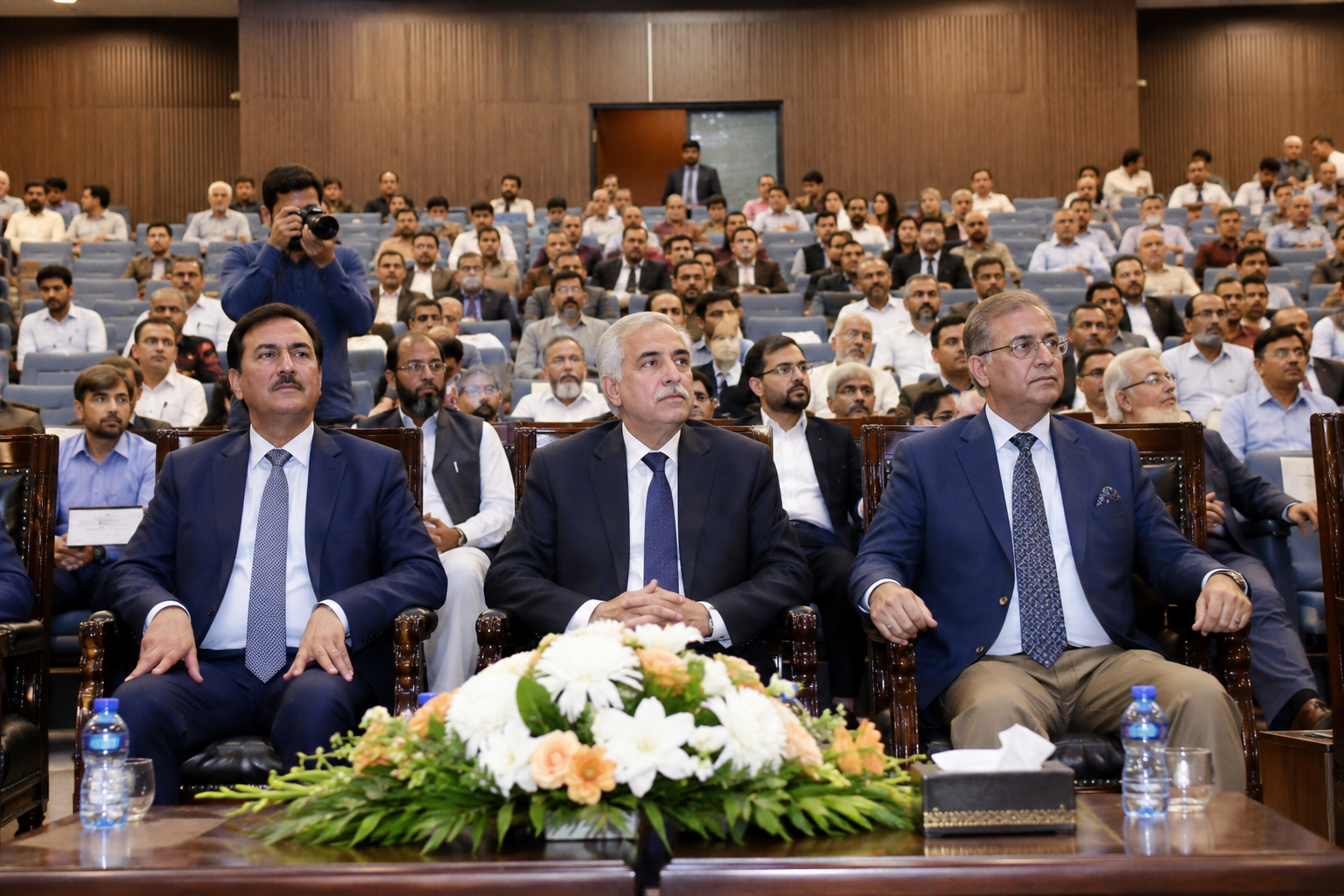
LAHORE: The University of Engineering and Technology (UET) Lahore hosted a high-level meeting of vice chancellors from more than 80 universities across Punjab under the auspices of the Higher Education Commission (HEC).

HEC Chairman Professor Dr Niaz Ahmad Akhtar chaired the meeting, while UET Lahore Vice Chancellor Professor Dr Shahid Munir hosted the gathering. Punjab University Vice Chancellor Dr Muhammad Ali Shah also attended the meeting and joined the senior academic leadership on stage.

The meeting focused on the rapid transformation of higher education in line with the changing demands of technology, industry and the global job market. Participants discussed the federal government’s initiative to modernize university curricula and degree programmes, with a particular emphasis on artificial intelligence and emerging technologies.

Dr Niaz Ahmad Akhtar urged universities to take immediate steps to update their curricula, teaching methods and academic programmes. He stressed the need to equip students with modern knowledge and practical skills that can help them compete in an increasingly technology-driven economy.

The HEC chairman highlighted the importance of incorporating fields such as artificial intelligence, data science, robotics, cybersecurity and biotechnology into university education. He also called on universities to align their academic programmes with the evolving needs of industry and the employment market so they can produce graduates with relevant and marketable skills.

During the meeting, participants exchanged views on the role of artificial intelligence in higher education, research and innovation. They also discussed digital learning, technology-enabled teaching and opportunities to strengthen international collaboration among universities.

UET Lahore Vice Chancellor Professor Dr Shahid Munir said the university was ready to share its AI-related curriculum and coursework with other higher education institutions. He emphasized the importance of cooperation among universities to accelerate the adoption of modern technologies and strengthen the quality of higher education across the country.

The meeting also highlighted the growing importance of research and digital education in preparing universities for future challenges. Academic leaders discussed ways to promote innovation, improve learning opportunities and create stronger links between higher education institutions and industry.

As part of a plantation campaign at UET Lahore, HEC Chairman Professor Dr Niaz Ahmad Akhtar also planted a sapling on the university campus, underscoring the institution’s commitment to environmental sustainability.

The meeting concluded with UET Lahore Vice Chancellor Professor Dr Shahid Munir presenting a commemorative shield to the HEC chairman in recognition of his visit and participation in the important academic gathering.

Similar Posts

  • | | |

    Polling continues in second phase of AJK elections

    Voting is underway in the second phase of the Azad Jammu and Kashmir (AJK) Legislative Assembly elections, with polling taking place for nine constituencies in Muzaffarabad Division and 12 refugee constituencies located across different parts of Pakistan. Polling began at 8:00am and will continue without interruption until 5:00pm. Election authorities have urged voters to reach their designated polling stations before the closing time to cast their ballots. Extensive security arrangements have been made to ensure peaceful polling throughout the election process. Officials said 1,483 polling stations have been established across Muzaffarabad Division, while election staff and security personnel have been deployed to maintain law and order. The second phase is considered an important stage of the AJK elections, as thousands of voters are participating in the selection of representatives for the Legislative Assembly. Alongside the nine seats in Muzaffarabad Division, polling is also being held for 12 refugee constituencies representing Kashmiri refugees residing in various cities across Pakistan. These include six Jammu seats and six Kashmir Valley seats. In Karachi, polling is being conducted for LA-34 (Jammu-I) and LA-40 (Kashmir Valley-I). Election officials have established 34 polling stations to facilitate voters in the city. According to election authorities, 698 registered voters are eligible to vote in the Jammu-I constituency in Karachi, while the Kashmir Valley-I constituency has 4,200 registered voters. Polling is also in progress for three refugee constituencies in Rawalpindi and Islamabad, including LA-43 (Valley-IV), LA-44 (Valley-V) and LA-39 (Jammu-VI). Election officials said 12 candidates are contesting LA-43, while eight candidates are in the race for LA-44. A total of 14 candidates are contesting the LA-39 constituency. LA-43 has 3,346 registered voters, including more than 1,600 women voters. LA-44 has 6,996 registered voters, including 3,294 women, while nearly 37,000 voters are registered in LA-39, making it one of the largest refugee constituencies in the current election phase. To facilitate voting, the District Election Commission has established 10 polling stations for LA-43, 27 polling stations for LA-44 and 155 polling stations for LA-39. Election officials said polling is continuing under strict security, with law enforcement agencies deployed at polling stations and sensitive locations to ensure a peaceful voting environment. Authorities are closely monitoring the electoral process and have urged political workers and voters to follow election rules.

  • |

    Solar boom needs battery storage, grid reforms to sustain momentum

    Islamabad: Pakistan’s rapid expansion of solar energy has already generated billions of dollars in savings, but experts and policymakers on Tuesday warned that battery storage, grid modernization and supportive policies are now essential to sustain the country’s clean energy transition. Speaking at the Solar, Storage and Flexibility 2026 Conference, Federal Minister for Power Awais Leghari said Pakistan’s energy mix is already 50% clean and is targeted to reach 90% by 2035. He stressed that local manufacturing of battery storage systems and the introduction of a daytime Time-of-Use (ToU) tariff would be key to integrating growing solar generation into the national grid. Addressing the conference, PPP Vice President Senator Sherry Rehman said solar energy has already saved Pakistan US$12 billion, with another US$6.3 billion in savings expected this year. She said the country now faces an energy management challenge rather than a generation shortfall, calling for major investments in battery storage, smart grids and modern transmission infrastructure. Rehman said one in every five Pakistani households now uses solar energy and urged international climate finance to prioritize distributed renewable energy, battery storage and affordable financing for households and small businesses instead of focusing mainly on large utility-scale projects. She also opposed the proposed 18% GST on solar equipment, saying it would have slowed Pakistan’s clean energy transition, and called for targeted subsidies, microfinance and supportive regulations to expand access to renewable energy, particularly in underserved and off-grid communities. Renewable energy experts noted that Pakistan has installed an estimated 38 gigawatts of distributed solar capacity, while imports of lithium-ion Battery Energy Storage Systems (BESS) surged 220% in 2025, signalling rapidly growing demand for energy storage. Global renewable energy leaders, including Global Solar Council CEO Sonia Dunlop and Renewable Energy Council Asia Pacific representative John Grimes, described Pakistan’s consumer-led solar revolution as a model for other countries but stressed that a comprehensive battery storage policy and modern electricity grid are now critical to maintaining the momentum.

  • | |

    Pakistan auto sales jump 80% in July

    Pakistan’s automobile sector started fiscal year 2026-27 on a strong note, with overall vehicle sales rising nearly 80% year-on-year in July 2026, according to data from the Pakistan Automotive Manufacturers Association (PAMA). Sales of cars, light commercial vehicles, vans, jeeps and electric vehicles reached 19,818 units during the month, compared with 11,034 units in July 2025. However, sales fell 13% month-on-month from the 22,741 units recorded in June. Analysts attributed the annual increase to stronger passenger-car demand, new vehicle launches, the entry of new manufacturers and growing auto financing. Leena Abid of Arif Habib Limited said passenger-car sales led the overall growth, jumping 141% year-on-year. She noted that June had benefited from pre-budget purchases, while uncertainty over the new Auto Policy affected bookings in July. Pak Suzuki recorded the highest sales at 10,120 units, representing a 175% year-on-year increase, although its sales declined 12% from June. Indus Motor Company sold 5,089 units, up 53% annually and 45% from the previous month. Honda Atlas Cars reported 2,640 units, marking a 76% annual increase but an 11% monthly decline. Sazgar Engineering sold 663 passenger vehicles. The two-wheeler market also performed strongly, with industry sales increasing 39% year-on-year to around 169,713 units, although volumes slipped slightly from June. Atlas Honda continued to dominate the segment. Commercial vehicles also recorded substantial annual growth. Truck sales surged 169% year-on-year, while bus sales increased 14%. Ghandhara Automobiles sold 111 trucks, up 247% annually and 31% month-on-month. Ghandhara Industries reported 424 units, a 212% year-on-year increase. Meanwhile, tractor sales rose 4% year-on-year to 1,242 units but plunged 59% from June. Al-Ghazi Tractors sold 414 units, up 29% annually, while Millat Tractors recorded 828 units, down 5% year-on-year. Analysts expect market performance to remain closely linked to the new Auto Policy, financing conditions and consumer demand in the coming months.

  • | | | |

    Yemen launches counter-operation against Houthis a…

    Yemen’s internationally recognised government forces have launched a military counter-operation against the Houthis following a series of missile and drone attacks on military positions in the provinces of Marib and Hadramout, according to a military spokesman. Yemeni army spokesman Majed al-Nazili said the government forces had begun responding to the attacks and would not tolerate threats against civilians, troops or military positions. “We will give a decisive military response to the threats facing the Yemeni people and armed forces,” al-Nazili said, according to the statement cited by local media. The announcement comes after Houthi forces carried out a series of attacks on government-aligned military camps in Marib and Hadramout. Recent reports said at least 30 Yemeni government soldiers were killed and 15 others wounded in the strikes. The escalation has raised fresh concerns over the fragile security situation in Yemen, where large-scale fighting had significantly declined following the UN-mediated truce that began in April 2022. Although the truce formally expired later that year, the country avoided a full return to nationwide warfare for an extended period. The latest violence is being closely watched because Marib remains strategically important to Yemen’s government, while Hadramout is a major eastern province with significant military and economic importance. The United Nations has repeatedly warned that renewed military escalation could undermine diplomatic efforts and worsen Yemen’s already severe humanitarian crisis. The UN Security Council has stressed the need for restraint and a Yemeni-led political process as the most viable route toward a lasting settlement. The latest developments could therefore mark a dangerous turning point if the government’s promised counter-operation leads to sustained fighting. For millions of Yemenis already affected by years of conflict, renewed hostilities could bring further displacement, economic hardship and pressure on essential services. With both sides now trading threats and military strikes, attention is turning to whether the latest confrontation remains limited—or develops into a broader escalation across Yemen.

  • | |

    Peshawar High Court blocks deportation of two Afgh…

    The Peshawar High Court has stopped the deportation of two Afghan journalists who are currently living in Pakistan. The court has directed the federal government to decide their cases within two months. The petitioners have been identified as Syed Ehsanullah Salehi and Syed Munir Ahmed. Both are Afghan journalists. The court said the two petitioners entered Pakistan on valid visas. They are currently residing in the country. According to the petitioners, they have applied for resettlement in France. Their applications are still under consideration. The petitioners also informed the court that the French embassy has already verified their cases. Their lawyer told the court that both journalists face a risk of arrest and deportation. He said the fear of deportation has also restricted their freedom of movement in Pakistan. After hearing the case, the high court directed the federal government to determine the matter within 60 days. The court also issued directions for the situation if the government fails to reach a decision within the given period. It said the Ministry of Interior should grant the petitioners temporary permission to remain in Pakistan. The ruling provides temporary relief to the two Afghan journalists while their cases are being reviewed by the relevant authorities. Separately, Minister of State for Interior Talal Chaudhry said Afghan nationals who wish to return to Pakistan in the future can do so after obtaining a valid visa. The development comes as Afghan nationals in Pakistan continue to face scrutiny over their legal status and documentation. The court’s decision means that the two petitioners cannot be deported while the government considers their cases within the period set by the court

  • | |

    Sharjeel Memon turns to NCCIA over social media al…

    KARACHI: Senior Sindh Minister Sharjeel Inam Memon has approached the National Cyber Crime Investigation Agency (NCCIA) over what he described as a social media campaign aimed at damaging his reputation and that of his son, Rawal Memon. Memon filed a written complaint with the cybercrime agency on August 9, seeking an investigation into what he termed false, fabricated and malicious claims circulating online. The controversy centres on social media allegations linking Memon to a guesthouse in Gulistan-e-Jauhar, Karachi, where Mir Ali Raza was allegedly tortured and killed. Posts circulating on social media claimed that the property was owned by the Sindh minister. Taking notice of the allegations, Memon urged the NCCIA to investigate the matter and determine the facts behind the claims. He also expressed his willingness to cooperate fully with the authorities during the investigation. The minister’s complaint comes as scrutiny surrounding the Mir Ali Raza case continues to generate discussion on social media, with competing claims being circulated online.

Leave a Reply

Your email address will not be published. Required fields are marked *