beyond public finance

Beyond Public Finance: Towards  Constitutional Po…

Pakistan has never lacked economic advice. Since independence, successive governments have experimented with socialist planning, import substitution, nationalisation, structural adjustment, privatization, fiscal decentralisation, value added taxation, documentation drives, digital governance and, most recently, artificial intelligence in tax administration

Almost every reform has been presented as the missing ingredient that would place the country on the path of sustained prosperity. However, Pakistan continues to oscillate between balance-of-payments crises, external dependence, fiscal instability and repeated recourse to the International Monetary Fund (IMF).

This persistent failure raises a more fundamental question. Is Pakistan’s crisis primarily economic, or are economists asking the wrong questions? For decades, the dominant explanation has remained remarkably consistent. Pakistan is said to suffer from a narrow tax base, inadequate domestic resource mobilisation, weak public institutions, poor governance and inconsistent implementation of otherwise sound policies. According to this view, if taxes were broadened, exemptions withdrawn, administration digitalised and markets allowed to function efficiently, sustainable growth would eventually follow.

There is much truth in these observations. They identify many of the symptoms. But they do not fully explain why technically sound reforms repeatedly fail in Pakistan while producing very different outcomes elsewhere. The reason, as suggested in earlier writings, is that Pakistan cannot be understood through the conventional assumptions of public finance alone. Economic policy does not operate in a constitutional vacuum; it reflects the incentives created by the political and legal institutions within which governments function.

Orthodox economics generally assumes a constitutional order within which governments seek, however imperfectly, to maximise public welfare. Fiscal policy, taxation and expenditure are analysed as instruments for correcting market failures, financing public goods and promoting economic growth. Political constraints are acknowledged but usually treated as external distortions rather than integral components of economic analysis.

Pakistan presents a different reality. Here, constitutional arrangements, political incentives, strategic considerations and informal institutions have shaped fiscal outcomes as much as, and often more than, economic policy itself. Taxation has frequently reflected the distribution of political power rather than principles of efficiency or equity

Public expenditure has often been determined by strategic imperatives rather than developmental priorities. External assistance has repeatedly substituted for difficult domestic reforms. Elite bargains have preserved privilege while transferring the burden of adjustment to documented businesses, salaried individuals and ordinary consumers. These outcomes cannot be adequately explained by models that assume an impartial state pursuing coherent economic objectives. The analytical framework itself, therefore, requires reconsideration.

This series proceeds from a simple but powerful proposition: before analysing taxes, budgets or debt, one must first understand the constitutional rules that shape political incentives. This is the central insight of Constitutional Political Economy (CPE). 

Unlike conventional public finance, CPE begins not with taxes or budgets but with the constitutional rules, institutional incentives and political structures that determine how economic decisions are actually made. It asks a prior question: Who designs the rules under which economic policy operates, whose interests do those rules serve, and how do they shape incentives for both governments and citizens?

Once that question is asked, many of Pakistan’s recurring puzzles begin to appear less mysterious. Why do technically sound tax reforms repeatedly fail? Why do successive governments rely on indirect taxation while avoiding politically influential sectors? Why has documentation remained elusive despite extraordinary advances in digital technology? Why does every external crisis quickly become a fiscal crisis? Why has debt expanded despite repeated stabilisation programmes?

The answers lie not merely in economics but in the constitutional and political environment within which economics operates.

This series proposes a different approach. Rather than examining taxation, debt or fiscal federalism as isolated subjects, it will analyse them as interconnected manifestations of Pakistan’s constitutional political economy. Future parts will explore how colonial legacies, post-independence constitutional choices, geopolitical dependency, elite capture, federal arrangements, judicial interpretation and administrative incentives have combined to shape Pakistan’s economic trajectory.

The purpose is not to reject orthodox economics. Public finance remains indispensable. Sound taxation, efficient expenditure and macroeconomic stability are essential for any modern state. However, these instruments cannot achieve their intended objectives when the institutional environment within which they operate generates incentives that systematically frustrate reform.

Pakistan’s crisis is not simply a fiscal crisis. Nor is it merely a crisis of governance. It is, more fundamentally, a crisis of constitutional political economy. Unless that deeper reality is understood, technical reforms, however well designed, will continue to produce disappointing results because they address the symptoms rather than the constitutional incentives that generate them.

In the next part, we shall examine why the assumptions of orthodox public finance differ fundamentally from those of constitutional political economy, and why that distinction matters profoundly for understanding Pakistan.

[To be continued]

 ____________________________________________________________________

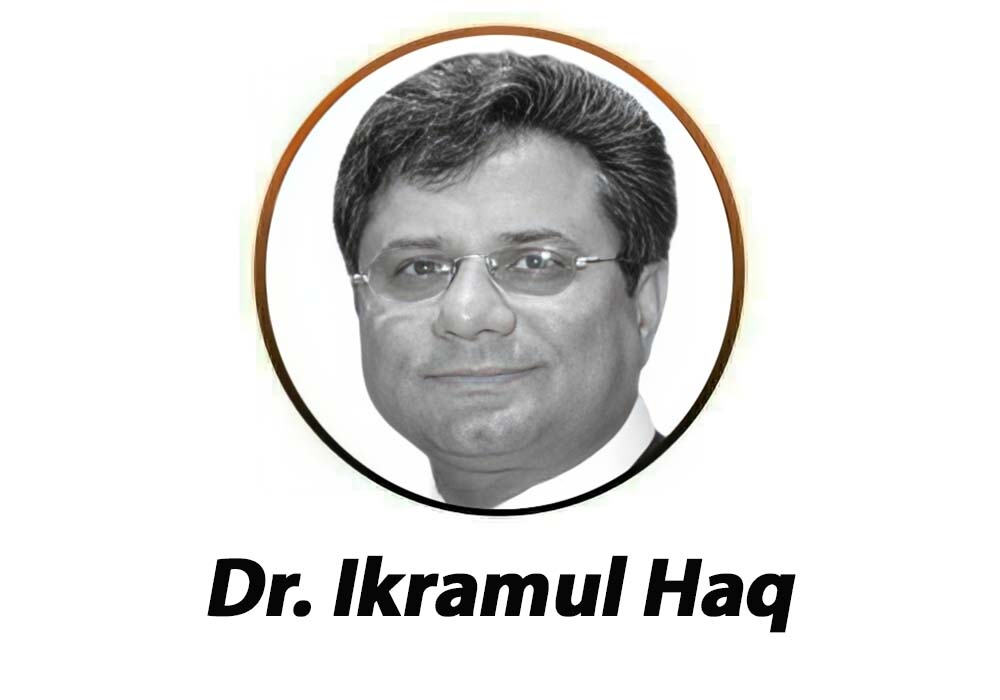
Dr. Ikramul Haq, Advocate Supreme Court, Adjunct Faculty at Lahore University of Management Sciences (LUMS), member Advisory Board and Visiting Senior Fellow of Pakistan Institute of Development Economics (PIDE), holds an LLD in tax laws. He was full-time journalist from 1979 to 1984 with Viewpoint and Dawn. He also served Civil Services of Pakistan from 1984 to 1996. 

Similar Posts

  • The Age of Consumerism              …

    Inflation is at its peak all around the world, while some in one part of the world cannot afford clean fresh water, others are buying a cup of coffee worth more than 10 dollars just to meet their aesthetics for an instagram story. It has become a necessity to upgrade their phones each year as apples launch new versions, or to eat at fancy cafes just to take pictures of the food even if their rent is not due. These are the outcomes and aftermaths of the rise of social media trends.   A new occupation of being an online influencer has emerged. Where a decade ago A-list celebrities were paid to promote products, now the same can be done through influencers (which from a marketing point of view is a lot cheaper and faster for companies). An influencer makes a 30 second video of persuasively advertisementing customers which allows them to make sufficient amounts of income. Paradoxically  they may even be neglectful of the product they are branding being safe or useful. Thus, common people with normal 9-5 jobs are falling for these traps online.   Millennials and Genz, both have been found to indulge in these unnecessary shopping habits arising from the online advertisements of influencers. The lives of influencers may seem perfect. Contradictorily someone promoting a skin care treatment may have genetically clear skin, others promoting health and fitness programmes may in reality live an unhealthy lifestyle. Little by little, bit by bit people who scroll on social media platforms like instagram and facebook are convinced to purchase needless items with no useful impact in their lives.   Gluttony is regarded as one of the seven deadly sins. The newly emerged habit of online shopping is feeding into it. Young adults nowadays are often in debt, however not the usual student debt they owe to their colleges- but the ones they owe to the credit card companies whom they have failed to pay back for the haphazard jumble of products they have purchased while not being cautioned enough. Most of these purchases are done to fit in a trend and are often to please the society they are around rather than personal desires.   One after another, the oligarchs set up traps for the world and yet again and again we have been seemingly fallen for it. May it be big fast food chains labeling every ultraprocessed junk as “high in protein” whilst hiding the fact that the same products are also high in processed fats and preservatives or having addictive ingredients which release dopamine and makes the buyer destined to repurchase.   People often call this impulse buying “convenient” for it is delivered on doorsteps. In some cases it may be accuarte, but in truth it is another method of making people becoming indolent and shiftless. A 10 minute walk to the supermarket is avoided when apps like doordash are introduced to deliver groceries to doorsteps- the same 10 minute walk which is without a debate must for all ages. Not only is this extremely harmful for the human body physically but it has its dangerous impacts on psychological health leading to high profile cases of depression and isolation.   These habits start slow and seem innocent, until they become addictions and empty bank accounts while also destroying an individual’s ability to live a life in which pleasing others is not a priority. This trend does not seem to stop anytime soon- nevertheless it is expanding endlessly in all countries, cultures and environments. Even in this cycle the rich gain tremendously while the poor pay unconsciously thinking that their lives are improving. This is modern slavery where chains are replaced by computers given to people in their hands and control their lives through it.

  • SPSC: When Cockroaches Approach the Granary

    A society does not collapse the day corruption is discovered; it begins to decay the day corruption becomes ordinary. The Sindh Public Service Commission (SPSC), established to uphold merit and provide equal opportunities to the youth of Sindh, has repeatedly found itself at the center of controversy. Allegations of paper leaks, irregularities, and lack of transparency have steadily eroded public confidence, leading thousands of young aspirants to raise their voices in protest. Reports of demonstrations against SPSC over recruitment and examination concerns, as well as past official action following examination irregularities, reflect the depth of this mistrust. The title, “Cockroaches Approaching the Granary,” is symbolic. A granary stores the food that sustains a nation, while cockroaches represent decay, contamination, and silent destruction. Public institutions responsible for selecting the brightest minds are the granaries of governance. If corruption, negligence, or manipulation infiltrates these institutions, they contaminate not merely examinations but the very future of society. The protests by the youth of Sindh are not simply demonstrations against one institution. They are a cry for justice, transparency, and dignity. Behind every candidate stands a family that has invested years of sacrifice, countless hours of preparation, and unwavering hope. When the credibility of competitive examinations is questioned, it is not only individual dreams that are shattered; public trust in the state’s promise of equal opportunity is weakened. This struggle echoes a wider regional concern. Across South Asia, young people have repeatedly taken to the streets whenever examination systems were perceived to have failed them. In India, nationwide protests over alleged examination paper leaks became a powerful reminder that education and public recruitment derive their legitimacy from public trust. Whether in India or Pakistan, the message from the youth remains remarkably similar: merit cannot survive where examination integrity is compromised. The issue transcends politics. It is fundamentally about governance. Every leaked paper, every allegation of favoritism, and every unexplained irregularity diminishes the value of honest effort. When deserving candidates begin to believe that influence outweighs competence, a dangerous message spreads across society: hard work is no longer enough. The consequences extend far beyond recruitment. Civil servants, lecturers, engineers, doctors, and administrators selected through questionable processes ultimately shape the institutions that govern millions. Weak recruitment today becomes weak governance tomorrow. A nation that compromises on merit ultimately compromises on its future. Yet this moment also presents an opportunity. The protests of Sindh’s youth should not be viewed merely as expressions of anger but as demands for institutional reform. Transparent examination procedures, secure digital systems, independent oversight, prompt investigations into alleged irregularities, and public accountability can restore confidence. Institutions earn respect not by claiming perfection but by responding credibly to legitimate concerns. History reminds us that nations progress when their institutions are stronger than individual interests. The youth of Sindh are asking for nothing extraordinary. They seek only a level playing field where success is determined by knowledge, ability, and perseverance rather than by connections or corruption. The metaphor of cockroaches approaching the granary serves as a warning. If the guardians of merit fail to protect the granary, decay will eventually consume the harvest. But if institutions choose transparency over secrecy and accountability over complacency, the granary can once again nourish hope instead of despair. The future of Sindh depends not merely on educating its youth but on convincing them that their honesty, talent, and hard work will always be rewarded. Merit is the foundation of every successful society. Once that foundation cracks, the entire structure stands in peril.

  • New World Order and World War III

    There is a common perception among experts that a new world order usually emerges after a world war or a major geopolitical event. Wars are caused by the irrational behavior of existing powers, illegal resource capture, and opposition to rising powers. These factors make the peaceful transition difficult. Thucydides’ Trap further explains the phenomenon. In modern history, World War I and World War II are often quoted as examples.   World War I began after Germany’s exponential growth and emergence as a new economic and global power. Germany’s efforts to enhance its influence further complicated the situation for existing powers such as the British Empire. It threatened them, and they started to conspire against Germany, especially after the launch of the Berlin-Baghdad railway line. The Berlin-Baghdad railway was considered a game-changing initiative for Europe and the Middle East. The British Empire negated it and built alliances with France; Russia, and later on, the USA helped them. World War II is considered a byproduct of the 1930s economic recession, Germany’s reemergence, Britain’s declining power, and the USA’s emergence as a new economic and global powerhouse.   World War I resulted in the collapse of the Ottoman Empire and Germany. It laid the first stone of the new empire, the USA. President Wilson tried to build on the fallen Empires and create a new world order through the League of Nations, but it could not sustain itself and ended with World War II. World War II ended with the collapse of Germany and the end of the two empires, the UK and Japan. After World War II, the USA emerged as a global empire and began crafting a new world order. Fortunately, it had the support of the USSR and China, which helped it create a new world order. However, after building a new world order, the USA turned against the USSR, and China laid the foundation of the Cold War Era.   The new system was built to continue the exploitation, but with new tools and strategies. With the end of World War II and the rise of freedom movements, the Western powers realized that the age of occupation and colonization had passed. It is not possible to enslave people physically. Thus, they pondered what new ways of controlling people should be. They identified the economy as a leading tool. Hence, they began devising tools to control the global economy. In the beginning, they leveraged the West’s production capacity to dominate the global economy. With the advent of globalization, they introduced tools to control supply chains and dominate markets by exerting absolute control over intellectual property rights, market rulemaking, and non-tariff barriers such as human rights, democracy, and the environment.  It led to the weaponization of the economy.   Simultaneously, they initiated the process to strengthen control over the financial system. The Bretton Woods institutions helped the USA and the West to dominate the global financial system. The US$ further consolidated its dominance as the leading global currency of global trade and reserves. Unfortunately, they also weaponized the global financial system.   However, with the dawn of the 21st century, they started to realize that new economic, technological, and trade powerhouses are emerging. These will challenge their dominance and exploitation. The rapid development and trade progress of the Global South further deepened their fears. China’s advances in technology and innovation made them worry about their future. However, China’s emergence as an alternative economic, trade, and technological power, challenging Western dominance in these areas, antagonized them.  After the launch of global initiatives such as GDI, GSI, BRI, GCI, GGI, AIIB, CIIE, and CIFTIS, among others, the West took off its gloves and began openly opposing China.   The West is opposing China, especially its BRI and technological aspects, just like the British and other powers opposed Germany’s rise and the Berlin-Baghdad railway line just before World War I. Therefore, many experts believe that the world is living under the threat of a looming third world war.   However, another school of thought claims the world is already in World War III, with different parameters. This time the battlefield would be trade, technology, and financial systems, as mentioned by an expert from Russia, Ms. Daria Para.   According to this theory, the world is already at war. President Trump has already intensified the trade war. He is using it as a tool to extract maximum benefit and consolidate the USA’s dominance over the global economic system. The USA is also not allowing any country to surpass it in the field of technology. First, in the late 90s and early 2000s, it compelled Japan to give up its dream of technological leadership. Now, the USA is doing everything to undermine Chinese advancements. It is sanctioning Chinese companies and compelling other nations to cut or restrict relations with China. Even the USA is creating challenges for Chinese students, as it considers them essential to technological development. Hence, admissions have dropped significantly. The USA has also weaponized the financial sector and is using it to penalize countries.   The war in these areas is deeply impacting humanity. It is aggravating inequality, food insecurity, and human suffering. This time, people are dying of malnutrition, unsafe water, poverty, and lack of opportunities for livelihoods, not with bullets or bombs. It is more painful and leaves lasting impacts on those who survive. Unfortunately, the war is intensifying in these fields. It is feared that soon it will lead to a hot war. First glimpses are already visible from the Iran-USA conflict, Russia-Ukraine conflict, regime change in Venezuela, blockade of Cuba, and conflicts in many other countries.   However, China and the Global South are still making every effort to avoid a third world war and create a new world order through reforms. The demand for reforms is rational and genuine, as due to flaws and inefficiencies of the existing order, inequality and poverty are on the rise and the world is facing the existential threat of climate change.

  • Democratic Technocracy and a New Administrative St…

    A truly democratic-technocratic model for Pakistan should also address the country’s administrative structure. Pakistan is too large and administratively complex to depend on highly centralized decision-making from Islamabad and provincial capitals. A modern governance system should therefore consider the creation of new provinces or constitutionally recognized administrative units, based on population, geography, economic viability, administrative accessibility, historical and cultural considerations, and the ability to provide effective public services. This distribution must not be based on the ground of nationality. In my personal opinion, in Pakistan, there is a very emotional and stimulation mind sets found everywhere, they create prejudice mentality among the whole nation. All provinces names should be on the basis of their respective specialty of that particular area. Sindh, Punjab, Khaiber pakhtoon kha, Balochistan, these names also must be changed to other names. This will remove the nation base mentality. The objective should not be to divide Pakistan on the basis of ethnicity, language or political rivalry. Rather, administrative boundaries should be designed around governance and public welfare. Where existing provinces have become too large to administer effectively, new administrative units could bring government closer to citizens, improve resource allocation, strengthen accountability and allow regional development plans to be tailored to local needs. Here is a very common example, as if there is a school, when strength of the students increases, school starts to produce more campus, this is just because of good administration, to deliver good services, to provide better education to all students equally. So same case is in Pakistan, now the population has been reached out more than 250 million. While, at the time of 1947, the population was 70-75 million, that was combined, west and East Pakistan both, and West Pakistan comprised of only 32-33 million. Now imagine, now the population is more than 250 million and provinces are same. The population has been increases up to 681%. Imagine….! Punjab population was 20 million in 1947, now in 2026 is 127 million. Sindh population was 6 million in 1947 and now in 2026 is 56 million. Similarly KPK was 11 million in 1947 and now is 41 million, Baluchistan was 4.3 million in 1947 and now is 15 million. By these figures, more provinces or administrative units must have been developed many years ago. When we look for cities of Sindh, as the largest opposition found in Sindh against this proposal, we see, Karachi population was 1 million and in 2026 is more than 20 million, Hyderabad was 5-6 lacs, means 500 to 600 thousands, and now in 2026 is 2.4 million. Similarly Tharparker population was almost 300 thousand only, now near to 2 million, Nawabshah, currently is SBA was 500 thousand in 1947 now in 2026 is almost 2 million, Larkana was 420 thousands and now is 1.7 million, Sukkur was 340 thousand in 1947 and now is 1.6 million. If I write the whole country data then we need many pages, so these main examples are presented to elaborate that new provinces or administrative units are compulsory in the country for the betterment of Pakistan and the people of Pakistan. Now, keeping in view the concept of new provinces or new administrative units, under a Democratic Technocracy model, each administrative unit could have an elected political government supported by professional technocratic administration. Citizens would elect their representatives, while key departments would be managed by qualified professionals and career administrators. Health systems could be led by experienced health administrators and public-health professionals; education by education-policy specialists; municipal development by professional urban planners and engineers; finance by qualified public-finance specialists; and agriculture, water, energy and industry by relevant technical experts. In current system, our all ministries have, very unfortunately, absolute irrelevant Persons to run that particular area, except a very few. Now see this model, would create a three-level governance architecture: Federal Government → Provincial/Regional Governments → Empowered Local Governments At the federal level, matters such as defense, foreign affairs, currency, national economic policy and other genuinely national responsibilities would remain centralized. At the regional level, governments would concentrate on sectors such as health, education, agriculture, provincial infrastructure and regional economic development. At the local level, elected governments would become directly responsible for municipal services, sanitation, water supply, local roads, primary healthcare, local education, waste management and other services that directly affect citizens. A New Map for Better Governance Pakistan should therefore be willing to have a serious national debate about whether the present administrative map remains optimal for the country’s future. The creation of additional provinces or administrative regions should be based on objective criteria rather than political convenience. A proposed new unit should undergo an independent feasibility assessment covering: – Population and geographic size – Administrative accessibility – Economic and revenue potential – Existing infrastructure – Healthcare and education requirements – Natural resources – Urban and rural population distribution – Connectivity and transportation – Fiscal sustainability – Public opinion and consultation – Protection of minority and regional rights No new unit should be created merely because a political group demands it, nor should a legitimate administrative reform be rejected simply because existing political interests oppose it. The principle should be simple: “Administrative boundaries should serve citizens-not political elites”. A smaller and more manageable administrative structure, combined with empowered local governments and professional administration, could make it easier to identify responsibility, measure performance and deliver public services. However, creating new provinces alone will not solve Pakistan’s governance problems. A smaller province with the same inefficient institutions would simply reproduce the same problems on a smaller scale. Administrative restructuring must therefore occur simultaneously with civil-service reform, fiscal decentralization, digital governance, merit-based appointments, independent oversight and strong local governments. The ultimate objective should be to create a Pakistan in which every citizen can reach an effective government institution without travelling hundreds of kilometers to a distant provincial capital, while every level of government remains constitutionally accountable to the people. This is where administrative reform and Democratic Technocracy meet: democracy determines representation, technocracy ensures competence,

  • Poetry, Power & Humanity—V  Waris Shah: Wh…

    Our discussion of Bulleh Shah in Part IV concluded with a question: Who are we when power can no longer name us? Bulleh Shah dismantled the identities imposed upon the human person by lineage, orthodoxy and social hierarchy. Waris Shah takes the inquiry into the institutions governing everyday life. He shows what happens when two human beings attempt to live according to the freedom Bulleh imagined. Heer is celebrated as Punjab’s greatest love story. To describe it merely as a romance, however, is to conceal its intellectual achievement. Earlier poets narrated the sufferings of Heer and Ranjha; Waris Shah’s classic poetic work Heeer (1766) placed an entire social order on trial. Shafqat Tanvir Mirza rightly observed that Waris treated the story through the “politics, economy and cultural values” lived by the people of his period. His poem contains a devastating criticism of poor governance, institutional corruption, religious exploitation, arrogance of the wealthy and misery of those without power. Love provides the narrative, but power determines its outcome. Waris Shah wrote against the background of eighteenth-century political disintegration. Invasions, weakening imperial authority, struggles among local forces and economic insecurity had destabilised Punjab. Waris Shah was not attached to a royal court capable of insulating him from ordinary suffering. His Heer therefore became more than a reconstruction of an old legend. It preserved Punjab’s speech, customs and collective memory while exposing the institutions through which privilege protected itself. Heer is central to this achievement because she is not a passive beloved. She recognises Ranjha, brings him into her father’s household as a herdsman, arranges opportunities to meet him and openly asserts her choice when the relationship is discovered. She possesses intelligence, desire and moral agency. Her freedom is tolerated only while it remains invisible and does not threaten the authority of the family. The moment Heer chooses her own future, affection turns into surveillance. Her body becomes the bearer of family honour, and marriage becomes the means through which that honour is restored. Heer does not ask permission to feel. She declares a commitment already formed through conscience and love. Her language is especially significant. She does not present Ranjha as an object she wishes to acquire. She has offered her own life and accepted responsibility for that choice. In a society where marriage joins families, properties and status groups, such self-determination is revolutionary. The dispute is not simply between one prospective husband and another. Ranjha represents Heer’s autonomous choice; the Kheras represent the settlement arranged for her by others. Her family treats marriage as a transaction carrying consequences for lineage, reputation and power. Heer insists upon treating it as a union requiring the will of the persons whose lives it determines. میں تاں منگ رنجھیٹے دی ہو چکی اساں منگ درگاہ تھیں لیا رانجھا Main tāṅ mang Ranjheṭe dī ho chukkī Asāṅ mang dargāh thīṅ liyā Rānjhā I have already been pledged to Ranjha; from the divine court itself I received him. اساں جان رانجھیٹے دے پیش کیتی لکھ کھیڑیاں نوں چا گھولدی ہے Asāṅ jān Ranjheṭe de pesh kītī Lakkh Kheṛiāṅ nūṅ chā gholdī hai I have laid my life before Ranjha; I would sacrifice a hundred thousand Kheras for him. This is the political economy hidden within the romance. Property is not limited to land, cattle and wealth. Patriarchal authority extends the idea of ownership to women. A daughter may be cherished as long as she accepts the future selected for her. Once she claims ownership of her own will, love within the family becomes conditional. Research on Heer similarly identifies the family, property, mosque, qazi, feudal hierarchy and ruling elite as interconnected institutions shaped by economic interest. Kaido is the most visible agent of this system, though he should not be dismissed as a solitary villain. He represents social surveillance: the resentful custodian of conformity who observes, reports and converts private happiness into public scandal. Power does not survive through rulers alone. It recruits relatives, neighbours and self-appointed guardians of morality who internalise its prohibitions and enforce them upon others. Kaido’s triumph begins when Heer and Ranjha’s love is no longer treated as a human relationship but as an offence against collective honour. The family then requires an institution capable of turning its demand into a lawful and religious command. The qazi enters at precisely this point. Waris Shah does not attack faith. He exposes the appropriation of faith by those serving property and patriarchy. The qazi is called because parental pressure has failed to secure Heer’s consent. Religious vocabulary is employed to present submission as virtue and resistance as sin. Heer answers him from within the moral tradition he claims to represent. She insists that genuine faith cannot be separated from truth, and that her union with Ranjha possesses a reality no ceremonial decree can erase. The surviving text presents an extended confrontation in which the qazi invokes authority while Heer asserts conscience and consent. Unable to persuade her, institutional power reveals its coercive core. The qazi threatens punishment and demands that she accept the Khera marriage. قاضی بنھ نکاح تے گھت ڈولی نال کھیڑیاں دے دِتی تور میاں Qāzī bannh nikāh te ghat ḍolī Nāl Kheṛiāṅ de dittī tor miyāṅ The qazi bound the marriage and placed her in the palanquin; she was sent away with the Kheras. ہیر کھیڑیاں نال نہ تُرے مولے پیا پِنڈ دے وچ ہے شور میاں Hīr Kheṛiāṅ nāl na ture, maulā piyā Piṇḍ de vich hai shor miyāṅ Heer would not willingly go with the Kheras; an uproar filled the village. کھیڑے گھن کے ہیر نوں رواں ہوئے جویں مال نوں لے وَگے چور میاں Kheṛe ghin ke Hīr nūṅ ravāṅ hoe Jiveṅ māl nūṅ lai vagge chor miyāṅ The Kheras took Heer and moved away, like thieves driving stolen cattle. The comparison is Waris Shah’s own and is among the most revealing images in the poem. The final line strips the ceremony of its respectable appearance. There has been a qazi, a marriage procession, jewellery, property and public

  • Reforming the Security Council Without Entrenching…

    The United Nations was founded in 1945 after the League of Nations had failed to preserve peace. Its Security Council was designed for the world that emerged from the Second World War, with five permanent members holding the veto and a small number of elected seats. That basic architecture has scarcely changed since 1965, when the non-permanent membership rose from six to ten. The veto was meant to keep the great powers inside the system and to prevent open conflict among them. Eight decades later the organisation still carries the imprint of 1945 while the membership of the United Nations has grown to 193 states and the global population exceeds eight billion. The Council’s composition therefore no longer reflects the international community it is supposed to serve. In 2008 the General Assembly launched the Intergovernmental Negotiations to consider reform. The discussions have centred on five linked questions: categories of membership, the veto, regional representation, the size of the Council and its working methods. Africa still has no permanent seat. Latin America, South Asia and large parts of the Muslim world remain under-represented. The present arrangement is widely seen as a remnant of the colonial order that concentrates power among a few states. Many argue that emerging powers and significant regional actors—Pakistan, Brazil, Egypt, South Africa, Nigeria, Indonesia, Türkiye, Saudi Arabia, Mexico and India among them—ought to enjoy greater weight if the Council is to regain legitimacy and effectiveness. Yet the debate is locked. The Group of Four seeks permanent seats for itself and two for Africa. The African Group demands two permanent seats with full veto rights. France and Mexico urge the permanent members to refrain voluntarily from using the veto in cases of mass atrocity. The Uniting for Consensus group, led by Pakistan and supported by Italy, Mexico, Argentina, Canada and South Korea, rejects any enlargement of the permanent category. It proposes instead an expansion of elected seats that would be longer-term and renewable. The rival camps cancel one another’s majorities, leaving the process stalled. Enlarging permanent membership would not reform the Council so much as entrench new privileges. Additional veto-holders would multiply the occasions on which national interests can block action. The repeated American vetoes that have shielded Israel and allowed the destruction of Gaza to continue illustrate how a single permanent member can nullify the will of the rest. More permanent members would introduce further competing interests and raise the risk of paralysis. Once granted, permanent status is effectively irreversible; the new members would be free to obstruct any future attempt to revise the arrangement. India’s claim to a permanent seat invites particular scrutiny. Permanent membership requires sustained confidence in a state’s fidelity to the Charter. India’s refusal to implement successive Security Council resolutions on Jammu and Kashmir, its rejection of a United Nations-supervised plebiscite and its unilateral constitutional changes in the territory sit uneasily with that standard. Concerns about human-rights practices in the disputed region and elsewhere, the suspension of the Indus Waters Treaty, reports of transnational repression, the Citizenship Amendment Act, the treatment of Rohingya refugees and a foreign policy that has offered strategic comfort to Israel all raise legitimate questions. India’s status outside the Non-Proliferation Treaty and the Comprehensive Test Ban Treaty adds a further layer of unease. Germany’s candidature faces different objections. Europe already holds two permanent seats. Adding a third would deepen regional imbalance. Recent German positions on Gaza have been criticised as inconsistent with the very humanitarian principles permanent members are expected to uphold. The country’s failure to secure even a non-permanent seat in a recent election suggests that its aspirations do not command the necessary breadth of support. The Uniting for Consensus proposal offers a more measured path. Expanding the elected membership from ten to twenty would open opportunities for Africa, Asia-Pacific, Latin America and the Caribbean without creating new permanent centres of power. Periodic elections would keep members accountable to the wider membership. Rotation would allow more states to contribute to the maintenance of peace and security. Broader participation could improve the quality of deliberation on intractable questions such as Palestine, Ukraine and other long-standing disputes, without multiplying vetoes that have so often produced deadlock. Reform should strengthen the Council’s legitimacy without sacrificing its capacity to act. Expanding permanent membership would create additional privileged seats, heighten the risk of institutional paralysis and make subsequent change more difficult still. Wider geographical representation is better achieved by enlarging the elected ranks. The Uniting for Consensus approach preserves the existing institutional framework, enhances inclusivity, promotes accountability through regular elections and reflects the interests of the membership as a whole. Sustainable reform therefore lies in widening participation and reinforcing regional balance rather than in extending permanent privilege and the veto.

Leave a Reply

Your email address will not be published. Required fields are marked *