8216locked loaded8217 iran
| | | |

US ‘locked and loaded’ as Iran talks continue

US President Donald Trump has said Washington is engaged in direct talks with Iran, signalling that diplomacy remains active despite rising tensions in the Middle East. However, he warned that the United States remains fully prepared for military action if negotiations fail.

Speaking at the White House, Trump said discussions with Tehran are ongoing and described Iranian officials as becoming “very serious” in the negotiations. He stressed that while the US is not rushing to reach an agreement, preventing Iran from acquiring a nuclear weapon remains a top priority.

The US president also stated that a previously mentioned “massive” military strike against Iran may not be necessary if diplomatic efforts produce results. Nevertheless, he made it clear that American forces remain on high alert and are fully prepared to respond if required.

Trump said senior administration officials, including Secretary of State Marco Rubio and Vice President JD Vance, are involved in the ongoing diplomatic contacts with Iran. He did not provide further details about the negotiations or any possible timeline for an agreement.

Iranian Foreign Minister Abbas Araghchi responded by saying Tehran would not be intimidated by threats or external pressure. Speaking during a regional meeting in Kyrgyzstan, he said Iran would continue defending its national interests and would not change its policies under pressure.

Meanwhile, regional tensions remain high. Air raid sirens were reported in Bahrain as Iran claimed it continued targeting US military bases in Bahrain, Kuwait and Jordan. The situation has added to concerns over a wider conflict in the Gulf region.

The Saudi-led coalition also announced military operations against Houthi positions in Yemen. Coalition officials said the strikes targeted military sites, while Houthi media reported damage to telecommunications and port facilities in Hodeidah and claimed that one civilian was injured.

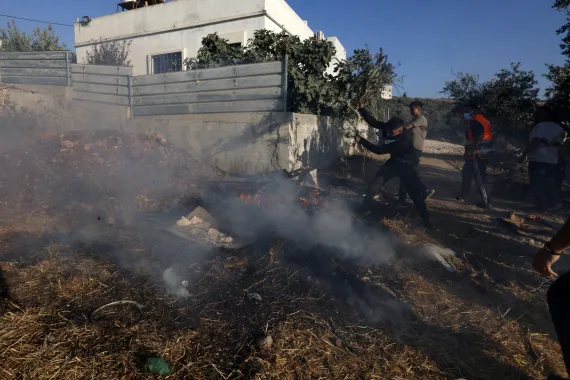
Violence also escalated in the occupied West Bank, where clashes involving Israeli settlers and Palestinians left several people dead. Rights groups have urged the international community to take immediate steps to prevent further violence and protect civilians.
Similar Posts

  • | |

    Flood defences shield Gujrat from monsoon

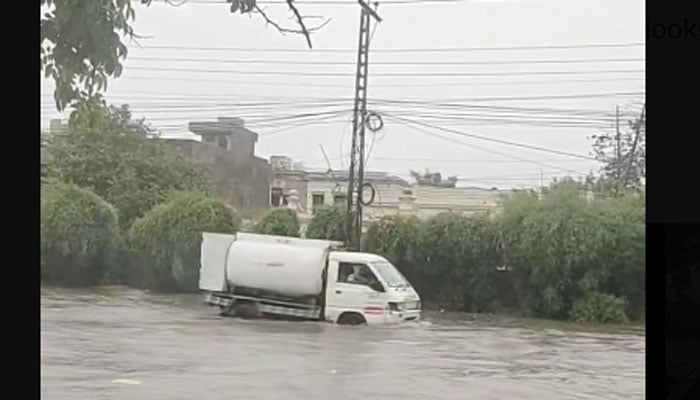
    The Water and Sanitation Agency (WASA) has credited pre-monsoon flood protection measures with preventing urban flooding in Gujrat during the recent spell of heavy rains. Managing Director WASA, Kashan Hafeez, said the city remained safe from potential flooding because of advance planning and the timely completion of key drainage projects before the arrival of the monsoon season. He said a three-kilometre-long protective drain constructed along Mehsam Mor and Fatehpur Road proved highly effective in managing the flow of rainwater. According to him, the project successfully diverted excess water away from residential and commercial areas, significantly reducing the risk of flooding. Kashan Hafeez said rainwater was redirected toward the Halsey Nullah through the newly developed drainage network. By channeling water into natural waterways, authorities were able to prevent water from accumulating in densely populated neighborhoods and major roads. He added that the drainage system functioned as planned despite heavy rainfall, allowing rainwater to flow smoothly without causing widespread disruption to daily life or damage to infrastructure. The WASA chief said the protective drainage network was developed under a Rs2 billion infrastructure project aimed at strengthening Gujrat’s flood management system. As part of the initiative, four major protective drains were constructed to improve stormwater disposal and enhance the city’s resilience against seasonal flooding. He said the successful performance of the project demonstrates the importance of proactive planning and investment in urban infrastructure. According to WASA, the newly built drainage system will continue to play a vital role in protecting Gujrat from future monsoon-related flooding and ensuring the safety of residents during periods of heavy rainfall.

  • | |

    Pakistan, Saudi Arabia landmarks lit up after defe…

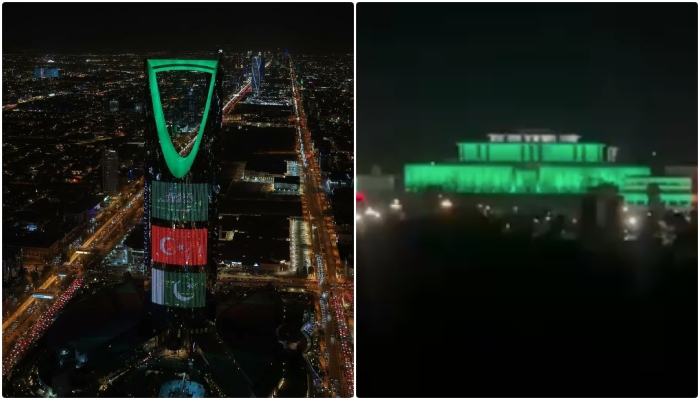
    Major landmarks in Pakistan and Saudi Arabia were illuminated with the national flags of Pakistan, Saudi Arabia and Türkiye following the signing of a landmark defence agreement between the three countries. The agreement was signed in Makkah a day earlier by the leaders of Pakistan, Saudi Arabia and Türkiye, marking a significant development in defence cooperation among the three countries. In Islamabad, key government buildings, including the President’s House, Prime Minister’s House and Parliament House, were decorated with the flags of the three nations to mark the agreement. The flags of Pakistan, Saudi Arabia and Türkiye were also displayed along major roads across the federal capital. Welcome banners highlighting the Makkah defence agreement were placed at prominent locations across the city. The celebrations extended to Saudi Arabia, where major landmarks and towers in Riyadh and other cities were illuminated and decorated with the flags of all three countries. The coordinated displays reflected the close ties and growing strategic cooperation between Pakistan, Saudi Arabia and Türkiye following the signing of the defence pact.

  • |

    India alarmed by Pakistan-Saudi-Türkiye alliance

    The defence agreement between Pakistan, Saudi Arabia and Türkiye has emerged as a major strategic concern for India. The three countries signed the Makkah Joint Defence Agreement on August 7. Under the pact, an armed attack against any one of the three countries would be treated as an attack against all three. The agreement has attracted significant attention in New Delhi. Indian analysts are assessing its possible impact on the regional balance of power. An Indian media analysis recalled comments made by Indian Army Deputy Chief Lieutenant General Rahul R Singh in 2025. He had said that during the military confrontation between India and Pakistan in May, India faced several forms of support for Pakistan. The analysis claimed that Pakistan was directly involved in the conflict. It also alleged that China provided satellite information to Pakistan. Türkiye was accused of providing military assistance to Pakistan. The assistance reportedly included drones and other defence equipment. Saudi Arabia’s participation has now added another dimension to India’s concerns. Indian analysts fear that Riyadh could support Pakistan if another armed conflict breaks out between India and Pakistan. The concern comes despite India’s strong relations with Saudi Arabia. The two countries have extensive economic and strategic ties. India and Saudi Arabia cooperate in oil, trade, investment, security and cultural affairs. Their bilateral trade is estimated at around $43 billion. Saudi Arabia also remains an important supplier of crude oil to India. It reportedly meets around 14% of India’s crude oil requirements. Pakistan and Saudi Arabia also have a long history of defence cooperation. Pakistan has provided military training to Saudi forces. Pakistani military personnel have also been deployed in Saudi Arabia at different times. The Indian analysis claimed that Pakistan sent around 8,000 military personnel and 16 JF-17 fighter jets to Saudi Arabia during 2026. It also referred to reports about possible Pakistani drone support and Chinese-made air defence systems. These developments were reportedly linked to Saudi Arabia’s security concerns and attacks involving drones. The relationship between Pakistan and Türkiye has also expanded significantly in recent years. The two countries have increased cooperation in defence technology and military production. Pakistan has acquired Turkish-made warships and other defence equipment. Türkiye has also supported the modernisation of Pakistan’s naval capabilities. The two countries are also cooperating in the field of unmanned aerial systems. Pakistan has acquired Turkish Bayraktar Akıncı drones. Both sides have discussed and worked on expanding cooperation in drone technology. Türkiye’s KAAN stealth fighter has also attracted interest from Pakistan. However, no final purchase agreement for the aircraft has been confirmed.

  • | |

    Oil prices climb as Hormuz tensions rekindle suppl…

    Global oil prices moved higher on Friday as renewed uncertainty surrounding the Strait of Hormuz fueled concerns over potential disruptions to one of the world’s most critical energy shipping routes. Brent crude futures rose 80 cents, or nearly 1%, to $83.29 per barrel, while US West Texas Intermediate (WTI) crude gained 64 cents to reach $77.93 per barrel. The increase followed a sharp rally in the previous session, when prices surged by more than $3 after reports that Iran was considering new restrictions on maritime traffic through the strategic waterway. Market sentiment shifted after Iranian officials proposed measures that could prohibit US and Israeli-linked vessels from transiting the Strait of Hormuz, while imposing significant financial penalties on ships from countries deemed hostile. The proposal, reportedly being reviewed by Iran’s parliament, has raised fresh concerns about the future of global energy supplies. Analysts said the latest developments indicate that tensions between Iran and the United States remain unresolved, despite recent hopes of diplomatic progress. They noted that the market is now pricing in the possibility of a tightly managed transit system rather than a return to unrestricted shipping through the strait. Reports also suggest that Iran is seeking transit fees ranging from 5% to 7% of cargo values, while Oman has proposed lower charges. However, industry experts believe any agreement would face significant hurdles because of US sanctions and insurance restrictions affecting international shipping. Although crude benchmarks are still on track to post weekly losses after earlier declines driven by optimism over a possible breakthrough in the regional conflict, the renewed geopolitical uncertainty has restored upward pressure on prices. Adding to market jitters, Yemen’s Houthi movement claimed missile and drone attacks targeting Saudi positions in Marib and Hadramout, further highlighting the fragile security situation in the region. Meanwhile, US President Donald Trump expressed optimism that the conflict could end soon, but investors remain cautious as uncertainty continues to dominate the global oil market.

  • | | |

    Pakistan clarifies Afghan deportation policy

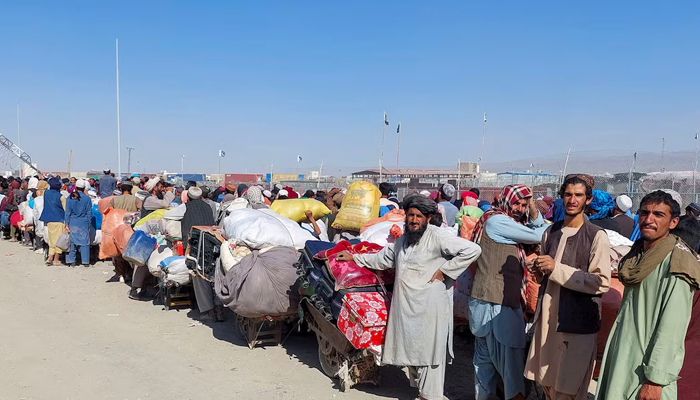
    Pakistan has clarified that Afghan citizens with valid visas and travel documents have not been expelled from the country. Foreign Office spokesperson Tahir Hussain Andrabi said the government was following a legal process regarding Afghan nationals staying in Pakistan. Addressing the weekly press briefing, Andrabi said cases of around 89,000 Afghan citizens were currently being reviewed under the Illegal Foreigners Repatriation Plan (IFRP). He explained that the process was being carried out according to established procedures and legal requirements. The spokesperson added that Pakistan was also providing humanitarian relief by extending the stay of nearly 16,000 Afghan nationals. The extension applies mainly to vulnerable groups, including women, children and elderly citizens, he said. Commenting on reports of an incident near the Chitral border areas, Andrabi said the Foreign Office had no confirmed information about the matter. He stated that reports coming from Afghanistan needed proper verification at the ground level before any official response could be given. The spokesperson stressed that Pakistan would avoid commenting on unverified reports and would share information only after confirmation from reliable sources.

  • | |

    FBR collects record Rs44bn income tax from salarie…

    ISLAMABAD: The Federal Board of Revenue (FBR) collected Rs44 billion in income tax from the salaried class during July, the first month of the current financial year. The collection was higher than the amount collected from salaried individuals during the same month in the previous two years. FBR had collected Rs42 billion from the salaried class in July 2025 and Rs30 billion in July 2024. According to sources, the higher collection from salaried individuals came despite an overall decline in income tax collection in some sectors. The figures indicate that the salaried class continued to contribute a significant share of income tax revenue at the beginning of the new financial year. Sources said property buying and selling transactions increased during July this year. However, tax collection from property transactions remained lower compared with the corresponding period last year. The development comes after the government introduced changes to income tax rates for several salaried income brackets in the federal budget for the current financial year. The government reduced tax rates on annual incomes above Rs2.2 million as part of its budget measures. Under the revised tax structure, the income tax rate for individuals earning between Rs2.2 million and Rs3.2 million annually was reduced from 23 per cent to 20 per cent. Similarly, the tax rate for the annual income bracket of Rs3.2 million to Rs4.1 million was reduced from 30 per cent to 25 per cent. For individuals earning between Rs4.1 million and Rs5.6 million annually, the income tax rate was reduced from 35 per cent to 29 per cent. The tax rate for people earning between Rs5.6 million and Rs7 million annually was also reduced from 35 per cent to 32 per cent. Despite these reductions in tax rates, FBR’s collection from salaried individuals increased in July compared with the previous two years. The figures show that the tax contribution from the salaried class remained strong despite changes in the tax slabs.

Leave a Reply

Your email address will not be published. Required fields are marked *