punjab offers rs100000
| | |

Punjab offers Rs100,000 monthly shrimp farming int…

LAHORE: The Punjab government has launched a paid internship programme in shrimp farming, giving young graduates an opportunity to gain practical experience while earning a monthly stipend of Rs100,000.

The initiative, introduced by the Punjab Fisheries Department, is designed to promote aquaculture, create employment opportunities and prepare skilled professionals for Pakistan’s growing shrimp farming industry.

The programme is open to graduates in fisheries, zoology, marine sciences, biological sciences and other related fields. Successful applicants will receive hands-on training from experienced professionals throughout the internship.

Trainees will learn key aspects of commercial shrimp farming, including hatchery management, pond maintenance, shrimp health monitoring, water quality control, feeding practices and modern aquaculture techniques. The training aims to equip participants with the technical knowledge required to establish careers in the aquaculture sector.

Officials said the internship is part of the provincial government’s broader plan to strengthen high-value agriculture by expanding shrimp production and improving export potential. By investing in professional training, the government hopes to build a skilled workforce capable of supporting the rapid growth of Pakistan’s aquaculture industry.

Similar Posts

  • |

    Taylor Swift mourns Dolly Parton, celebrates her lasting legacy

    Taylor Swift has paid an emotional tribute to Dolly Parton following the death of the legendary singer, songwriter and entertainer at the age of 80. Swift remembered Parton as an extraordinary artist whose generosity, strength and timeless music touched millions of people around the world. Parton died in Nashville on August 25, 2026, following a brief battle with cancer. News of her death was announced by her nephew Bryan Seaver, who had worked as her head of security for more than two decades. The announcement prompted an outpouring of grief from fans, fellow musicians and celebrities across the entertainment industry. Swift shared her heartfelt tribute with The Hollywood Reporter just hours after Parton’s passing. Reflecting on the loss, the pop superstar said that imagining a world without Parton did not feel possible. She praised the late icon for the generous way she lived her life and for the countless people she inspired through her music, philanthropy and personal values. Swift described Parton as someone who encouraged people to remain true to themselves while offering valuable lessons about life with warmth, honesty and humour. She also admired the way Parton balanced her public image with genuine openness, describing her as a person who could combine grace, determination and strength. The 14-time Grammy winner particularly highlighted Parton’s compassion for others and her ability to defend her own worth as an artist. According to Swift, Parton possessed a remarkably kind heart when dealing with other people’s struggles while also having the courage and determination to stand up for herself. Swift also expressed gratitude for Parton’s enduring musical legacy. She praised the songs and lyrics that have continued to connect with audiences across generations, noting that Parton’s work had the power to reach people emotionally and remain meaningful long after it was written. Beyond music, Swift highlighted Parton’s philanthropic work, especially her Imagination Library. The nonprofit organisation provides free, age-appropriate books to children from birth to age five, helping encourage a love of reading among young children. Swift and Parton had maintained a warm relationship over the years, supporting each other’s professional and charitable efforts. Their connection became particularly notable when Swift and her husband, NFL star Travis Kelce, made a $26 million donation to Parton’s Imagination Library shortly before their July 3, 2026 wedding at Madison Square Garden. Parton later expressed her appreciation for the enormous contribution, saying she was deeply moved and delighted by the gesture. In a playful social media message, she even joked with Swift about eventually sending her firstborn to the programme. Parton leaves behind a remarkable legacy spanning music, film, television, business and philanthropy. She is survived by six of her siblings as well as more than a dozen nieces and nephews. She and her husband, Carl Dean, who died before her, did not have children of their own. For Swift and countless other admirers, Parton’s influence will continue through her music, charitable work and the generations of artists and fans she inspired. Her life remains a testament to the lasting impact one artist can have through talent, kindness and generosity.

  • |

    Oil prices rise as Hormuz tensions escalate

    Oil prices climbed on Monday as uncertainty over a possible diplomatic breakthrough between the United States and Iran increased, while a sharp slowdown in tanker movements through the Strait of Hormuz heightened concerns about disruptions to global crude supplies. Brent crude futures gained as much as 1% during early trading to reach $89.40 per barrel. The benchmark was later up 72 cents, or about 0.8%, at $89.20 a barrel by 0229 GMT. US West Texas Intermediate (WTI) crude also moved higher, rising 44 cents to $82.83 per barrel. Both international benchmarks posted gains of more than 5% last week after a series of attacks involving energy and shipping assets in and around the strategically important Strait of Hormuz. The incidents have intensified fears that further escalation could affect one of the world’s most important oil transit routes. Market sentiment was further affected by developments over the weekend, when Iranian Foreign Minister Abbas Araqchi said Tehran had yet to decide whether it would resume negotiations with Washington. US President Donald Trump, meanwhile, told Americans to prepare for somewhat higher gasoline prices as the conflict continues. Analysts said the renewed uncertainty had brought geopolitical risk back into crude markets after oil prices had previously come under pressure on expectations that diplomatic efforts could ease tensions. “Oil prices have now rebounded almost completely from the lows seen in early August, as hopes for a more permanent resolution between the US and Iran have faded and geopolitical risk premiums have returned to the market,” said Priyanka Sachdeva, head of market insights at Phillip Nova in Singapore. Sachdeva cautioned, however, that the rally could lose momentum unless there is evidence of a further deterioration in the situation. She said the market would need to see renewed aggression in the Strait of Hormuz, particularly significant damage to oil tankers or energy infrastructure, before prices were likely to move substantially higher. Hormuz shipping activity slows Concerns over physical supply disruptions increased after ship-tracking data showed a marked decline in vessel traffic through the Strait of Hormuz over the weekend. According to data from Kpler, only five commodity vessels crossed the strategic waterway on Saturday, while no such transits were recorded on Sunday. This compared with 31 commodity vessel crossings during the previous weekend. The slowdown is significant because the Strait of Hormuz is a critical route for international energy shipments. Any prolonged disruption could increase transportation risks, raise insurance costs and place additional upward pressure on crude prices. The United Arab Emirates also accused Iran of attacking another vessel operated by Abu Dhabi National Oil Company (ADNOC) while it was passing through the strait on Friday, according to the Emirati state news agency WAM. The UAE had earlier blamed Iran for two separate incidents involving ADNOC-operated vessels on Thursday evening. The latest incidents have added to concerns among traders that the conflict could increasingly affect commercial shipping and energy infrastructure, rather than remaining confined to military and diplomatic confrontation. Markets remain focused on escalation risks The Strait of Hormuz remains particularly important to global oil markets because a substantial volume of crude and petroleum products moves through the waterway. Any sustained interruption could therefore have consequences well beyond the region. For now, traders are closely monitoring developments involving US-Iran diplomatic contacts, attacks on shipping and the movement of tankers through the strait. While the latest price gains reflect a higher geopolitical risk premium, analysts remain cautious about predicting a prolonged rally. If shipping activity resumes and diplomatic channels reopen, some of the premium built into crude prices could quickly unwind. Conversely, additional attacks on tankers, oil facilities or other critical infrastructure could trigger a stronger market reaction and push prices higher as traders reassess the security of regional supplies.

  • |

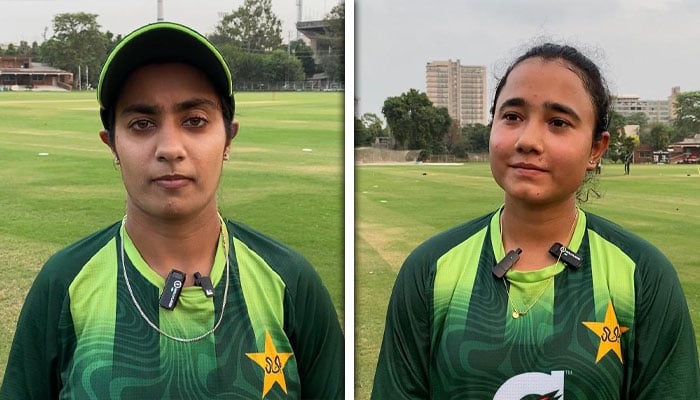
    Pakistan women spinners back team to shine in Asia Cup, Asian Games

    LAHORE: Pakistan women’s cricket team spinners Nashra Sandhu and Tuba Hassan have expressed confidence in the side’s preparations for the upcoming Women’s Asia Cup and Asian Games, saying consistency will be the key to turning strong performances into results. Speaking during the team’s training camp in Lahore, Sandhu said the squad was preparing specifically for different opponents while working to improve every aspect of its game. Pakistan’s spinners could have a particularly important role to play in the UAE, where the conditions are expected to suit slow bowling. Sandhu said the team was focused on adapting its plans according to opponents and match situations rather than relying on a single approach. “We prepare according to every opponent,” Sandhu said, stressing the importance of maintaining consistency during crucial moments. The spinner acknowledged that Pakistan have sometimes produced encouraging performances without being able to finish matches strongly. The team, she said, was working to address those lapses and build greater consistency in areas where it has already shown promise. India matches, meanwhile, bring an added level of pressure. Sandhu said players prepare carefully for such contests because the team that handles pressure better on match day often gains the advantage. Tuba Hassan also highlighted the importance of preparing for conditions in Dubai. According to the leg-spinner, Pakistani players are familiar with the UAE environment, but training specifically for those conditions remains essential before the tournament begins. She said the team was concentrating on reducing mistakes, particularly because small errors can have a major impact in T20 cricket. Training sessions are being designed around different match situations, including pressure scenarios, to help players make better decisions when the stakes are high. Tuba also revealed that coach Wahab Riaz has been challenging players with different situations during practice, aiming to prepare them for the demands of international matches. The leg-spinner admitted that Pakistan still face a psychological hurdle when playing against top-ranked sides, despite having competed strongly against leading teams in the past. She argued that more bilateral series against the world’s top four teams would help Pakistan bridge the gap and develop greater confidence. The experience of players competing abroad could also prove valuable. Tuba said Fatima Sana had shared lessons from her stint in The Hundred with teammates, offering the squad insight into playing at a high level overseas. With the Asia Cup and Asian Games ahead, Pakistan’s women’s team will hope that improved preparation, greater consistency and exposure to elite opposition can translate into stronger results. For the spinners, the message is clear: Pakistan have the ability to challenge the best — but now they must learn to finish the job.

  • Senate questions PPRA over ePADS security and transparency

    Islamabad: The Public Procurement Regulatory Authority (PPRA) came under Senate scrutiny as lawmakers raised concerns over transparency, cybersecurity and accountability in Pakistan’s public procurement system. During a meeting of the Senate Standing Committee on Cabinet Secretariat, members questioned whether the country’s new digital procurement system was strong enough to protect government contracts, public money and sensitive information. The committee, chaired by Senator Rana Mahmood ul Hassan, reviewed PPRA’s performance and examined reforms aimed at improving how government departments purchase goods and services. The Managing Director of PPRA informed the committee that the Electronic Pakistan Acquisition and Disposal System, known as ePADS 2.0, has been introduced to make government procurement more transparent and reduce the chances of irregularities. Officials said the digital system now covers the complete procurement process, starting from planning until the final award of contracts. The committee was informed that Standard Bidding Documents have been added to the system to ensure all government departments follow the same procedures and prevent unauthorised changes in tender documents. Officials also informed lawmakers that payments made outside the ePADS system are no longer accepted, making the process more controlled and financially accountable. However, committee members raised questions about the electronic procurement platform’s cybersecurity, data protection, and overall safety. Lawmakers questioned how the system protects sensitive procurement information and whether Pakistan’s digital procurement framework matches international standards. The committee directed PPRA to provide a detailed briefing on the cybersecurity measures, encryption methods and data protection systems used in ePADS. Members also asked PPRA to compare Pakistan’s cybersecurity practices with leading international procurement systems to identify areas where improvements are needed. The committee stressed that a digital system can only succeed if it remains secure, reliable and protected from possible cyber threats. During the meeting, members also questioned the difference between manual and electronic procurement, the time required to complete procurement processes and the method used to select successful bidders. PPRA officials explained that contracts are awarded through the Most Advantageous Bid evaluation system. Officials said the relevant government departments decide technical requirements and qualification standards according to procurement rules. The committee was informed that complaints related to procurement decisions are handled through a formal grievance system before parties can approach courts or other legal forums. The committee also discussed government procurement during emergency situations, especially the purchase of fuel and essential goods during changing conditions in the Middle East. PPRA officials clarified that no special exemption was provided for emergency purchases. They informed the committee that existing Public Procurement Rule 21A already provides a legal method for urgent procurement during supply shortages or emergency requirements. The committee also reviewed draft regulations for the disposal of public assets. Officials informed members that the Disposal of Public Assets Regulations 2026 have been prepared according to the updated procurement framework and ePADS requirements. A special disposal module has also been developed within ePADS to ensure public assets are disposed of through a transparent process. The committee directed PPRA to continue improving procurement standards, expand vendor training across Pakistan and strengthen the overall digital procurement system. Members said better procurement management is important because government spending directly affects public services and national development. The committee also expressed concern over the Islamabad Club Administrator’s absence during the meeting despite the session being held at the club. Members recommended that Islamabad Club elections should be conducted according to rules and decided to raise the matter with the Prime Minister’s Office. The committee further expressed dissatisfaction over the National Vocational and Technical Training Commission’s failure to follow previous committee directives. Members recommended referring the matter to the Privileges Committee and informing the Prime Minister about the issue.

  • | |

    Indian activist Sonam Wangchuk says he remains ali…

    Indian activist Sonam Wangchuk says he has lost 11 kilograms during a 26 day hunger strike but remains alive, as his protest continues to fuel a wider youth movement demanding education reforms in India. Wangchuk, known widely as Sonam sir, has become the central figure in a youth led campaign organized by the Cockroach Janta Party, which is calling for sweeping education reforms and the resignation of Education Minister Dharmendra Pradhan. He was removed from the group’s protest site at Delhi’s Jantar Mantar on Saturday and taken to a hospital, where he has continued his fast. Despite his removal from the demonstration site, thousands of supporters have kept returning to Jantar Mantar, even after a heavy handed police response to a march toward parliament earlier in the week left numerous protesters and police officers injured. That crackdown has intensified public anger and energized opposition parties, creating a growing political challenge for Prime Minister Narendra Modi’s government. Modi has not addressed the protests directly or met with demonstrators, but he issued a statement on social media that many interpreted as an effort to connect with students angered by repeated leaks of exam papers. He wrote that the welfare of the country’s youth matters above all else and said the government would establish fast track courts to deliver swift punishment for those responsible for the leaks. A spokesperson for the Cockroach Janta Party, Ashutosh Ranka, responded that the government’s plan addressed the aftermath rather than the root cause, saying the movement wants to know why the leaks keep happening and who profits from them. He indicated in a video statement that protesters intend to continue their campaign until their demands are met. Even though Wangchuk is no longer physically present at the protest grounds, his fast has become a symbolic centerpiece of the movement, with demonstrators displaying placards and artwork referencing his hunger strike. Before he was hospitalized, he spent 21 days enduring intense summer heat while consuming only salt and water. Medanta Hospital in Gurugram said in a statement that Wangchuk was admitted to intensive care and is being monitored by a team of specialists. The hospital described his condition as stable and said his vital signs remain within normal ranges, adding that all treatment is being given with his consent. On Wednesday, senior figures including Cockroach Janta Party founder Abhijeet Dipke, along with opposition lawmakers, activists and public personalities, again urged Wangchuk to end his fast. Health Minister JP Nadda, who visited the hospital on Tuesday night, said he too had asked the activist to stop and rejoin efforts to guide young people, adding that the government remains willing to discuss the issues he has raised. Wangchuk has so far rejected these appeals. In a video statement recorded from his hospital bed on Wednesday night, he said he wants to end his fast because his work matters to him, but added that he would only do so once the government guarantees no force or retaliation will be used against students. He said he would end the strike immediately if that assurance comes, and would continue if it does not. He also praised the students involved in Monday’s confrontation with police, saying they showed remarkable composure even while being beaten with sticks, and said their restraint under pressure led him to keep going with his fast. Neither Wangchuk’s latest statement nor an earlier letter he sent to government ministers he met on Tuesday mentioned Pradhan’s resignation directly, though the Cockroach Janta Party maintains that the demand has not changed. Dipke told supporters that the protest at Jantar Mantar will continue until Pradhan steps down, and said the movement would not let Wangchuk’s sacrifice or the injuries suffered by students go without result. The standoff reflects a broader pattern seen in past protest movements across South Asia, where a single high profile figure’s personal sacrifice becomes a rallying point that sustains momentum long after the initial spark fades. Hunger strikes in particular have a long history in Indian political life as a tool for applying moral pressure on governments, dating back to independence era activism, and their effectiveness often depends on sustained public attention and the government’s willingness to negotiate before a health crisis forces the issue. As the standoff continues, the government faces mounting pressure to address both the immediate demand for accountability over exam paper leaks and the broader question of how education policy is managed, while doctors continue to monitor Wangchuk’s condition inside the hospital.


  • | |

    FIFA pushes ahead with controversial commercial investment plan despite opposition from UEFA and Concacaf

    FIFA has insisted that “nobody is selling football” whilst reaffirming its intention to proceed with a plan to sell minority stakes in its commercial operations to private investors, despite a fierce backlash from major regional governing bodies. UEFA voted to boycott future World Cups if the initiative moves forward, whilst Concacaf confirmed its 41 member associations also rejected the proposal put forward by FIFA president Gianni Infantino. Under the proposal, FIFA intends to establish a new commercial subsidiary, FIFA Forward Enterprise (FFE), to manage the commercial rights of major tournaments including the men’s World Cup. Private equity firm Thrive Eternal, founded by venture capitalist Joshua Kushner, is expected to lead the investor group purchasing a minority stake in the new entity, which carries an initial valuation of $20 billion. To secure the necessary 106 votes from FIFA’s 211 member associations, Infantino has offered an immediate $20 million payout to federations that back the proposal before a 19 September deadline. FIFA maintains the initiative will significantly increase development funding for smaller footballing nations without compromising the sport’s governance.

Leave a Reply

Your email address will not be published. Required fields are marked *