Some medicines go bad after opening

Many people check the expiry date on a medicine bottle or box and assume it is safe to use until that date.

However health experts say this is not always true.  Some medicines start losing their effectiveness or become unsafe after they are opened even if the printed expiry date is still months away.

It is common for people to use a cough syrup or eye drops once put them back in the cupboard and use them again weeks or months later after checking only the expiry date.

Doctors say this can be risky because some medicines do not stay safe for long

once opened.

When a medicine bottle tube or dropper is opened air moisture and germs can get inside. Over time repeated opening can reduce the medicine’s protection against bacteria increasing the risk of contamination.

If a syrup changes color or smell a cream separates or tablets become soft or crumbly they should not be used.

Many people believe that every medicine should be thrown away one month after opening but experts say this is not true.

According to Dr. Sanjay K. Jain, Head of Pediatrics and Neonatology in New Delhi each medicine has different storage and usage rules.

He explains that common syrups such as cough syrup paracetamol syrup and vitamin syrup can usually be used until their expiry date if they are stored properly and show no changes in color smell or appearance.

Tablets and capsules also remain safe until their expiry date in many cases especially if they stay in their original blister packs and are stored according to the instructions.

However some medicines have a much shorter life after opening.  Antibiotic syrups that come as powder and need water before use should usually be thrown away after 7 to 14 days even if some medicine is left.

If the syrup changes color or particles appear inside the bottle it should be discarded immediately.

Eye drops also need extra care. Most should be used within 28 days after opening because the tip of the bottle can collect germs each time it is used.

Insulin and some injectable medicines also have special storage rules and may only remain safe for a limited time after opening.

Doctors advise reading the label or package instructions carefully before using any medicine.

This is especially important for eye drops insulin liquid antibiotics and medicines that need refrigeration.

It is also a good idea to check medicines stored at home from time to time. If you are unsure whether a medicine is still safe ask a doctor or pharmacist instead of taking the risk.

Health experts say that for some medicines the most important date is not the expiry date but the day the bottle or package was first opened.

Writing the opening date on the bottle can help you know when it is time to throw it away.

If you ever have doubts about a medicine’s safety it is better to discard it than risk your health.

Similar Posts

  • Survey of Käthe Kollwitz’s legacy

    The Museum of Modern Art in New York  exhibits the first major museum retrospective devoted to the German printmaker and sculptor Käthe Kollwitz (1867–1945).The exhibition serves as reassessment of an artist who chose raw human emotion over abstract aesthetics. The survey features roughly 120 works on paper and evocative bronze sculptures gathered from private and public collections across North America and Europe. Käthe Kollwitz originally trained as a painter before turning to printmaking, etching, and charcoal drawing. She quickly realized that black-and-white graphic arts provided a far more direct, accessible, and potent medium for addressing the social injustices around her. She lived through the tumultuous transition of late 19th-century industrialization. The revolution followed by the political instability and devastating carnage of two world wars in Berlin. However, Kollwitz dedicated her career to giving form to the silent suffering of society’s most vulnerable. When many of her contemporaries were exploring radical formal abstraction, Kollwitz stayed firmly rooted in figuration. She viewed her artistic talent not as a path toward personal prestige, but as a moral imperative. As Kollwitz famously noted in her journal, she felt a profound duty to give voice to humanity’s immense burdens. It was a motivation clearly reflected in her emotionally charged compositions. The retrospective marks several crucial series and individual masterpieces that define Kollwitz’s career. Early landmark series included A Weaver’s Revolt (1890s) and Peasant War (1902–1908). They showed her skill in capturing collective resistance, class struggle, and the violent fallout of peasant rebellions. Her works like Woman with Dead Child (1903) and her recurring depictions of mothers shielding their young. This theme is also dominant in her famous Mütter (Mothers) lithographs. These works demonstrate her ability to channel deep personal empathy into universal symbols of protective instinct. Kollwitz produced woodcuts and sculptural works that transformed personal bereavement into universal anti-war statements. She was distilling the excruciating grief of losing her younger son, Peter, during World War I. Kollwitz’s artistic contributions extend far beyond historical interest. Kollwitz established herself as a genius of Expressionist printmaking. As a result, she achieved widespread international acclaim during her lifetime. More importantly, she radically prioritized the female experience, framing motherhood, domestic hardship. She expressed grief not as passive domestic occurrences, but as central, powerful forces within history and politics. Above all, she achieved all that during an era when the international art world was almost exclusively governed by male perspectives, MoMA exhibition underscores the artist’s meticulous process through rare working proofs and preliminary studies. Such an event exposed how she repeatedly refined line, shade, and texture to maximize the emotional potency of each scene. It was Curated by Starr Figura. In a world still facing economic disparity, displacement, and armed conflict, Kollwitz’s unflinching commitment to human dignity continues to resonate with undeniable relevance. Her skills were bold woodcuts, deep etchings, and heavy bronzes. However, they serve as a reminder that art can act as both a mirror to societal trauma and a compassionate voice for justice.  

  • Lunch salad may boost health

    If you want to live a healthier lifestyle health experts say making a nutritious salad part of your lunch is a simple and effective habit. The goal is not to lose weight quickly but to build healthy eating habits that are easy to follow for the long term. Experts say a healthy salad should include more than just leafy greens. It can contain chickpeas whole mung beans cucumber tomatoes onions carrots bell peppers, quinoa avocado orange slices pomegranate seeds or even raw mango.  These foods provide fiber vitamins minerals and other important nutrients. For extra flavor you can use salt black pepper lemon juice or vinegar.  To make the meal more filling experts recommend adding a healthy source of protein such as grilled paneer soy or other protein rich foods. Eating the same salad every day can become boring so changing the ingredients regularly can keep meals tasty while providing a wider range of nutrients. According to health experts eating a balanced salad at lunch may help control hunger reduce unhealthy snacking and keep you feeling full for longer. It may also reduce the afternoon energy slump and help you stay more active during the day. Experts say weight loss results can vary from person to person but following a balanced diet over time can improve body composition help clothes fit better and support overall health. They also stress that healthy eating does not mean giving up your favorite foods completely.  The key to a healthy lifestyle is balance moderation and consistency. Enjoying treats occasionally while choosing nutritious foods most of the time is the best approach.

  • Health benefits of plant compounds

    Eating more plant based foods may benefit several areas of health including digestion the immune system metabolism and heart health. New research is helping scientists understand how foods from plants interact with the bacteria in our gut and influence the way our body processes nutrients. Gut bacteria play an important role One important reason plant based foods may be beneficial is their effect on the gut microbiome the large community of bacteria living in the digestive system. Dietary fiber is especially important. Gut bacteria break down fiber and turn it into different compounds that can affect the body in various ways. Plant chemicals may also help Plants contain natural chemicals called phytochemicals. These compounds help plants protect themselves from environmental stress.  When people eat plant foods these chemicals may also have different effects inside the body. What did the new studies find? Two studies led by researchers associated with Princeton University provided new information about the connection between diet, gut bacteria and metabolism.  One study was published in Proceedings of the National Academy of Sciences while the other appeared in Nature Metabolism. The first study found that plant based fiber and certain plant proteins can change how gut bacteria process nutrients.  These changes may increase some helpful metabolic compounds while reducing certain potentially harmful ones. The second study found that some metabolic compounds previously thought to be produced mainly by gut bacteria can also be made in significant amounts by mammals themselves. Why this research matters Researchers are increasingly interested in using the gut microbiome and the compounds it produces to improve health.  However scientists first need to understand exactly how different parts of our diet affect specific gut bacteria and the substances they produce. Future health benefits These findings could eventually help researchers develop better dietary strategies and treatments aimed at supporting a healthy gut microbiome. In the future this may make it possible to use food choices more effectively to encourage the production of beneficial compounds in the body.

  • |

    Press play on nostalgia

    There is an absurdly satisfying drama to slipping a shiny compact disc into a silver portable CD player. Next up, click the lid shut and voila! Listen to that faint mechanical whir-click as the laser reads the track. We live in an era where a glass smartphone screen gives you instant access to 100 million songs. And when one chooses to carry around a plastic disc player, it feels less like a modern inconvenience and more like a heroic act of rebellion. Well! In order to figure out why Gen Z is suddenly obsessing over vintage music players that take up actual pocket space, we have to look at the wild journey of how we got here. From Giant Plastic Discs to Invisible Spotify Soundtracks The evolution of portable music is essentially a history of humans constantly trading physical soul for pure convenience. The Boombox & Tape Era Back in 1979, the original Sony Walkman fundamentally changed society by letting people walk down the street with their own personal soundtrack playing on magnetic cassette tape. It was revolutionary, even if you occasionally had to fix a tangled tape using a No. 2 pencil. The Silver Disc Reign By the late 80s and 90s, the CD player (affectionately nicknamed the Discman, though brands like Goodmans ruled the market too) took over. Suddenly, music was crisp, digital and skip-resistant. The condition that provided your player had a reliable 45-second anti-shock buffer and you didn’t jump off while walking! Albums came with jewel cases, actual artwork and fold-out lyric booklets you could read on the bus. The MP3 Tidal Wave The early 2000s crushed physical media into tiny digital files. The iPod and cheap MP3 players meant you could hoard thousands of low-bitrate songs in your pocket. They effectively killed off the concept of buying an album just to listen to it as a cohesive story. The Infinite Streaming Void Today, platforms like Spotify and Apple Music serve us endless music on demand.  Every track on Earth is accessible with a single tap. That’s why music easily morphs into background noise rather than a meaningful event. The Retro Revival You’d think the generation born into high-speed Wi-Fi would turn their noses up at retro tech. However, physical music sales among young listeners are skyrocketing. It turns out that living entirely online gets exhausting. The antique way of listening to music hits differently for a few fun reasons. Spotify’s algorithm loves to push you into a hyper-specific mood bubble. On the other hand, physical disc into a portable player forces you to listen to an entire album from track 1 to track 20 the way the artist intended. On top, there are no skips, no ads, no doomscrolling while listening. There is a joy in pressing actual spring-loaded plastic buttons instead of tapping a flat screen. The mechanical clicks, volume dials and tangled headphone wires bring a sensory connection. In my opinion, a digital app just can’t match. In the subscription economy, you don’t own anything. If a streaming platform loses licensing rights, your favorite album vanishes overnight. A physical CD on your shelf, however, is yours forever. Now, let’s be honest! Pulled-out wired earbuds connected to a metallic silver CD player looking like straight out of Y2K sci-fi is an undeniable aesthetic flex.

  • Why our brain repeats old choices

    Have you ever noticed that many people eat the same food for breakfast every day?  Even when they have many other options they often stick to what they already know. Scientists have been trying to understand why people repeat the same choices again and again.  A new study from TU Dresden University in Germany may have found the answer. Researchers analyzed data from more than 700 people from earlier studies.  They found that our past choices strongly influence the decisions we make later. According to the researchers when we choose something repeatedly it slowly becomes a habit.  Once it becomes familiar our brain tends to choose it again even when a better option is available. This habit of repeating past choices can affect many parts of daily life including shopping eating habits and everyday routines. The study suggests that many of our decisions are not completely new. Instead our brain often relies on what worked for us before and simply repeats the same choice.

  • 40,000-Year-Old ivory birds discovered in a German cave

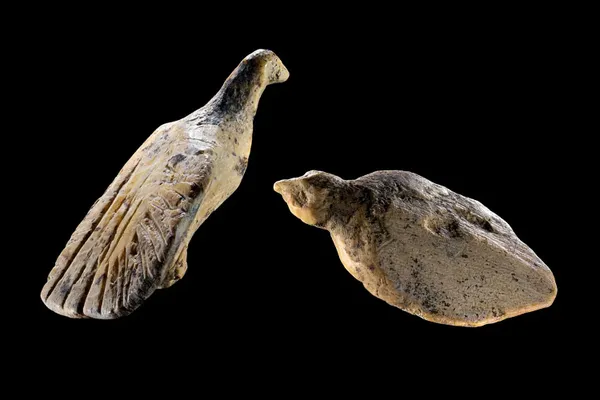
    Archaeologists have recently uncovered two thumbnail-sized sculptures of birds carved from mammoth ivory approximately 40,000 years ago. These delicate figurines, which have spent dozens of millennia buried in sediment, offer an intimate glimpse into the minds, environments, and creative capacities of our ancient ancestors during the Ice Age. The astonishing discoveries were made in the Hohle Fels Cave, a site deeply embedded in the Swabian Jura region of Germany. This location has long been celebrated as one of the most critical archaeological sites in the world for understanding early modern human culture in Europe. The newly found sculptures are extraordinarily small. Each measures less than a single inch in length and weighs merely a fraction of an ounce. It makes them roughly the size of an average human thumbnail. Despite their diminutive scale, the level of detail the prehistoric artist managed to achieve is nothing short of masterful. Rather than relying on abstract or highly stylized representations, the Ice Age carver recorded specific, anatomical observations. The figurines feature carefully incised markings that clearly delineate feathers, as well as distinctively carved eyes. One of the miniature sculptures portrays a bird with its wings fully spread, capturing a moment of dynamic movement, although a few fragments of its body have unfortunately been lost to time. Remarkably, this particular piece now holds the record as the smallest Ice Age artwork ever found in the region. The second figurine, which survived completely intact, depicts a bird in a resting posture. It appears to be lying down, a pose that researchers speculate might represent the animal tending to its eggs. Experts analyzing the avian features believe that at least one of the sculptures represents a ptarmigan, a robust bird belonging to the grouse family that would have been familiar to inhabitants of the harsh Ice Age landscape. While the identity of the second bird remains slightly less certain, it too could be a ptarmigan, or possibly a small bird of prey. Because the two ivory pieces were found just about five feet apart during the 2025 excavation season and share stylistic similarities, archaeologists strongly suspect they were crafted around the exact same time, quite possibly by the very same artist. The excavation was led by Nicholas Conard and a dedicated team from the University of Tübingen, who have been meticulously studying the Hohle Fels site for nearly three decades. The process of unearthing such fragile artifacts requires incredible patience. Researchers painstakingly remove layers of earth before washing and sifting the prehistoric sediment through extremely fine mesh screens. It was during this rigorous process that Elisa Luzi, a paleontologist at the university, first spotted one of the tiny birds. She described the profound emotional weight of the moment, emphasizing the sheer privilege of being the first human being to lay eyes on the carving in 40,000 years, and feeling an instant connection to the humanity of its maker. The Hohle Fels Cave These findings belong to the Aurignacian period, an epoch that coincides with the early settlement of Homo sapiens in Europe. The Hohle Fels Cave which is protected as a UNESCO World Heritage site has previously yielded some of the oldest known figurative art and musical instruments on the planet. The collection includes early bone flutes and the famous Venus of Hohle Fels. Exactly why these early humans took the time to carve such intricate, tiny birds remains a mystery. Researchers have proposed various theories, wondering if they were utilized as personal talismans meant to bring good fortune, or as cultural symbols associated with the specific identity of their owner. While we may never have a definitive answer regarding their prehistoric purpose, these thumbnail-sized masterpieces firmly remind us that the human desire to observe, create, and capture beauty is as ancient as humanity itself.  

Leave a Reply

Your email address will not be published. Required fields are marked *