fcc hear pti
| |

FCC to hear PTI ‘Release Force’ and May 9 case…

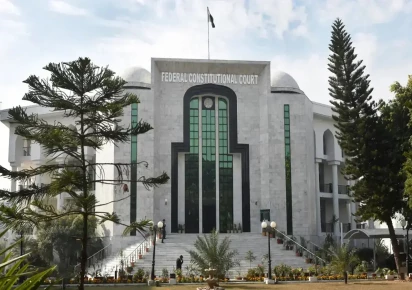
The Federal Constitutional Court (FCC) has fixed July 29 for hearing two important petitions linked to Pakistan Tehreek-e-Insaf (PTI) founder Imran Khan. The hearings come at a time when PTI is preparing to launch a nationwide campaign demanding the release of its founding chairman.

A three-member bench headed by Chief Justice Aminuddin Khan will hear a petition challenging the proposed formation of what has been described as the “Imran Khan Release Force.” On the same day, the bench will also hear another petition concerning the Khyber Pakhtunkhwa government’s decision to withdraw selected criminal cases related to the May 9, 2023 violence.

The first constitutional petition argues that the formation or mobilisation of any organisation under the title of the “Imran Khan Release Force” would be unconstitutional and contrary to Pakistani law. The petitioner has requested the court to declare such an organisation illegal, arguing that private forces or militias are prohibited under the Constitution and relevant legislation.

The petition also states that citizens and public office holders are constitutionally bound to remain loyal to the state and act within the framework of the law. It argues that any attempt to organise a private force would violate constitutional principles and existing legal provisions.

The issue first came before the court after public statements were made earlier this year regarding the creation of a movement aimed at securing Imran Khan’s release. At that time, the court sought a response from the Khyber Pakhtunkhwa chief minister. The matter has now been scheduled for detailed hearing after several months.

However, some legal experts have disputed the interpretation presented in the petition. They argue that the term “Release Force” refers to a political campaign or public movement seeking Imran Khan’s release rather than the creation of any armed organisation. According to their view, there is no proposal to establish a private militia, and the movement has no official connection with the provincial government.

The same bench will also hear a petition filed by the Pakistan Broadcasting Corporation (PBC) concerning the attack on Radio Pakistan Peshawar during the May 9 unrest. The petition requests that the criminal case be transferred from Khyber Pakhtunkhwa to an anti-terrorism court in Islamabad or another province to ensure an impartial trial.

The petitioner argues that political influence and executive interference could affect the fairness of judicial proceedings if the case continues within the province. Earlier, the Federal Constitutional Court issued an interim order preventing the withdrawal of certain May 9-related cases while the matter remains under consideration.

Officials from the Khyber Pakhtunkhwa Law Department have questioned that interim order. They maintain that the provincial government had not yet filed any formal application before the anti-terrorism court seeking withdrawal of cases. According to provincial authorities, the cabinet had only approved the withdrawal of cases considered politically motivated or those lacking sufficient evidence.

Provincial officials have stated that 23 out of 29 terrorism-related cases linked to the May 9 incidents have already been decided. They also said that 285 of the 319 cases registered in ordinary courts have been concluded, while the remaining cases are still under trial.

Similar Posts

  • | | | |

    Gen Aamer Raza honoured with Nishan-i-Imtiaz

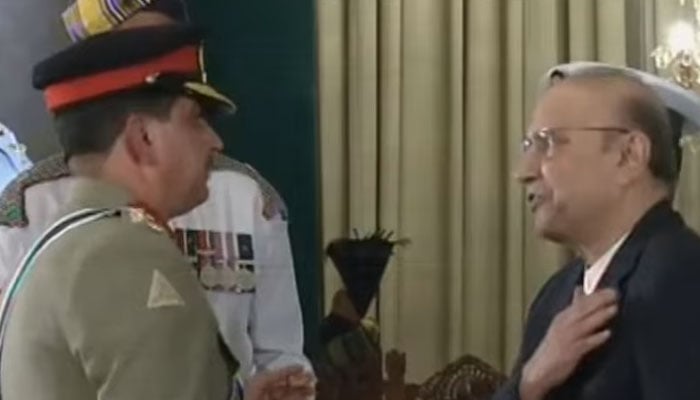
    Commander National Strategic Command General Syed Aamer Raza has been conferred the Nishan-i-Imtiaz (Military), one of Pakistan’s highest military honours. President Asif Ali Zardari conferred the prestigious award on General Syed Aamer Raza during a ceremony held at Aiwan-e-Sadr in Islamabad. President Zardari, Prime Minister Shehbaz Sharif, Field Marshal Syed Asim Munir and the chiefs of the armed services attended the ceremony. Deputy Prime Minister and Foreign Minister Ishaq Dar, the chairman of the Senate, federal ministers and other senior government officials were also present. The ceremony was held to recognise General Aamer Raza’s services and contributions in his capacity as Commander National Strategic Command. General Raza has previously received two major military honours, the Hilal-i-Imtiaz (Military) and the Sitara-i-Basalat. Before his latest appointment, he was serving as Chief of General Staff. The position is considered one of the Pakistan Army’s key operational assignments. During his tenure, he was involved in implementing organisational changes following the 27th Constitutional Amendment. He also oversaw restructuring within the military after last year’s conflict with India. The changes included the creation of the Army Rocket Force Command, as part of efforts to strengthen the army’s organisational and operational capabilities. General Raza began his military career as a cavalry officer. He trained at the Officers Training School and was commissioned into the 6th Lancers in 1988. Over the course of his career, he held several important command positions. These included command of an armoured regiment and an armoured brigade. He also commanded an infantry brigade in South Waziristan. Later, he served as the commander of an infantry division. His senior field appointments included command of Lahore-based IV Corps, one of the Pakistan Army’s major corps formations. General Raza has also held a number of important institutional and staff positions. He headed Heavy Industries Taxila, a major defence production organisation. He also served as Director General of Weapons and Equipment. In another senior assignment, he worked as Chief of Staff at II Corps. His professional background has largely focused on conventional military operations, command responsibilities and force development. Unlike some senior officers associated with Pakistan’s strategic institutions, General Raza has not served in the Strategic Plans Division or the Army Strategic Forces Command. He has also not held an appointment directly linked to the country’s strategic missile programme.

  • |

    Noor Bukhari concerned over Moammar Rana’s health crisis

    Noor Bukhari, a well-known former Pakistani film actress and model, has expressed concern over the deteriorating health of veteran actor Moammar Rana, saying she feels deeply saddened by his current condition and believes he needs strong support from his family. Noor began her acting career at a very young age and entered the Pakistani film industry when she was just 14. Over the years, she appeared in numerous successful films and worked with some of the biggest stars of her generation. Her notable projects include Mujhe Chaand Chahiye, Ghar Kab Aao Ge, Uff Yeh Larkiyan, and Main Noor Ka Parastaar Hoon. Alongside acting, she also explored other areas of the entertainment industry, including film direction, music videos and television commercials. The actress also remained in the spotlight because of her personal life and multiple marriages. In recent years, she made a major change in her lifestyle after leaving showbiz and turning towards Islam. She later remarried Aun Chaudhary, the father of her daughter, and has since focused much of her attention on her family and children. Recently, Noor appeared as a guest on Ambreen Fatima’s YouTube talk show, where she spoke openly about Moammar Rana and the concerns surrounding his health and reported alcohol addiction. While discussing the veteran actor, Noor described him as a good-hearted person and said she felt emotional after seeing some of his recent videos circulating on social media. She revealed that watching his reels had brought tears to her eyes because she could not understand how he had reached his current situation. Noor emphasized that Moammar Rana had always been regarded as a major star in the Pakistani film industry. According to her, audiences had seen him at the height of his career and would continue to remember him as a superstar. She expressed sadness that fans were now seeing him in a very different condition. The former actress also highlighted the importance of family support during difficult periods. She suggested that Moammar Rana’s wife and family should play a stronger role in helping him overcome his struggles. Noor said she was not certain about how much support he currently receives from his family, but believed that having loved ones around can make a significant difference when someone is going through a difficult phase. She further expressed her view that the actor may also be dealing with emotional or mental distress, adding another dimension to the concerns surrounding his well-being. Noor’s comments have drawn attention because of her personal experience in the Pakistani entertainment industry and her long-standing association with many prominent film personalities. Her remarks also reflect growing concern among fans over Moammar Rana’s current health and lifestyle. The veteran actor remains a respected name in Pakistani cinema, and Noor’s comments have once again sparked discussion about the importance of family, emotional support and care for public figures facing personal challenges.

  • | |

    Bangladesh cricket board cancels BPL this year aft…

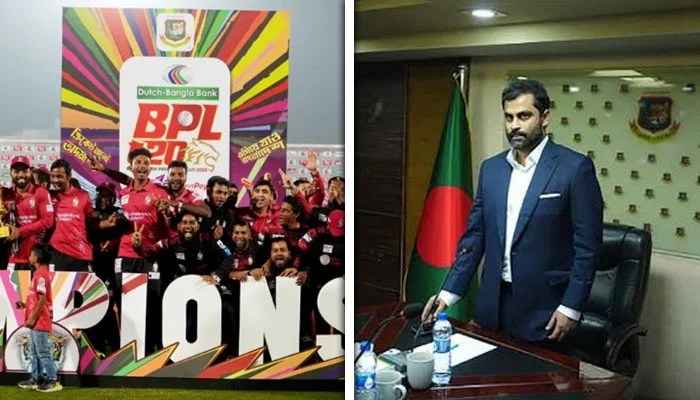
    The Bangladesh Cricket Board (BCB) has decided not to hold the Bangladesh Premier League (BPL) this year after suffering significant financial losses in the tournament’s previous two editions. According to reports in the international media, the BCB has decided to suspend the current BPL format and use the additional time to develop a more sustainable structure for the popular domestic T20 competition. BCB President Tamim Iqbal said the decision was taken after the board incurred losses of approximately Tk400 million over the last two editions of the tournament. Rather than rushing ahead with another edition featuring a limited number of teams, the board wants to focus on improving the league’s quality, credibility and financial sustainability. Iqbal said the BPL will not be scrapped permanently. Instead, the board plans to relaunch the competition next year after making significant changes to its franchise system, financial arrangements and regulations. One of the major issues identified by the BCB has been franchise compliance. According to the board president, repeated violations of tournament regulations and failure by franchises to fulfill their commitments have created serious challenges. In some cases, franchise withdrawals or non-compliance reportedly left the BCB with financial responsibilities that contributed to the league’s losses. The board now wants to establish a more reliable system before bringing the competition back. Iqbal said the BCB is prepared to spend six to 12 months working on the restructuring process. Discussions with potential and existing franchises have already begun, with the board reportedly targeting completion of the franchise process by April or May next year. The decision means Bangladesh will have to create an alternative domestic cricket calendar for the period in which the BPL would normally be played. The BCB is expected to use domestic competitions to ensure that players continue to receive competitive cricket opportunities. The board’s long-term objective is to make the BPL a more organized and financially sustainable tournament. Rather than accepting recurring losses, officials want the competition to generate revenue for Bangladesh cricket. The temporary suspension could therefore mark a major turning point for the BPL. If the proposed reforms are successfully implemented, the tournament could return with a stronger franchise structure, clearer financial rules and greater accountability. For now, however, the BCB has chosen restructuring over a rushed edition, making Bangladesh Premier League 2026 one of the most significant developments in the country’s domestic cricket calendar.

  • | | |

    Iran says Pakistan ties gaining greater importance

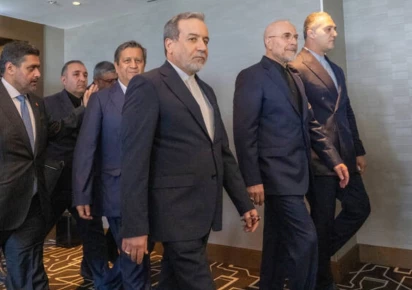
    TEHRAN: Iran has described its relationship with Pakistan as increasingly important, saying Islamabad has played a significant role as a mediator since the outbreak of the regional conflict. Iranian Foreign Ministry spokesperson Esmaeil Baghaei said the two neighbouring countries were maintaining close diplomatic contacts. He also confirmed that Iranian Foreign Minister Abbas Araghchi and Parliament Speaker Mohammad Bagher Ghalibaf had been invited to visit Islamabad. Baghaei said the two officials would travel to Pakistan at a suitable time. He did not announce a specific date for the visit. He described reciprocal visits between the two countries as a natural part of their growing bilateral relationship. The Iranian official also played down concerns that the recently signed defence agreement between Pakistan, Saudi Arabia and Turkiye was aimed at Tehran. Pakistan, Saudi Arabia and Turkiye signed the Makkah Joint Defence Agreement on August 7. The agreement seeks to strengthen collective defence cooperation and provides for a joint response if any member comes under attack. Baghaei said Tehran did not consider the agreement a direct threat to Iran. He said regional countries were increasingly seeking security arrangements based on their own regional realities rather than relying entirely on external powers. He maintained that regional cooperation could contribute to stability if such arrangements remained inclusive and focused on preventing conflict. Baghaei also said Iran was not prepared to resume direct negotiations with the United States while Tehran believed Washington was violating an interim agreement. The Iranian government has also linked the reopening of the Strait of Hormuz to a number of demands. These include compensation for damage caused during the conflict and an end to the US naval blockade of Iranian ports. Meanwhile, Iran and Oman are continuing discussions on arrangements for commercial shipping through the Strait of Hormuz. Baghaei said the talks were progressing in a constructive manner. He said the two sides had reached an understanding on a proposed map for shipping traffic and were working on several technical details. According to the Iranian official, the proposed arrangement would establish mechanisms for safer maritime movement. It would also address environmental protection and maritime crimes. He stressed that the discussions with Oman were focused on ensuring safe international shipping and were separate from broader political disputes. Baghaei nevertheless reiterated that Tehran would not allow the full reopening of the strategic waterway unless its conditions concerning Washington were addressed. In a separate development, Iran has appointed former Islamic Revolutionary Guard Corps commander Mohsen Rezaei to a senior position in the Supreme National Security Council. Rezaei has replaced Mohammad Baqer Zolqadr as secretary of the body responsible for coordinating Iran’s security and foreign policy. No official reason was immediately given for the change. It also remains unclear whether the appointment will lead to any major shift in Iran’s security policy. Rezaei, 71, commanded the Revolutionary Guards from 1981 to 1997. He later served for more than two decades as secretary of Iran’s Expediency Discernment Council and also held the position of vice president for economic affairs. Iran’s Supreme National Security Council brings together senior military, intelligence and government officials. It is formally chaired by the president, while the supreme leader retains ultimate authority over major state matters. A separate decree appointed Rezaei as the supreme leader’s representative on the council. Zolqadr was instead named as a political adviser. The developments come as Iran faces heightened regional tensions and continues efforts to manage its relations with neighbouring countries and major international powers.

  • | |

    SSGC rules out gas leak after Karachi odor complai…

    KARACHI: The Sui Southern Gas Company (SSGC) has reassured residents that the unusually strong smell of natural gas reported in several parts of Karachi is the result of routine testing linked to a new pipeline project and not due to any gas leak. In a statement issued on Sunday, the utility company said the odor was caused by the temporary addition of a higher-than-normal concentration of odorant during the commissioning of a new gas pipeline near Abul Hasan Ispahani Road. According to SSGC, the testing of odorisation plants forms a standard part of the commissioning process to ensure that natural gas can be easily detected by smell in the event of future leaks. The company emphasized that gas system pressures remain stable and that no leakage has been detected anywhere in the network. The stronger odor prompted numerous complaints from residents across different neighborhoods, many of whom feared a possible gas leak. However, SSGC clarified that the smell was expected during the testing phase and did not pose any immediate safety risk. “The system is operating under normal conditions, and no gas leakage has been reported,” the company said, urging consumers to remain calm and continue their daily activities without concern. Officials explained that odorants, which are harmless chemical compounds, are intentionally added to naturally odorless gas to help people quickly identify leaks. During commissioning and testing, the quantity of odorant may temporarily increase, resulting in a stronger smell than usual. The clarification comes amid heightened public sensitivity over gas safety following several incidents in recent years involving gas leaks and explosions in Karachi. In April this year, a local court held SSGC responsible for negligence in connection with a 2022 gas explosion in Orangi Town’s Millat Colony, which claimed the lives of two residents. The court directed the company to pay Rs30 million in compensation to the affected family after concluding that repeated complaints about gas leakage had not been addressed adequately. Against that backdrop, Sunday’s reports of a strong gas smell quickly attracted public attention and triggered concerns on social media. SSGC said it remains committed to maintaining a safe and reliable gas distribution system and advised consumers to report any actual signs of leakage, such as hissing sounds or damaged pipelines, through its emergency helpline. The company added that technical teams would continue monitoring the network while pipeline commissioning and testing activities are completed.

  • | |

    Nearly 2,000 child abuse cases reported in Pakista…

    Pakistan recorded 1,914 reported cases of child abuse during the first six months of 2026, with child sexual abuse making up the largest share of incidents, according to a new report released by child rights organisation Sahil. The report, based on cases published in national and regional newspapers, revealed that 1,015 children were victims of sexual abuse between January and June. It also documented 558 abductions, 101 missing children, 35 child marriages and 98 cases involving child pornography linked to sexual abuse. In addition, 49 newborn babies were found abandoned in different parts of the country during the reporting period. Girls accounted for 58 percent of the reported victims, while children between the ages of 11 and 15 were identified as the most vulnerable group. The report also noted that children aged 16 to 18 and those between six and 10 years old were among the frequently affected age groups. According to Sahil, many victims were abused by people they knew. Acquaintances were identified as the alleged perpetrators in 43 percent of the reported cases, while strangers accounted for 34 percent. The findings further showed that nearly half of the abuse incidents occurred inside the victims’ homes, highlighting the hidden nature of child abuse. Other cases took place in the homes of the accused or at various public locations, while the location was not specified in several reports. Urban areas recorded a higher number of reported incidents than rural regions. Punjab accounted for around 80 percent of all reported child abuse cases nationwide, followed by Sindh with 15 percent. The remaining cases were reported from Khyber Pakhtunkhwa, Balochistan, Islamabad Capital Territory, Azad Jammu and Kashmir, and Gilgit-Baltistan. The report also stated that police registered cases in 89 percent of the reported incidents. However, a small number of cases were either not reported to law enforcement or allegedly faced refusal in the registration of a First Information Report (FIR), while the registration status of some cases remained unknown.

Leave a Reply

Your email address will not be published. Required fields are marked *