kareena kapoor recalls
|

Kareena Kapoor recalls sister Karisma’s painful early career

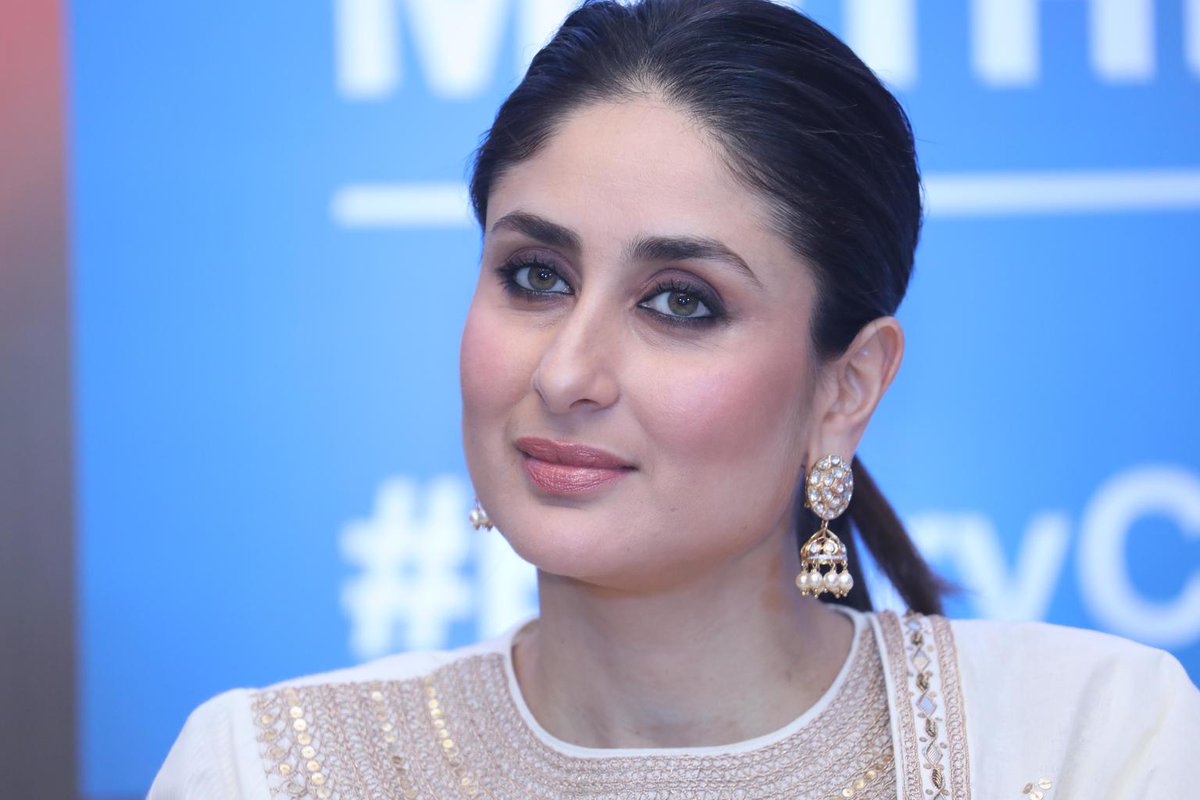
Bollywood actress Kareena Kapoor has opened up about the emotional challenges her elder sister, Karisma Kapoor, faced during the early years of her acting career, revealing that the journey was far more difficult than many people realized.

Speaking on a television reality show, Kareena reflected on Karisma’s struggles as she entered the film industry at a young age. She shared that despite belonging to the legendary Kapoor family, Karisma did not receive the support many would have expected. Instead, she encountered rejection and criticism from various quarters while trying to establish herself as an actress.

According to Kareena, several people in the film industry refused to work with Karisma when she was starting out. She also revealed that there was a period when even their father was unable to stand by her career decisions, leaving their mother to shoulder the responsibility of supporting both daughters through difficult times.

Kareena praised her mother for remaining strong and encouraging Karisma despite the emotional and professional obstacles the family faced. She said her mother never lost hope and constantly motivated Karisma to keep moving forward, even when circumstances seemed overwhelming.

Recalling those painful memories, Kareena said the hardships deeply affected Karisma emotionally. She remembered seeing her elder sister crying late at night after facing repeated disappointments. As a young child, Kareena would quietly watch from behind the curtains, witnessing the emotional toll those struggles had taken on her sister.

She added that people often underestimated Karisma and tried to discourage her, making her early years in Bollywood especially challenging. Kareena said watching her mother and sister endure those difficult moments taught her valuable lessons about resilience, determination, and the importance of family support.

The actress emphasized that although Karisma belonged to one of Bollywood’s most celebrated film dynasties, success did not come easily. She had to prove herself through hard work and perseverance rather than relying on her family name. Kareena said her sister’s journey remains an inspiring example of overcoming adversity through dedication and courage.

Karisma Kapoor made her Bollywood debut in 1991 at the age of 16 with Prem Qaidi. Despite facing criticism and setbacks during the initial phase of her career, she gradually established herself as one of the leading actresses of the 1990s. Over the years, she delivered several commercially successful and critically acclaimed performances, earning widespread recognition for her talent.

Kareena noted that looking back at those years fills her with admiration for both her sister and her mother. She believes their strength and determination played a significant role in shaping not only Karisma’s successful career but also her own outlook on life and the entertainment industry.

This is not the first time Kareena has spoken about her sister’s struggles. In an earlier interview, she also reflected on the emotional hardships Karisma experienced before achieving success, highlighting the sacrifices and determination that helped her become one of Bollywood’s most respected actresses.

Today, Karisma Kapoor’s journey is widely regarded as a story of perseverance, proving that talent, resilience, and unwavering family support can overcome even the toughest challenges.

Similar Posts

  • | | |

    Second phase of AJK elections kicks off

    The second phase of the Azad Jammu and Kashmir (AJK) general elections began on Sunday with polling underway in Muzaffarabad division and all 12 refugee constituencies located across Pakistan. Polling started at 8am and will continue until 5pm without any break. Election officials opened polling stations early in the morning, while voters began arriving to cast their ballots. Security personnel were deployed across sensitive areas to ensure a peaceful voting process. This phase of the elections covers nine constituencies in Muzaffarabad division. These include five constituencies in Muzaffarabad district and two each in Neelum and Jhelum Valley districts. At the same time, polling is also being held for 12 refugee constituencies representing refugees from the Kashmir Valley and Jammu region. More than 340 candidates are contesting the elections in this phase. According to election authorities, 207 candidates are in the race for the nine seats in Muzaffarabad division, while another 137 candidates are contesting the refugee constituencies. More than 809,000 registered voters are eligible to vote in Muzaffarabad division. The refugee constituencies have over 438,000 registered voters. Thousands of election staff have been deployed to conduct polling and oversee the voting process. Authorities have established 1,483 polling stations across Muzaffarabad division. Among them, 533 have been declared highly sensitive, 741 sensitive and 209 normal. In addition, 1,057 polling stations have been set up for refugee constituencies in different provinces. The refugee constituencies are spread across Punjab, Khyber Pakhtunkhwa, Sindh, Balochistan and Islamabad. Polling arrangements have been completed in all regions where registered refugee voters are residing. In Rawalpindi and Islamabad, around 27,000 registered voters are casting their votes for three refugee seats. Election officials have established 175 polling stations, while enhanced security has been provided at sensitive locations. In Gujrat, Wazirabad and Mandi Bahauddin, nearly 2,000 police personnel have been deployed to maintain law and order during polling. More than 50,000 registered voters are expected to elect their representative in the constituency. Polling is also taking place in Karachi and several districts of Sindh for two refugee constituencies. Election officials have made arrangements to facilitate voters across the province. In Balochistan, polling stations have been established in Quetta, Pishin, Qila Saifullah, Hub, Loralai, Sibi, Mastung, Zhob and Barkhan for refugee voters. Similar arrangements have been made in Khyber Pakhtunkhwa, particularly in Swat and Mansehra, where polling is being held for another refugee seat. The second phase of the elections is taking place amid heightened political tensions between the Pakistan Peoples Party (PPP) and the Pakistan Muslim League-Nawaz (PML-N). Relations between the coalition partners have remained strained since the first phase of polling, with both parties accusing each other of electoral irregularities in several constituencies. Senior leaders from both sides held multiple meetings in recent days in an effort to resolve the dispute. However, the talks failed to produce an agreement before the second phase of voting. The PPP has demanded legal action and re-polling in selected constituencies, while the PML-N has rejected allegations of organized rigging and maintained that the election results reflect the will of the voters. Meanwhile, Prime Minister Shehbaz Sharif met PML-N President Nawaz Sharif to review the political situation and discuss developments related to the AJK elections. Senior party leaders also attended the meeting and discussed the coalition’s future strategy.

  • | | | |

    Petrol Price hits Rs320.73 after fresh hike

    The federal government on Tuesday announced a fresh increase in the prices of petrol and high-speed diesel (HSD), continuing its new policy of daily fuel price adjustments. According to a notification issued by the Ministry of Petroleum, the price of petrol has been increased by Rs4.93 per litre. The new price has been fixed at Rs320.73 per litre. The price of high-speed diesel has also been raised by Rs7.15 per litre. Consumers will now pay Rs367.21 per litre for HSD. The revised prices will come into effect from July 22. The increase follows the government’s recent decision to introduce a daily petroleum pricing mechanism. Previously, fuel prices were reviewed every two weeks. Under the new system, prices are revised every day based on changes in the international oil market. Officials said the daily pricing formula uses the average international oil prices recorded over the previous seven days. The policy is intended to ensure that fluctuations in global crude oil prices are reflected more quickly in domestic fuel rates. The government had also revised fuel prices a day earlier. At that time, the price of high-speed diesel was increased, while petrol received a slight reduction for only one day. The Oil and Gas Regulatory Authority (OGRA) will continue updating petroleum prices on a daily basis. The authority says the new system will improve transparency and allow consumers to see immediate changes linked to global oil prices. Officials said international crude oil prices have become highly volatile due to renewed tensions in the Middle East. Fresh conflict in the region has increased fears of disruptions to global energy supplies and pushed oil prices higher. Concerns over possible supply disruptions through key international shipping routes have also added pressure on global oil markets. Pakistan, which imports a large portion of its petroleum requirements, remains vulnerable to these fluctuations. Earlier, international oil prices had declined after hopes of easing regional tensions. However, the latest developments reversed that trend, forcing another increase in domestic fuel prices. High-speed diesel is mainly used by heavy transport vehicles, agricultural machinery and industries. Any increase in its price usually raises transportation costs and farming expenses, which can contribute to higher prices of essential goods. Petrol is the primary fuel for motorcycles, cars and other private vehicles. Officials said petrol consumption has also increased after restrictions were imposed on the use of indigenous gas in Punjab, leading more consumers to rely on petrol-powered transport.

  • | |

    Manuel Neuer signals likely retirement at season’s end

    Bayern Munich captain Manuel Neuer has said it is “very likely” he will retire at the conclusion of the upcoming campaign, bringing an end to a career that has defined modern goalkeeping. Speaking at Bayern’s training camp in southern Bavaria, the 40‑year‑old confirmed that his one‑year contract extension signed in May would almost certainly be his last. “It certainly looks very likely I’m going to retire,” Neuer told reporters, adding that the strength of the current squad convinced him to play one more season. Neuer has battled recurring muscle injuries but remains a key figure for Bayern, who won the Bundesliga and German Cup double last season before falling to Paris Saint‑Germain in the Champions League semi‑finals. He missed the German Cup final against Stuttgart, with Jonas Urbig deputising in goal. The 2014 World Cup winner retired from international football after Euro 2024 but briefly returned for the most recent World Cup, where Germany exited in the last 32 against Paraguay. Since joining Bayern from Schalke in 2011, Neuer has collected 13 Bundesliga titles, six German Cups and two Champions League crowns. Despite hinting at retirement, he insisted the coming season would not be treated as a farewell tour. “I’m not playing these matches just to say, ‘This is my last game,’” he said.

  • | | |

    Rising chip costs may increase phone prices in Pak…

    The rising cost of semiconductor chips in the global market could lead to another increase in mobile phone prices in Pakistan, as smartphone manufacturers continue to face higher production expenses. Industry experts say the global technology sector is experiencing a sharp rise in the cost of key components used in smartphones. The increasing demand for advanced semiconductor chips, particularly those used in artificial intelligence (AI) data centres, has placed significant pressure on chip manufacturers and global supply chains. In addition to AI-related demand, the prices of memory chips, silicon wafers, chip packaging materials and other electronic components have also increased. These factors have raised the overall cost of manufacturing smartphones, forcing companies to review their pricing strategies. The impact is being felt across the international mobile industry. Manufacturers are facing higher production costs, while suppliers are adjusting prices to cope with increased manufacturing expenses. As a result, smartphone companies are expected to pass part of the additional cost on to consumers. Pakistan’s mobile phone market is closely linked to global supply chains because most smartphones and their components are imported. Any increase in international production costs is likely to affect the prices of devices sold in the local market. Industry analysts say consumers may have to pay more for both premium and mid-range smartphones if the trend continues. They added that the exact increase will depend on international market conditions, import costs and currency exchange rates in the coming months. The expected rise would come at a time when consumers are already dealing with higher prices for electronic goods due to inflation and increased import expenses. A further increase in smartphone prices could reduce purchasing power and slow demand in the local market.

  • |

    Erdogan says Makkah defence pact could expand across region

    ANKARA: Turkish President Recep Tayyip Erdogan has said the vision behind the Makkah Joint Defence Agreement between Türkiye, Saudi Arabia and Pakistan extends beyond the three signatories and could eventually include other regional countries. Erdogan said the agreement was designed to strengthen collective security and promote lasting peace, stability and prosperity in the region. He stressed that the pact was not directed against any particular country. Speaking in an interview with an Arab newspaper, Erdogan said the three countries wanted to create a broader regional framework based on cooperation, mutual trust and collective responsibility. He said countries that support peace, stability and prosperity should be able to join the framework in the future. According to Erdogan, the agreement is based on the principle of collective deterrence. A security threat against one member would be treated as a concern for the other members. He said the arrangement could also encourage joint defence-industry projects and greater cooperation against terrorism. Erdogan argued that regional countries should take greater responsibility for addressing their own security challenges rather than relying on solutions imposed from outside the region. He described the agreement as the outcome of long-running consultations among the participating countries and said it reflected changing conditions in the region. The Turkish president also rejected the idea that the pact was simply a response to tensions between the United States and Iran. He said its broader objective was to establish a durable mechanism for regional security. Focus on Gulf security Erdogan said the agreement could contribute to stability in the Gulf, which he described as vital to international trade and the global economy. He highlighted the importance of energy supplies, maritime routes and trade links passing through the region. He also expressed concern over tensions surrounding the Strait of Hormuz, warning that prolonged disruption there could have consequences for economies around the world. Erdogan called for restraint and continued diplomatic engagement to ensure the waterway remains safe for international shipping. He said Türkiye preferred dialogue and negotiations over military escalation and believed diplomatic efforts were essential to resolving disputes in the region and beyond. The Makkah agreement formalises growing strategic cooperation between Pakistan, Saudi Arabia and Türkiye. The three countries describe the arrangement as defensive and aimed at strengthening collective deterrence rather than creating an offensive military bloc. Erdogan said stronger cooperation between Ankara and Riyadh would also contribute to regional stability. He pointed to expanding ties in defence, trade, investment, energy and tourism. Prime Minister Shehbaz Sharif has described the trilateral agreement as an extension of Pakistan and Saudi Arabia’s existing defence cooperation. Pakistan and Saudi Arabia had earlier signed a strategic mutual defence agreement under which aggression against either country would be treated as aggression against both. The latest trilateral framework builds on those longstanding security ties and introduces Türkiye into a wider mechanism for defence cooperation.

  • |

    Weekly inflation rises 0.15% in second week of August

    ISLAMABAD: Weekly inflation increased by 0.15% during the second week of August 2026, pushing the year-on-year inflation rate to 9.11%, according to the latest data released by the Pakistan Bureau of Statistics (PBS). The weekly Sensitive Price Indicator (SPI), which tracks changes in the prices of essential consumer goods, showed a mixed trend during the week. Prices of several food and household items increased, while consumers received some relief from lower prices of petroleum products and selected food commodities. According to the PBS report, prices of 20 out of 51 essential commodities increased during the week under review, while prices of nine items declined. The prices of the remaining 22 commodities remained unchanged. Onion prices surge sharply Among the major price increases, onions recorded the most significant weekly jump, becoming 24.68% more expensive compared with the previous week. The increase is likely to add further pressure on household food budgets, particularly for low-income consumers who are more exposed to fluctuations in basic food prices. The price of gram pulse increased by 3.35%, while chicken became 2.45% more expensive during the week. LPG prices also edged up by 0.67%. Other commodities that recorded weekly price increases included tea, mustard oil, yoghurt and masoor pulse, adding to the overall upward movement in the weekly inflation indicator. Petroleum prices provide some relief The weekly inflation reading was partly offset by declines in the prices of petroleum and several food items. Petrol prices decreased by 2.35% during the week, providing some relief to consumers and transport users. Tomato prices fell by 1.26%, while potatoes became 0.73% cheaper. Diesel prices also declined, though marginally, by 0.29%. Prices of bananas, moong pulse, eggs and sugar also recorded weekly decreases. Despite these reductions, the increase in the prices of several essential food items, particularly onions, pulses and chicken, kept overall weekly inflation in positive territory. Food prices remain major source of annual pressure The year-on-year comparison presents a more pronounced picture of price pressures in several essential commodities. Tomatoes recorded the largest annual increase, with prices rising by 143.77% compared with the same period last year. Onion prices were 125.75% higher, while wheat flour became 77.41% more expensive. LPG prices increased by 55.41% on an annual basis, while diesel recorded a 34.05% increase. Petrol prices were also 23.02% higher than a year earlier. The sharp annual increases in basic food items indicate that consumers continue to face significant pressure in meeting everyday household expenses, even though some commodities have become cheaper compared with last year. Several commodities become cheaper annually The annual data also showed declines in the prices of a number of commodities. Potato prices dropped by 30% compared with a year earlier, marking the largest annual decline among the commodities listed in the report. Sugar prices fell by 17.93%, while chicken became 17.45% cheaper on an annual basis. Gram pulse, eggs and moong pulse also recorded year-on-year declines. The contrasting movements highlight the uneven nature of inflation, with some essential commodities witnessing substantial annual increases while others have recorded notable reductions. The latest PBS figures suggest that although overall inflation remains elevated, price movements continue to vary considerably across different categories. Food, energy and other essential commodities remain key factors influencing household expenditure and the broader cost-of-living situation.

Leave a Reply

Your email address will not be published. Required fields are marked *