momina iqbal usama
|

Momina Iqbal and Usama Khan team up for new drama Nizaam

Pakistani television is gearing up for another major drama as acclaimed actors Momina Iqbal, Usama Khan, and Nauman Ijaz are set to share the screen in an upcoming Green TV production tentatively titled Nizaam. The project has already entered the production phase, with filming currently underway, raising excitement among drama enthusiasts eager to see the trio together.

Momina Iqbal, who began her career in the fashion industry before transitioning into acting, has steadily established herself as one of Pakistan’s most admired television stars. Since making her acting debut in Parlour Wali Larki, she has taken on a variety of challenging roles that have showcased her versatility. Whether portraying emotionally driven protagonists or strong antagonists, Momina has consistently impressed audiences with her commanding performances. Her role in Do Kinaray further highlighted her ability to balance complex emotions and compelling screen presence, earning praise from viewers and critics alike.

Joining her in Nizaam is Usama Khan, one of the most recognizable faces of the younger generation of Pakistani actors. Over the past few years, Usama has built a loyal fan base through a series of memorable television performances. While his recent projects have generated mixed responses, the actor remains a popular name in the entertainment industry. Expectations are high that Nizaam will mark a significant return for him, offering a powerful role that allows him to reconnect with audiences and showcase his acting range.

Adding further weight to the cast is veteran actor Nauman Ijaz, whose presence alone often elevates any television project. Widely regarded as one of Pakistan’s finest performers, Nauman has built a remarkable career through unforgettable performances across numerous critically acclaimed dramas. His ability to portray layered, emotionally rich characters has made him one of the industry’s most respected artists. In Nizaam, he is expected to play a pivotal role that will be central to the drama’s narrative.

The upcoming serial is written by Fatima Faizan, whose previous work has received attention for its engaging storytelling and strong character development. With a fresh script and an experienced cast, the drama is expected to offer a gripping viewing experience that combines emotional depth with compelling performances.

The project is being produced by Multiverse Production for Green TV, a channel that has gained recognition for presenting unique stories and high-quality productions in recent years. Although specific plot details have not yet been revealed, the collaboration between established stars and a talented creative team has already generated considerable anticipation.

As filming progresses, viewers are eagerly awaiting more information about the storyline, supporting cast, and official release schedule. Given the popularity of its lead actors and the strong creative team behind it, Nizaam is already emerging as one of the most anticipated Pakistani television dramas expected to premiere in the coming season. Fans will be watching closely for further updates as the production moves toward its official launch.

Similar Posts

  • | |

    KPC President Fazil Jameeli: Sindh govt offers fin…

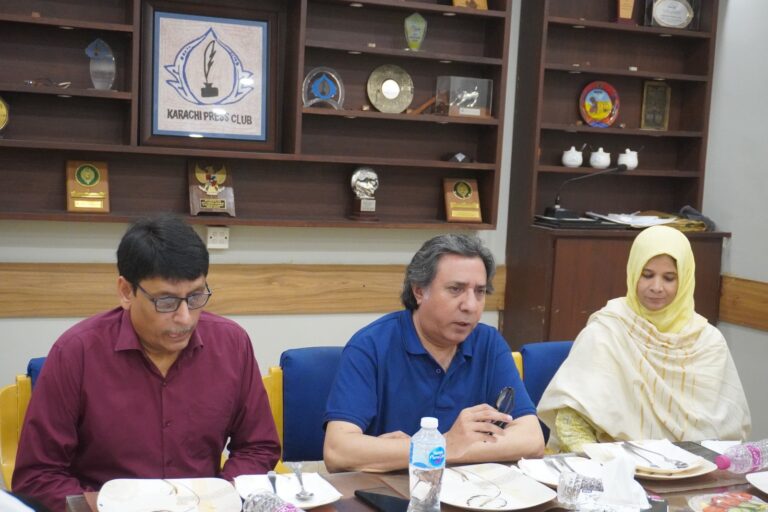
    In a rare but welcome gesture, Karachi Press Club President Fazil Jameeli, serving his second consecutive term, hosted a luncheon for women journalists to hear their concerns and suggestions firsthand. A good number of female journalists attended. KPC General Secretary Aslam Khan and governing body member Sheema Siddiqua were also present. For women journalists in Karachi, the newsroom is only half the story. Beyond deadlines, beats, and breaking news, they carry the weight of a double role — as working professionals and as homemakers. It is this unseen labor that makes spaces like the KPC luncheon significant — not just as a meeting, but as recognition that their challenges are different, and their voices need a dedicated forum. During the discussion, President Fazil Jameeli disclosed that the Sindh government’s Pink Scooty scheme was initially his brainchild. He said he had advised the Sindh Minister for Information and Transport, Mr Sharjeel Inam Memon, to launch it to empower women, building on the province’s existing Pink Bus service for females. The conversation moved beyond formalities to everyday issues — from canteen management and cleanliness to broader facilities. Jameeli briefed the gathering on ongoing initiatives, including the Pink Scooty Training program and the club’s pending requisition to the Sindh government for support. More importantly, he sought concrete recommendations from the women present on making KPC’s services more inclusive, signaling a shift from token representation to real consultation. The luncheon concluded with a vote of thanks from women members. Later, in an interview, President Fazil Jameeli — a poet and writer of repute who enjoys great respect in literary and scholarly circles — outlined the elected body’s plans. Known for his thoughtful verse and warm leadership, he spoke with vision and clarity about expanding facilities and empowering members. In a major announcement, he said: “KPC will be the first club in Pakistan to introduce daycare centers for women members. This will help them work with greater peace of mind.” While the Women Development Department had committed to building one, no action has followed. KPC is now approaching the corporate sector and overseas Pakistanis for support. The women’s complex infrastructure is ready, but running a daycare will require significant expense — trained governesses, teachers, a nutritionist, and food for toddlers and school-going children. “This project is very close to my heart,” he said. Jameeli added that the club was preparing women journalists for the digital media boom. “We have already set up a state-of-the-art studio. Dozens are already benefiting by making vlogs and monetizing their channels,” he said. The aim, he noted, is to help women become financially independent through digital content. He also highlighted a major opportunity: Sindh government financing for digital projects. “The Sindh government has offered to finance documentaries and digital content that showcase Sindh to the world,” he said. The scope includes the province’s landscape, rivers, coastline, Indus Delta, history, culture, languages, Sufi heritage, folk music, handicrafts, cuisine, and ancient civilizations like Mohenjo-daro and Kot Diji, as well as contributions of Sindhi scholars, poets and leaders. “From the government’s point of view, this is about narrative building,” he said. “They want young content creators to tell Sindh’s real story — its pluralism, resilience and heritage — through modern digital platforms. In return, the Sindh government will provide financial support for quality projects that project a positive image of the province.” On sustainability, Fazil Jameeli said KPC was the only club in Pakistan working on green energy. The current body was enhancing solar capacity with larger panels and better batteries to make the club more self-reliant and cut electricity costs. He also updated members on KPC Media Town. A summary sent to the provincial government has been approved for sewerage, drainage, roads and other infrastructure at Hawksbay Media Town. The President further said the body was considering a big family picnic and an annual family gala. Recommendations are being invited from women members to make club life more inclusive. Wrapping up, Jameeli said; the focus is clear: to make KPC more inclusive, self-reliant and future-ready. “From green energy and Media Town infrastructure to daycare centers, digital studios and skill programs for women, the aim is to build a club where every member — especially women — feels supported. These are not just projects. They are steps toward a KPC that reflects the creativity, resilience and spirit of its journalists.

  • | |

    Chris Evans shares good reason to prioritize his w…

    Chris Evans has opened up about the major shift in his perspective on acting, explaining why he has become far more selective about the projects he chooses to take on. The actor, best known for playing Captain America in the Marvel Cinematic Universe, has previously spoken about how fame and the demands of Hollywood affected his personal life. Over time, Evans said he learned that simply staying busy was not enough. The work itself needed to feel meaningful. In a recent discussion about his career, Evans explained that filmmaking requires an enormous level of commitment. From preparation and filming to post-production and promotion, a project can consume months of a person’s life. Because of that, he now believes a role needs to be something he genuinely cares about rather than an opportunity he accepts simply because it is available. (Vanity Fair⁠) That mindset represents a significant change from earlier in his career. Evans previously admitted that he became increasingly anxious in his late 20s as his career grew. He questioned whether Hollywood was bringing him closer to the person he wanted to become or pushing him further away from himself. Those concerns became particularly important when he was considering the role of Captain America. (GQ⁠) Although the role ultimately transformed his career, Evans has never treated acting as something he must do constantly. After completing his Marvel commitments, he took a step back from Hollywood and spent more time away from the intense pressure surrounding blockbuster filmmaking. His approach has also influenced the way he views new projects. Evans has said that directing taught him just how demanding the filmmaking process can be. After directing Before We Go, he realized that a project requires a strong emotional connection to remain fulfilling throughout the long production process. (Vanity Fair⁠) That lesson appears to have shaped his choices today. Evans recently returned to the Marvel universe for Avengers: Doomsday, but his comeback was not something he agreed to immediately. He revealed that Marvel presented him with numerous ideas over several years, but none felt right until the latest opportunity came together. He said he wanted to protect what Captain America meant to him rather than return simply because fans wanted it. (Geo News⁠) His decision highlights a broader change in the actor’s priorities. Evans no longer appears interested in filling his schedule simply to remain visible. Instead, he wants his time and energy to go toward stories that genuinely excite him. For the actor, prioritizing work does not necessarily mean working more. It means choosing better. After years of enormous success, Evans seems comfortable with saying no and waiting for the right opportunity. His career may now move at a slower pace, but his latest perspective suggests that he values purpose, personal happiness and meaningful creative work more than simply being everywhere at once.

  • |

    Pakistan unveils five-year plan to revive hockey

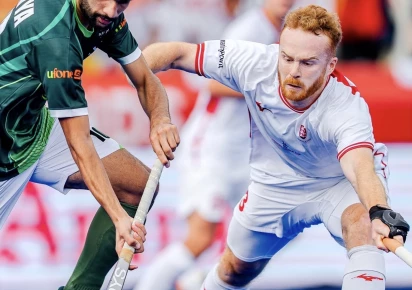
    ISLAMABAD: Pakistan Hockey Federation (PHF) President Mohiuddin Ahmad Wani has unveiled an ambitious three-to-five-year roadmap aimed at rebuilding Pakistan’s national sport from the grassroots level and restoring the country’s competitiveness on the international stage. The plan comes at a difficult time for Pakistan hockey. The national team’s defeat against England in its opening match of the 2026 FIH Men’s Hockey World Cup has once again raised questions about the sport’s decline and the team’s ability to compete with the world’s leading sides. Wani said the federation wanted to move away from short-term decisions and instead build a sustainable system that could continuously produce quality players. “Our priority is not just to win one tournament but to rebuild the entire hockey ecosystem,” he said. Under the proposed system, young players would progress through school, district, provincial and national competitions before entering the senior setup. The PHF says the pathway will be based on merit, allowing talented players to rise through the ranks regardless of their background. The federation also plans to draw lessons from successful hockey systems in the Netherlands, Belgium, Germany and India. Greater emphasis will be placed on modern coaching, professional training methods and improved infrastructure. A major target is to increase the number of astro-turf facilities across Pakistan from the existing 52 to 100 within five years. The proposed facilities would not merely provide playing surfaces but also host coaching programmes, competitions and dedicated initiatives for women’s hockey. Coaching is another key part of the roadmap. Local coaches are expected to receive advanced training with the assistance of foreign experts, while the national side would be given greater international exposure through overseas tours and visits by foreign teams to Pakistan. The PHF also intends to improve financial incentives for players and provide clearer career opportunities, an important step toward encouraging talented youngsters to choose hockey as a long-term profession. The roadmap envisages grassroots and infrastructure development during the first year, stronger academies and coaching programmes in the second, followed by a performance review in the third year. Wani stressed that restoring Pakistan hockey would require sustained cooperation from governments, stakeholders and the public. The challenge is formidable, but the PHF hopes its long-term approach can turn Pakistan’s once-dominant hockey tradition into a competitive future rather than another chapter of sporting nostalgia.

  • |

    Gal Gadot says motherhood turned her into a ‘lioness’

    Gal Gadot is opening up about how motherhood has deeply shaped her latest on-screen role. The actress admitted becoming a mother gave her direct access to emotions she couldn’t have understood otherwise. The “Snow White” star, who is a mother of four, plays a woman whose son gets kidnapped in her upcoming film “The Runner.” She reflected on the emotional weight of the role in a new interview with Modern Luxury magazine. Gadot explained that becoming a mother essentially turns a woman into a protector, almost like a lioness. She said nothing matters more than the safety of one’s children, regardless of background or beliefs. According to her, that protective instinct is something virtually every parent shares. She described the fear of being unable to protect your child as one of the deepest fears any mother carries. Gadot said that exact fear defines her character Maia’s journey throughout the film. She explained that Maia is not portrayed as a superhero with all the answers. Instead, she said, Maia makes mistakes, doubts herself and often feels scared. Despite that, Gadot noted, her character keeps pushing forward regardless of the fear she’s carrying. She said that quality is what she personally finds most inspiring about the role. According to Gadot, real courage is not about being fearless, but about continuing forward even while afraid. The “Wonder Woman” star also spoke more broadly about how motherhood has shaped her as a performer. She described it as the deepest emotional well she has access to as an actress. Gadot explained that motherhood gives her emotional insight that simply can not be reached through logic or preparation alone. She said those feelings are something you can only truly access by living through them yourself. Her comments offer a personal look into how her real-life experiences as a mother are influencing her more emotionally driven roles. “The Runner” is scheduled to premiere on Amazon Prime Video on September 2, giving audiences their first look at Gadot’s latest performance.

  • |

    GIDC Amendment Bill to unlock Rs400bn stuck dues

    ISLAMABAD: The National Assembly is expected to consider the Gas Infrastructure Development Cess (Amendment) Bill, 2026, a proposed legal change aimed at resolving more than Rs400 billion in disputed and outstanding Gas Infrastructure Development Cess (GIDC) payments currently tied up in litigation. The proposed legislation seeks to amend the Gas Infrastructure Development Cess Act, 2015, and comes after years of legal disputes between the government and major gas consumers, including industrial, fertiliser and CNG sectors. The Cabinet Committee for Disposal of Legislative Cases (CCLC) approved the proposed amendments in principle earlier this year, paving the way for the government to move forward with the legislative process. The GIDC was originally introduced to generate funds for major gas infrastructure projects, including the Iran-Pakistan (IP) gas pipeline, the Turkmenistan-Afghanistan-Pakistan-India (TAPI) pipeline, LNG-related projects and other associated infrastructure. However, progress on several of these projects has remained slow, while the collection and utilisation of the cess became the subject of prolonged litigation. Legal history of GIDC According to a briefing provided by the Petroleum Division to the CCLC, the original Gas Infrastructure Development Cess Act, 2011, and the GIDC Ordinance, 2014 were struck down by the Supreme Court in 2014. The government subsequently enacted the GIDC Act, 2015, in May that year. The new legislation also provided retrospective legal cover to the cess that had been charged and collected under the 2011 Act and the 2014 ordinance. Section 4(1) of the 2015 law specifies that the cess is to be utilised by the federal government for infrastructure development related to the IP pipeline, TAPI pipeline, LNG projects and other ancillary schemes. The constitutional validity of the 2015 legislation was subsequently challenged by consumers from the industrial, fertiliser and CNG sectors before different high courts. The disputes eventually reached the Supreme Court. In its judgment of August 13, 2020, the Supreme Court dismissed the civil appeals and connected petitions and upheld the constitutionality of the GIDC Act, 2015, including its retrospective application. The court, however, did not permit the government to impose a fresh cess under the disputed arrangements. Instead, it allowed recovery of outstanding arrears through instalments. Supreme Court links cess to infrastructure projects A significant aspect of the Supreme Court’s ruling was its observation that GIDC constituted a fee rather than a conventional tax. As a fee, the court noted, there must be a corresponding benefit or service associated with the amount collected. The infrastructure projects identified under Section 4 of the Act therefore formed an important basis for the continuation and utilisation of the cess. The court also observed that failure to pursue the specified gas infrastructure projects could undermine the purpose for which the cess had been imposed. Despite the Supreme Court judgment, the dispute did not come to an immediate end, as consumers continued pursuing related matters before the high courts. This resulted in a substantial amount of GIDC remaining locked in prolonged litigation. Government forms high-powered committee In an attempt to find a solution, Prime Minister Shehbaz Sharif constituted a high-powered GIDC Committee on November 8, 2022, to examine the issue of outstanding amounts exceeding Rs400 billion. The committee held several meetings following its formation, but progress remained limited because of continuing litigation in different high courts. The matter was again taken up on March 19, 2025, when the committee met under the chairmanship of the federal Minister for Finance and Revenue. The meeting was attended by the Minister for Petroleum Division, the Attorney General for Pakistan and senior officials from the Petroleum, Finance and Law divisions. During the meeting, participants agreed in principle that Section 4 of the GIDC Act, 2015 should be amended to help address the long-running legal disputes. Following the committee’s recommendations, the Petroleum Division prepared a proposal for amendments and submitted a summary seeking approval of the draft GIDC (Amendment) Act, 2025. First amendment proposal rejected The initial proposal, however, was not approved by the CCLC at its meeting on September 3, 2025. The committee directed the Petroleum Division to revisit the draft and ensure that the proposed changes remained within the original scope and objectives of the GIDC Act, 2015. The Petroleum Division subsequently revised the draft after consultations with the relevant government departments. The amended draft was sent to the Law and Justice Division for legal scrutiny, which gave its concurrence on December 15, 2025. The Petroleum Division then sought formal approval of the revised GIDC amendment bill under the relevant provisions of the Rules of Business, 1973. The Finance Division had also been consulted during the process and conveyed that it had no objection to the proposal contained in the summary submitted to the CCLC. CCLC gives approval to revised proposal The CCLC considered a Petroleum Division summary dated January 1, 2026 concerning amendments to the GIDC Act, 2015. The committee approved the proposal, subject to the incorporation of amendments recommended by the CCLC into the draft legislation by the Law and Justice Division before the bill was submitted to the federal Cabinet. The approval represents another attempt by the government to break the deadlock surrounding billions of rupees in GIDC dues and bring a degree of finality to disputes that have continued for more than a decade. TAPI project remains slow The government’s original justification for GIDC included financing major regional gas infrastructure projects. However, the implementation of these projects has remained challenging. The TAPI pipeline, envisioned to transport natural gas from Turkmenistan through Afghanistan and Pakistan to India, has faced repeated delays because of financial, security and geopolitical challenges. Although work has reportedly begun on an initial 153-kilometre section extending from Serhetabat on the Turkmenistan-Afghanistan border towards Herat in western Afghanistan, the broader project remains far from completion. The slow progress of the pipeline and other proposed infrastructure projects has also remained relevant to the broader debate over the purpose and utilisation of GIDC collections. The proposed amendment is therefore being viewed as an effort to address both the legal complications surrounding outstanding dues and the government’s


  • | |

    ECC approves hike in petrol, diesel dealers’ mar…

    ISLAMABAD: The Economic Coordination Committee (ECC) has approved an increase in the dealers’ margin on petrol and diesel by Rs1.34 per litre. According to sources, the dealers’ margin on both petrol and diesel has been raised from Rs8.64 to Rs9.98 per litre. Vice Chairman of the All Pakistan Petrol Pumps Owners Association Nauman Butt thanked the prime minister and petroleum minister for approving the increase. The association said the government had fulfilled its long-standing demand by increasing the dealers’ margin by Rs1.34 per litre. Meanwhile, the government collected more petroleum levy revenue than both its target and the International Monetary Fund’s (IMF) estimate during the last fiscal year. According to Finance Ministry sources, petroleum levy collections exceeded Rs1.56 trillion during the previous fiscal year. More than Rs50 billion was also collected under the Climate Support Levy. Petroleum levy collections were around Rs100 billion higher than the government’s target and Rs21 billion above the IMF’s estimate. At present, a petroleum levy of Rs80 per litre is being charged on petrol. High-Speed Diesel carries a levy of Rs77.28 per litre. In addition, a separate Climate Support Levy of Rs5 per litre is being imposed on both petrol and diesel.

Leave a Reply

Your email address will not be published. Required fields are marked *