glasgow heart power
| |

From Glasgow to the heart of UK power

How Anas Sarwar challenged a Prime Minister, reshaped Labour politics and rose to become a UK minister

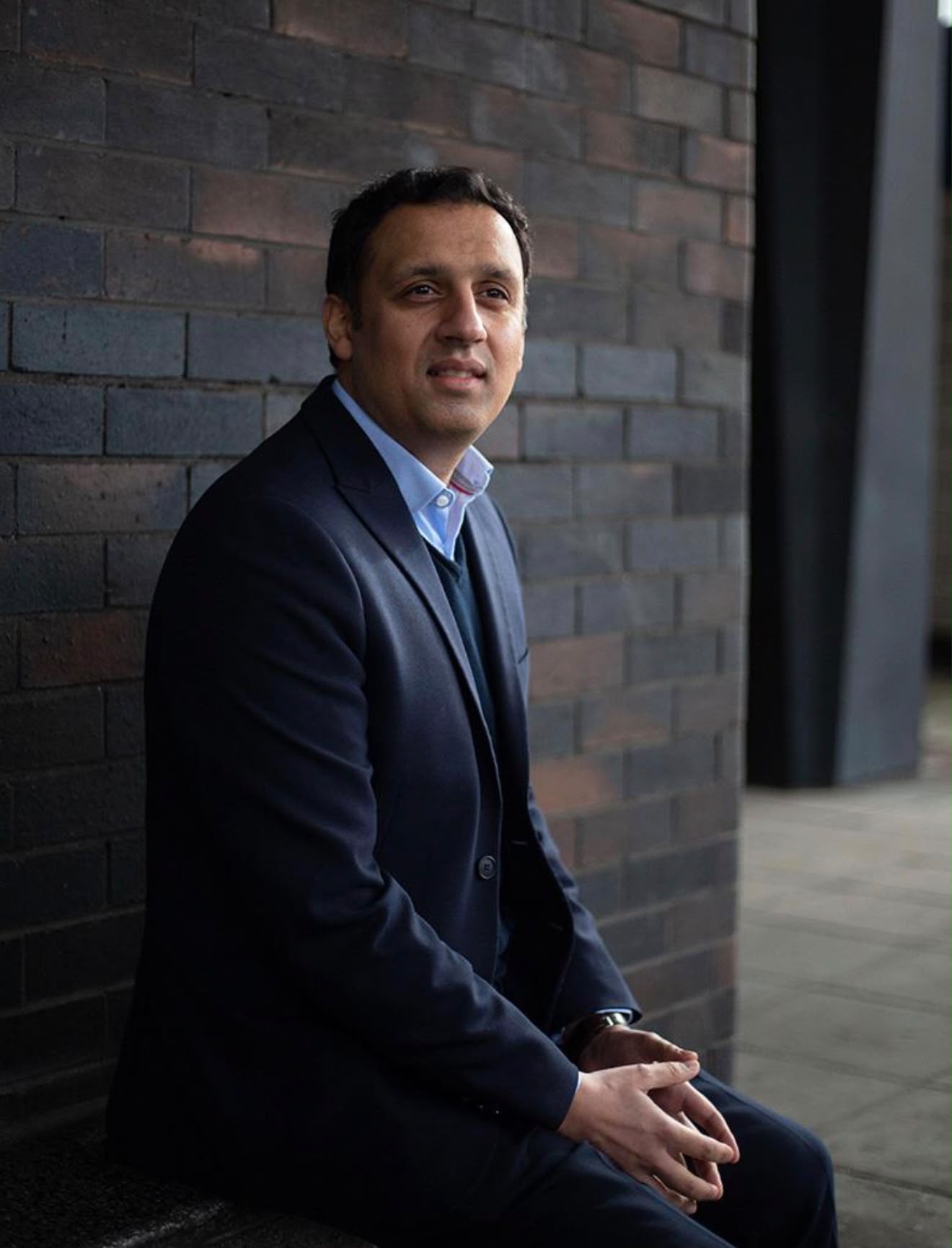
Anas Sarwar’s journey from a young Scottish politician carrying the weight of a famous political surname to one of the most senior ministers in the British government has reached a defining moment. His appointment as Minister of State for Business, Innovation, Science and Trade, alongside his elevation to the House of Lords, marks one of the most significant political achievements by a British politician of Pakistani heritage in recent decades.

The appointment also underlines the confidence Prime Minister Andy Burnham has placed in Sarwar, entrusting him with a department central to the government’s ambitions for economic growth, scientific research, innovation and international trade.

A FAMILY THAT MADE HISTORY

Politics has long been part of the Sarwar family story.

Anas Sarwar is the son of Mohammad Sarwar, who made British political history in 1997 by becoming the first Muslim and the first MP of Pakistani origin elected to the House of Commons. Mohammad Sarwar later went on to serve as Governor of Punjab, Pakistan’s largest province, giving the family a unique political legacy spanning both Britain and Pakistan.

Although his father’s achievements opened doors for greater representation of British Pakistanis in politics, Anas Sarwar has spent much of his career building his own political identity through perseverance, resilience and leadership.

A POLITICAL CAREER BUILT ON RESILIENCE

A qualified dentist by profession, Sarwar entered Parliament after winning Glasgow Central in 2010.

His political career has been shaped by both success and setbacks.

Following Labour’s electoral collapse in Scotland in 2015, Sarwar emerged as one of the party’s most recognisable figures during one of its darkest periods. He served as Deputy Leader of Scottish Labour before unsuccessfully contesting the party leadership. Rather than retreating from frontline politics, he rebuilt his standing within the party and was elected Leader of Scottish Labour in 2021.

Tasked with reviving a party that had suffered years of decline, Sarwar focused on rebuilding Labour’s organisation, reconnecting with voters and restoring its credibility as Scotland’s principal opposition party.

THE MAN WHO FIRST CHALLENGED STARMER

Sarwar’s reputation as an independent political figure was cemented during Labour’s leadership crisis when he became the first senior Labour politician to publicly call for Keir Starmer to resign.

At a time when many senior figures remained publicly loyal, Sarwar openly argued that Labour required a change in leadership. Political observers viewed his intervention as a turning point that encouraged wider debate within the party over Starmer’s future. In the weeks that followed, pressure on the Prime Minister intensified, ultimately culminating in Starmer’s resignation and the election of Andy Burnham as Labour leader and Prime Minister.

Today, the politician who first publicly challenged Starmer has become one of the key members of Burnham’s ministerial team—an illustration of how dramatically Labour’s political landscape has changed.

A KEY ROLE IN GOVERNMENT

Sarwar’s appointment as Minister of State for Business, Innovation, Science and Trade places him at the centre of one of the government’s most important departments.

His responsibilities will include supporting business investment, promoting innovation, advancing scientific research, strengthening Britain’s industrial strategy and expanding international trade—areas regarded as crucial to the UK’s long-term economic future.

His elevation to the House of Lords enables him to take up ministerial office while bringing his tenure as Leader of Scottish Labour to an end, triggering a contest to choose his successor.

POLITICAL SIGNIFICANCE

Political commentators believe the appointment carries significance far beyond a routine cabinet reshuffle.

For Prime Minister Andy Burnham, it brings an experienced political strategist into a department central to delivering economic growth.

For Scottish Labour, it marks the departure of the leader who steadied the party during a challenging period and leaves a significant leadership vacancy.

For Britain’s Pakistani community, Sarwar’s promotion represents another landmark in the growing influence of British Pakistanis at the highest levels of national politics.

COLLEAGUES SEE A RESILIENT LEADER

Labour colleagues have publicly described Sarwar as a disciplined and pragmatic politician who remained committed to rebuilding Scottish Labour despite difficult electoral circumstances.

Political observers argue that his appointment reflects years of persistence, resilience and organisational leadership rather than a sudden political promotion.

Critics, meanwhile, have questioned his move from frontline Scottish politics to the unelected House of Lords, arguing that Scottish Labour loses one of its most experienced leaders at a crucial political moment.

A NEW CHAPTER

Anas Sarwar now moves from leading Labour in Scotland to helping shape Britain’s economic future from the heart of government.

His appointment completes a political journey that began in Glasgow, was forged through years of electoral battles and internal party struggles, and has culminated in one of the most influential ministerial positions in Westminster.

From following in the footsteps of his father, Mohammad Sarwar, to becoming the first senior Labour figure to challenge Keir Starmer’s leadership and now joining Andy Burnham’s Cabinet, Anas Sarwar’s rise reflects one of the most remarkable political stories in contemporary British politics.

Similar Posts

  • | |

    Israel claims Hamas commander killed in Central Ga…

    The Israeli military says it has killed a Hamas commander during an airstrike in central Gaza, as fighting in the territory continues despite ongoing international efforts to reduce hostilities. According to a statement issued by the Israeli military, the commander, identified as Hamam Eid, was targeted in central Gaza. Israel alleged that he was involved in developing Hamas’ drone capabilities and was working to rebuild the group’s aerial operations. The military further claimed that these activities violated the terms of the ceasefire arrangement, describing the operation as part of its ongoing campaign against Hamas’ military infrastructure. Separately, Palestinian officials reported that two members of Gaza’s internal security service were killed in another Israeli airstrike. According to local authorities, the victims were Colonel Wael Al-Lidawi, described as a regional head of the internal security service, and Major Ramez Abu Zuraiq. They were reportedly traveling through Deir al-Balah in central Gaza when their vehicle was struck. The reported deaths come as military operations continue across Gaza despite previous ceasefire efforts. Both Israeli and Palestinian authorities have continued to exchange accusations over violations of the truce, while humanitarian concerns remain high. The claims made by the Israeli military and Palestinian officials have not been independently verified, and the conflict continues to evolve with ongoing reports of casualties on both sides.

  • |

    Petrol prices may bring relief in two days if global oil rates stay stable

    LAHORE: Federal Petroleum Minister Ali Pervaiz Malik has indicated that consumers could receive some relief in petroleum prices within the next two days if international crude oil rates remain stable, while acknowledging that elevated fuel costs continue to place pressure on households and the wider economy. Speaking in Lahore, the petroleum minister said the government was closely monitoring developments in the international oil market and would take the prevailing global prices into account during the next petroleum price review. Malik explained that petroleum prices in Pakistan are linked to international market trends and are calculated on the basis of a seven-day average. He said the Oil and Gas Regulatory Authority (OGRA) is responsible for determining the prices under the existing mechanism. He added that the movement of global oil prices during the next couple of days would be particularly important in determining whether consumers could receive positive news in the upcoming review. Government averts fuel supply crisis The minister said Pakistan had managed to maintain uninterrupted supplies of petroleum products despite severe pressure created by regional tensions and volatility in international energy markets. According to Malik, Prime Minister Shehbaz Sharif and his team took measures on both the economic and diplomatic fronts to ensure that the country did not experience a fuel shortage. He said the government had continued supplying petroleum products across the country even during a period when uncertainty in the region was creating serious risks for energy-importing nations. “There was no shortage of petroleum products in Pakistan during the tension,” Malik said, stressing that maintaining fuel supplies remained one of the government’s key priorities. He acknowledged, however, that preventing a shortage did not eliminate the financial burden caused by high international oil prices. International oil market remains a major concern Malik said the recent regional conflict created extraordinary volatility in global energy markets. He pointed to sharp increases in crude oil, petrol and diesel prices during the period of heightened tensions. He said crude oil prices had at one stage climbed as high as $170 per barrel, while diesel prices reached around $280 and petrol prices also touched $170. The minister further referred to periods when market expectations pointed towards even more dramatic increases, with petrol and diesel prices moving towards levels of around $500. Such volatility, he said, demonstrated the difficulties faced by countries that rely heavily on imported energy to meet domestic requirements. Pakistan, being an energy-importing country, remains particularly vulnerable to sudden increases in international oil prices because changes in global rates can quickly affect domestic fuel prices, transportation expenses and industrial costs. Expensive fuel putting pressure on people The petroleum minister conceded that high fuel prices are creating difficulties for ordinary citizens and businesses. He said an increase in petroleum prices does not remain confined to fuel stations, as higher transportation and energy costs eventually affect the prices of goods and services throughout the economy. According to Malik, expensive petroleum products increase the cost of moving agricultural produce, industrial raw materials and finished goods, thereby adding to inflationary pressure. “The people are suffering” because petroleum products are expensive, he said, while maintaining that the government was making efforts to provide relief within its available financial capacity. Petroleum levy collection exceeds target Malik also disclosed that the government collected around Rs1,900 billion through the petroleum levy during the previous year, exceeding the official target of Rs1,700 billion. The collection represents an important source of government revenue, but the minister acknowledged the broader economic implications of relying on petroleum-related revenues while consumers are already facing high fuel costs. He said the government had to balance revenue requirements with the need to protect consumers from excessive increases in petroleum prices. Prices cut when conditions allowed The minister said the government reduced petroleum prices whenever international market conditions and other relevant factors created room for downward revisions. He said Prime Minister Shehbaz Sharif had ordered reductions when an agreement was reached and circumstances permitted the government to pass on the benefit to consumers. Malik said the administration was attempting to manage fuel prices within the limits imposed by international markets and domestic economic conditions. He also recalled the prime minister’s commitment to introducing greater transparency in the petroleum pricing mechanism. The minister said the government had been required to make difficult decisions as part of broader efforts to stabilise the economy and place Pakistan on a sustainable development path. Heavy reliance on imported energy questioned Malik also raised concerns over Pakistan’s longstanding dependence on imported energy. He questioned why the country had continued relying on overseas energy supplies for decades despite having significant potential for developing domestic oil and gas resources. The minister said Pakistan obtains around 90% of its energy requirements from foreign sources, leaving the economy exposed to fluctuations in global energy prices and geopolitical developments. He argued that reducing this dependence should be treated as a long-term national priority. According to Malik, Pakistan has promising gas resources in areas such as Waziristan and Balochistan, and greater efforts are required to explore, develop and utilise domestic reserves. He said increasing local production could eventually reduce pressure on the country’s import bill and provide greater protection against international price shocks. Focus shifts towards domestic energy development The minister said Pakistan could not continue responding to every international energy crisis after it had already occurred. Instead, he stressed the need for long-term investment in exploration, infrastructure and domestic energy production. He said the government wants to move the country away from a cycle in which international price increases immediately translate into domestic economic difficulties. Malik described development of local energy resources as an important component of Pakistan’s broader economic strategy. He said the government was working towards an environment in which energy availability could support industrial expansion, investment and economic growth. Major energy infrastructure initiative planned Malik also referred to a new infrastructure initiative, saying the prime minister and the field marshal had assigned a major internationally recognised company to undertake energy infrastructure work within a

  • Tourism Minister Proposes 1,000 Baht Exit Fee for Thais Traveling Abroad

    BANGKOK — Thai citizens planning international trips may soon face a new expense before boarding their flights: a 1,000 baht exit fee proposed by the Tourism and Sports Ministry as a way to fund domestic tourism from the pockets of those leaving the country. Thailand to Launch 300 Baht Tourist Entry Fee Under New Government […]

  • | |

    FIA launches unit to hunt dark web criminals

    The Federal Investigation Agency (FIA) has established a dedicated unit to investigate criminals operating through the dark web. The move is aimed at strengthening Pakistan’s ability to deal with hidden online criminal networks. The new unit has been set up at the FIA’s National Command and Control Centre (NC3) in Islamabad. It will use advanced technology and digital investigation techniques to identify suspects who use encrypted platforms to conceal their identities. FIA Director General Dr Usman Anwar said the unit would focus on criminal networks involved in activities that fall under the agency’s jurisdiction. Investigators will also examine suspicious digital transactions, including those involving cryptocurrencies. A major focus will be networks involved in producing fake documents. Such documents can be used to facilitate human trafficking and illegal migrant smuggling. The unit will also investigate other forms of cyber-enabled crime linked to the dark web. The dark web is a hidden part of the internet. Its websites are not normally indexed by standard search engines. Access often requires specialised software and knowledge. Criminals can use these systems to hide their identities and locations. The technology has also been misused for illegal trade, cybercrime and other criminal activities. Authorities face additional challenges because many dark web networks operate across national borders. Criminals can also use cryptocurrency to make financial transactions more difficult to trace. The FIA plans to address these challenges through modern digital investigation tools and greater coordination between specialised teams. The new unit will work closely with the FIA’s cryptocurrency investigation unit. Both units will operate under the same facility and share technical expertise. Investigators will use blockchain forensic techniques to examine cryptocurrency transactions. These techniques can help authorities analyse transactions and potentially connect anonymous or pseudonymous digital addresses with real-world identities. Open-source intelligence will also be used to support investigations. Officials said digital evidence gathered from different sources could help strengthen criminal cases. Investigators will track aliases, usernames and pseudonyms used by suspected criminals across online marketplaces, forums and other hidden platforms. The information will be used to build detailed profiles of suspected offenders. Authorities can then use the evidence to identify suspects and pursue legal action. NC3 Director Dr Athar Waheed explained the basic structure of the internet. He said it is commonly divided into three broad layers: the surface web, deep web and dark web. The surface web includes websites that can be found through regular search engines. News websites, social media platforms, blogs and online shopping sites are examples. The deep web contains online material that search engines do not index. This includes private databases, email accounts, banking systems, academic resources and internal organisational networks. Much of the deep web is legitimate. Users normally need passwords, subscriptions or specific permissions to access such content. The dark web is a smaller and deliberately hidden section of the deep web. It uses technologies designed to provide greater anonymity. Tor is one of the technologies commonly associated with accessing dark web services. It routes internet traffic through multiple volunteer-operated relays, making it more difficult to identify the original source. The FIA’s new unit will seek to overcome these anonymity measures through digital forensics, intelligence gathering and technological investigation.

  • | |

    Maryam slams PPP over AJK election rigging claims

    Punjab Chief Minister Maryam Nawaz has accused the Pakistan Peoples Party (PPP) of adopting double standards over election results, saying the party did not allege rigging when it won in Gilgit-Baltistan but raised accusations of electoral fraud after losing in Azad Jammu and Kashmir (AJK). Addressing a meeting of the Pakistan Muslim League-Nawaz (PML-N) parliamentary party in AJK, Maryam Nawaz said the PML-N had secured victory in the AJK elections, describing the result as a wise decision by the people despite difficult circumstances. She said the people of AJK had defeated violence, unrest, bloodshed, protests and strikes through the power of their vote. According to her, certain elements wanted to create conflict between Pakistan and AJK, but the election result was a major setback for them. Maryam said the people of AJK knew what they wanted and were aware of the development work being carried out in the federal government and Punjab. She maintained that voters had chosen development and progress over confrontation and instability. The Punjab chief minister said the election was not the biggest test for the PML-N, adding that the real test had now begun. She said her party had faced numerous conspiracies and challenges, while its leaders had also gone through difficult phases. “We have to start working from day one and should not spend time enjoying protocols and invitations,” she said. Referring to the 2021 AJK elections, Maryam said the PML-N had won 17 seats while the Pakistan Tehreek-e-Insaf (PTI) had secured three seats. She said immediate work would begin for AJK once the government was formed, stressing that the new administration should focus on public welfare and development. Maryam Nawaz also described PML-N supremo Nawaz Sharif as the founder of modern Pakistan, saying the party would continue its efforts to promote development and progress.

  • | |

    Spain accuses EU allies of ‘selfish’ r…

    Spain has accused several European Union governments of a selfish and unlawful reaction after nearly 60,000 migrants crossed into the Spanish enclave of Ceuta from Morocco, triggering a wave of statements from EU member states calling for tighter border restrictions. Prime Minister Pedro Sanchez, in a letter addressed to European Commission President Ursula von der Leyen, described the response from unnamed member states as selfish, polarizing and unlawful. According to a report by the British broadcaster, Sanchez said Madrid had restored order within 48 hours, returning most of the migrants to Morocco and preventing them from reaching mainland Europe. The diplomatic dispute was triggered largely by Italy’s response, which included a temporary suspension of visa free travel with Spain under the Schengen arrangement, along with pointed criticism accusing Madrid of encouraging human trafficking by granting citizenship to more than 500,000 people who had entered the country irregularly. Italian Foreign Minister Antonio Tajani wrote on social media that he supports closing the Schengen area to Spain and expressed confidence in the actions of Italy’s interior minister, Matteo Piantedosi. He said uncontrolled and irregular immigration represents a threat to national security, and argued that the situation unfolding in Ceuta demonstrates how Spain’s decision to naturalize large numbers of irregular immigrants was fundamentally wrong and only encourages trafficking. Italy was not alone in calling for a tougher stance. Czech Prime Minister Andrej Babis went further, calling for Spain to be suspended immediately from the 29 member Schengen arrangement. Finland and Denmark also voiced support for stricter border controls in response to the crisis. Notably, Ceuta itself lies outside the Schengen zone, meaning the enclave is not directly governed by the same free movement rules at the center of the diplomatic dispute between Madrid and its European partners. The clash highlights long standing tensions within the European Union over how to handle migration pressure at its external borders, an issue that has repeatedly strained relations between member states with differing approaches to asylum policy, border enforcement and integration in recent years.  

Leave a Reply

Your email address will not be published. Required fields are marked *