tourism minister proposes

Tourism Minister Proposes 1,000 Baht Exit Fee for Thais Traveling Abroad

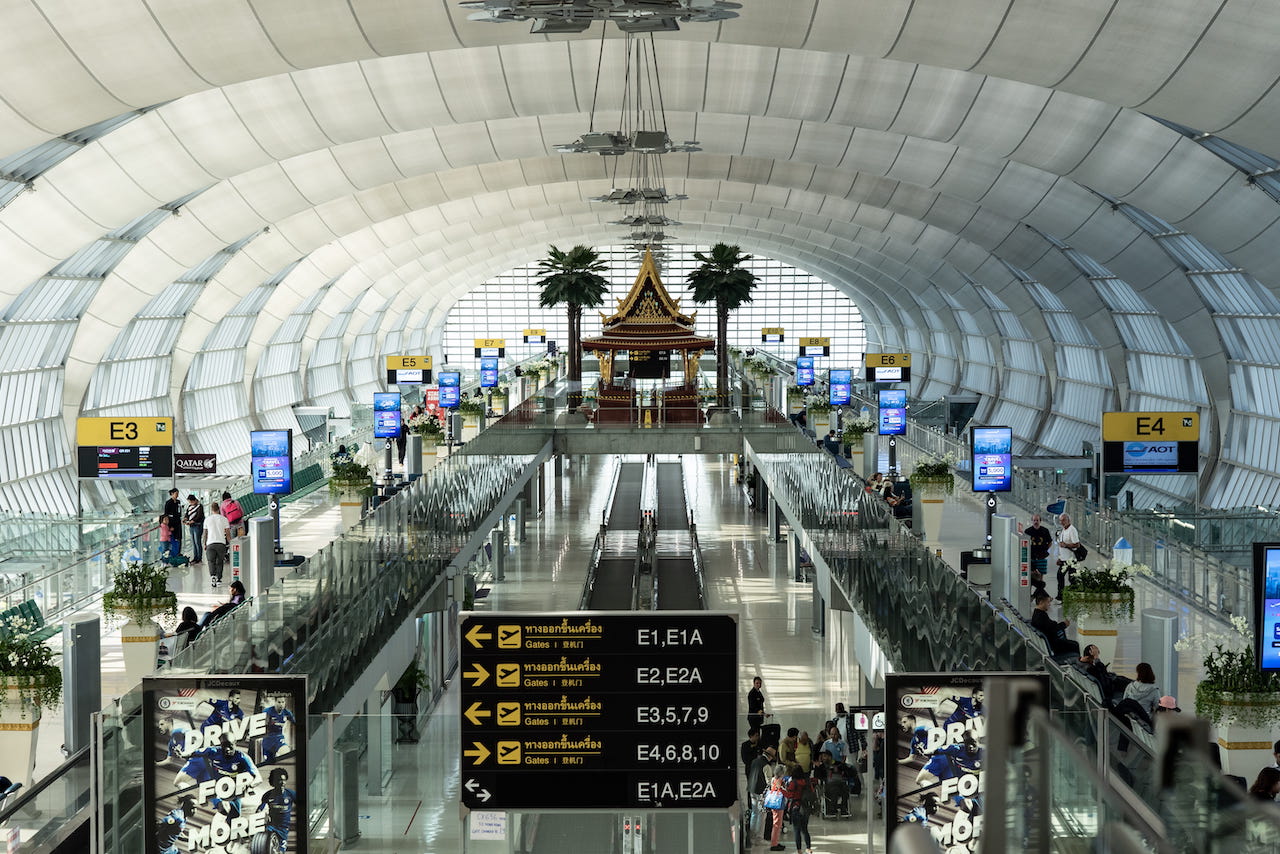
BANGKOK — Thai citizens planning international trips may soon face a new expense before boarding their flights: a 1,000 baht exit fee proposed by the Tourism and Sports Ministry as a way to fund domestic tourism from the pockets of those leaving the country.

Thailand to Launch 300 Baht Tourist Entry Fee Under New Government

The proposal, announced by Tourism and Sports Minister Surasak Phancharoenworakul and developed jointly with the Ministry of Finance, would levy the fee on Thai nationals each time they travel abroad. With approximately 10 million outbound trips made by Thais annually, the minister estimates the fee could generate about 10 billion baht per year.

That revenue would then be channelled directly into domestic tourism initiatives, offering subsidies such as a 1,000 baht support per trip for Thais vacationing within the country. In essence, the proposal would take money from those leaving and give it to those staying, creating a closed-loop funding mechanism that reduces the government’s reliance on annual budget allocations.

Minister Surasak argued that the initiative would enhance the long-term sustainability of Thailand’s tourism industry, enabling more strategic planning while insulating domestic promotion efforts from political budget battles. Rather than begging for funds each fiscal year, the ministry could count on a predictable stream of revenue tied directly to outbound travel volumes.

The proposal comes against a backdrop of global uncertainty. Geopolitical tensions, including ongoing conflicts in the Middle East, threaten to slow international tourism, making domestic travel even more critical to maintaining Thailand’s vast hospitality sector. A weaker global market would leave hotels, restaurants and tour operators increasingly dependent on Thai travellers filling rooms and seats.

Efforts are also underway to revive successful past domestic tourism schemes, such as the “We Travel Together” co-payment program, which subsidised hotel stays and flights for Thai travellers. Additional initiatives under consideration include bus travel promotions, tax incentives for domestic trips and measures to boost tourism in secondary cities that rarely see international visitors.

The exit fee proposal, however, is likely to face significant headwinds. Thai travellers, accustomed to the freedom of international travel without an additional levy, may object to the new cost. Airlines and travel agencies may worry that a 1,000 baht fee could discourage some Thais from booking overseas trips, reducing their business at a time when international arrivals are already under pressure.

The government’s argument—that the fee is a small price to pay for a more sustainable tourism model, and that the revenue will be recycled back to domestic travellers—may not satisfy those who see it as yet another tax on mobility. And for the 10 million Thais who travel abroad each year, many of whom are budget-conscious tourists visiting neighbouring countries, an extra 1,000 baht is not trivial.

Thailand to Raise International Passenger Fee by More Than 50% Starting June 2026

Whether the proposal will be approved by the Cabinet and ultimately implemented remains to be seen. But the message from the Tourism Ministry is unmistakable: Thailand wants Thais to travel at home, and it is willing to tax those who leave to make staying more attractive. For frequent flyers, the exit fee would be an unwelcome addition to the cost of a holiday. For the ministry, it is a creative solution to a perennial funding problem. For now, the debate is just beginning.

-Thailand News (TN)

Similar Posts

  • | | |

    PM Shehbaz unveils bold Vision 2047 for Pakistan?…

    Prime Minister Shehbaz Sharif has launched Vision Pakistan 2047, a long-term national development framework focused on economic growth, youth empowerment, employment, education, technology and sustainable development. Addressing a youth event in Islamabad, the prime minister pledged to do everything within his power for the prosperity and employment of young Pakistanis as long as he remained responsible for serving the country. Shehbaz said Pakistan’s founders built the country in 1947, while the Pakistan of 2047 would be shaped by the vision, energy and capabilities of its young generation. He urged students to prepare themselves to play a leading role in the country’s future development. Youth development is a major component of Vision Pakistan 2047. The government plans to expand opportunities in education, employment, entrepreneurship and technology so that young people can acquire skills required by the modern economy. The prime minister also announced Pakistan’s first national youth employment policy. Under the policy, women will have a 35 per cent share in the labour force, while 10 per cent of the allocation will be reserved for startups. The initiative aims not only to help young people find jobs but also encourage them to establish businesses and create employment for others. Shehbaz stressed that equal access to quality education was essential for building the welfare state envisioned by Quaid-e-Azam. He said talented children from villages and less-developed areas should receive opportunities comparable to those available to students from privileged backgrounds. The government plans to expand the Danish Schools network to Azad Jammu and Kashmir, Gilgit-Baltistan and Balochistan. The initiative is intended to provide quality education to deserving students without financial barriers. A Danish University is also being established in Islamabad, with classes expected to begin next year. The institution will focus on modern education and emerging disciplines. The prime minister said Pakistan must increase its focus on information technology, artificial intelligence and technical education to remain competitive globally. He said 1,000 students had already been sent to China for training in agricultural technology, while high-achieving students would receive opportunities for IT and AI education. The government has also distributed around 700,000 laptops among deserving students. Another 250,000 laptops are expected to be provided to high-achieving students this year. Vision Pakistan 2047 will be aligned with the government’s Uraan Pakistan programme. Ministries and relevant institutions have been directed to set long-term targets covering economic transformation, human capital, technology, innovation, governance and sustainable development. The broader objective is to create a competitive and inclusive economy and move Pakistan towards a trillion-dollar economic target while improving living standards and expanding opportunities for its young population. Chairman of the Prime Minister’s Youth Programme Rana Mashhood Ahmed Khan also addressed the gathering. He said the government was working continuously to create opportunities for young people and praised Shehbaz Sharif for initiatives taken for youth development.

  • | |

    Gen Z group behind India’s cockroach protest…

    The Cockroach Janta Party, the youth movement that forced a top Indian minister to quit, says it has no plans yet to contest elections despite its growing influence among young voters. Abhijeet Dipke, the founder of the group, told a foreign news agency on Tuesday that the organization intends to stay focused on grassroots mobilization rather than rush into formal politics. The statement comes weeks after protests led by Dipke swept through Delhi and spread to other parts of the country, ultimately pressuring Prime Minister Narendra Modi’s education minister to step down. Speaking from his family home in Maharashtra, Dipke said the group wants to first understand what young Indians actually want before deciding its next move. He announced that supporters would gather for a two day meeting starting Wednesday to map out priorities for the movement going forward. “The purpose will be to form the agenda for the Cockroach Janta Party and discuss how we can take this social movement forward,” Dipke said, as well wishers arrived at his home carrying flowers and gifts. Dipke made clear that entering electoral politics is not on the table for now, though he left the door open for the future. He said he would only consider building a formal party if a clear majority of supporters pushed for it, and that any decision to contest elections would come later, guided by public sentiment rather than a fixed timeline. He argued that Indian politics does not currently need another party competing for power. Instead, he said, the country requires a broader public campaign aimed at restoring faith in institutions that have lost credibility among ordinary citizens. Dipke said the group’s immediate priority is to give voice to the frustrations of India’s youth, many of whom, in his view, no longer trust the country’s political class, judiciary or press. He emphasized the importance of listening directly to young people before setting any formal agenda, saying it was necessary to understand their actual concerns rather than assume them. Dipke made these comments while still recovering from typhoid, which he contracted during the weeks he spent camped out during the Delhi demonstrations. A hero’s welcome at home Following the 36 day protest, Dipke traveled back to his hometown of Chhatrapati Sambhajinagar, where hundreds of supporters lined up outside his home to greet him, many carrying flowers in celebration of the movement’s success. Dipke’s rise to prominence has been rapid. After returning to India in June from his studies in the United States, he became a household name almost overnight when his call to protest against leaked medical entrance exam papers pulled tens of thousands of young demonstrators onto the streets of the capital. The pressure campaign achieved a significant result on July 25, when Education Minister Dharmendra Pradhan resigned from his post. Authorities had attempted to disperse the crowds using tear gas and baton charges, but the demonstrations continued regardless. In the aftermath, the government announced tougher legal penalties for those involved in leaking exam papers and formed a committee to reassess the broader examination system. The stakes attached to these entrance exams are enormous for India’s youth. Millions of students spend years preparing for them, viewing a strong result as their surest route to stable, well paying careers and financial security for their families. Wary of political traps Dipke explained that he is avoiding a formal political launch partly out of concern that the government could use investigations or legal pressure to undermine the party’s leadership if it formalized too quickly. He also said he has no intention of aligning the movement with any existing political party, even as opposition figures in India have tried to capitalize on the rare momentum the protests created against Modi’s government. Some of that caution appears to draw on regional experience. In neighboring Bangladesh, a youth led party that emerged after mass protests ousted long time leader Sheikh Hasina in 2024 went on to perform poorly in this year’s elections, a result that may be shaping how Dipke approaches the question of formal politics in India. Political observers say the true test of whether young Indians’ frustration translates into votes will come in elections scheduled for next year in Uttar Pradesh, India’s most populous state, along with Punjab and Modi’s home state of Gujarat. A bigger risk for the ruling Bharatiya Janata Party could emerge in the 2029 general election if the Cockroach Janta Party evolves into a formal political force by then. Political analyst Amitabh Tiwari said the movement is unlikely to cause major damage to the BJP in upcoming state elections but could grow into a more serious factor by the time of the next general election. He added that if the group builds a party structure, continues championing youth causes and sustains its current momentum, it stands a real chance of attracting broader support. Security concerns following the protests remain high. More than a dozen police officers have been stationed outside Dipke’s family home after he received threats on social media once his profile surged following the initial call to protest in May, a period in which the Cockroach Janta Party’s Instagram following grew to 22 million within days. Dipke said his greatest worry is not for his own safety but for that of his parents. He expressed relief at being back home and said he trusts that government provided security will keep his family safe in the coming weeks. The episode adds to a growing pattern across South Asia, where youth led movements have increasingly forced political concessions from long entrenched governments, even when those movements stop short of transforming into electoral parties themselves.

  • Songkran Road Toll Climbs to 154 as Holiday Travel Enters Fourth Day

    BANGKOK — The first four days of the Songkran holiday’s “seven dangerous days” have claimed 154 lives and left 705 people injured in road accidents across Thailand, with Bangkok recording the highest number of fatalities, authorities reported on Tuesday. Songkran Holiday Road Death Toll Rises to 95 After Three Days While the toll remains deeply […]

  • New Lao River Water Station to Secure Clean Tap Water for Chiang Rai Residents

    CHIANG RAI — The Thai government is launching a major project to protect the long-term water safety of Chiang Rai residents. A brand-new water production station will be built to draw fresh water from the Lao River instead of the Kok River. Deputy Prime Minister Songsak Thongsri announced the plan during an official site visit […]

  • | |

    Gohar rejects reports on Imran-Noreen meeting

    PTI Chairman Barrister Gohar Khan has rejected reports about the meeting between party founder Imran Khan and Noreen Niazi. He said several fabricated reports were being circulated about what was discussed during the meeting. Speaking about the matter, Barrister Gohar said he contacted Noreen Niazi by phone after her meeting with Imran Khan. However, he said she did not share details of the conversation or explain what had taken place during the meeting. According to Barrister Gohar, Noreen Niazi had made it clear that she would not discuss the meeting outside. She had also decided not to speak publicly about the details of her interaction with Imran Khan. Barrister Gohar said there was no truth in reports claiming that Imran Khan had spoken against PTI leadership. He specifically clarified that the PTI founder had not made any remarks against Sohail Afridi or other members of the party leadership. He said the reports being circulated about the meeting were misleading and should not be treated as factual. Barrister Gohar maintained that the details being attributed to the meeting did not reflect what had actually been discussed. The PTI chairman also said Noreen Niazi appeared to be happy after meeting Imran Khan. However, he noted that there were certain matters discussed during the meeting that could not be shared publicly. He said some information remained private because of the nature of the meeting. Barrister Gohar therefore urged people not to rely on unverified reports or speculation regarding the interaction between Imran Khan and Noreen Niazi.

  • | | |

    Sister reveals shocking details of Imran’s check…

    Uzma Khan, sister of incarcerated former prime minister Imran Khan, said Friday that the PTI founder had complained of health problems that he believed were connected to his prolonged solitary confinement. She made the remarks during a press conference in Islamabad alongside Imran’s personal physician, Dr Faisal Sultan, following his transfer to hospital for a medical examination. Uzma said she and Dr Sultan were asked to reach Adiala Jail on Friday evening after receiving a phone call. According to her, they arrived at the prison at around 8pm to 8:30pm. She said they were taken to a room belonging to a deputy superintendent of police. After some time, she alleged, Dr Sultan was asked to leave the room with a police official while she was taken separately by a female police officer. Uzma said police officers did not explain where she was being taken or provide clear information about Dr Sultan. She was eventually taken to the Pakistan Institute of Medical Sciences (Pims), despite the Supreme Court directing that Imran be shifted to Shifa International Hospital for a medical checkup. According to Uzma, officials told her the visit to Pims was related to a follow-up examination of Imran’s eye condition. She described the hospital environment as unusually dark and said she was taken through the building with the help of a mobile phone flashlight before being brought to an office. Uzma said she was later taken upstairs, where she unexpectedly saw her brother. She recalled that Imran appeared surprised and shocked to see her after a long period apart. He reportedly introduced her to the doctors as his sister, saying they were meeting after about 10 months. Uzma said she informed Imran that he had been brought for a medical examination and was expected to be taken to Shifa International Hospital afterward. She also asked about Dr Sultan but said she was not given a clear answer. The examination eventually focused on Imran’s eye. Uzma said several doctors were present, although she was familiar with only one of them, whom she identified as Dr Arif. Imran has previously received treatment at Pims following the diagnosis of right central retinal vein occlusion, an eye condition identified earlier this year. The Supreme Court had directed authorities to arrange Imran’s medical examination while also instructing that information about his health should not be used for political purposes.

Leave a Reply

Your email address will not be published. Required fields are marked *