
great tragedy partitionviii

The Great Tragedy of Partition—VIII Mountbatten,…

The legality of a constitutional settlement cannot compensate for the absence of time, preparation and protection required to implement it

The collapse of the Cabinet Mission Plan did more than extinguish the last comprehensive attempt to preserve a united India. It transformed a constitutional dispute into an administrative and humanitarian emergency.

Indian National Congress proceeded with the Constituent Assembly, the Muslim League withdrew its acceptance of the Plan, and political distrust increasingly gave way to confrontation. Communal violence spread across different parts of India, demonstrating that the approaching transfer of power could no longer be treated simply as an exercise in constitutional drafting.

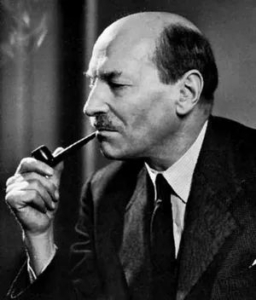
By the beginning of 1947, Britain had reached a decisive conclusion. Its rule in India could not continue indefinitely, while no constitution acceptable to all the principal political parties had emerged. On February 20, 1947, Prime Minister Clement Attlee announced that British authority would be transferred to Indian hands no later than June 1948.
The statement also acknowledged that, in the absence of an agreed constitution, Britain would have to determine whether power should pass to a central authority, provincial governments or some other arrangement. The possibility of more than one successor authority had now entered official policy.

Lord Louis Mountbatten arrived as the last Viceroy in March 1947 with a mandate to supervise this transfer. He inherited a political order already close to collapse. The Cabinet Mission framework had ceased to command common confidence, the interim government was paralysed by rivalry between Congress and the Muslim League, and communal violence had exposed the fragility of provincial administration.
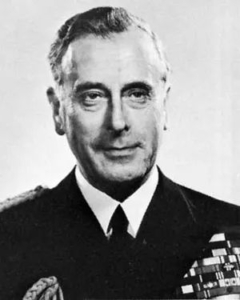
Mountbatten’s task was not to negotiate within a stable constitutional environment. It was to construct a settlement while the institutions through which it had to be implemented were rapidly disintegrating.

The central question was whether the deadline of June 1948 provided sufficient time to undertake an orderly transfer or whether delay would deepen violence and political uncertainty. Mountbatten chose acceleration.

On June 3, 1947, the British Government announced a plan under which British India could be divided and power transferred to two successor governments. Punjab and Bengal would decide whether they should themselves be partitioned; separate constituent assemblies could emerge; and referendums would determine the future of the North-West Frontier Province and the Sylhet district of Assam. The date for transfer was brought forward from June 1948 to August 1947.

The acceleration was defended as a response to deteriorating conditions. British authority was weakening, communal violence was spreading and the principal political parties had accepted that Partition had become unavoidable. Mountbatten and his supporters believed that a definite and immediate date would end uncertainty and compel the parties to assume responsibility.

The opposing view deserves equal attention. A constitutional transformation of such magnitude required the division of provinces, armed forces, civil services, financial assets, railways, irrigation systems, records and administrative institutions. It required the establishment of two governments and the settlement of territorial boundaries affecting millions of people. Compressing this process into a few weeks inevitably reduced the time available for administrative preparation, security arrangements and the protection of vulnerable communities.

The question is therefore not simply whether British withdrawal had become inevitable. It plainly had. The more difficult question is whether the decision to advance the transfer by approximately ten months converted political urgency into administrative recklessness.

The Indian Independence Act received Royal Assent on July 18, 1947. It provided that two independent Dominions—India and Pakistan—would be established from August 15, 1947. It partitioned Punjab and Bengal, empowered the respective constituent assemblies to legislate for the new Dominions and terminated British responsibility for governing India. Parliamentary sovereignty, exercised from London for generations, legislated itself out of the subcontinent in an extraordinarily compressed period.

The legal instrument was concise. Partition was not. An Act of Parliament could establish two Dominions, confer legislative authority and terminate imperial jurisdiction. It could not divide villages, canals, railway lines, police forces, military units, families and centuries of shared social existence with comparable simplicity. Constitutional law could provide a date for independence, but it could not by itself produce the administrative capacity necessary to manage the consequences of territorial division.

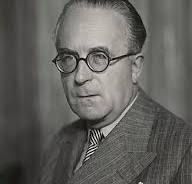
The most visible illustration of this haste was the work of the Punjab and Bengal Boundary Commissions. Sir Cyril Radcliffe was appointed to chair both bodies and was required to determine the boundaries separating Muslim-majority and non-Muslim-majority areas. The task involved densely populated territories in which religious communities, agricultural systems, transport networks and commercial centres were deeply interwoven. He was given only a matter of weeks to complete it.
Punjab and Bengal could not be divided by applying census figures mechanically. District-level majorities concealed substantial minorities, while economic and geographic considerations frequently pointed in directions different from religious demography.

Rivers, irrigation headworks, railways and markets crossed the proposed boundaries. Sikhs were particularly vulnerable in Punjab because their population, landholdings and sacred places were distributed across areas claimed by both successor states.

The commissions were expected to resolve these questions while political authority was itself being divided. Their members were nominated from opposing political sides and were unable to agree on many decisive matters. The ultimate responsibility therefore rested with Radcliffe, who was required to draw boundaries under extraordinary pressure and with limited opportunity for local investigation.

More troubling was the timing of publication. The boundary awards were made public on August 17, 1947, after independence ceremonies had already taken place. Large populations in Punjab and Bengal consequently entered independence without knowing with certainty on which side of the new international frontier they would fall.

The delay may have been intended to prevent the boundary controversy from overshadowing the independence celebrations or provoking immediate disorder. Its effect was to deepen uncertainty at the precise moment when administrative clarity was most urgently required. Officials responsible for security, local government and transportation had little time to prepare for the territorial consequences. Ordinary people were left to respond to rumour, fear and rapidly changing political realities.

No law expressly ordered a complete exchange of populations between India and Pakistan. The migration that followed arose from violence, insecurity and the collapse of confidence that minorities could remain safely on the “wrong” side of the new border. Trains, roads and refugee columns became scenes of unimaginable suffering.

Families abandoned land, homes and livelihoods accumulated over generations. Women were subjected to abduction and sexual violence, while entire communities disappeared from places where they had lived for centuries.

The precise numbers remain disputed, but the scale is beyond controversy. Around fourteen million people were uprooted during Partition, making it one of the largest forced movements of population in modern history. Estimates of those killed vary greatly, reflecting both the chaos of the period and the inadequacy of official records.

Responsibility for this tragedy cannot be placed upon one actor alone. Congress and the Muslim League accepted Partition when other constitutional alternatives had collapsed. Communal organisations and armed groups converted political division into organised violence. Provincial administrations failed to protect minorities. Local grievances, rumours and retaliatory killings intensified the catastrophe.

Recognition of this shared responsibility does not absolve the departing imperial power. Britain controlled the timetable, supervised the division of the state and retained formal authority until the transfer occurred. The decision to accelerate independence, complete the boundary process within weeks and disclose the awards only after the transfer materially affected the conditions under which Partition was implemented.

The archival record does not establish that Britain intended the humanitarian catastrophe. It reveals something different and equally disturbing: a withdrawal carried out with insufficient appreciation of the administrative and human consequences of speed. Haste was treated as the solution to political instability when it also magnified institutional weakness.

Mountbatten succeeded in transferring power earlier than originally contemplated. The British Parliament enacted the required constitutional legislation, and two independent states came into existence. Judged solely by the formal completion of imperial withdrawal, the process was remarkably rapid. Judged by the suffering of the people required to live through it, the same process appears tragically unprepared. This is the central distinction upon which historical assessment must rest.

Partition as a political decision and Partition as an administrative operation were not identical questions. Even after the decision to create two states had been accepted, different choices remained possible regarding the timetable, security arrangements, boundary publication, refugee protection and institutional transition. The failure to make adequate provision in these areas converted constitutional separation into human catastrophe.

The tragedy of 1947 did not arise from constitutional disagreement alone. It arose when political division was implemented faster than administrative institutions could protect the people caught within it.

The concluding article will consider whether Partition itself, the haste of its execution and the scale of the resulting violence were inevitable. It will also examine the unresolved constitutional inheritance that passed to India and Pakistan when British rule ended.

References: Principal Documents and Sources

His Majesty’s Government, Statement on the Transfer of Power in India, February 20, 1947.

His Majesty’s Government, Plan for the Transfer of Power, June 3, 1947.

Indian Independence Act, 1947, 10 & 11 Geo. 6, c. 30.

Punjab and Bengal Boundary Commission Awards, August 1947.

Nicholas Mansergh (ed.), The Transfer of Power 1942–47, relevant volumes.

Stanley Wolpert, Shameful Flight: The Last Years of the British Empire in India.

Yasmin Khan, The Great Partition: The Making of India and Pakistan.

The National Archives, collections on Indian independence and the Partition of British India.

[To be continued]

____________________________________________________________________

Dr. Ikramul Haq, Advocate Supreme Court, Adjunct Faculty at Lahore University of Management Sciences (LUMS), member Advisory Board and Visiting Senior Fellow of Pakistan Institute of Development Economics (PIDE), holds an LLD in tax laws. He was full-time journalist from 1979 to 1984 with Viewpoint and Dawn. He also served Civil Services of Pakistan from 1984 to 1996.

Similar Posts

  • How much do we love Pakistan?

    Patriotism is not a loud noise that we hear only on the 14th of August. It is not only flags on the streets, or songs on television, or speeches in big grounds. Real patriotism is a quiet light that burns in the heart of a common man, every single day. It lives in the way we treat our country when no one is watching. It lives in the small choices we make from morning till night. Pakistan was not given to us as a gift. It was bought with blood, with tears, with the prayers of mothers and the sacrifices of fathers. Millions left their homes. Millions never returned. Today, the debt of that sacrifice is on us. And how do we pay that debt? Not always with great battles. Often, we pay it with small, honest, and consistent acts. Look around you. When a young boy in Lahore gets up early and sweeps the street in front of his house without waiting for anyone to tell him, that is patriotism. When a shopkeeper in Karachi refuses to sell expired medicine to a poor child, even when he could earn more, that is patriotism. When a teacher in Peshawar stays for ten extra minutes to explain one more sum to a weak student, that is patriotism. When a driver in Islamabad stops at the red light at 2 AM when the roads are empty, that is patriotism. The world may not clap for them. Cameras may not follow them. But Allah sees. And the nation grows stronger because of them. Consider our daily life. We waste water while brushing our teeth. We throw plastic on the road and then complain that the drains are blocked. We break the queue and then blame the system for being corrupt. But a true patriot asks a different question. He asks, “What can I do today?” He turns off the extra fan. He plants one tree in his street. He picks up one wrapper and puts it in the dustbin. One person doing this means nothing. But when two hundred and forty million people do this, rivers become clean, cities become beautiful, and the government saves billions that can go to schools and hospitals instead of cleaning our mess. Now look at our work. A nation is built in offices, in fields, in factories, and in classrooms. The doctor who treats every patient with the same care, whether he is rich or poor, is serving Pakistan. The engineer who builds a bridge that does not fall for fifty years is serving Pakistan. The farmer who works under the hot sun of Punjab and Sindh to grow wheat so that no child sleeps hungry is serving Pakistan. The coder in Lahore who earns dollars from clients abroad and brings that money back to Pakistan is serving Pakistan. Even the mother at home who raises her children with honesty and faith is serving Pakistan. These are not small jobs. These are the pillars of a nation. In today’s world, patriotism also lives on our phones. Every day we forward messages. Every day we post something. A patriot thinks before he types. He does not spread hate between provinces. He does not share a lie to get more likes. He speaks about Pakistan with pride, even when he is criticizing to improve. When a Pakistani student sits in London or Dubai and works hard and follows the law, he becomes the face of Pakistan. When he helps a stranger and says “I am from Pakistan” with his head high, he wins respect for all of us. We are a nation of diversity. We speak different languages. We wear different clothes. We eat different food. But we share one sky, one land, and one flag. True patriotism is when a Baloch, a Sindhi, a Punjabi, a Pashtun, and a Kashmiri sit at one table and say “We are Pakistani first.” It is when during floods, people from Gilgit send donations to people in Thar. No one asks your caste. No one asks your sect. We only ask, “How can we help?” That is the Pakistan of Quaid-e-Azam. That is the Pakistan we must protect. And what about our land? Our rivers, our mountains, our air? To harm them is to harm Pakistan. The patriot plants a tree. The patriot says no to plastic. The patriot keeps his mosque, his school, and his park clean. Because a dirty nation can never be a great nation. Dear readers, let us be clear. We do not need to do everything. But we must do something. Every day. Faith, Unity, Discipline. These were not just three words. They were a plan. Faith in Allah and in ourselves. Unity with each other despite our differences. And Discipline in our small, daily actions. Do not wait for a hero to come and fix everything. You are the hero. In your home. In your street. In your office. On 14th August we celebrate. But on 15th August, and 16th August, and every day after that, we must build. With honesty. With hard work. With love. Because nations are not built by what we say in one day. Nations are built by what we do in three hundred and sixty-five days.

  • Before We Map New Provinces: Replacing Colonial Bu…

    For eighteen years, I have made a quiet, sometimes lonely case: that technology, not more paperwork and more offices, is the only honest path to good governance in Pakistan. I did not arrive at this conviction from a textbook. I arrived at it from a desk inside the Planning Commission, watching a system that was designed — on paper — to deliver development, and instead delivered delay, opacity, and grievance. Anyone who has sat through the sanctioning of a Public Sector Development Program (PSDP) project knows the ritual. The feasibility study is glowing. The PC-1 is approved with confident projections. Committees nod. Funds are released. And then the project disappears into the machinery of provincial implementation, where oversight thins out and accountability evaporates. What was promised on paper and what is delivered on the ground are, more often than not, two entirely different stories. I watched this happen again and again, and each time the gap between sanction and delivery was not explained by a shortage of money or expertise. It was explained by bureaucracy — a system built not to serve citizens but to preserve itself. This is not an abstract observation. It is the root of a very real and very dangerous problem. A significant part of the unrest we see in Balochistan, in Azad Jammu and Kashmir, and in Khyber Pakhtunkhwa is not simply about resources or geography. It is about the absence of transparency and the absence of governance that people can see, question, and trust. When a citizen cannot find out where a development fund went, when a project sanctioned in Islamabad never materializes as promised in a district headquarters, when the only visible authority is a bureaucrat with a stamp and a discretionary signature, resentment grows. People do not rebel against distance from the capital. They rebel against being governed by a system that treats them as subjects to be managed rather than citizens to be served. And here is the tragedy that too few are willing to name plainly: the bureaucratic architecture we still operate under was never designed to serve the governed. It was designed by the British Raj to control a colonized population — to extract revenue, maintain order, and ensure that authority always flowed downward from a distant center, never upward from the people. Files, layers of clearance, and the personal discretion of an officer were features of a colonial control system, not instruments of democratic accountability. We inherited that machinery at independence and, astonishingly, kept it largely intact. The tool built to pacify a colony has been repurposed, with barely a redesign, to govern a republic. It should trouble us deeply that a structure engineered to keep a colonized people in check is now one of the principal reasons that Pakistan’s most marginalized regions distrust their own government. So when the conversation turns, as it periodically does, to creating new administrative units — carving out new divisions, new districts, new tiers of provincial machinery — as the answer to Balochistan’s or KPK’s grievances, I feel obligated to push back, loudly. Before we draw a single new administrative boundary, we must confront the core disease, not multiply its symptoms. New units will not dilute bureaucratic power; they will replicate it. Every new administrative tier is another office, another set of discretionary signatures, another opportunity for the same colonial-era logic of gatekeeping to entrench itself further. For the aggrieved citizen in Turbat or Muzaffarabad or Bannu, a new secretariat is not relief. It is simply a new address for the same unaccountable authority. We would be handing the bureaucracy — an institution that has shown a consistent instinct for self-preservation — more territory to govern, not less power to abuse. Real relief requires shrinking the space in which discretion operates unchecked, not expanding the number of desks where it can be exercised. This is precisely why the moment for AI-enabled local governance has arrived, and why Pakistan can no longer afford to treat it as a distant aspiration. Around the world, and notably across India, urban local bodies and municipalities are moving beyond basic digitization toward what might be called algorithms of accountability — systems purpose-built to increase transparency, limit human discretion where it invites abuse, and protect citizen data. These frameworks generally rest on a few consistent pillars: ensuring that automated public decisions on things like welfare disbursement or tax assessment can be audited and challenged rather than buried in a file; protecting citizen data through clear legal safeguards; requiring any private vendor supplying government technology to disclose how its systems work; and actively checking automated tools for bias against marginalized communities. The Indian experience offers concrete, transferable lessons. Municipal bodies in cities like Delhi and Bengaluru now use satellite imagery and mapping systems to flag unauthorized construction and property tax discrepancies — but critically, they pair this with a human-verification step, so an algorithm’s flag is only ever an advisory alert, not a final punishment, creating a documented trail a citizen can actually contest. States such as Telangana and Maharashtra have deployed multilingual citizen chatbots to handle civic complaints, built with data-masking safeguards that strip personal information before it ever touches a broader system. Smart-city command centers in Surat and Pune operate under strict data retention rules, so surveillance footage is automatically deleted unless tied to an active investigation, preventing the machinery from becoming a permanent surveillance state. And where facial-recognition attendance systems have been used to track municipal staff, unions pushed successfully for dispute mechanisms so that a technical glitch never costs a worker their wages. None of these systems eliminate human judgment. What they eliminate is unaccountable, invisible, discretionary human judgment — the exact currency the colonial bureaucracy was built to trade in. That is the reform Pakistan needs at the local government level: not another administrative layer, but a transparent, auditable, citizen-facing system that makes it structurally difficult for a project to vanish between sanction and delivery, and structurally easy for a citizen in the

  • From steel to semiconductors and back

    It is widely believed that the more things change, the more they remain the same. For nations to stand on their own feet, the basics have to be covered; it is the lesson of history which must never be ignored. Steel has always been considered the basic building block of advancement. Pakistan started off well in producing its metals. In the decade of the sixties, the Kalabagh Iron deposit was upgraded by the German Krupp Wrenn process to be later converted into steel. Germans are known for thoroughness; they produced VW cars with the local metal. The powerful import lobby prevailed and the Pilot Plant was shut down. Precious time was lost. Finally, in the decade of the seventies the Soviet Union came to our help. The Pakistan Steel Mills project was started outside Karachi at Port Qasim. In the decade of the eighties Pakistan started producing its own steel based on imported ore and coal. The plan was to gradually replace the imported raw materials with the indigenous. At its peak the mill produced about 3 MTPY ( Million Tons per year ) against a national demand of 5 MTPY. Instead of increasing capacity, the plant was shut down in the year 2015. Coming from a family of technologists, I opted for Metallurgical Engineering. I wanted to join Pakistan Steel Mills ( PSM ) which was recruiting students for education and training in USSR. But instead, I landed in the USA where I completed my masters study from the College of Mines University of Arizona ( U of A ). Arizona was considered the world Copper Capital with several mines around. In the decade of the seventies an organization was established at the federal level called Resource Development Corporation ( RDC ) with its head office in Karachi while PUNJMIN ( Punjab Mineral Company ) covered Punjab where Kalabagh and Chiniot Iron deposits were located. It was RDC that launched the first Copper-Gold project at Saindak through its subsidiary SML ( Saindak Metals Limited ) in the year 1992. I was closely associated with this project as the bench studies were conducted in Tucson by a consulting firm by the name of MSME ( Mountain States Mineral Enterprise ). Till my master’s level, mining remained my focus. After graduating in 1981 when I returned in 1983 to start my doctoral program in Arizona, mining had been replaced by high-tech Silicon based Semiconductors. Research was focused on electronic materials. Silicon was produced from Silica Sand on which Integrated Circuits ( ICs ) were built. Metals like Aluminum, Titanium, Gold and Copper were being used. Then came the Solar Cells which Pakistan had produced in the decade of the seventies but missed opportunity due to lack of commercial linkages. While the Semiconductors and Solar batteries are in great demand, the material needs have increased manifold. Mining is back with a bang. Without basic raw materials, the technological advancements are not possible. I have gone full circle in my own career, and so have the technological advancements. From Steel to Copper, then Silicon based Semiconductors followed by mining and gasification of Coal. As a nation, we have missed several opportunities. Catch-up is possible through Leap-Frogging which is widely used by late entrants. China and India have adopted this approach effectively. The crusade should start with a Minerals Development roadmap. PMDC ( Pakistan Mineral Development Corporation ) and PUNJMIN can take the lead. Most of our mineral deposits remain un-tapped which can be developed to meet our needs. Self-sufficiency in Steel and Copper is achievable. Even lithium is available to produce batteries. Minerals are the basic building blocks of the nation which have been ignored. High grade Silica Sand is available in the north to produce Solar Cells and Semiconductors. India has made major investments in the high-tech Semiconductor sector. In the recently held Mining Conference in Karachi, it was agreed to expand the operations at Thar to meet our energy and fertilizer needs after gasification of the Black Gold. Basics have to be covered; advancement cannot be achieved through imports and borrowing. The party should finally come to an end for nation building to start.

  • The 60-Day Window in Hormuz: Oil, Sanctions, and t…

     On the morning of June 23, 2026, oil traders watching screens in London and Singapore saw a rare combination: the price of Brent crude falling and tanker traffic in the Strait of Hormuz rising. The trigger was a one-page notice from the U.S. Treasury. Effective immediately, the United States would authorize the production, delivery and sale of Iranian crude oil and petrochemical products through August 21, a 60-day general license issued as American and Iranian officials concluded a first round of talks in Switzerland.   For a waterway that carries roughly one-fifth of the world’s oil consumption, the shift was significant. After months in which oil had spiked above $100 on fears of a closure of the Strait, Brent fell back below $85. European shares opened August higher on hopes that diplomacy would hold. The question now confronting energy markets and foreign ministries alike is whether this “Hormuz Corridor” arrangement marks the beginning of a stabilization of global energy security, or merely a tactical pause in a longer confrontation.   From Maximum Pressure to Managed De-escalation   To understand the current opening, it is necessary to recall how the Strait became a flashpoint. The Strait of Hormuz, a narrow channel 21 miles wide at its narrowest point between Iran and Oman, has long been the world’s most important oil chokepoint. About 20 million barrels of oil per day transit it, along with a third of global liquefied natural gas trade.   U.S.-Iran tensions over the waterway escalated sharply after 2018, when the United States withdrew from the Joint Comprehensive Plan of Action and reimposed sweeping sanctions on Iranian oil exports. Iran, whose economy relies heavily on crude sales, responded by threatening to impede shipping and, at times, seizing tankers. The cycle repeated in late 2025 and early 2026, with a series of attacks and counter-threats that pushed insurance premiums for Gulf shipping to multi-year highs and forced major refiners in China, India, and South Korea to seek alternative barrels.   The talks that began in Switzerland in late June followed that period of acute risk. Mediated by Oman, Qatar and Pakistan, according to official statements, the first round concluded with what U.S. Vice President J.D. Vance described as a “good foundation for a successful final deal.” The resulting U.S. general license does not lift sanctions permanently. It is a temporary waiver, valid through August 21, designed to allow Iranian oil to flow legally while negotiators pursue a final peace framework within 60 days. Iran’s Foreign Ministry, for its part, said it was discussing a temporary safe route through the Strait and denied that direct bilateral talks were continuous, underscoring the fragility of the process.   For Washington, the calculus is twofold. Domestically, lower energy prices ahead of the autumn reduce inflationary pressure. Crude futures had risen sharply earlier in the year on supply fears, contributing to volatility in equities. Strategically, a temporary de-escalation allows the U.S. to reallocate diplomatic and military resources and to test whether Tehran is willing to agree to constraints on its nuclear program and regional activities in exchange for sanctions relief.   For Tehran, the incentive is economic. Iran holds the world’s third-largest proven oil reserves, but its exports had been curtailed to well below capacity. Even under sanctions, Iranian-linked tankers continued to move oil, according to tracking data, but at steep discounts and with high transaction costs. A legal channel to sell crude through August 21 provides immediate revenue and a measure of relief for an economy facing high inflation and currency pressure.   Market Relief and Market Skepticism   The initial market reaction has been cautiously optimistic. After reports that both sides had agreed on a roadmap, oil prices settled down more than 3 percent in a single session, with the more active August Brent contract settling around $73.86 to $79.04 per barrel in late June trading, down from earlier highs near $93. European equities, sensitive to energy costs, began August higher.   Analysts interviewed for this article point to two competing interpretations of this relief.   The optimistic view holds that the waiver creates a positive feedback loop. By allowing Iranian oil back into the formal market estimated at 1 to 1.5 million barrels per day of additional supply if fully utilized it eases global balances at a time when OPEC+ is managing voluntary cuts first announced in April 2023 and set to continue into August 2026. Lower prices reduce the incentive for further escalation, giving negotiators space to discuss the more difficult issues: the future of uranium enrichment, the status of Iranian support for armed groups, and verification mechanisms for any corridor through Hormuz that would give Iran a role in monitoring inbound traffic, as suggested in one proposal reported by Reuters.   The skeptical view, which currently dominates private commentary among Gulf-based energy executives, is that the structure of the deal itself reveals its limits. A 60-day license is, by design, reversible. It does not resolve the underlying lack of trust, nor does it provide long-term certainty for refiners and shippers to sign term contracts. Tanker operators continue to price in risk, and traffic data showed an initial uptick as talks progressed, but not a full normalization. One proposal that would give Iran formal control over inbound traffic through the Strait has alarmed some Gulf states, who have privately warned that such an arrangement could be used as leverage in the future.   Stakeholders Beyond Washington and Tehran   The implications extend far beyond the two principal parties.   For Gulf Arab states, particularly Saudi Arabia and the United Arab Emirates, the Hormuz arrangement presents a dilemma. They benefit from lower oil prices and reduced risk of a regional war that could target their own infrastructure, but they are wary of any deal that enhances Iran’s ability to control shipping lanes or that is reached without binding security guarantees. Iran’s recent warning that it could target Gulf states if the U.S. launches new strikes has reinforced that anxiety.   For

  • Islamabad’s carriage ride

    I have lived long enough, and travelled enough, to know that a buggy ride is royal. This week, a buggy ride was held in Islamabad and that ride has become a centre of all drawing room discussions. Let me start with what I have seen with my own eyes, many times over, on the streets of London. I walk those streets often, and I see mounted police there almost every week. Big handsome horses, officers sitting tall in the saddle, moving through crowds at football matches, at protests, at royal parades. But here is the thing I want you to notice. Those horses are working. The officer on that horse is doing a job. He is controlling a crowd, keeping an eye on trouble, making sure that thousands of people move safely through narrow streets. Nobody in London looks at a mounted police officer and thinks of him as a king. They think of him as a policeman who happens to have four legs helping him do his job better than two legs could. Then there is the other side of the horse story in London, the royal family. Once or twice a year, you will see the King or a prince ride out in a grand carriage, gold trim, footmen in uniform, the whole show. And it is exactly that, a show. It is theatre, built on centuries of tradition, and everybody watching knows exactly what it is. Royalty is a different breed. Nobody expects the King to explain why he has running water or why the country’s roads have potholes. He was born into that role, and the carriage is part of a costume that comes with the job. People do not confuse that costume with the daily business of government. Now bring me back home, to Islamabad, on our own Independence Day. I watched the video like everybody else did. The chairman of the Capital Development Authority and the inspector general riding in a horse drawn carriage, arriving grandly at the ceremony. And I felt they were not kings. This was not centuries of tradition. This was a serving civil servant and a serving police officer, the very same officers who are supposed to answer to the public every single day, arriving like they were opening a coronation. Interior Minister Mohsin Naqvi explains the story behind that ride. He said what happened was not appropriate, but insisted it was not the fault of the IG or the chief commissioner. He says that he and the chief guest were delayed because of the president’s meeting with the prime minister, and that the crowd had been waiting since five in the evening. Around six, when it was clear they would be late, he says he told the officers to start the programme so the public would not have to wait any longer. The buggy, he said, had been arranged for the chief guest, and the officers were only supposed to ride with him, but due to unavoidable circumstances they ended up using it alone. He added that both officers had initially resisted starting the program without him, and that he personally instructed them to proceed, for the convenience of the public. I keep thinking about that journalist who asked a simple, honest question. Have you ever seen the police commissioner of London ride around in a royal buggy? The answer, of course, is no. Because he knows his job is to serve, not to be served. That is the whole difference in one sentence. A horse carriage is a fine thing, in the right hands, for the right reason. In London, it either works, or it performs. In Islamabad this week, it did neither. It simply left a bad taste in everybody’s mouth.

  • The AJK Unrest

    Distrust in Azad Jammu and Kashmir is linked to a small but organized group that allegedly used social media manipulation, propaganda, and genuine public grievances to create an impression of widespread support disconnected from reality, deepening divisions within society and straining relations between the state and its citizens. The Rawalakot protests are said to have involved only a small fraction of AJK’s population of about four million, with fewer than 40,000 participants at peak attendance and likely around 10,000–15,000 overall, while more than five times that number reportedly traveled from Rawalakot to Rawalpindi on June 6 and 7. Many families moved weddings to Rawalpindi and Islamabad, sick people and schoolchildren left the town, and hundreds of families delayed school and college admissions until August because of the disruption. Most residents remained away from the protests to protect their families, forming a “silent majority,” while around 90 percent of people in other districts are said not to support the protesters’ agenda. Large political rallies in Muzaffarabad, Kotli, Dhirkot, and Bhimbar are taken as evidence of stronger support for the constitutional political process than for the Rawalakot sit-in. Around 10,000–15,000 protesters are held responsible for disrupting daily life, damaging the economy, creating fear and uncertainty, and causing disorder over an issue that could have been resolved through legislation, dialogue, and democratic institutions rather than confrontation and violence. Aided by a few journalists acting as propagandists, the movement is accused of using manipulated images, fake news, and emotional appeals to create the impression that the whole of Azad Kashmir supports it, even though the participants are said to constitute less than 10 percent of Rawalakot’s own population.   The government has addressed many demands by reducing electricity and flour prices, abolishing refugee ministries, reducing the number of ministers, halving the property transfer tax, completing the Rathwa Hariyam Bridge, withdrawing FIRs and legal cases, compensating the families of those killed and 56 injured people, providing a government job to Azhar’s brother, approving a Rs. 5.5 billion PC-1 for MRI facilities, and approving a Rs. 9 billion PC-1 to improve the power transmission system.   The application to make Azad Kashmir Bank a scheduled bank has been submitted to the State Bank of Pakistan, a move that will strengthen the financial sector and provide greater access to banking services for the people. The health card has been restored, a vital social safety net program that provides access to medical care for those who cannot afford it, and its restoration was a major victory for the people. Two new boards of education have been established, decentralizing the education system and allowing for more focused and effective administration of schools. The Mansehra, Muzaffarabad and Mangla expressways are included in the CPEC project, a game-changing development that will bring massive investment, improve connectivity, and create economic opportunities for the region. The establishment of Mirpur Airport was announced by the Prime Minister of Pakistan on live television, a major milestone that will open up the region to the world and facilitate trade and tourism, and work on the feasibility has started, with the project now moving from the planning stage to reality. The quota system has ended, a long-standing demand that was seen as discriminatory and unjust, and its abolition was a major step towards equality and fairness. Additional departments were abolished and merged with existing departments, a move that reduced bureaucracy and made the government more efficient. The e-tendering of electricity meters was approved, a reform that will ensure transparency and fairness in the procurement process. The demand for 30 KVA for schools and colleges was approved, and the notification has been issued, ensuring that educational institutions will have access to a reliable power supply. Now, among the remaining demands, there is a demand for 4 tunnels and bridges, infrastructure projects that are undeniably needed and would greatly benefit the people, but in reality one single tunnel is estimated to be completed in 10 billion rupees, and the total development budget of Azad Kashmir is less than 40 billion rupees, meaning that these projects cannot be built overnight. The government or no one has any magical capabilities, and no airport, bridges, and tunnels can be built overnight, as they require years of planning, feasibility studies, environmental assessments, and massive financial outlays that must be spread over many years.   In fact, after approving so many demands, after demonstrating such a clear willingness to address the grievances of the people, to insist on only one remaining demand and to lay siege to the entire region and paralyze the lives of millions, one must ask a crucial question: is it the stubborn government or the action committee that is being unreasonable?   The so-called peaceful revolutionary sit-in of the banned Joint Action Committee has been completely exposed for what it really is, and the mask of peaceful protest has slipped to reveal the ugly face of violent insurgency. Their so-called rational teams, which were presented as peaceful negotiators and organizers, are in fact positioned on rooftops with state-of-the-art SMG guns and ultra-expensive military binoculars, and their purpose is not to maintain order but to monitor the security forces on the ground, tracking their movements and planning for a confrontation. This is not a political sit-in, which is a legitimate form of protest in a democracy, but a planned military confrontation against the security forces of the state, a deliberate strategy to provoke a reaction and to create martyrs. Recently a banned Action Committee’s leader made a revealing statement, admitting to the supply of modern US-made M4 rifles to troublemakers, a serious accusation that confirms the armed nature of the group and its intent to use violence against the state. The banned JAAC is using fake and AI generated videos and posts to get the support of the people, manufacturing evidence and creating a false reality to manipulate public opinion, and these fabricated materials are spread widely on social media to create a sense of crisis and to incite hatred.

Leave a Reply

Your email address will not be published. Required fields are marked *