saudi arabia arrests
| |

Saudi Arabia arrests suspects in major corruption cases

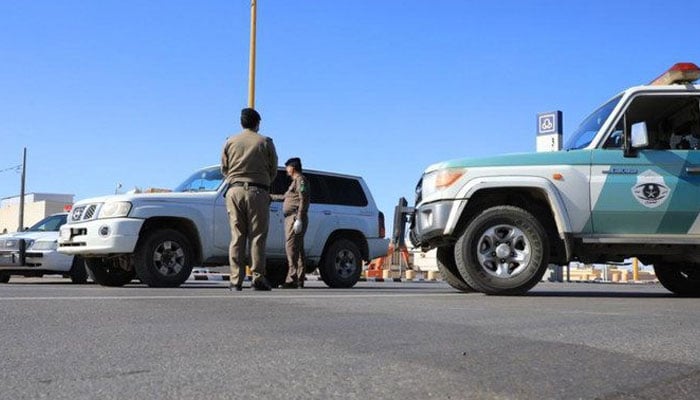
Saudi Arabia’s Oversight and Anti-Corruption Authority, known as Nazaha, has launched a series of investigations into alleged bribery, abuse of authority, and other corruption-related offenses, leading to the arrest of several government employees, businesspeople, and foreign nationals.

According to officials, authorities arrested a businessman who allegedly offered a bribe of **1.6 million Saudi riyals** to secure the illegal clearance of two containers. In a separate case, investigators arrested an employee accused of accepting **200,000 riyals** in exchange for favors.

Nazaha also reported action against an employee of the **Ministry of Health**, who allegedly received **900,000 riyals** in return for illegally awarding government projects. Authorities also arrested a person linked to a **Ministry of Energy project** for allegedly accepting a 200,000-riyal bribe.

The anti-corruption agency further said that authorities arrested a former passport official over allegations of receiving **60,500 riyals** in bribes. A customs employee also faced arrest after investigators accused the official of accepting **55,000 riyals** in exchange for facilitating unlawful activities.

Nazaha said its investigations also covered employees working in municipal bodies and other government institutions, along with several individuals involved in suspected corruption schemes.

The authority continues to investigate the cases and has stressed that it will take legal action against anyone found involved in bribery, misuse of public office, or violations of government regulations. The latest arrests reflect Saudi Arabia’s ongoing efforts to strengthen oversight, protect public funds, and hold officials and private individuals accountable for corruption.
Similar Posts

  • | | | | | |

    Trump orders one-day pause in Iran strikes as talks continue

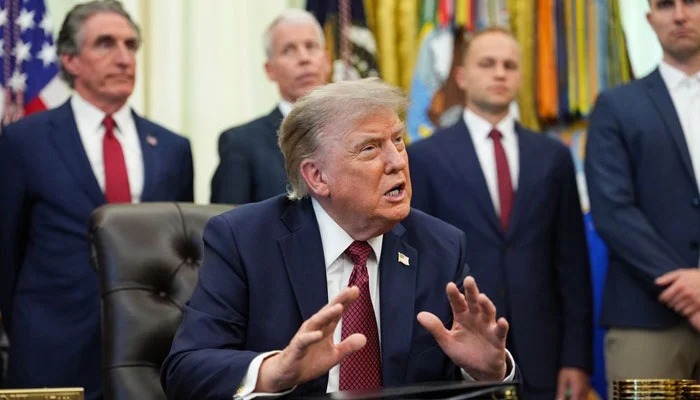
    US President Donald Trump has reportedly ordered a one-day halt to military strikes against Iran, temporarily interrupting a nearly two-week-long series of attacks, according to reports from US media outlets. The pause comes as uncertainty remains over whether the decision represents a temporary break in operations or the beginning of a broader ceasefire process. Reports suggest that the US military had been preparing for possible further strikes against Iran, but Trump has not yet approved any new major offensive. According to US media reports, military plans for continued operations were presented to the president, but Trump instructed officials not to proceed with attacks on that day. The decision marked a significant shift after a period of repeated strikes targeting Iranian positions. Trump later told reporters that the United States still had the option to continue military action and increase the intensity of attacks if necessary. However, he indicated that pursuing a diplomatic solution could be a more effective strategy. “The smart strategy is to make a deal,” Trump was reported as saying, adding that Iran appeared to be becoming more serious about discussions while the US remained prepared for possible military action. The reported pause came as an Omani delegation arrived in Iran for discussions aimed at addressing regional tensions and negotiating a possible agreement related to the reopening of the Strait of Hormuz. Officials suggested that a deal between Iran and Oman could potentially be reached during the weekend, after which the final decision would depend on Washington. Meanwhile, Iran’s Islamic Revolutionary Guard Corps (IRGC) claimed that Iranian forces had destroyed several US military aircraft and drones during attacks on American bases. The group claimed that 17 drones, an F-15 fighter jet, a P-8 aircraft, a C-17 transport aircraft, and eight refueling planes were destroyed. The claims from both sides have not been independently verified, and officials have continued to provide competing accounts of the military developments. The situation remains highly sensitive as regional tensions continue, with diplomatic efforts taking place alongside military preparations. The coming days are expected to determine whether the temporary pause leads to broader negotiations or whether hostilities resume.

  • | | | | |

    Iran issues stark warning to US over ground troops

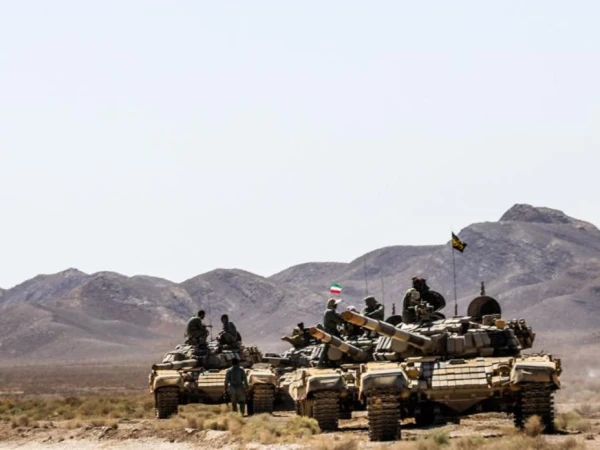
    TEHRAN: Iran has issued a stark warning to the United States, saying any American ground troops attempting to enter Iranian territory would face fierce resistance. The warning was delivered by Iranian Army Ground Forces Commander Brigadier General Ali Jahanshahi, as tensions between Tehran and Washington remain high and the region continues to watch closely for signs of further military escalation. According to Iranian media reports, Jahanshahi said Iran’s armed forces were fully prepared to respond to any hostile action. He stressed that the country’s ground forces remained at a high state of readiness and were closely monitoring Iran’s borders. The Iranian commander made clear that Tehran would not take any threat to its territory lightly. Any attempt by an enemy to launch military action on Iranian soil, he said, would trigger an immediate and forceful response. The remarks underline Iran’s long-standing position that a direct ground intervention would represent a major escalation. Iranian officials have repeatedly warned that foreign troops entering the country would encounter strong resistance from the country’s armed forces. Jahanshahi also emphasized that Iran’s military units were prepared to respond to a range of potential scenarios. Security measures along the country’s borders, he said, remain active as authorities continue to assess possible threats. The latest warning comes against the backdrop of continued tensions between Iran and the United States, with military developments and diplomatic efforts both shaping the rapidly changing regional situation. For Tehran, the message appears aimed at drawing a clear red line around Iranian territory: while the country may face external pressure, any attempt to send foreign ground forces across its borders would be treated as a direct threat to national security. Analysts say such statements also reflect Iran’s effort to strengthen deterrence and signal military readiness at a time when uncertainty remains over the future course of US-Iran relations. With tensions already running high, any direct military confrontation could have consequences far beyond Iran and the United States, potentially triggering a wider regional crisis. For now, the sharp warning from Iran adds another layer of uncertainty to an already fragile security situation, while international attention remains focused on whether diplomacy can prevent another escalation.

  • |

    Poland and Baltic states shield critical infrastructure against potential Russian false-flag drone attacks

    Poland, Lithuania, Latvia, and Estonia have tightened security around vital energy and national infrastructure, acting on intelligence warnings that Moscow may stage false-flag attacks using Ukrainian-made drones to provoke a political crisis within NATO. Lithuania deployed troops alongside riot police to protect its floating liquefied natural gas terminal at Klaipėda, an oil products terminal, a key power link with Poland, and the Kruonis hydro plant. Latvia reinforced security around the Daugava River dam near Riga and the Incukalns underground gas storage facility. In Poland, state-owned energy developers launched an investigation alongside security services after forged documents surfaced targeting the construction site of the country’s first nuclear power plant, a move traced to sources east of Poland. Military personnel also stepped up security around power grid interconnectors running to Ukraine. Baltic intelligence assessments indicate Russian military and domestic security agencies may execute a staged attack inside Russia or across the border using captured or forged Ukrainian drones. Regional officials warn that Moscow’s primary objective is to trigger political paralysis in Brussels by forcing NATO members into a divisive debate over how to respond. Kremlin spokesperson Dmitry Peskov dismissed the reports, calling warnings of Russian sabotage scare stories used to justify NATO militarisation. The surge in defensive measures follows a series of unexplained drone incidents across Europe, including an explosive-laden drone recently discovered at Leipzig/Halle Airport in Germany. With Russian forces facing continued pressure in Ukraine, intelligence analysts suggest Moscow may be attempting to destabilise European infrastructure to test the alliance’s political resolve.

  • | |

    Nestle turns to AI to build products for weight lo…

    Nestle is working to convert the rapid rise of GLP-1 weight loss drugs from a business threat into an opportunity, deploying artificial intelligence and nutritional research to develop products aimed at the millions of consumers now taking medications like Ozempic and Wegovy. The fast growing adoption of drugs made by Novo Nordisk and Eli Lilly has raised concerns among investors that appetite suppressing medications could permanently dent demand for packaged foods, snacks and beverages. Nestle sees the same trend differently, believing the drugs are creating a new market for products that address the side effects associated with rapid weight loss. Chief Technology Officer Stefan Palzer told a foreign news agency that Nestle is using artificial intelligence and other technology to analyze clinical research, identify effective nutrient combinations and build products tailored specifically to GLP-1 users. He said the company believes its existing product portfolio positions it well to capture what he described as a major opportunity. Materials shown to reporters outlined side effects tied to rapid weight loss, including muscle loss and the loss of facial volume sometimes referred to informally as Ozempic face, along with areas where Nestle believes its products could help address those issues. The GLP-1 drug market remains dominated by Eli Lilly’s Mounjaro and Zepbound alongside Novo Nordisk’s Wegovy and Ozempic. Roughly 16 million Americans currently take GLP-1 medications, according to Boston Consulting Group, a number expected to grow significantly by the end of the decade. Nestle’s strategy centers on developing products suited to the needs of weight loss drug users while relying on AI to speed up research, product development and consumer analysis. Addressing side effects directly Palzer said Nestle scientists have spent time studying the downstream effects of rapid weight loss and building products intended to help consumers manage them. The company uses AI tools to process large volumes of clinical research and identify nutrient combinations that may support muscle health, hydration and overall nutritional intake. Nestle has already begun adding collagen protein to products under its Vital Proteins brand to address concerns about skin, hair and nail health linked to rapid weight loss. In the United States, Nestle’s business created the Boost Advanced Nutrition Shake, marketed as containing 35 grams of protein to support muscle health during weight loss. In Asia and Australia, the company introduced a higher protein version of its Milo malt drink called Milo PRO High Protein. Rival ice cream makers are grappling with similar pressures, shifting toward higher protein products, smaller portions and simpler ingredient lists. An AI powered recipe database Artificial intelligence plays an increasingly central role throughout Nestle’s product development process. The company has built internal systems to analyze scientific literature, simulate consumer behavior, spot emerging trends and help product developers navigate a database containing roughly 120,000 recipes. One such tool, an internal platform called Food Genie, helps scientists and developers predict how recipes might perform and identify opportunities for reformulation, according to Palzer. He said the scale of Nestle’s recipe database gives the company an advantage, noting that a smaller company with only a thousand recipes would struggle to model and predict outcomes using AI, since the technology depends heavily on large volumes of data. Nestle is also testing AI driven consumer simulations designed to predict how shoppers will respond to new products and health claims before they reach store shelves, and the company uses AI to monitor social media activity and identify emerging consumer trends. Palzer said the technology helps distinguish genuine, lasting trends from short term noise around particular topics, and said he expects AI to play a growing role in that kind of trend analysis going forward. Skepticism remains among some experts Not everyone is convinced specialized products offer meaningful advantages over conventional food. Amanda Avery, an associate professor of nutrition and dietetics at the University of Nottingham in central England, said it is unfortunate that consumers keep turning to new, more expensive products that often contain the same protein and nutrients found in whole, fresh foods. She noted that meat, fish, eggs, dairy, beans, nuts and pulses remain relatively affordable sources of protein and other nutrients. Even so, Avery said she expects products marketed specifically to GLP-1 users to find a ready customer base, acknowledging that marketing exerts significant influence over consumer choices and suggesting Nestle has likely done its homework before entering the space.

  • | |

    Bessent says Hormuz shipping deal with Iran could …

    US Treasury Secretary Scott Bessent said on Tuesday that a deal to reopen the Strait of Hormuz to normal shipping traffic could be reached within a day or two, as diplomatic activity intensified across the Gulf region. Speaking in a television interview, Bessent said American officials are in active discussions with Iranian counterparts and expressed optimism about a near term breakthrough. “There is a chance we may have a deal today or tomorrow,” he said, adding that the goal is to move toward a more normalized posture in the conflict. Asked whether any agreement would let Iran charge ships a toll for using the waterway, Bessent said he expects the outcome to guarantee freedom of movement rather than a fee based system. He noted that vessel traffic through the strait has picked up in recent days despite lingering danger, and predicted that energy prices would ease once a deal takes hold. His comments followed a report from The New York Times saying Iran and Oman have moved close to an arrangement that would restore commercial shipping through the strait. Under the terms described in that report, inbound vessels would travel through a corridor close to the Iranian coast while outbound ships would use a route nearer Oman. Iranian officials told the newspaper that no formal tolls would apply, though they said a service charge tied to environmental protection, cargo security and staffing costs would be split evenly between Tehran and Muscat. A US official pushed back on that characterization, calling the Iranian version inaccurate and insisting any temporary shipping lanes would not need Iranian sign off or involve fees. The report also noted that some Pentagon officials worry the arrangement could look like a concession to Tehran, while some Iranian officials privately questioned whether it would actually stop further American strikes. Qatar’s Foreign Ministry said Tuesday that mediators including Doha, Pakistan and Oman continue to coordinate closely to bridge the gap between Washington and Tehran, exchanging draft proposals between the two sides. Ministry spokesperson Majed Al Ansari said there is still no clear timeline for a final agreement, and Qatar separately called for a return to normal conditions in the strait while diplomacy continues. Tension over the waterway remained visible even as talks progressed. A dry bulk carrier called the Minoan Pioneer, sailing under the Liberian flag, was struck by an unidentified projectile near Oman’s coast on Tuesday, according to maritime security sources. The strike reportedly hit the engine room and sparked a fire in the crew’s living quarters, forcing the entire crew to abandon ship. One crew member, the vessel’s third engineer, was reported missing. The ship’s Greece based operator did not immediately respond to requests for comment. The incident followed an earlier report from the UK Maritime Trade Operations center, which said a separate cargo vessel had broadcast that it was hit by an unknown projectile about 20 nautical miles northeast of Khasab, Oman. No group has claimed responsibility for either strike, and authorities have opened an investigation. In Tehran, President Masoud Pezeshkian used a televised address to reject reports that he had offered his resignation amid the ongoing standoff with Washington. “If I were going to resign, I would announce it publicly,” he said, denying any rift with Supreme Leader Ali Khamenei or the armed forces and insisting the leadership is working in full coordination. He separately said Iran intends to defend its territorial integrity but has no interest in expanding the conflict, while claiming Iranian missile and drone strikes had disrupted US military goals during a recent 17 day period of fighting. The regional picture grew more complicated elsewhere. Yemen’s Houthi movement claimed responsibility for a drone strike on Najran Airport in southern Saudi Arabia, with military spokesman Yahya Saree saying the attack struck its target accurately. He described the strike as retaliation for alleged Saudi drone incursions over Yemen’s Saada and Hajjah provinces and warned that further violations would draw a response. Saudi authorities had not commented on the claim as of Tuesday. In Lebanon, a seventh round of direct negotiations with Israel opened in Rome under American sponsorship, continuing talks tied to a framework agreement the two sides signed in June covering a phased Israeli withdrawal from Lebanese territory in exchange for Lebanese army deployment and the disarming of armed factions, a clear reference to Hezbollah. Hezbollah Secretary General Naim Qassem used a speech at an Arbaeen commemoration in Baalbek to criticize the talks, saying they have delivered only “shame, humiliation, despair and repeated concessions” for Lebanon. He accused Lebanese President Joseph Aoun of acting with bias rather than serving as a unifying figure and argued that only the earlier US brokered truce between Washington and Tehran had kept Israeli strikes at bay. Financial markets showed relief at the signs of diplomatic movement. Brent crude futures fell about 7 percent to near $83.77 a barrel on Monday, while the Dow Jones Industrial Average closed at a record high. Asian stocks and oil prices ticked higher again on Tuesday. In a Truth Social post, Trump described Iran’s leadership as “unbelievably duplicitous” while claiming more talks were scheduled for the near future. He also reasserted that the US Navy maintains full control over the strait, writing that nothing passes through unless Washington allows it. The exchange fits a broader pattern that has defined the conflict since it began roughly five months ago under the codename Operation Epic Fury. Trump has repeatedly threatened major military escalation only to step back and cite diplomatic openings, while Iran has publicly refused direct talks with Washington since a memorandum of understanding both sides signed collapsed in early July. Washington maintains that June’s memorandum obligated Iran to open the Strait of Hormuz to shipping, while Tehran insists the agreement preserved its authority over traffic through the waterway, a disagreement that continues to sit at the center of the standoff.

  • |

    Owaisi slams hijab ruling, calls it ‘Attack on Islam’

    AIMIM chief and Hyderabad MP Asaduddin Owaisi has strongly criticised the Allahabad High Court’s recent decision rejecting a Muslim student’s plea to wear a hijab with her school uniform. Reacting to the ruling, Owaisi described the decision as an “attack on Islam” and argued that judges cannot determine which practices are essential to a religion. “Islam is our religion, and we will decide what is essential in it,” Owaisi said, while questioning the court’s approach to matters of religious practice. The AIMIM leader also pointed out that the Supreme Court is already considering issues related to essential religious practices and freedom of religion. He argued that the Allahabad High Court should therefore have avoided making a ruling on the matter while the broader legal question remains before the apex court. Owaisi further claimed that the judgment conflicts with Articles 19 and 25 of the Indian Constitution, which protect freedom of expression and religious freedom. Defending the student’s right to wear a hijab, Owaisi said the decision concerns a personal and religious choice. He remarked that the student was wearing a hijab on her head, “not on her brain,” stressing that wearing the religious garment should not be viewed as a barrier to education or academic ability. He also warned that the ruling could discourage Muslim girls from pursuing education, particularly in Uttar Pradesh. According to Owaisi, Muslim girls already have relatively low enrolment at the secondary-school level in the state, and restrictions on religious attire could create additional obstacles for them. The controversy follows an Allahabad High Court ruling issued on August 21, in which a two-judge bench dismissed a petition filed by a Muslim student from a private school in Prayagraj. The student had sought permission to wear a hijab along with the prescribed school uniform. The student had already completed her high school education and wanted to continue in Class 11 at the same institution. Her petition challenged the school’s restriction on wearing the hijab as part of the uniform. The bench, comprising Justices J.J. Munir and Indrajeet Shukla, rejected the argument that wearing a hijab constitutes an essential religious practice in Islam. The judges noted that several High Courts have previously held that wearing a hijab is not an obligatory religious practice for Muslim women to the extent that failing to observe it would affect their faith. The court also maintained that students cannot unilaterally alter an institution’s prescribed uniform based on their individual preferences. The ruling has since sparked debate over the balance between uniform regulations, religious freedom and students’ rights in educational institutions.

Leave a Reply

Your email address will not be published. Required fields are marked *