india approves first
| |

India approves first dengue vaccine

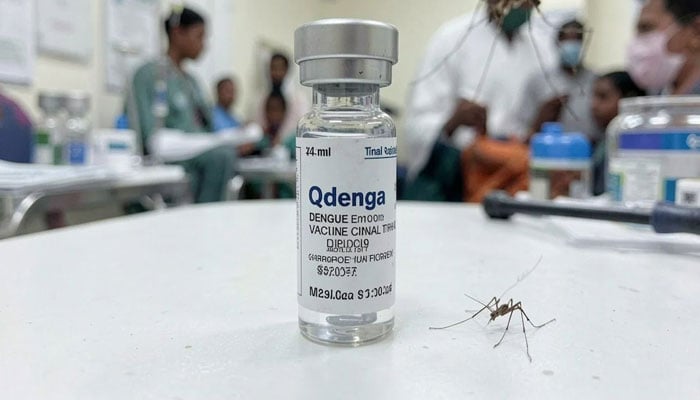
India has approved the use of its first dengue vaccine, marking a significant step in the country’s efforts to tackle a disease that affects millions of people each year.

According to India’s Ministry of Health, authorities approved the Japanese pharmaceutical company Takeda’s dengue vaccine, Qdenga, on July 21. The Central Drugs Standard Control Organisation (CDSCO) has cleared the vaccine for people between the ages of 4 and 60.

Health officials say the vaccine could help protect children, teenagers, and adults from dengue, a mosquito-borne viral infection that can sometimes develop into a severe and potentially life-threatening illness. The vaccination schedule consists of two doses administered three months apart.

Takeda developed the vaccine in partnership with Indian pharmaceutical company Biological E, which is working with the Japanese firm to support its production in India.

According to media reports, Qdenga offers protection against all four major dengue virus serotypes. Regulators in 42 countries have already approved the vaccine, while more than 24 million doses have reportedly been administered worldwide. So far, health authorities have not identified any major safety concerns linked to its use.

The approval comes as India continues to face a substantial dengue burden. More than one million dengue cases have reportedly been recorded across the country since 2021, with around 1,500 deaths linked to the disease during the same period.

Dengue spreads primarily through the bite of infected Aedes mosquitoes and remains a major public health concern in tropical and subtropical regions. India’s approval of Qdenga could provide health authorities with another tool to reduce the impact of dengue, particularly during periods when mosquito populations rise and infections increase.

Similar Posts

  • | |

    Zimbabwe ferry disaster death toll climbs to 68

    HARARE: The death toll from a ferry disaster on Zimbabwe’s Lake Kariba has risen to 68 after rescuers recovered 22 more bodies, police said on Saturday. The ferry, operated by the government’s Rural Infrastructure Development Agency, overturned on Tuesday while travelling through rough waters. The vessel was carrying villagers and fish traders who rely on the lake for their livelihoods. Authorities said the boat was licensed to carry 90 passengers but had 114 adults and five crew members on board, along with an unknown number of children. The overcrowding has raised concerns about safety standards as the search for the remaining victims continues. Lake Kariba lies along Zimbabwe’s border with Zambia and is a vital source of transport and trade for communities living around the lake.

  • | |

    Japan PM Takaichi’s approval falls as inflation hits households

    Japanese Prime Minister Sanae Takaichi is facing growing public dissatisfaction as rising prices and higher living costs begin to weaken support for her government. A nationwide poll published by the Yomiuri newspaper showed that approval for Takaichi’s administration fell sharply in July. The cabinet’s approval rating dropped to 57 per cent, compared with 69 per cent in June. It is the first time since Takaichi took office that support for her government has fallen below 60 per cent. The survey was conducted from July 24 to 26. It showed that public disapproval also increased significantly. The share of respondents who opposed the cabinet rose to 34 per cent, up from 21 per cent in the previous month. Inflation has emerged as the biggest concern for voters. About 71 per cent of respondents expressed dissatisfaction with the government’s handling of rising prices and living costs. That figure stood at 56 per cent in June. The findings indicate that economic pressure is increasingly affecting Takaichi’s political standing. Her government had previously enjoyed strong public support, but persistent price increases are creating fresh challenges. Takaichi is also facing criticism over her government’s expansionary fiscal and monetary policy approach. The policies have contributed to higher bond yields and pressure on the yen, which has fallen to levels not seen in several decades. The latest polling results could increase pressure on the government to provide immediate relief to households. While issues such as national security remain important, voters are increasingly focused on everyday expenses and their purchasing power. Takaichi now faces the challenge of demonstrating that her economic policies can control inflation while maintaining broader economic stability.

  • | |

    Screwworm spreads in Mexico, raising alarm across …

    MEXICO CITY: A dangerous flesh-eating parasite known as the New World screwworm is spreading through parts of Mexico and Central America, with hundreds of human infections reported and growing concern over its potential impact on livestock and animal health. The parasite is the larval stage of a particular fly. Unlike ordinary flies, the female screwworm fly can lay eggs in open wounds or vulnerable areas of living animals and humans. The eggs can hatch within about a day, after which the larvae enter the wound and feed on living tissue. The infection, known as myiasis, can become severe if treatment is delayed. In serious cases, the larvae can damage muscles and even reach deeper tissues and bones. A study published in a medical journal linked to US health authorities examined 202 confirmed human cases recorded in Mexico between April 2025 and March 2026. Researchers found that reported infections increased sharply, rising from roughly three cases a week in 2025 to more than nine cases a week during 2026. More than half of the patients examined had infections involving their legs. Other cases affected the head, neck, nose, mouth and eyes, highlighting the parasite’s ability to invade different parts of the body through wounds or vulnerable tissue. The study reported six deaths among the patients examined, although researchers directly linked only one of those deaths to screwworm infection. The average age of patients was about 61, while 72 per cent were men. Researchers also found that 77 per cent of those infected had at least one pre-existing medical condition, potentially increasing their vulnerability to complications. The parasite is considered particularly dangerous for livestock because its larvae feed on living tissue. Untreated infections can cause serious wounds, weaken animals and, in severe cases, prove fatal. The resurgence has also raised concerns in the United States. The country had previously eliminated the New World screwworm after decades of control efforts, achieving eradication in 1966. However, the parasite returned to the spotlight after an infected calf was confirmed in Texas’s Zavala County in June 2026, according to international reports. The development has heightened fears that the parasite could spread further north, particularly through livestock movement and other routes. Health and agricultural authorities face the difficult task of controlling the parasite while detecting infections early. For people, experts generally stress the importance of seeking medical attention for unusual or worsening wounds, particularly after exposure in areas where screwworm is circulating. The outbreak serves as a reminder that a tiny insect can create a major public-health and agricultural challenge when conditions allow a dangerous parasite to spread.

  • | | |

    Israeli lawyer calls Silwan demolitions ‘ethnic …

    JERUSALEM: A new British media report has renewed international attention on the disputed East Jerusalem neighbourhood of Silwan, where the demolition of Palestinian homes and land disputes continue to fuel tensions between Israeli authorities and Palestinian residents. According to the report, a prominent Israeli lawyer described Israel’s policy of removing Palestinians from their ancestral homes in Silwan as comparable to “ethnic cleansing,” adding to the growing debate over housing rights and displacement in the occupied territory. The report states that the continued threat of home demolitions has left many Palestinian families living in constant uncertainty, affecting their daily lives, financial stability and emotional well-being. Residents say they fear losing homes that have been in their families for generations. Palestinians living in Silwan argue that Israeli authorities frequently classify their properties as unauthorised constructions, leading to demolition orders that they consider unfair and discriminatory. Many residents say obtaining building permits is extremely difficult, leaving families vulnerable to eviction and the destruction of their homes. The issue of demolitions in East Jerusalem has remained one of the most contentious aspects of the Israeli-Palestinian conflict, drawing criticism from international human rights organisations and foreign governments. Rights groups have repeatedly expressed concern that such actions contribute to the displacement of Palestinian communities and alter the demographic balance of the area. The latest report also comes amid continued regional tensions, with accusations of ceasefire violations and ongoing diplomatic efforts to prevent further escalation in the conflict. Israeli authorities have consistently maintained that demolitions are carried out in accordance with municipal planning and building regulations, arguing that structures built without the required permits are subject to legal enforcement regardless of the owners’ identity. Silwan, located just south of Jerusalem’s Old City, remains one of the most sensitive areas in the decades-long conflict, with competing historical, religious and political claims. As international scrutiny grows, the situation in Silwan continues to highlight the broader challenges surrounding housing rights, land ownership and the future of Palestinian communities in East Jerusalem.

  • |

    Salman Rushdie attacker convicted on US federal terrorism charges

    The man who stabbed renowned author Salman Rushdie during a public event in 2022 has been found guilty on multiple federal terrorism charges in the United States. The verdict marks another major legal milestone in a case that drew worldwide attention because of the long standing threats against the celebrated novelist. A federal jury in Buffalo, New York, convicted 28 year old Hadi Matar after only a few hours of deliberation. Prosecutors argued that the attack was motivated by decades old calls for Rushdie’s death following the publication of his controversial novel The Satanic Verses. Matar was found guilty of attempting to provide material support to Hezbollah, engaging in terrorism across national borders, and providing support to terrorists. Matar is already serving a 25 year prison sentence after being convicted in a New York state court for attempted murder. Following the federal conviction, he now faces the possibility of life imprisonment when he is sentenced in November. The federal trial began last week and included testimony from Rushdie himself. The 79 year old author described the attack that left him with life changing injuries. The defence did not call Matar or any other witnesses to testify during the proceedings. Rushdie has lived under threat since the publication of The Satanic Verses in 1988. The novel sparked widespread controversy in parts of the Muslim world, leading Iran’s then Supreme Leader Ayatollah Ruhollah Khomeini to issue a religious decree in 1989 calling for the author’s death. The fatwa also targeted people involved in publishing the book and led to violent attacks over the following years, including the killing of Japanese translator Hitoshi Igarashi in 1991. Although the Iranian government later distanced itself from the fatwa, US prosecutors said it continued to receive support from Hezbollah leaders and was reaffirmed by Iran’s current Supreme Leader, Ayatollah Ali Khamenei. During the trial, prosecutors presented evidence showing that Matar spent more than a year studying the fatwa before carrying out the attack. They argued that he deliberately planned the assault to carry out the religious decree against Rushdie. The attack took place on August 12, 2022, while Rushdie was preparing to speak at the Chautauqua Institution, an educational and cultural centre in New York state. Matar rushed onto the stage and repeatedly stabbed the author before audience members intervened and restrained him until police arrived. Rushdie suffered multiple stab wounds to his head, neck, chest, and hand. The injuries permanently blinded him in one eye and caused severe damage to several internal organs. Another man on stage was also injured during the incident. Born in the United States and holding Lebanese citizenship, Matar had been living in New Jersey before the attack. His conviction in state court earlier resulted in a 25 year prison sentence, but the federal terrorism charges carry significantly harsher penalties. Rushdie, who was born in India and later became a British and American citizen, spent many years under police protection after the fatwa was issued. He lived largely in hiding throughout the 1990s before gradually returning to public life and eventually settling in New York City. The latest verdict closes another chapter in one of the most widely followed literary and terrorism related cases in recent history. It also reinforces the long lasting impact of threats that began nearly four decades ago over a work of fiction and continued to influence events many years later.

  • | | | |

    Iran, Oman move closer to Hormuz shipping agreement

    TEHRAN: Iran and Oman have reached a preliminary understanding on the geographic coordinates of a proposed shipping route through the Strait of Hormuz, marking progress in negotiations aimed at regulating navigation through one of the world’s most strategically important waterways. Iranian Foreign Ministry spokesperson Esmaeil Baghaei said discussions between Tehran and Muscat had advanced positively and that both sides had agreed on the geographical framework of the proposed route. He added that a joint statement outlining the key points of the understanding was in its final stages and could be issued if the process is not disrupted by external factors. Despite the progress, Baghaei emphasised that the agreement alone would not automatically guarantee security in the Strait of Hormuz. He noted that ensuring stability in the region would require broader cooperation and continued diplomatic engagement. According to regional officials familiar with the negotiations, the proposed arrangement would give Iran a greater role in overseeing vessels entering the Gulf through the strategic waterway. However, several technical and operational issues still need to be resolved before any final agreement can be implemented. The Strait of Hormuz remains one of the world’s busiest energy transit routes, carrying a significant share of global oil and gas exports. Any changes to shipping arrangements in the area are closely watched by international markets due to their potential impact on global trade and energy supplies. Officials involved in the negotiations described the talks as constructive, while indicating that further consultations would continue before a formal announcement is made. Both Iran and Oman have maintained that dialogue remains the preferred path for addressing issues related to maritime navigation and regional stability.

Leave a Reply

Your email address will not be published. Required fields are marked *