senate slams 20year

Senate slams 20-year delay in gas supply to Ghotki villages

Islamabad: The Senate Sub Committee on Petroleum has expressed serious concern over a delay of more than 20 years in providing gas to localities within five kilometers of Pakistan’s gas fields, highlighting administrative lapses despite directives from the Prime Minister and the Supreme Court. The Sub Committee, chaired by Senator Jam Saifullah Khan Dharejo, called for accountability of the authorities responsible for failing to implement these binding instructions, particularly in Ghotki, one of the country’s major gas producing and densely populated districts.

During the session, MNA and subcommittee members reviewed the progress of gasification projects, noting that out of 57 villages identified in Ghotki, only 42 fall within the five kilometer radius of gas fields. Despite being included in earlier phases of the project in 2021, several schemes remain incomplete. Senator Haji Hidayatullah also raised concerns about ungasified localities in Khyber Pakhtunkhwa, emphasizing that many eligible areas were still awaiting service.

Officials informed the committee that approximately Rs670 million is required to complete gasification in Ghotki, while around Rs1 billion may be made available in phases. The funding will be released as a grant and not through the PSDP, with the Petroleum Ministry responsible for preparing a phased implementation mechanism. The committee instructed the Ministry to present a comprehensive plan within a week, detailing timelines, responsibilities, and funding strategies to ensure full compliance with Supreme Court orders.

The Sub Committee criticized inconsistent and potentially misleading information previously provided by the Director General (Gas), Petroleum Division. The matter has been referred to the Senate Committee on Privileges to ensure future information is accurate, complete, and supported by official records. Additionally, the absence of the OGRA Chairman, despite prior directions to attend, was strongly noted. The committee decided to inform the Cabinet Division and request his presence at the next meeting to provide viable solutions.

The Managing Director of SSGC briefed the committee that Rs480 million had been used in accordance with existing subsidy and tariff provisions, but emphasized the need for a structured, transparent mechanism to ensure funds reach the intended localities. The Sub Committee also requested the Attorney General for Pakistan to attend the next meeting to explain the legal implications of Supreme Court judgments on gas provision.

Senator Abro underscored that the directions of both the Prime Minister and the Supreme Court must be implemented “in letter and spirit,” warning that no further undue delay would be tolerated. The Sub Committee emphasized the importance of a fully funded, transparent, and time bound strategy to ensure that all eligible villages in Ghotki, Khyber Pakhtunkhwa, and other regions within the five kilometer radius of gas fields receive gas access without further postponement.

The next meeting date and time will be announced separately, with expectations that all relevant stakeholders, including the OGRA Chairman, SNGPL representatives, and the Attorney General, will be present to finalize implementation plans.
Similar Posts

  • | | | |

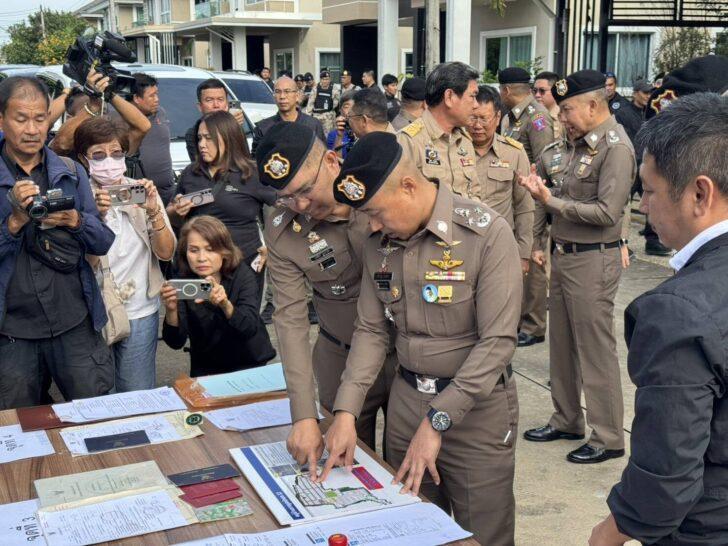
    Police General Samran Orders Expanded Nominee Crackdown as 250+ Officers Raid 18 Locations in Chiang Mai to Dismantle Foreign Nominee Network Involving 633 Million Baht in Assets

    Chiang Mai, Thailand – July 20th, 2026 In a major escalation of Thailand’s nationwide campaign against illegal foreign business ownership, Police General Samran Nuanma (known as “บิ๊กราญ” or “Big Ra”), Deputy Commissioner-General of the Royal Thai Police, ordered the expansion of Operation “Dismantling Foreign Nominee Networks Phase 5” in Chiang Mai province. On July 20th, […]

  • |

    AJK’s JAAC accused of pursuing foreign agenda to sabotage regional polls

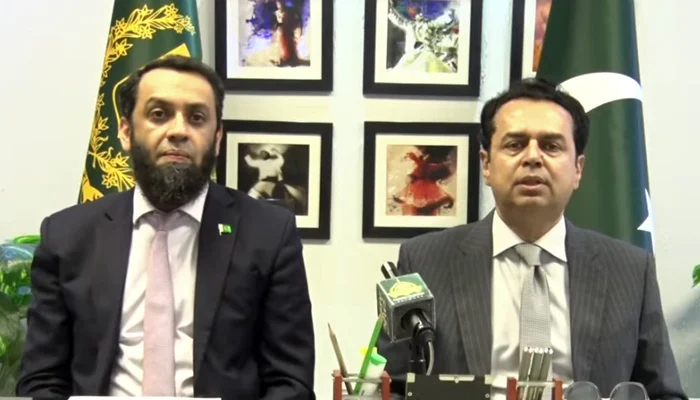
    Pakistan federal ministers and Azad Jammu and Kashmir authorities have publicly accused the proscribed Jammu Kashmir Joint Awami Action Committee of deploying armed violence and operating under Indian financial backing to disrupt the region’s legislative assembly elections. During a joint press conference in Islamabad, State Minister for Interior Talal Chaudhry and Federal Minister for Information Attaullah Tarar asserted that the group’s ongoing campaign aims to disenfranchise local voters rather than secure public rights. Chaudhry stated that thirty-seven of the committee’s thirty-eight demands had already been accepted by the government, rendering the continuing street agitation unjustified. Information Minister Tarar added that law enforcement agencies recently uncovered an India-linked digital campaign network funding social media operations and bot farms specifically to amplify content associated with the banned organization. The press conference coincided with statements from Azad Kashmir officials in Muzaffarabad following violent confrontations between law enforcement and protesters in Rawalakot. Regional police and administration spokespersons confirmed that five police officers sustained injuries from automatic gunfire during the clashes, alleging that armed elements within the movement have used civilians as shields. Despite the unrest in parts of the region, government representatives highlighted that roughly six hundred thousand citizens participated in the initial voting phase across Mirpur Division, characterising the high turnout as a definitive public rejection of efforts to derail the democratic process.

  • | |

    Expensive sugar export decision raises concerns

      Lahore: The federal Ministry of Industries and Production has reportedly allowed the export of sugar that was imported at a higher cost, raising concerns over potential losses to the national exchequer. Sources within the ministry said the government has yet to approve the export of around 250,000 tonnes of locally produced sugar, which is available at a comparatively lower cost. Instead, authorities have decided to permit the export of only 100,000 tonnes, a move that industry sources have described as disappointing. According to the sources, the decision could create further difficulties for the sugar industry and affect the procurement of sugarcane from farmers. Sugar mill owners have already warned the Ministry of Industries and Production that they may face difficulties purchasing the upcoming sugarcane crop under the current circumstances. The sources expressed concern that allowing the export of expensive imported sugar while holding back cheaper locally produced stocks could increase financial pressure on the country. They also questioned the rationale behind exporting only 100,000 tonnes when a significantly larger quantity of locally produced sugar remains available. Sugar industry stakeholders have warned that the situation could affect the entire supply chain, particularly farmers who depend on sugar mills for the purchase of their sugarcane crop. If mills struggle to sell their existing stocks or face financial constraints, they may find it difficult to make timely purchases from growers. The development has also raised questions about the government’s sugar management policy, particularly its approach to balancing domestic availability, imports, exports and the interests of farmers and millers. Industry representatives are now seeking a clearer policy to prevent disruptions in sugarcane procurement and avoid further losses to the national economy.

  • | | | |

    Maryam hails Katcha’s historic security turnarou…

    Punjab Chief Minister Maryam Nawaz has said that the Katcha region has become a safer area after decades of insecurity. She made the remarks while addressing an Independence Day ceremony at the Safe City Authority. She said the government was taking steps to improve security and protect citizens across the province. Maryam said Safe City cameras have now been installed in 43 cities of Punjab. She said the expanded surveillance system would help improve monitoring and strengthen the security network. The chief minister said the government wants to provide a safer and better Pakistan to future generations. She stressed that public safety remains an important part of the government’s development agenda. Maryam rejected the impression that government attention was limited to Lahore. She said development cannot be considered meaningful if people living in other cities and regions are ignored. She said every citizen has the right to benefit from better public services and improved security. The government, she added, is working to ensure that development reaches different parts of the province. Referring specifically to the Katcha region, Maryam said the area had witnessed insecurity for decades. She claimed that the situation had now changed and the region had become a safer place for the people. She said modern security technology was playing an important role in improving law and order. The expansion of Safe City surveillance, she added, would help authorities monitor sensitive areas and respond more effectively to security concerns. The chief minister said the government would continue strengthening security infrastructure across Punjab. She also reiterated her commitment to creating safer cities and improving the quality of life for citizens.

  • | |

    Islamic World can unite like NATO, says Hafiz Tahi…

      Chairman of the Pakistan Ulema Council, Hafiz Tahir Mahmood Ashrafi, has said that the Muslim world has the potential to unite and cooperate in a manner similar to the North Atlantic Treaty Organization (NATO). Speaking at a press conference in Lahore, Hafiz Tahir Mahmood Ashrafi emphasized the importance of unity and collective efforts among Muslim countries. He said that the Islamic world could work together more effectively if countries focused on common interests and strengthened cooperation among themselves. Ashrafi said that religious scholars have an important role to play in safeguarding Pakistan and promoting peace, stability and unity within society. According to him, the role of the ulema is particularly important at a time when the country faces various social, political and security challenges. He stressed that religious scholars should contribute to strengthening harmony among people and discouraging divisions based on sectarian, political or social differences. He said that unity and consensus were essential for the stability and progress of Pakistan. The Pakistan Ulema Council chairman also spoke about the registration of religious seminaries across the country. He said that around 22,000 seminaries had already completed their registration. He described the development as an important step toward bringing religious institutions into a more organized framework. Ashrafi maintained that cooperation between the government, religious scholars and religious institutions could help address several challenges facing the country. He said that seminaries and their scholars could play a constructive role in promoting education, social responsibility and national cohesion. Referring to the wider Muslim world, Ashrafi suggested that Islamic countries could establish stronger mechanisms for collective cooperation. He pointed to NATO as an example of countries working together for shared security and strategic interests. In his view, Muslim-majority countries also have the potential to develop stronger cooperation if they demonstrate unity and mutual understanding. He said that the Muslim world possesses significant human, economic and strategic resources, but greater coordination is needed to make these strengths more effective. Cooperation among Muslim countries, he added, could help them address common challenges and protect their collective interests. Ashrafi further emphasized that Pakistan’s stability depends not only on government institutions but also on the positive contribution of religious scholars and other segments of society. He called on the ulema to continue playing their role in promoting peace, tolerance and national unity. He reiterated that the Pakistan Ulema Council believes in unity and consensus rather than division. According to him, differences of opinion can exist, but they should not become a source of conflict or weaken the country. The remarks come amid continuing discussions about the role of religious institutions and scholars in Pakistan’s social and national affairs. The registration of seminaries has remained an important issue, particularly in relation to regulation, documentation and the integration of religious education with broader national objectives. Ashrafi’s comments also highlight the importance of cooperation among Muslim countries at a time when the Islamic world faces a range of political, economic and security challenges. He argued that greater unity could provide Muslim countries with a stronger collective voice in international affairs. Concluding his remarks, Hafiz Tahir Mahmood Ashrafi reaffirmed his belief in unity, cooperation and consensus. He said that religious scholars, educational institutions and ordinary citizens all have a role to play in strengthening Pakistan and promoting harmony across society.

  • |

    LESCO on high alert; urges public to follow electrical safety measures during monsoon

    Lahore: Lahore Electric Supply Company (LESCO) Chief Executive Officer, Engineer Muhammad Ramzan Butt, has expressed deep sorrow over recent electricity-related incidents and reaffirmed that the protection of human life remains the company’s highest priority. He extended heartfelt condolences to the families affected by these unfortunate incidents and urged the public to strictly observe electrical safety precautions during the ongoing monsoon season. According to the LESCO spokesperson, a tragic incident occurred in the Islampura area where a citizen lost his life after receiving an electric shock near a streetlight pole during rainfall. Preliminary investigations revealed that an illegal electricity connection had been obtained through a damaged PVC service cable, allowing leakage current to energize the streetlight pole and resulting in the fatal accident. In another incident reported in the Sitara Colony Sub-Division, electricity was found leaking into a shop’s metal shed. Upon receiving the complaint, LESCO immediately shut down the relevant feeder and dispatched emergency teams to the site. Inspection confirmed that LESCO’s distribution system and service wires were in proper condition, while the leakage originated from the consumer’s own service wire joint, which had come into contact with the metal shed. The fault was promptly rectified, and the area was declared safe. In light of the ongoing monsoon rains across Lahore and other parts of the LESCO region, the company’s field staff, Power Distribution Control (PDC), Control Room, and operational officers have been placed on high alert under the directions of CEO Engineer Muhammad Ramzan Butt. LESCO is continuously monitoring the power distribution network to ensure the earliest possible restoration of electricity wherever weather-related faults occur. The spokesperson added that once weather conditions permit, LESCO teams immediately begin repair work while strictly following all safety protocols. Recently, after an 11kV feeder near Qaid-e-Azam Industrial Area, Kacha Jail Road was affected due to adverse weather conditions, emergency teams swiftly reached the site, isolated the feeder for safety, and initiated restoration work. Senior officers remained present in the field to supervise operations and ensure that power supply was restored to consumers in the shortest possible time. CEO Engineer Muhammad Ramzan Butt has directed all field personnel to perform their duties using complete personal protective equipment (PPE) and in accordance with established safety procedures. He also appealed to citizens to avoid illegal electricity connections, unsafe wiring, and substandard electrical installations, particularly during the rainy season. The public is strongly advised to stay away from electric poles, streetlights, broken or hanging wires, metal sheds, and other electrical installations during rainfall or in waterlogged areas. In case of any emergency or electricity-related hazard, citizens should immediately contact their nearest LESCO office or call the LESCO Helpline 118. LESCO remains fully committed to ensuring public safety and maintaining a reliable power supply throughout the monsoon season through timely response, continuous monitoring, and coordinated field operations.

Leave a Reply

Your email address will not be published. Required fields are marked *