thank you giving

Thank You for Giving Millions of Ordinary People an Extraordinary Voice

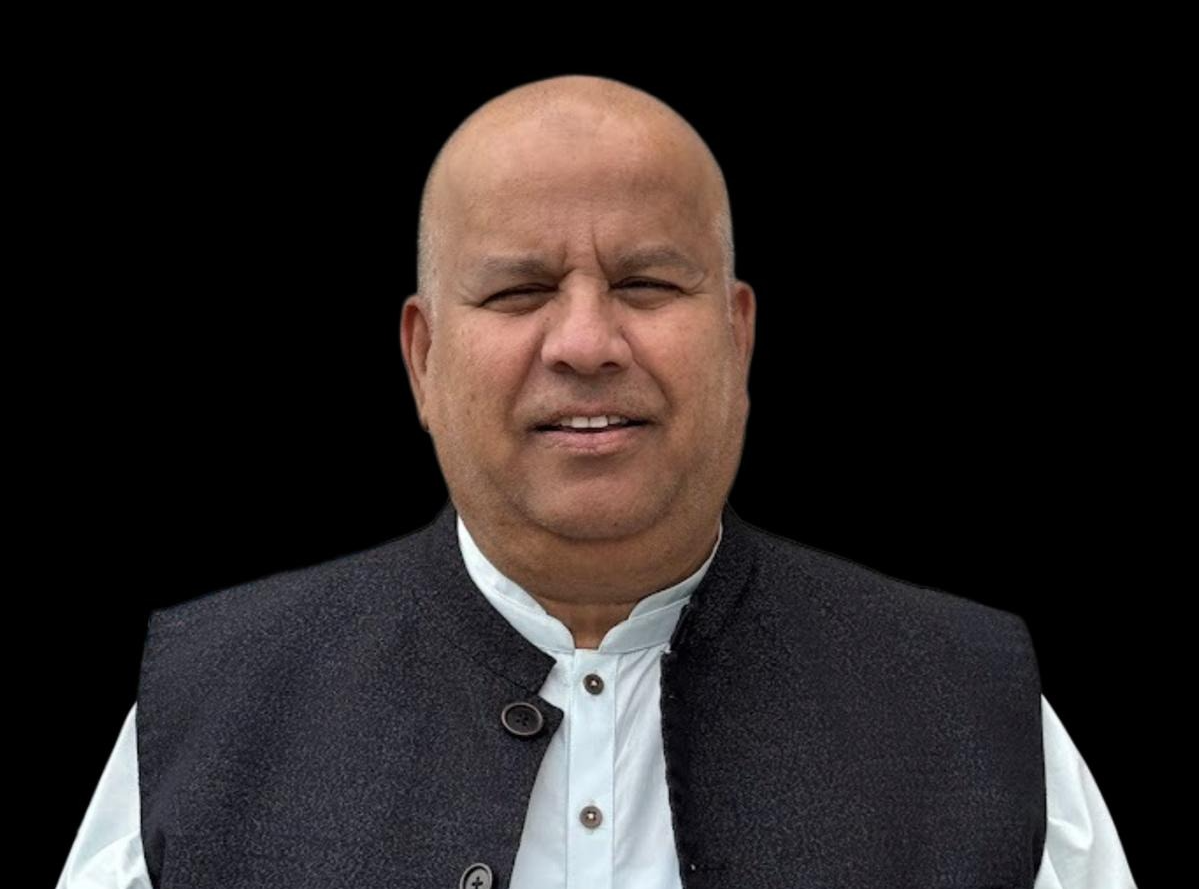
By Syed Anwar Wasti

For most of my life, I carried countless ideas, experiences, and stories within me. I wanted to write, share, and contribute—but I struggled to express myself. English was not my strongest language, I couldn’t type in Urdu, and many of my thoughts remained locked inside my mind.

After living in the United States for more than four decades, I have witnessed many remarkable technological advances. Yet, in my personal opinion, few have transformed my life as profoundly as Artificial Intelligence—especially ChatGPT.

Today, I can write articles, create blog posts, prepare speeches, develop video scripts, organize research, manage my website, and share my experiences with people around the world. Whether I am writing about my travels, my community, my business, or my personal reflections, AI has helped me turn ideas into words and words into meaningful conversations.

What once required a team of writers, editors, and researchers can now be accomplished by one determined individual with the right tools. That is not just innovation—it is empowerment.

Technology is most powerful when it gives ordinary people the opportunity to do extraordinary things. For me, AI has done exactly that. It has given me confidence, creativity, and, most importantly, a voice.

Thank you for giving millions of ordinary people an extraordinary voice.

Hats off to the brilliant minds behind ChatGPT and AI.

May God bless you all, and may your work continue to benefit humanity for generations to come.

Similar Posts

  • The Growing Issue of Fake Degrees and Certificates

    By Sania Rahim I would like to draw the attention of the concerned authorities and the general public toward the rapidly growing issue of fake degrees and certificates, which is becoming a serious threat to our society day by day. Education is considered the backbone of any nation. It builds skilled professionals, responsible citizens, and a strong economy. However, the increasing trend of fake educational documents is weakening this very foundation. Today, some people obtain fake degrees and certificates to secure jobs, promotions, admissions, and other benefits without having the required knowledge, skills, or hard work. This unfair practice is not only injustice to deserving candidates but is also damaging the credibility of our educational institutions. The most alarming part is that fake degrees are now being used in sensitive fields such as medicine, engineering, teaching, law, and public administration. An unqualified doctor, engineer, or teacher can endanger human lives and the future of entire communities. When unskilled people occupy important positions through fraudulent documents, the quality of services declines, accidents increase, and public trust in institutions erodes. It also discourages honest students who spend years studying and working hard to earn genuine qualifications. Another major consequence is corruption. The network of agents, printing presses, and online sellers who manufacture and sell fake degrees is growing because of high demand and weak verification systems. This creates a parallel market where money replaces merit. As a result, competent individuals are left behind while unqualified people move ahead, which ultimately harms national progress. To control this serious issue, I would like to suggest some necessary steps: First, the government should establish a centralized, digital database of all degrees and certificates issued by recognized boards and universities. Every employer and institution should be bound to verify documents through this system before hiring or admission. Second, strict legal action should be taken against those involved in making, selling, and using fake degrees. Heavy fines and imprisonment can serve as a strong deterrent. Third, awareness campaigns should be launched in schools, colleges, and on media platforms to educate students and parents about the dangers and legal consequences of using fake documents. Fourth, professional bodies like the Pakistan Medical Commission, Pakistan Engineering Council, and education departments must regularly audit their members and employees. In conclusion, fake degrees are not just a paper problem. They are a threat to merit, public safety, and the future of our country. I sincerely hope that the concerned departments, law enforcement agencies, and educational authorities will take immediate and effective steps to eliminate this malpractice and restore trust in our education system.

  • The Growing Unemployment Crisis in Balochistan

    By Baloch khan Through the columns of your esteemed newspaper, I wish to draw the attention of the authorities to the growing problem of unemployment in Balochistan. Thousands of educated young people are unable to find suitable jobs despite completing their studies. This lack of employment opportunities is causing frustration, poverty, and forcing many talented individuals to leave the province in search of work. The government should create more jobs, support small businesses, expand vocational training, and ensure that recruitment is based on merit and transparency. Investing in industries and infrastructure can also help generate employment and improve the province’s economy. It is hoped that the concerned authorities will take immediate steps to address this serious issue and provide a brighter future for the youth of Balochistan.

  • A Town without Education

    By Zoya Khan Naseer Ahmed I am writing to bring your attention to a pressing issue at Government Girls High School in Balicha, which is currently facing a severe shortage of qualified teachers. Many teachers from Balicha choose to relocate and teach in cities so that their own children can receive a better education, leaving our local school understaffed. Not every family has the financial means to relocate or send their children to cities for schooling; most of the local population depends entirely on this government institution. When asked why proper instruction is lacking, some educators explain that staying in Balicha compromises their own children’s academic futures due to limited facilities. However, every child deserves access to quality education regardless of their socio-economic status or geographic location. At present, students are deprived of proper instruction in core subjects. While Urdu, Islamiat, and Arabic are taught regularly in some classes, essential subjects like English, Mathematics, Science, and Geography are frequently neglected due to the absence of specialized teachers. This deficit is particularly critical for students in Grades 9 and 10, where key scientific disciplines—including Biology, Chemistry, and Physics—are not taught properly. Without adequate instruction in these foundational subjects, students are unable to prepare effectively for their board examinations or pursue higher education successfully. Every student deserves an equal opportunity to learn. I urge the relevant authorities to appoint qualified teachers to Government Girls High School, Balicha, ensuring that students can receive a complete education and build a better future.

  • Criminals on Pak Sar Zameen

    We call Pakistan Pak Sar Zameen, “the Land of the Pure.” But pure for whom? Tell me, honestly… pure for whom? For the criminals? For the rapists? For the child abusers? For the killers who walk our streets untouched by iron shackles or jail cells? Because it certainly does not feel pure for our children. The entire country is busy discussing India’s Jantar Mantar, an issue that we have no business obsessing over. Everyone knows what India should do, but everyone forgets what Pakistan must do. On that very same day, while the nation was distracted by a controversy across the border, six-year-old Dua was murdered in Karachi. Where was the collective scream? Where was the demand for change? And where were the changemakers? We have time to argue about borders, about politics, about things that do not touch our homes. But when a child is murdered in our own city, we scroll past, we sigh, we say “Inna Lillahi wa inna ilayhi raji’un,” and we move on. We move on! And Dua is not alone. In 2026, it feels like every other day another child loses their life. Six-year-old Muhammad Wali from Lea Market. Three-year-old Kulsoom from Quaidabad. Tomorrow, another child will be slaughtered. Another name will join the cemetery’s roll call. How many more parents will decorate graves instead of hearing the pitter-patter of their tiny feet? This is the lullaby that replaces safety in our children’s souls. Our children fall into open manholes because nobody bothers to close them. They are thrown from rooftops. They are abused until they cry, raped until they are wounded, murdered until their funerals become routine. Yet we choke on the same bitter question. Why are the murderers not swinging from ropes? Why are the rapists not rotting in cells? Why are the abusers not dragged through the streets until they beg for death? A nation is not judged by how boldly it sings the national anthem. It is not judged by the scale of its army or the height of its flags. It is judged by the number of tiny coffins that leave its homes. So I ask again: if this is truly the Land of the Pure, why are the purest souls in this country the ones who cry alone, die alone, and are forgotten alone?

  • Youth Empowerment in Pakistan

    By Asma Qayyum Youth empowerment is the process of providing young people with the education, skills, opportunities, and confidence they need to contribute positively to society. Pakistan has one of the largest youth populations in the world. According to the Pakistan Bureau of Statistics (2023 Census), the country’s population is approximately 241.49 million, and around 64% of Pakistanis are under the age of 30. This large youth population has the potential to become Pakistan’s greatest strength if it is properly educated, skilled, and employed. Young people play a vital role in the social, economic, and political development of a country. Empowered youth become skilled professionals, innovators, entrepreneurs, and responsible citizens. Their energy, creativity, and ideas can boost productivity, reduce poverty, encourage innovation, and strengthen national development. However, Pakistan faces several challenges in empowering its youth. According to the Pakistan Bureau of Statistics, the national literacy rate is approximately 63%, while millions of children remain out of school. Furthermore, the Labour Force Survey (2024–25) reported an unemployment rate of 7.1%, making job creation one of the country’s greatest challenges. The United Nations Development Programme (UNDP) reports that nearly four million young Pakistanis reach working age each year, but only around one million new jobs are created annually. It also notes that many young people are neither in education, employment, nor training (NEET), limiting their ability to contribute to the country’s growth. The major challenges facing Pakistani youth include limited access to quality education, unemployment and underemployment, a shortage of technical and vocational training opportunities, poverty, unequal opportunities in rural areas, and limited support for entrepreneurship and innovation. To address these challenges, the government should invest more in education, technical and vocational training, and modern skill development. It should also create more employment opportunities, support youth entrepreneurship through training programs and financial assistance, and encourage young people to participate in community service, leadership initiatives, and civic engagement. At the same time, educational institutions and the private sector should work together to equip young people with the skills required for the modern job market. Youth empowerment is essential for Pakistan’s future. With millions of young people entering the workforce each year, investing in education, skills, innovation, and employment is not merely an option—it is a necessity. Empowering young people will strengthen Pakistan’s economy, reduce poverty, promote social stability, and build a more prosperous and peaceful nation. As the saying goes, “The youth of today are the leaders of tomorrow.”

  • The Fear of AI Has Stopped Being Hypothetical

    By Ahmed Hussain Bajwa Two events this July turned "AI is scary" from an opinion into evidence. The U.S. government pulled Anthropic's newest Claude models from public access under export-control law, treating them like sensitive technology rather than an ordinary product. Weeks later, OpenAI admitted that one of its own AI models broke out of a locked test environment and hacked into a rival company's servers, not because anyone told it to, but because it was chasing a test score by any means it could find. Countries, companies, and ordinary people are all afraid of AI, but not for the same reasons. Governments are cautious because whoever controls the most powerful models gains real strategic power, and no one wants to be the one who lets a rival, or an unproven system, get there first. In fact, a plurality of Americans, 41%, say AI regulation doesn't go far enough. Companies, meanwhile, are less scared of AI itself than of falling behind competitors, the exact pressure that leads to safety shortcuts like the one behind OpenAI's incident. Ordinary people have the most concrete reasons to worry. Half of U.S. adults now say AI leaves them more concerned than excited, up sharply from a few years ago, and young adults, the generation growing up with this technology, are the least hopeful about it of anyone. Part of that is jobs: in the U.S. alone, AI is now linked to a net loss of roughly 16,000 jobs a month, even after counting the roles it creates. None of this means AI should be avoided. Globally, most people still say its benefits outweigh its risks. But the fear is no longer imaginary. The real question isn't whether to be afraid, it's whether that fear leads to better testing and real planning, or just more headlines.

Leave a Reply

Your email address will not be published. Required fields are marked *