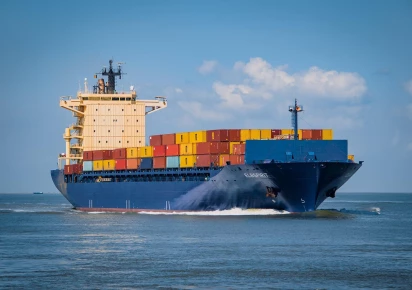
Pakistan eyes PNSC ships to boost GCC trade amid shipping crisis
ISLAMABAD: The government is considering a range of emergency measures, including the deployment of Pakistan National Shipping Corporation (PNSC) vessels, to keep Pakistan’s trade links with Gulf Cooperation Council (GCC) countries operational amid severe disruption to maritime traffic.
The move comes as Pakistan’s exports to the GCC region declined significantly in July 2026, while imports also recorded a sharp fall compared with the same month last year, according to data shared by the Ministry of Commerce.
The ministry’s figures show that exports to GCC countries dropped by around 12% year-on-year in July, reflecting the impact of heightened maritime security concerns and disruptions to established shipping routes.
Exports to major Gulf markets decline
Pakistan’s exports to the United Arab Emirates (UAE), its largest GCC trading partner, fell 9.5% in July 2026, reaching $144.6 million compared with $159.8 million recorded in July 2025.
Exports to Saudi Arabia witnessed a steeper decline of 20.5%, falling to $42 million from $52.8 million a year earlier. Shipments to Oman decreased 3.7% to $15.8 million from $16.4 million.
Pakistan’s exports to Bahrain suffered the sharpest percentage decline among the GCC markets, dropping 50.8% to $2.3 million from $4.2 million.
Exports to Kuwait declined 7.4% to $7.4 million, while shipments to Qatar fell 4.2% to $8.7 million from $9 million in the corresponding month of 2025.
The decline has raised concerns over the ability of Pakistani exporters to maintain regular deliveries to Gulf markets, particularly for goods that depend heavily on maritime transportation.
GCC imports also fall sharply
Pakistan’s imports from GCC countries also recorded a substantial decline during July. The Commerce Ministry reported that imports fell 32.5% year-on-year to $1.0009 billion from $1.4825 billion in July 2025.
Imports from the UAE decreased 34.2%, falling to $380.7 million from $576.5 million.
Imports from Saudi Arabia declined 4.7% to $295.3 million from $310 million, while purchases from Bahrain dropped 44.4% to $15.1 million from $27.2 million.
The most significant declines were recorded in imports from Kuwait and Qatar. Imports from Kuwait plunged 92.8% to $9.5 million from $132.1 million, while those from Qatar fell 96.1% to $10.2 million from $261.8 million.
Oman was the exception, with Pakistani imports from the country increasing 67.7% to $290.2 million from $173 million a year earlier.
Month-on-month trade also weakens
The trade slowdown was also visible on a month-on-month basis. Pakistan’s exports in July were 2.7% lower than in June 2026.
However, the performance varied considerably across GCC destinations. Exports to the UAE increased 15.7%, while shipments to Kuwait and Qatar rose 19.4% and 88%, respectively.
In contrast, exports to Saudi Arabia declined 34.5% during the month. Shipments to Oman fell 34.6%, while exports to Bahrain decreased 18.2%.
Imports recorded an even sharper monthly decline, falling 32.5% in July compared with June.
Imports from the UAE decreased 17.9%, while those from Saudi Arabia fell 41.4%. Imports from Oman declined 49.9%, and purchases from Qatar plunged 93.2%.
Imports from Bahrain and Kuwait, however, increased during the month, rising 295.8% and 72%, respectively.
Maritime security disrupts Gulf trade
The Commerce Ministry linked the deterioration in trade flows to the worsening maritime security situation following the breakdown of an interim truce between the United States and Iran in July 2026.
According to the ministry, the resulting security concerns severely affected international shipping movements through key maritime routes and created uncertainty for commercial vessels operating in and around the Gulf.
The ministry said the waterway normally accommodates between 70 and 80 commercial vessel crossings each day. However, traffic reportedly dropped to as few as six vessels a day during the disruption, leaving hundreds of ships waiting outside the Strait of Hormuz.
The ministry also referred to statements attributed to Iran’s Islamic Revolutionary Guard Corps (IRGC), according to which vessels were required to obtain permission to pass through the strategic waterway. Such developments, coupled with threats against shipping, significantly increased the risks and costs associated with maritime trade.
Red Sea tensions add to shipping risks
The Commerce Ministry also highlighted the impact of attacks attributed to Houthi militants on Saudi oil facilities and areas along the Red Sea coast.
The resulting security threats to Saudi-linked vessels have increased concerns surrounding shipping through the Bab al-Mandab Strait, another critical maritime gateway connecting the Red Sea with the Gulf of Aden.
With shipping operators facing heightened security risks, commercial maritime movement between Pakistan and GCC markets has been severely disrupted. The ministry said some Pakistani exports had consequently been shifted to air freight to ensure the delivery of goods to Gulf customers.
However, air transport is considerably more expensive than sea freight, creating additional pressure on exporters and potentially reducing the competitiveness of Pakistani products in GCC markets.
Government considers alternative shipping routes
To reduce the impact of the disruption, the Commerce Ministry has proposed establishing dedicated feeder links between Karachi and safer maritime nodes outside the immediate Hormuz chokepoint.
The proposed connections include Fujairah and Khor Fakkan in the UAE, as well as suitable Omani ports located outside the affected maritime corridor.
Such routes could provide Pakistani exporters with alternative channels for moving cargo to the Gulf while reducing their exposure to disruptions around the Strait of Hormuz.
The ministry has also recommended accelerating the operationalisation of multi-purpose passenger and cargo ferry services between Gwadar and GCC ports.
The proposed ferry network is intended to provide another avenue for transporting commercial goods and passengers while strengthening Gwadar’s role as an alternative regional logistics hub.
PNSC vessels under consideration
Another option being examined by the government is the use of vessels operated by the Pakistan National Shipping Corporation to maintain trade connectivity with GCC destinations.
The deployment of national-flag shipping capacity could provide greater control over cargo movement at a time when private commercial operators are facing security and logistical constraints.
Officials believe that maintaining reliable access to Gulf markets is important because GCC countries remain a major destination for Pakistani exports and a key source of energy and other imported commodities.
The proposed measures are therefore aimed not only at addressing the immediate shipping crisis but also at developing alternative logistics channels that could strengthen Pakistan’s trade resilience in the event of future disruptions.