Trump hails Makkah Defence pact, calls it bold ste…
WASHINGTON: US President Donald Trump has welcomed the newly signed Makkah Joint Defence Agreement between Pakistan, Saudi Arabia and Türkiye, describing the trilateral pact as an important step toward greater regional security.
Trump said he was pleased to see the three countries formalise the agreement, arguing that it demonstrated a growing willingness among Middle Eastern and regional states to strengthen their ability to protect themselves.
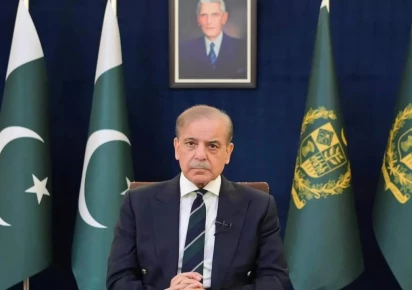
The agreement was signed in Makkah on August 7 during a summit involving Prime Minister Shehbaz Sharif, Saudi Crown Prince Mohammed bin Salman and Turkish President Recep Tayyip Erdogan. It establishes a framework for closer defence cooperation, collective deterrence and enhanced strategic coordination among the three countries.
Although the pact has drawn comparisons with NATO, security analysts say it is primarily an institutionalisation of longstanding political and military ties rather than the creation of a new offensive military alliance. The framework is expected to facilitate greater cooperation in areas including intelligence sharing, defence planning, military coordination and strategic consultations.
The agreement comes amid an increasingly complex regional security environment marked by conflicts, shifting alliances and emerging military threats. Supporters argue that stronger coordination among the three countries could enhance deterrence and contribute to regional stability.
Pakistan brings extensive military and operational experience, while Saudi Arabia offers significant economic and political influence. Türkiye, meanwhile, contributes a developed defence industry, military technology and industrial capabilities. Analysts believe combining these strengths could improve the partners’ collective preparedness.
Turkish President Erdogan has also described the agreement as a significant message for global peace. Speaking in an interview with Al Jazeera Arabic, he said the decision to sign the pact in Makkah gave it additional significance, particularly amid tensions between the United States and Iran.
Erdogan stressed that Pakistan, Türkiye and Saudi Arabia sought to position themselves as advocates of peace and said the three countries would continue supporting diplomatic efforts to prevent conflict.
Asked whether the agreement was comparable to NATO’s Article 5, Erdogan said its collective defence principle meant the three countries would have the opportunity to respond jointly if any member faced a serious threat.
He also revealed that the framework could eventually expand beyond the three founding members. According to Erdogan, the agreement leaves the door open for other countries to join, with Egypt among the potential future participants.
The pact is therefore emerging as a significant development in regional security cooperation, while its proponents present it as a defensive mechanism designed to strengthen deterrence and promote stability rather than fuel confrontation.