pakistan independence day
| | |

Pakistan Independence Day celebrated at New York C…

NEW YORK: Pakistan’s Independence Day was celebrated at the historic New York City Hall this year in a landmark event highlighting the growing presence and contributions of the Pakistani-American community.

The ceremony marked the first time that Pakistan’s Independence Day celebrations were held inside New York City Hall, making it a notable occasion for the Pakistani diaspora and a significant moment in Pakistan-US community relations.

The event was jointly organised by New York City Council Speaker Julie Menin and Council Member Linda Lee, with support from the American Pakistani Advocacy Group (APAG).

Pakistan’s Consul General in New York, Aamer Ahmed Atozai, addressed the gathering and praised APAG and the participating elected representatives for their efforts in arranging the historic celebration. He described the event as a proud and memorable moment for Pakistani-Americans and said holding the ceremony at City Hall reflected the organisers’ strong connection with Pakistan.

A large number of Pakistani-Americans, elected officials, community representatives and members of the media attended the ceremony.

Speaking at the event, Speaker Julie Menin acknowledged the valuable contributions of the Pakistani-American community to New York City. She highlighted the community’s role in the city’s development while maintaining strong ties with both Pakistan and the United States.

Other lawmakers and speakers also commended the Pakistani-American community for its dedication, resilience and continued contributions. They highlighted its role as an important bridge between Pakistan and the United States and recognised its growing influence in the city’s civic, economic and social life.

The historic celebration at New York City Hall underscored the increasing significance of the Pakistani-American community and its positive contributions to New York, while also highlighting the enduring people-to-people ties between Pakistan and the United States.

Moreover, Pakistan’s diplomatic efforts to promote peace and stability, including its role in mediating during the recent US-Iran tensions, were highlighted at an Independence Day ceremony held at Pakistan House in New York.

Speaking at the event, Pakistan’s Permanent Representative to the United Nations, Ambassador Asim Iftikhar Ahmad, said Pakistan had consistently sought peaceful solutions amid growing international instability and conflicts. He urged renewed commitment to the country’s founding principles, sovereignty, security, peace and socio-economic progress.

The ambassador paid tribute to Quaid-e-Azam Muhammad Ali Jinnah, describing him as a visionary statesman whose leadership led to the creation of Pakistan. Reflecting on the country’s journey since independence, he praised the resilience and achievements of Pakistanis despite significant challenges.

Ahmad also commended the armed forces for their sacrifices in defending the country and protecting its people, while recognising the achievements of Pakistanis abroad in fields ranging from innovation and sports to the arts.

He reaffirmed Pakistan’s diplomatic and political support for the people of Indian Illegally Occupied Jammu and Kashmir and for the rights of Palestinians. He also stressed the importance of combating terrorism while advancing economic development and national progress.

Consul General Aamer Ahmad Atozai also paid tribute to the leaders and workers of the Pakistan Movement, emphasising that freedom carries both a legacy and a responsibility. He highlighted the Pakistani-American community’s contributions through investment, remittances, philanthropy and expertise, describing it as an important bridge between Pakistan and the United States.

The ceremony featured the hoisting of the Pakistani flag and the national anthem, while messages from Pakistan’s leadership were also read out. Addressing children at the gathering, Ambassador Ahmad described them as the country’s future and called for collective efforts to build a peaceful, prosperous and inclusive Pakistan.

The event concluded with calls for greater national unity and continued commitment to peace, diplomacy and Pakistan’s progress on the global stage.

Similar Posts

  • | | |

    Govt increases petrol by Rs1.63, diesel by Rs1.55

    The government on Tuesday increased the price of petrol by Rs1.63 and high-speed diesel (HSD) by Rs1.55 per litre, passing on the impact of fluctuating global oil prices following renewed hostilities in the Persian Gulf. Following the changes, the price of petrol stands at Rs335.81 per litre, while HSD is now priced at Rs388.38 per litre. The government is charging a total of Rs110 per litre in taxes and duties on petrol and Rs96 on diesel. The Petroleum Division’s notification said the new prices would be applicable for July 29 (Wednesday). The diesel price has come down from a peak of Rs520.35 recorded on April 3, after beginning its upward trajectory from Rs281 per litre when the US-Iran war broke out on February 28. Similarly, petrol had peaked at Rs458.41 on April 3 after rising from Rs266 in the first week of March. Earlier, Petroleum Minister Ali Pervaiz Malik announced that fuel prices would now be fixed on a daily basis due to fluctuations in international market prices. The government had been announcing weekly revisions since early March, alongside conservation measures amid possible oil supply disruptions due to the ongoing Middle East conflict. In April, the federal government also announced targeted relief measures to provide subsidised fuel. The petroleum minister stated that the cabinet and prime minister had decided to give the Oil and Gas Regulatory Authority (OGRA) the responsibility of deciding fuel prices daily based on international market trends. The daily pricing decision was rejected by the All Pakistan Dealers Association, which said it would consider a protest plan this week. Petrol is mainly used in private transport, small vehicles, rickshaws and two-wheelers, and changes in its price affect the middle and lower-middle classes. Similarly, diesel price changes impact the public at large, as it is primarily used in the heavy transport sector, power plants and large generators. Petrol and HSD are the major revenue earners, with monthly sales of about 700,000 to 800,000 tonnes, compared to just 10,000 tonnes of monthly demand for kerosene.

  • | |

    Pakistan rise in WTC standings after West Indies w…

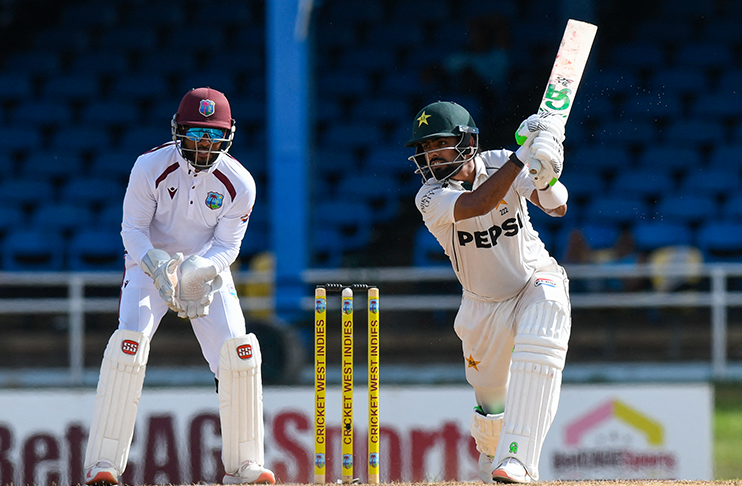
    Port of Spain: Pakistan breathed new life into their ICC World Test Championship (WTC) 2025-27 campaign after defeating the West Indies by eight wickets in the second and final Test, a victory that lifted them off the bottom of the standings and restored confidence under new captain Babar Azam. The convincing win helped Pakistan move up to seventh place in the WTC table with a points percentage of 22.22, replacing the West Indies, who dropped to the bottom after another disappointing result. Pakistan have now won two of their six matches in the current championship cycle, while the Caribbean side have managed just two victories in 12 Tests. At the top of the standings, Australia remain the dominant force with seven wins in eight matches and a remarkable winning percentage of 87.50. Defending champions South Africa occupy second place, followed by New Zealand, Bangladesh, India, Sri Lanka, England, Pakistan and West Indies. Pakistan entered the Caribbean series under fresh leadership after Babar Azam replaced Shan Masood as Test captain. However, the new chapter began on a disappointing note as the visitors suffered a 90-run defeat in the opening Test at Tarouba. The Green Shirts responded in style in the second Test at Queen’s Park Oval with an impressive all-round performance. After electing to bat, the West Indies posted 344 thanks to fighting half-centuries from captain Roston Chase and Justin Greaves. Pakistan answered with determination as opener Abdullah Shafique produced a magnificent unbeaten 160, anchoring the innings from start to finish. Captain Babar Azam added a composed half-century as Pakistan reached 387, taking a valuable first-innings lead of 43 runs. The turning point came in the West Indies’ second innings when Pakistan’s spin duo completely dominated the hosts. Sajid Khan and Ali Usman claimed four wickets each to dismiss the West Indies for just 117, leaving Pakistan a modest target of 75. Pakistan completed the chase comfortably with eight wickets to spare. Shafique and Babar remained unbeaten on 24 each, guiding their team to its first away Test victory since July 2023. Teams Matches Wins Losses Draw Points Winning Percentages Australia       8    7      1     0    84        87.50 South Africa       4    3      1     0    36           75 New Zealand       6    4      1     1    52        72.22 Bangladesh       4    2      1     1    28        58.33 India       9    4      4     1    52        48.15 Sri Lanka       4    1      1     2    20        41.67 England      13    4      8     1    38        24.36 Pakistan       6    2      4     0    16        22.22 West Indies      12    2      8     2    30        20.83   The morale-boosting triumph not only squared the two-match series 1-1 but also revived Pakistan’s hopes in the World Test Championship race. With Babar Azam’s captaincy beginning to take shape and key players delivering under pressure, Pakistan will now look to build momentum in the remainder of the WTC cycle.

  • | |

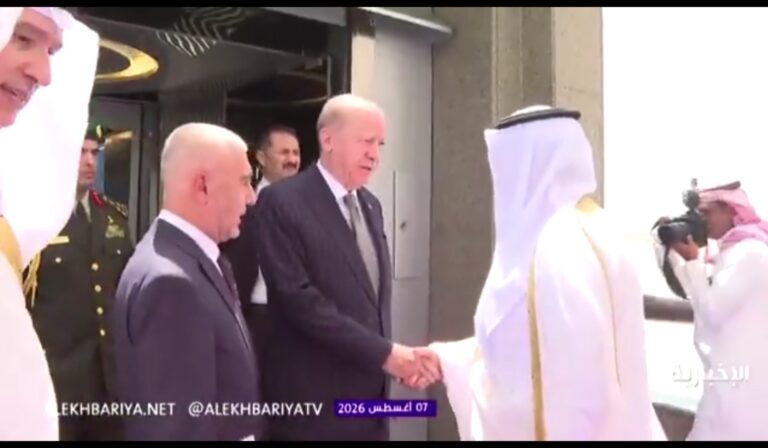
    President Erdoğan arrives in Saudi Arabia for tri…

    President of Türkiye Recep Tayyip Erdoğan has arrived in Saudi Arabia to participate in the high-level trilateral summit. President Erdoğan received a warm welcome upon his arrival at Jeddah Airport, with ceremonial scenes reflecting the significance of the visit. The summit is expected to focus on strengthening regional cooperation, enhancing diplomatic engagement, and advancing shared strategic interests amid evolving geopolitical developments in the Middle East. Earlier, Prime Minister Muhammad Shehbaz Sharif was received by Saudi Crown Prince and Prime Minister Prince Mohammed bin Salman bin Abdulaziz Al Saud at Al-Safa Palace in Makkah on Friday, where the two leaders commenced high-level bilateral talks aimed at further strengthening Pakistan-Saudi Arabia strategic ties. The Prime Minister is accompanied by Deputy Prime Minister and Foreign Minister Senator Mohammad Ishaq Dar, Field Marshal Syed Asim Munir, Chief of Army Staff and Chief of Defence Forces, and Defence Minister Khawaja Muhammad Asif.

  • | |

    Rs3.2 million salary under fire: Senate questions …

    Islamabad: “Serious questions have been raised about the National Electric Power Regulatory Authority (NEPRA) after Senator Aimal Wali Khan questioned why the Chairman NEPRA continues receiving a monthly salary of Rs3.2 million despite concerns regarding his office attendance and official responsibilities.” The issue was raised during a meeting of the Senate Standing Committee on Cabinet Secretariat chaired by Senator Rana Mahmood ul Hassan at the Establishment Division. Senator Aimal Wali Khan questioned the performance and accountability of senior government officials, saying that important positions should not continue without effective participation and responsibility. While discussing NEPRA, Senator Aimal Wali Khan stated that the Chairman NEPRA had remained ill only a few weeks after his appointment and was not attending office regularly, yet continued receiving his full salary. He questioned whether public funds should continue to be spent on positions where official duties are not being performed and demanded accountability regarding the matter. The committee took note of the concerns raised by Senator Aimal Wali Khan and discussed the importance of transparency and responsibility in government institutions. During the wider discussion on public sector appointments and governance issues, Senator Aimal Wali Khan criticised the practice of keeping individuals in important positions despite their inability to perform official duties. He remarked that some people continue holding positions even when they are unable to actively carry out responsibilities, raising questions about institutional efficiency and accountability. The committee stressed that senior positions in government bodies must be linked with performance, transparency and public responsibility. The issue comes at a time when regulatory institutions such as NEPRA play a major role in Pakistan’s electricity sector, including matters related to power regulation, tariffs and consumer interests. The committee directed relevant authorities to provide required information so that matters related to public appointments, governance and institutional reforms could be examined in detail.

  • |

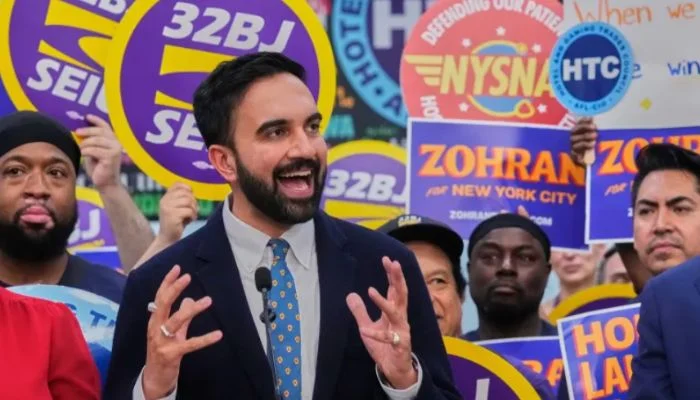
    Mamdani’s multilingual, meme-friendly style wins over young voters

    Zohran Mamdani has built a notably different kind of political connection with New York’s diverse communities. His approach centers on delivering campaign outreach in multiple languages, including Mandarin, Bengali and Spanish. Rather than relying solely on English, Mamdani’s team has woven the city’s varied linguistic makeup directly into its outreach strategy. That approach has helped him connect more directly with working-class neighbourhoods and immigrant populations in their native languages. The New York City mayor’s approach to engaging constituents has repeatedly drawn attention. His localised messaging and public appearances, often delivered fluently across several languages, have become a defining feature of his public image. The style has also sparked plenty of reaction online, with social media users reacting with a mix of praise and humour. One widely shared comment joked that he seems to be collecting languages the way people collect Pokémon cards. Online audiences have picked up on his frequent switching between languages across different platforms, fuelling ongoing viral commentary and internet humour surrounding his public appearances. Mamdani’s rise has been driven largely by viral moments, genuine community engagement, and his multilingual outreach. Together, these elements have made him a particularly influential figure among Gen Z and millennial voters. Exit polling data shows just how central younger voters have been to his political base. Roughly 75% to 78% of voters aged 18 to 29 backed him, contributing to a notable rise in youth turnout during recent municipal elections. Unlike many politicians who stick closely to rehearsed talking points, Mamdani’s communication style leans heavily on relatable humour, short-form video content and an active social media presence. Whether he is sharing lighthearted Gen Z-style clips, interacting casually with a neighbourhood cat, or switching fluidly between Mandarin, Bengali and Spanish, his approach reflects both the language and culture of a diverse, younger audience. Beyond his online popularity, younger voters also point to his focus on core issues like housing affordability, economic inequality and broader representation. By treating everyday culture and multilingual communication as central to his political identity rather than an afterthought, Mamdani has reshaped how candidates in the city are attempting to reach younger, more diverse voters.

  • | |

    Congo tightens grip on mineral exports with ban on…

    The Democratic Republic of Congo has prohibited exports of copper concentrate and cobalt concentrate, according to a government order reviewed on Thursday, marking the latest step in an ongoing push to force more mineral processing to happen inside the country and capture a larger share of the value generated by its mining sector. News of the ban sent benchmark three month copper prices on the London Metal Exchange up by as much as 1.8 percent to $14,369.50 a metric ton, the highest level since January 29, when the metal touched an all time peak of $14,527.50. Prices stood at $14,300 as of 0930 GMT following the report. Congo holds the position of the world’s largest cobalt supplier and ranks among the top sources of copper and other minerals critical to the global energy transition. The government is using that leverage to encourage the build out of domestic processing capacity rather than allowing raw or partially processed materials to leave the country. The order, dated June 29 and signed jointly by Mines Minister Louis Kabamba Watum, Foreign Trade Minister Julien Paluku Kahongya and Economy Minister Daniel Mukoko Samba, states plainly that exporting copper and cobalt concentrates is now prohibited. The prohibition took effect immediately, though the order allows for one year export waivers to be granted under unspecified strategic circumstances. The same order also establishes a new tax structure covering economically significant mining by products, with a three month transition period built in before the new rules take full effect. Officials said the export ban aims to push mining companies toward marketing or exporting higher value processed mineral products rather than raw concentrate. This marks the fourth time Congo has restricted concentrate exports, following similar bans imposed in 2013, 2019 and 2023, each of which included waivers in cases where domestic smelting capacity could not keep pace with output. The new order formally repeals the 2023 measure and its associated exemptions, replacing it with a broader regulatory framework governing both mineral exports and taxation of significant by products recovered during processing. Congo already exports the vast majority of its copper in refined form. During the first quarter of 2026, the country shipped 696,725 tons of copper cathodes, compared with just 53,926 tons of copper concentrate containing roughly 18,863 tons of copper metal, according to official figures. Over the same period, Congo exported 51,940 tons of cobalt hydroxide containing about 17,054 tons of cobalt metal. Christian Geraud Neema, a mining analyst with the nonprofit China Global South Project, said the new ban is unlikely to significantly disrupt most mining operators since the bulk of Congo’s copper and cobalt already undergoes domestic refining before export. He said the operation most likely to feel the impact is the Kamoa Kakula venture, jointly owned by Ivanhoe Mines, China’s Zijin Mining and the Congolese government, which still exports some volume of concentrate under existing exemptions. Neither Ivanhoe nor Zijin responded immediately to requests for comment, and the Congolese chamber of mines also did not respond. The newly introduced tax regime applies broadly across mineral categories, extending to trace and ultra trace minerals recovered during the refining process. These by products will be taxed using a 55 percent valuation coefficient, with royalties applied alongside those already charged on the primary mineral being extracted. The policy fits into a broader pattern across resource rich African nations seeking to move beyond raw material exports and capture more manufacturing and processing value domestically, a shift that has gained momentum as global demand for energy transition minerals like copper and cobalt continues to grow.

Leave a Reply

Your email address will not be published. Required fields are marked *