

kath garh land

Kath Garh land record delay causes public hardship

DERA ISMAIL KHAN: The continued delay in the preparation, completion and computerization of the four year land record of Kath Garh Patwari Circle has become a serious matter of public concern, causing difficulties for citizens in dealing with land-related affairs.

Land records are directly linked to the fundamental rights and legal matters of the public. Their timely completion, verification and accuracy are therefore essential. According to information, the four-year record of Kath Garh Patwari Circle has still not been fully prepared and computerized, resulting in difficulties for residents in obtaining land records, processing mutations, verification and completing other property-related matters.

In contrast, land records in most areas of Dera Ismail Khan district, particularly in Tehsil Paharpur, have already been prepared and computerized. This raises questions about why the process in Kath Garh has remained delayed for such a long period and requires the immediate attention of the concerned authorities.

In the modern era, securing, maintaining and computerizing government records is an essential requirement for ensuring transparency and preventing disputes. Even a minor error or unnecessary delay in land records can create prolonged difficulties for citizens. The completion of the Kath Garh four-year record should therefore be treated as a matter of urgency rather than merely routine official paperwork.

Complete transparency and strict compliance with laws and regulations must particularly be ensured in mutations and other land-related matters. Until the four-year record is fully completed, verified and computerized, the concerned authorities should issue clear written instructions regarding mutations so that legal or administrative complications do not arise in the future.

Residents have demanded that they should not face unnecessary obstacles in obtaining records of their own land. They urged senior officials to take immediate notice of the issue, set a clear deadline for completion of the record, personally monitor the process and determine the reasons behind the delay. Those responsible for the delay should also be asked to explain their position.

The people of Kath Garh deserve the same facilities that are available to residents of other areas of the district. Immediate completion and computerization of the four-year land record would not only alleviate public difficulties but also strengthen transparency, accuracy and public confidence in the land record system.

The residents have urged the higher authorities to keep all mutations suspended until the four-year record is completed and to issue a formal notification in this regard.

Similar Posts

  • | | |

    Top National Thailand Stories From the Past Week: Death Toll in School Mass Shooting Reaches 9, Chinese Man Gets 46 Years for Military Weapons, and More

    Here is a look at the top NATIONAL Thailand stories, chosen by our Pattaya News/TPN National team, from last week, Monday, August 3rd to Sunday, August 9th. They are not in any particular level of importance but are listed in the order of date of publication. Nonthaburi’s Disaster Prevention and Mitigation Department has confirmed a […]

  • | |

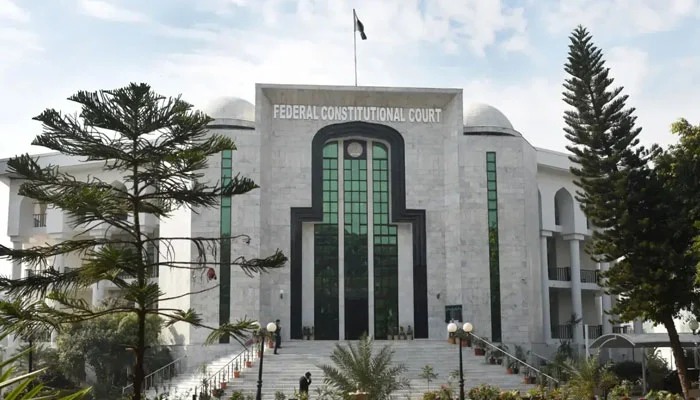
    Federal constitutional court overturns 16-year-old…

    Pakistan’s Federal Constitutional Court (FCC) has overturned a 16-year-old Supreme Court ruling concerning land acquisition and claims for additional compensation, delivering a significant judgment on the legal rights of landowners. A three-member bench headed by FCC Chief Justice Amin-ud-Din Khan announced the decision on review petitions challenging the Supreme Court’s 2010 majority judgment. Justice Ali Baqar Najafi and Justice Syed Arshad Hussain Shah were also members of the bench. The 47-page judgment, authored by Chief Justice Amin-ud-Din Khan, held that parts of the Supreme Court’s earlier decision in the Sadaqat Ali Khan case were not legally sustainable. The court ruled that a landowner who accepts compensation without raising an objection cannot subsequently claim additional compensation. It also held that a landowner who fails to file a reference within the prescribed legal period cannot later seek additional compensation. Another important finding was that landowners who were not parties to earlier proceedings cannot automatically claim the benefit of higher compensation awarded to other landowners through court proceedings. The Federal Constitutional Court observed that the Land Acquisition Act, 1894 provides a comprehensive legal framework for land acquisition and determination of compensation. Anyone seeking additional compensation must follow the procedure established under the law. According to the judgment, once the prescribed period for legal proceedings expires, the award issued by the Land Acquisition Collector becomes final. Courts cannot use their powers to bypass mandatory statutory requirements. The court further clarified that the principle of equality under Article 25 of the Constitution cannot eliminate statutory limitation periods or mandatory legal conditions. Similarly, the power to do complete justice cannot be used to create a new legal right that does not exist under the relevant law. The Supreme Court’s 2010 majority ruling had extended the benefit of additional compensation to certain landowners who were not parties to the original proceedings. The National Highway Authority chairman and other authorities subsequently challenged the ruling through review petitions. The Federal Constitutional Court accepted the review petitions filed by the concerned authorities and also allowed related civil appeals. Decisions of the Peshawar and Lahore High Courts concerning additional compensation were consequently set aside, while the original orders of the Land Acquisition Collectors and other competent authorities were restored. However, Justice Syed Arshad Hussain Shah’s additional note clarified that additional compensation already paid in good faith under the earlier judgment cannot be recovered. Recovery would not be permissible where the money was obtained without fraud, misrepresentation or an unlawful method. The ruling could have significant implications for future land acquisition and compensation disputes by emphasizing statutory procedures, legal deadlines and the finality of compensation awards.

  • Private medical college fees spark Parliamentary debate

    Islamabad: A heated parliamentary debate over private medical college fees has exposed a conflict between the Pakistan Medical and Dental Council and members of the National Health Services Standing Committee. Lawmakers questioned why students are being asked to pay millions of rupees for medical education while some colleges seeking fee increases allegedly have incomplete documents and audit reports. The controversy became more serious when Member Aliya Kamran questioned the approval of higher fees for colleges whose facilities and records were allegedly not good enough to justify such increases. She specifically referred to Rawal Institute of Health Sciences and claimed that photographs showed standing water in classrooms and students unable to attend classes because of poor infrastructure. She questioned how such an institution could qualify for a fee increase and said colleges with poor standards should face action rather than receive permission to charge more. The debate also revealed a major disagreement over whether high fees are responsible for vacant seats in private medical and dental colleges. One PMDC official argued that fees alone cannot explain the vacant seats, pointing out that some colleges charging Rs3.5 million have no vacant seats. The official said students also consider the quality of education, facilities and the reputation of institutions before choosing a college. But the Vice Chancellor of Jinnah Sindh Medical University presented a very different picture. He told the committee that around 8,000 students who passed the Medical and Dental College Admission Test did not take admission because they could not afford the fees. He said many of these students could have joined if more public sector seats had been available. The disagreement over fees comes as the committee is examining a fee range of Rs1.8 million to Rs2.5 million for private medical colleges. According to the PMDC briefing, 61 colleges applied for permission to charge more than the Rs1.8 million baseline. After checking their balance sheets, third party audit reports, specifications and inspection reports, only 35 were declared eligible for fee enhancement. However, eligibility did not mean that all 35 colleges were allowed to charge Rs2.5 million. Some were allowed to charge Rs1.9 million, Rs1.95 million or Rs2 million. The issue of quality also came under strong criticism. Aliya Kamran questioned the argument that better quality should automatically allow a college to charge higher fees. She warned that allowing some institutions to charge Rs2.5 million while keeping others at Rs1.8 million could create the impression that students studying at lower fee colleges belong to inferior institutions. Minister for National Health Syed Mustufa Kamal defended the fee difference by saying that institutions have different facilities and levels of exposure. He cited Aga Khan, which was described as charging Rs3.5 million, and Ziauddin, which was described as charging Rs2 million. He said some colleges hire professors from abroad and provide additional practical training; their audited accounts are used to show their higher operating costs. The debate then turned into a bigger question: should medical education be treated as a business or as a social service? Member Gul Asghar Khan openly argued that medical education is a business and that private investors put money into medical colleges because they expect a return. He warned that imposing strict fee controls could force private colleges to close. He claimed that a major audit could show the actual cost of educating one medical student is more than Rs4 million a year in the public sector. Another member rejected this argument, pointing out that government medical institutions may spend much more on a student while charging students only around Rs5,000 to Rs50,000 in fees. The member said private medical college fees ranging from Rs1.8 million to Rs2.5 million are simply beyond the reach of ordinary families. The committee also heard that medical education fees have increased sharply over the years. A university vice chancellor said the cost per student at a public medical college had earlier been estimated at around Rs750,000 to Rs800,000. An audit conducted after Justice Saqib Nisar sought data had put the private college figure at around Rs900,000, but the fee later increased to Rs1.8 million. The vice chancellor said the higher fee is beyond the ability of most students to pay and stressed that fees are a major factor behind the problem. Another member said medical college fees had earlier been around Rs640,000 before increasing to Rs900,000 and then suddenly reaching Rs1.8 million. The member argued that colleges struggling to fill seats should reduce fees to Rs1.5 million or even Rs1 million rather than leave seats empty. The BDS programme also came under discussion. Officials said the programme is being increased from four years to five years to meet international recognition requirements. This means students will have to pay for an additional year. Officials warned that students already struggling to pay around Rs10 million for four years could face another Rs2.5 million burden for the fifth year, potentially leading to even more vacant seats. The committee was also told about serious questions regarding documentation submitted by colleges seeking fee increases. Aliya Kamran pointed out that Peshawar Medical, Sahara, Liaquat National and Rawal were among colleges whose documents were allegedly incomplete in the list provided to the committee. She questioned how colleges could be included in the fee enhancement process when some did not have audit reports. The PMDC official responded that audit reports had not been demanded from colleges in the past. According to the official, PMDC started demanding third party audit reports after the January 2023 Act. The official said colleges that failed to provide the required documents were rejected, while the 35 colleges approved for fee enhancement had submitted third party audits. The chairman of the committee, Dr. Mahesh Kumar Malani, said the committee had already decided that medical colleges should generally charge between Rs1.8 million and Rs2.5 million and had sought lists of colleges charging higher fees. Complaints had been received that some colleges were charging more than what their standards justified. The discussion also highlighted a major difference between high

  • | |

    Sherry Rehman accuses India of using flood situati…

    Pakistan Peoples Party Senator Sherry Rehman has criticised India’s water policies, accusing New Delhi of using the flood situation as a tool of “water aggression” against Pakistan. In a statement, Sherry Rehman said India was adopting a contradictory approach by threatening to suspend the Indus Waters Treaty while also releasing floodwater towards Pakistan. She claimed that India opened the gates of the Salal Dam, putting millions of Pakistanis at risk of flooding. She stressed that river water management should be handled responsibly and should not become a source of conflict between the two countries. The senator said India’s alleged failure to provide timely information about water flows had created uncertainty, particularly regarding the flow of the Chenab River. She warned that sudden changes in the river’s water levels could affect Pakistan’s irrigation system and agriculture. The Chenab River supports millions of acres of farmland in Punjab, and any unexpected increase or decrease in water flow could damage crops and impact farmers’ livelihoods. Sherry Rehman said Pakistan’s agricultural economy depends heavily on the proper management of river systems. She added that uncertain water policies could increase risks for farmers and create challenges for the country’s water security. She urged India to respect existing water agreements and follow international commitments. She said western rivers under the Indus Waters Treaty cannot be diverted, stored, or transferred in a manner that affects Pakistan’s water supply.

  • | |

    Pakistani student makes global mark with 10 LLB di…

    Pakistani student Diya Aneel Bhatia has reportedly achieved a major academic distinction by securing 10 distinctions in the three-year LLB (Honours) programme of the University of London. Bhatia belongs to Jamshoro, Sindh, and is studying at a private law college in Islamabad. She secured the highest marks worldwide in the programme, according to the information shared at a ceremony held in her honour. Her achievement was celebrated at a special ceremony at the Islamabad School of Law. Faculty members from the University of London also attended the event. They congratulated Bhatia and praised her academic performance. The ceremony also recognised other high-performing students. Shields were presented to the students for their outstanding results. Bhatia was among the students honoured for her exceptional performance. Her achievement has brought attention to the academic potential of Pakistani students studying international degree programmes. It has also highlighted the growing participation of Pakistani students in global legal education. Bhatia’s success has been particularly noted because of the number of distinctions she achieved during the LLB programme. Her performance placed her among the top-performing students internationally. Education experts and academics praised her achievement. They described it as a source of pride for Pakistan and an encouragement for other young students. Bhatia has also expressed her desire to use her education for a wider social purpose. She said she wants to work for Pakistani women, particularly women from minority communities. She aims to support women through education, legal awareness and greater access to opportunities. Her goal, she said, is to contribute to the empowerment of women and help them build stronger futures.

  • | | |

    Nationwide petrol pump shutdown announced

    The All Pakistan Petrol Pumps Association has announced a nationwide shutdown of petrol stations from tonight after negotiations with the government failed to resolve the dispute over daily changes in petroleum prices. Association General Secretary Nauman Butt said talks between the Petroleum Minister and petrol pump owners ended without reaching any agreement. He said the association raised concerns over the government’s decision to revise petroleum product prices on a daily basis. However, the discussions did not produce a solution acceptable to both sides. The association has now decided to close petrol pumps across the country as a protest against the unresolved issue. The shutdown announcement has raised concerns about possible disruptions in fuel supply and difficulties for consumers if the strike continues. Further developments are expected as the government and petrol pump representatives may hold additional talks to resolve the matter and restore normal fuel services. The government had earlier decided to introduce a daily petroleum pricing mechanism in view of the deteriorating regional security situation. Under the new policy, the Oil and Gas Regulatory Authority (OGRA) will announce petroleum prices on a daily basis without requiring approval from the prime minister or the federal government. However, fuel prices announced on Fridays will remain unchanged on Saturdays and Sundays. The All Pakistan Petrol Pumps Association (APPPA) has rejected the petroleum price deregulation policy and urged the government to reconsider its decision. Association Chairman Nauman Ali Butt said the burden created by the new pricing system should not be placed on petrol pump owners. He stressed that all stakeholders should be consulted before finalising fuel prices with Oil Marketing Companies (OMCs). Butt added that nearly 15,000 petrol pump owners across Pakistan have expressed serious concerns over the new policy and called on the government to address their reservations before implementing the system.

Leave a Reply

Your email address will not be published. Required fields are marked *