
easy ways get

Easy ways to get rid of bed bugs

Bed bugs can make it difficult to sleep and may leave red itchy marks on the skin. These tiny insects often hide in beds sofas clothes and other dark places during the day.

At night they become active and feed on people. Even a few bed bugs can quickly turn into a bigger problem if they are not treated properly.  While many bed bug sprays are available in stores some people also try simple home methods to control them.

Use hot air

A hair dryer can be used to blow hot air into cracks corners and other places where bed bugs or their eggs may be hiding.  Heat can kill bed bugs but care is important. Never use a hair dryer near flammable materials.

Try mint leaves

Bed bugs may dislike strong smells such as mint. Fresh mint leaves can be placed near beds sofas or areas where bed bugs are found. However mint should not be considered a reliable way to kill bed bugs. It may only help make certain areas less attractive to them.

Wash bedding in hot water

Wash bedsheets pillow covers clothes and other washable items that may contain bed bugs in hot water.  After washing dry them thoroughly using high heat if the fabric allows it. Heat can help kill bed bugs and their eggs and reduce their numbers.

Keep the area clean

Baking soda is sometimes suggested as a home remedy for bed bugs but there is limited evidence that it can kill them.  Instead of relying on baking soda regularly vacuum mattresses sofas carpets and cracks where bed bugs may hide.

If the infestation has become large home remedies may not be enough.  In such cases contacting a professional pest control service is usually a better option.
Similar Posts

  • |

    America’s premier tourist destination

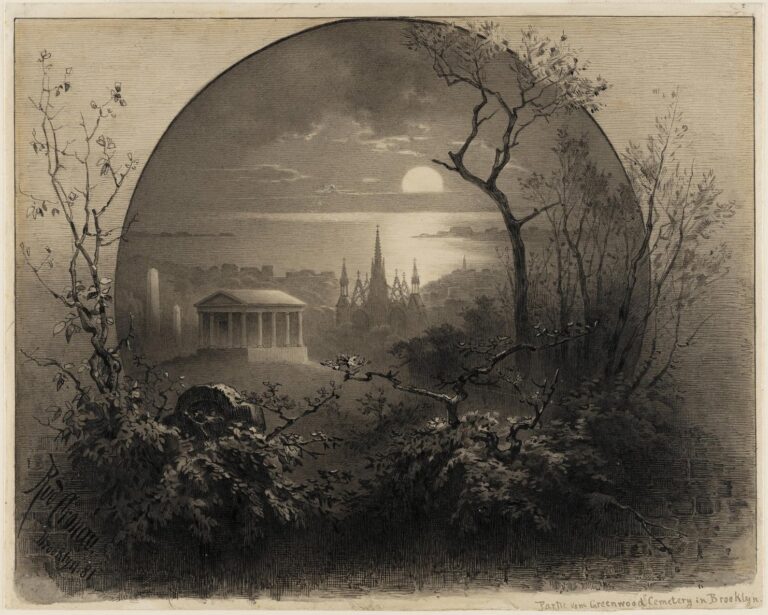
    During the early 1860s, an unexpected location ranked as the second most visited tourist spot in the United States: Green-Wood Cemetery in Brooklyn. Trailing only Niagara Falls in popularity, the vast burial ground welcomed roughly 500,000 visitors every year. Families routinely spent their afternoons strolling through the peaceful grounds. They took horse-drawn carriage rides and admiring the elaborate grand monuments across the landscape. When Green-Wood first opened its gates in 1838, New York City had virtually no public parks, as Central Park had not yet been conceived. By the time the early 1860s arrived, Central Park was only beginning to open its initial sections to the public. As a result, rural cemeteries like Green-Wood filled a massive void for city dwellers seeking fresh air, natural beauty, and a quiet escape from urban density. The unique charm and sweeping vistas of the cemetery caught the attention of Rudolf Cronau, a German-born illustrator and artist. Born in Solingen in 1855, Cronau trained at the prestigious Düsseldorf Art Academy under Andreas Müller before establishing his own studio. In 1881, he ventured across the Atlantic on an assignment for Die Gartenlaube, a popular German illustrated magazine. His mission was to document the landscapes, bustling cities, and diverse people of the United States, bringing the American experience to life for European readers through a mix of written reports and detailed artwork. While visiting Brooklyn in 1881, Cronau captured the cemetery’s famous skyline view in a artwork titled View from Greenwood Cemetery, Brooklyn. Rendered in delicate watercolor and black ink, the piece now resides in the permanent collection of the Brooklyn Museum. Cronau arranged his view in three distinct planes: an elaborate mausoleum anchored the foreground, Green-Wood’s iconic Gothic main entrance gates framed the middle ground, and the vast expanse of New York Harbor and the New Jersey coastline stretched out in the background. The mausoleum highlighted in the foreground of Cronau’s illustration belonged to John Anderson, a prominent NYC figure who amassed a massive fortune in the tobacco trade. Anderson, born in 1812, ran a well-known shop near Manhattan’s City Hall before eventually passing away in Paris in 1881.   Beyond serving as his final resting place, Anderson’s tomb was built as a bold political statement. Commissioned during the heights of the American Civil War, the Greek Revival-style structure was purposefully designed to symbolize a commitment to republican governance over monarchical rule, while serving as an unmistakable declaration of pro-Union support. Through art and architecture, a single cemetery hilltop managed to weave together personal wealth, national ideology, and one of the finest views of 19th-century New York.

  • |

    Favoritism at Civil Hospital Turbat

    Patients visiting Civil Hospital Turbat deserve equal treatment, but many complain that this is not always the case. Poor patients often wait for hours to see a doctor, while the relatives or acquaintances of doctors are allowed to enter directly without waiting their turn. Such favoritism is unfair and causes great hardship to those who have no influence or connections. A public hospital should serve every patient equally, regardless of their social status or personal relationships. The hospital administration should ensure that all patients are examined according to a fair queue system and take action against any practice that gives unjust preference to certain individuals. Equal treatment is a basic right. Fairness and accountability are essential to restore public trust in Civil Hospital Turbat.

  • |

    How translation reconstructs global literature

    For generations, the international publishing world operated around a narrow geographic axis. Books written in dominant English-speaking hubs dominated bookstore displays worldwide. Stories crafted in regional languages across Asia, Africa, South America, and Eastern Europe struggled to secure international distribution. When works were translated, the process was often viewed as a purely mechanical service. A utilitarian act of converting words from one dictionary to another. Today, a seismic cultural shift is redefining global literature. Translation is finally recognized as a sophisticated, creative art form that acts as the lifeblood of global storytelling. Recent publishing trends and prestigious accolades, such as the International Booker Prize, highlight this remarkable transformation. In 2026, the prize made history by awarding its top honor to Taiwan Travelogue by Yáng Shuāng-zǐ, brilliantly translated from Taiwanese Mandarin into English by Lin King. This historic win marking the first time a Taiwanese Mandarin work secured the award highlighted a broader reality. Global audiences are hungrier than ever for diverse, culturally distinct narratives. Over the past decade, sales of translated fiction have surged dramatically, proving that readers no longer seek comfort solely in familiar local settings. At the center of this movement is a fundamental re-evaluation of the translator’s role. Far from being invisible ghostwriters, translators are cultural ambassadors and literary artists in their own right. Translating a novel is rarely a matter of word-for-word substitution. Every language carries unique rhythms, idioms, historical baggage, and untranslatable social nuances. When a translator approaches a text, they must reconstruct its tone, preserve its emotional core, and decide how to navigate cultural concepts that have no direct equivalent in the target language. They rewrite the story from the inside out, ensuring it resonates authentically with a brand-new audience without stripping away its original soul. This evolving respect for translation has sparked important industry changes, such as the widely supported movement to print translators’ names directly on book covers alongside the author’s. Independent publishers are leading the charge, taking bold risks on works translated from lesser-represented languages, including Kannada, Taiwanese, Bulgarian, and Arabic. Digital distribution platforms have further accelerated this trend, allowing indie books to cross oceans instantly. Ultimately, translation is what prevents global literature from becoming an echo chamber. It dismantles geographical gatekeeping, fosters empathy across political divides, and allows readers to step directly into the lived experiences of people half a world away. The delicate craft of translation and the global literary community ensure that stories are no longer limited to by borders of the language in which they were born.  

  • Restarting your workout? Avoid these common mistakes

    If you stopped exercising for a long time because of work stress or other reasons and are now planning to return to the gym health experts advise against starting with your old workout routine right away. After a long break the body needs time to get used to physical activity again. Starting with heavy or intense exercise too quickly can lead to muscle pain extreme tiredness and a higher risk of injury. Why you should start slowly Busy work schedules long meetings stress and personal responsibilities often cause people to stop exercising.  When they return to the gym many assume they can immediately exercise at the same level as before. However staying inactive for a long time can reduce muscle strength flexibility and stamina. The body needs time to rebuild these abilities so suddenly doing hard workouts can put too much pressure on the muscles and joints. Begin with light exercise Experts recommend starting with simple stretching exercises to prepare the muscles and reduce stiffness.  Light activities such as walking or easy cardio can then help the heart and lungs adjust while gradually improving stamina. Light strength training is also useful because it helps build stronger muscles bones and joints.  Beginners should use manageable weights and focus on doing each exercise with the correct form. Rest and nutrition matter A safe return to exercise is not only about workouts. Eating a balanced diet drinking enough water and getting proper sleep can help the body recover and support muscle health. The key is to increase the intensity slowly instead of trying to make up for lost time with hard workouts. Note This information is for general awareness. Anyone with an existing health condition injury or other medical concern should consult a doctor before restarting exercise.

  • Keep lizards away with bird feathers

    Seeing a lizard inside the house is quite common. Most house lizards are not poisonous or dangerous but many people feel uncomfortable or scared when they see them. This is why people often try simple home methods to keep lizards away. Lizards can actually help control insects because they eat small bugs. However most people still do not want them inside their homes. If lizards often appear on walls in the kitchen or in other parts of the house a few simple steps may help reduce their presence. Use bird feathers Some people use bird feathers as a traditional way to keep lizards away.  Lizards are natural prey for birds so the sight of feathers may make them feel that a bird could be nearby. Peacock feathers are sometimes placed in areas where lizards are often seen.  Besides being used as a traditional method they can also work as a decorative item. Try eggshells Eggshells are another popular home remedy. After using eggs the shells can be cleaned and placed in areas where lizards are commonly seen. Some people believe that the smell of eggshells may discourage lizards from staying in the area. However this method may not work equally well for everyone. Use garlic Garlic is also commonly used to keep lizards away because of its strong smell.  You can place a few garlic cloves near corners windows or other possible entry points. The strong smell may help discourage lizards from coming into these areas. Keep the House clean Home remedies alone may not be enough.  Keeping your house clean is one of the best ways to reduce lizard visits. Avoid leaving food uncovered and clean crumbs or leftover food quickly. It is also important to control insects because mosquitoes flies and other small bugs are a major food source for lizards. By keeping the home clean reducing insects and blocking possible entry points you can make your home less attractive to lizards.

  • How many squares can you spot?

    Most people enjoy solving puzzles but picture puzzles can be even more fun and challenging. Look carefully at the image and try to count how many squares are hidden in it. At first the puzzle may look simple but it can be surprisingly difficult even for people who are good at solving puzzles. To find the correct answer you need to pay close attention to every part of the picture. A little knowledge of geometry can also help. Remember a square is a shape with four equal sides. There are many small and large squares hidden in the image so counting them all is not as easy as it looks.  You may need to check the picture from left to right and then from top to bottom. If you are still confused don’t worry you are not alone.  The puzzle is designed to make you think carefully. After counting all the squares the total comes to 40. So, the answer is 40 squares.

Leave a Reply

Your email address will not be published. Required fields are marked *