china indonesia deepen
|

China, Indonesia deepen security and economic ties

JAKARTA: China and Indonesia opened a new round of high-level talks on Friday, with defence cooperation, regional security, political relations and trade expected to dominate discussions as Jakarta seeks to maintain strong ties with Beijing while preserving its relationship with Washington.

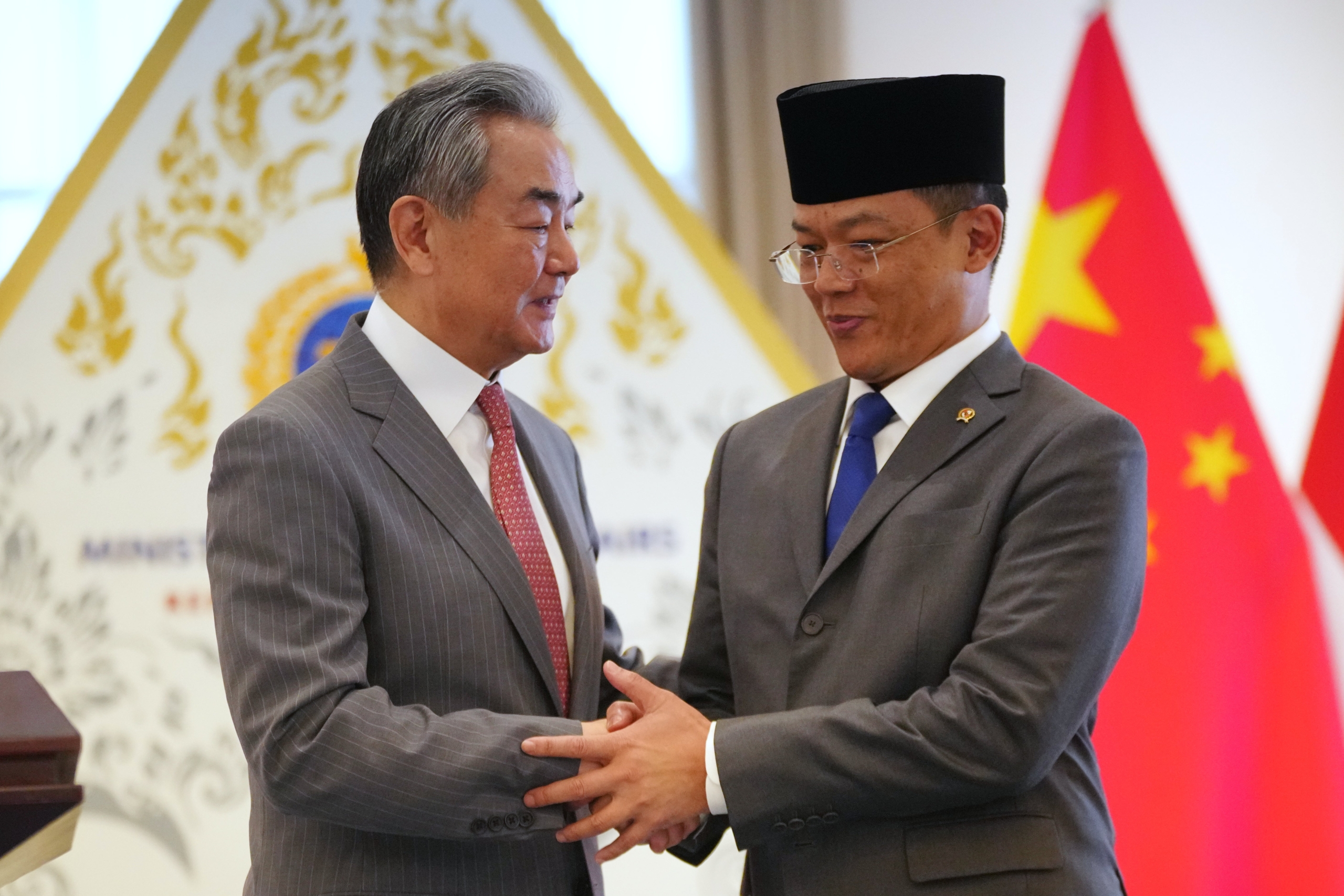
Chinese Foreign Minister Wang Yi, visiting Jakarta for the first time in two years, met his Indonesian counterpart Sugiono before joining a “2+2” dialogue involving the two countries’ defence ministers.

The talks come at a sensitive moment for Southeast Asia, where tensions in the South China Sea, competition between China and the United States and growing economic interdependence are putting pressure on regional governments to carefully balance their relationships with major powers.

Wang said the new dialogue mechanism was timely as the world faced increasingly complex challenges.

“Unilateralism and hegemonic acts bring serious impact on global cooperation and stability,” he said, adding that China aimed to build cooperation with Indonesia at a high level.

Indonesian officials said economic issues and political relations would be among the foreign ministers’ priorities, while China said the discussions would also cover defence cooperation and international and regional affairs.

Defence Cooperation Expands

Chinese Defence Minister Dong Jun was welcomed with a military honour guard at Indonesia’s defence ministry, where he said the two armed forces had significant room to strengthen cooperation.

“The prospects for cooperation between the two militaries are broad,” Dong said, describing the relationship as increasingly effective and higher in quality.

Indonesia’s Defence Minister Sjafrie Sjamsoeddin said the countries planned to expand military activities, including joint exercises, officer exchanges and cooperation in the defence industry.

He described the move as an important step in strengthening Indonesia’s defence capabilities.

The discussions follow a joint naval exercise between China and Indonesia last week that drew attention because of its location east of Taiwan. Taiwan, which Beijing claims as part of China, expressed concern over the exercise.

Indonesia’s navy said the activity was routine and noted that it conducts exercises not only with China but also with Japan and the United States.

Defence analyst Curie Maharani said the episode highlighted how military diplomacy could serve broader strategic purposes.

Indonesia, she said, had gained an important lesson about how major powers can use defence cooperation to project influence.

Balancing China and Washington

Jakarta’s approach reflects its long-standing “free and active” foreign policy.

President Prabowo Subianto has repeatedly said Indonesia intends to remain non-aligned while maintaining friendly relations with all countries, including China and the United States.

That balancing act is becoming more complicated as competition between Washington and Beijing intensifies.

Indonesia also has differences with China over developments in the South China Sea. Beijing claims almost the entire disputed waterway, while Indonesia has sought to avoid becoming directly involved in broader territorial disputes between China and the Philippines, Malaysia and Vietnam.

Jakarta has generally maintained a measured position, prioritising diplomacy and economic cooperation while protecting its own interests.

Billions at Stake

Economic ties provide another major reason for Indonesia to maintain close relations with Beijing.

China contributed $3.9 billion in foreign direct investment to Indonesia during the first half of 2026, according to Indonesian figures.

Chinese companies have invested heavily in industries ranging from nickel processing and steel to electric-vehicle batteries. Indonesia possesses the world’s largest nickel reserves, making it strategically important to China’s rapidly expanding electric-vehicle supply chain.

Among major investors are Contemporary Amperex Technology, one of the world’s largest electric-vehicle battery makers, and Tsingshan Group, which operates nickel and steel facilities in Indonesia.

However, the growing investment relationship has not been free of tension.

In May, Chinese companies operating in Indonesia urged Jakarta to introduce more business-friendly policies, arguing that higher taxes and a new nickel pricing formula were increasing costs and threatening investment.

The China Chamber of Commerce in Indonesia also complained of what it described as excessive regulation and enforcement, while raising allegations of corruption and extortion.

The concerns underline the challenge facing both countries: expanding economic cooperation while managing disagreements over regulation, investment conditions and strategic interests.

For Indonesia, Friday’s talks therefore carry significance beyond bilateral diplomacy. Jakarta is trying to strengthen its economy and defence capabilities without becoming overly dependent on either Beijing or Washington. In

For China, deeper engagement with Indonesia offers an opportunity to strengthen its influence in one of Southeast Asia’s largest economies while expanding defence and economic partnerships in a strategically important region.
Similar Posts

  • | |

    Pakistan continues repatriation of undocumented Af…

    Punjab authorities have stepped up action against Afghan nationals living in the province without valid documents. The Foreign National Security Cell of the Punjab Home Department is carrying out checks across the province. Officials are identifying Afghan nationals who are staying without acceptable visas. Those found to be residing illegally are being detained. They are then moved to designated holding centres before being repatriated to Afghanistan. A spokesperson for the Punjab Home Department said 2,689,295 Afghan nationals have so far been repatriated from Pakistan. The spokesperson said 140,468 undocumented Afghan nationals have been sent back from Punjab alone. Officials said the action is being carried out under the government’s existing policy. Under the policy, Afghan nationals without valid and acceptable visas are considered to be staying illegally in Pakistan. The crackdown is not limited to one area. Officials are conducting checks in residential neighbourhoods and commercial markets across Punjab. The authorities are also monitoring places where foreign nationals may be living or working. The purpose is to identify people who do not have the required legal documents. The department said detained Afghan nationals are transferred to holding centres. These facilities are being used to manage the repatriation process. There are currently 39 active holding centres across Punjab. According to the department, 188 Afghan nationals are currently staying in these centres. The provincial authorities have also directed action against people who rent properties to undocumented foreign nationals. Cases can be registered against property owners found violating the relevant rules. Officials said the enforcement drive will continue across the province. Authorities are maintaining checks in different areas as part of efforts to enforce immigration regulations.

  • |

    South Korea becomes global health tourism giant

    South Korea is rapidly becoming one of the world’s leading destinations for medical tourism as international travellers increasingly combine vacations with comprehensive health check-ups. Foreign visitors are now adding blood tests, ultrasounds, cancer screenings and other preventive healthcare services to their travel plans, attracted by affordable costs, advanced technology, quick results and foreigner-friendly facilities. According to South Korea’s Ministry of Health and Welfare, more than 2 million foreign patients visited the country in 2025, marking a significant increase from the previous year. Visitors mainly came from China, Japan, Taiwan and the United States. Experts say South Korea’s growing popularity as a healthcare destination is driven by its efficient medical system, advanced equipment and competitive prices. Many international patients can complete full-body health screenings within a few hours, avoiding long waiting periods and complicated procedures common in other countries. Medical tourism officials say healthcare in South Korea remains relatively affordable because of government regulation of medical costs. In some cases, the cost of a single advanced medical test in countries like the United States can equal the price of a complete health screening package in South Korea. The country’s healthcare system also focuses heavily on preventive care, allowing doctors to detect diseases at an early stage through regular screenings. International visitors can book health packages through specialised medical concierge services that arrange appointments, interpreters and follow-up consultations. Many major hospitals and screening centres provide services in English and offer results in multiple languages. Foreign patients have shared positive experiences of completing extensive medical examinations, including blood tests, X-rays, ultrasounds and endoscopies, within a single visit. One visitor from Los Angeles said he chose South Korea after researching medical centres online and was impressed by the number of tests offered and the professionalism of healthcare workers. His complete screening, including several procedures, was completed within hours at a comparatively low cost. Another traveller from Hong Kong said a similar health package in her home country would have cost several times more than what she paid in South Korea. Healthcare providers say international patients are also attracted by smooth services, modern facilities and the availability of follow-up treatment if any health issues are discovered. However, experts advise travellers to confirm language support before booking appointments and recommend using medical assistance services to avoid communication problems.

  • Thailand Orders Probe into University’s International Student Admissions

    BANGKOK, Thailand – Deputy Prime Minister and Minister of Higher Education, Science, Research and Innovation (MHESI), Dr. Yoschanan Wongsawad, has ordered an urgent investigation into a university’s international student recruitment programme following concerns raised over curriculum standards, teaching quality, and visa procedures, PR Thai Government reported. Thailand Intensifies Crackdown on Student Visa Abuse The inquiry […]

  • |

    Punjab CNF command changes hands

      LAHORE: The Punjab Counter Narcotics Force (CNF) held a Command Changeover Ceremony in Lahore as Brigadier Muhammad Rizwan Khan assumed charge as the new Director General, succeeding Brigadier Mazhar Iqbal. Brigadier Mazhar Iqbal completed his two-year tenure as the force’s first Director General and formally handed over command to Brigadier Muhammad Rizwan Khan during the ceremony. Secretary Excise, Taxation and Narcotics Control Department Muhammad Masood Mukhtar attended the event along with senior officers, officials and personnel of Punjab CNF. Officials praised Brigadier Mazhar Iqbal for his leadership and contributions to building and strengthening Punjab CNF. During his tenure, he helped develop the force’s operational structure, improve its professional capabilities and expand its efforts against drug trafficking and narcotics across the province. Speaking at the ceremony, Muhammad Masood Mukhtar appreciated the outgoing DG’s services and expressed confidence in the new leadership. Brigadier Muhammad Rizwan Khan pledged to continue the force’s mission and further improve its operational effectiveness. He stressed the importance of professionalism, discipline, teamwork and coordinated efforts to tackle the growing threat of narcotics. He also reaffirmed his commitment to working towards a safer, healthier and drug-free Punjab. The ceremony marked the leadership transition while reaffirming Punjab CNF’s commitment to professional enforcement and strengthening the province-wide fight against drugs.

  • |

    Guy Oseary honors Madonna with heartfelt birthday …

    Madonna’s 68th birthday became a memorable occasion as her longtime talent manager and close friend, Guy Oseary, celebrated the popGuy Oseary honors Madonna with heartfelt birthday tribute icon with an emotional tribute highlighting their decades-long friendship. The “Material Girl” singer celebrated her 68th birthday on Sunday, August 16, with Oseary taking to Instagram to share a throwback comparison featuring the pair in 2000 and another photo from 2026. Alongside the pictures, Oseary reflected on how much had changed in his life over the past 26 years while emphasizing that his bond with Madonna had remained strong. He described the two images as a reminder that, despite the many changes life has brought, some relationships remain constant. Oseary said he was still standing “side by side” with Madonna, celebrating their enduring friendship and professional partnership. The longtime manager also praised the singer for continuing to inspire generations of fans and artists. He expressed gratitude for having what he described as a privileged view of the career of one of the world’s greatest performers. Oseary highlighted Madonna’s determination to challenge expectations and push beyond established boundaries. He praised her ability to continue reinventing herself while refusing to be limited by age or conventional ideas about what is possible for an artist. The birthday tribute also celebrated the warm reception surrounding Madonna’s latest musical era. Oseary expressed his happiness at seeing her new album, “Confessions II,” receive widespread love from fans, describing it as another important chapter in her extraordinary career. The heartfelt post quickly attracted attention from several high-profile figures in the entertainment industry. Stars including Ariana Grande, Rita Ora, Rita Wilson and Andy Cohen were among those who showed their support by liking Oseary’s birthday message. Madonna is currently enjoying renewed attention surrounding her music career following the release of her 15th studio album, “Confessions II.” The album arrived on July 3, 2026, marking another major milestone in a career that has continued to evolve for more than four decades. As Madonna celebrates another year, Oseary’s tribute offered a glimpse into the lasting friendship behind one of pop music’s most enduring careers, while reminding fans that the singer’s influence continues to reach new generations.

  • |

    China rejects Pakistan’s waiver request

    Chinese lenders and Independent Power Producers (IPPs) have turned down Pakistan’s request to write off nearly Rs 170 billion in late-payment surcharges. The refusal highlights the growing friction between the two long-standing allies as Pakistan struggles to navigate a staggering power-sector circular debt that continues to drag down its broader economy. The unpaid dues owed to 18 Chinese-backed power generation projects established under the CPEC have now increased to approximately Rs 423 billion. The financial bottleneck stems from a combination of structural inefficiencies within Pakistan’s domestic energy distribution network and systemic delays in clearing operational invoices. Under the original 2015 CPEC Energy Framework Agreement, Pakistan was legally obligated to ensure full and timely payments to power producers, backed by a designated revolving fund to cushion investors against domestic liquidity shortfalls. As payment deadlines were repeatedly missed over recent years due to severe foreign exchange constraints, contractual interest penalties accumulated to the tune of Rs 170 billion. While local power suppliers previously accepted debt-restructuring deals and fee write-offs to ease the burden on state coffers, Chinese energy firms have maintained a strict stance, citing global precedent and financial commitments to their own institutional lenders. This refusal creates an immediate impasse for Pakistan’s Ministry of Energy and financial regulators. The federal government had structured a massive Rs 1.225 trillion banking facility intended to retire the country’s broader circular debt stock. However, disbursement terms mandated that power producers accept renegotiated terms or offer discounts on late-payment fees before receiving principal clearances. Because the Chinese IPPs declined to waive the surcharges or offer similar concessions, billions in funds remain locked, leaving power plant operators facing severe liquidity squeezes that threaten regular fuel procurement and plant operation. Total Outstanding Dues: Rs 423 Billion. Requested Surcharge Waiver (Rejected): Rs 170 Billion. Principal Energy Cost Owed: Rs 253+ Billion. Pakistani negotiators are exploring alternative financial maneuvers to manage the expensive debt burden. Seeking low-interest bilateral funding including potential long-term loan packages in the range of $6 billion to $10 billion from partner nations like Saudi Arabia to retire high-cost Chinese energy loans. Requesting cabinet approval for extensions on expiring domestic banking facilities to prevent immediate default claims. Balancing the debt burden through structured tariff pass-throughs, though consumer capacity to absorb higher electricity prices remains extremely strained. The dispute underscores a delicate transition in the CPEC bilateral relationship. While both nations remain deeply committed to long-term strategic partnership and Phase-Two infrastructure development, commercial reality is setting a firmer baseline. Moving forward, resolving the sovereign debt backlog will require transparent structural reforms within Pakistan’s power distribution setup rather than relying on debt waivers from foreign investors.  

Leave a Reply

Your email address will not be published. Required fields are marked *