remembering amin mughalrepublic

Remembering Amin Mughal;Republic of revolutionarie…

A rare photograph can sometimes preserve more history than an official archive. The one below brings together six extraordinary men. In the front row, from left to right, stand Zafar Iqbal Mirza—our beloved ZIM—Shafqat Tanvir Mirza, Dada Ameer Hyder and I.A. Rehman. Behind them are Major Ishaq Muhammad, remembered for the Rawalpindi Conspiracy Case, and Professor Amin Mughal. None sought celebrity. Together, they represent a moral and intellectual republic that Pakistan never formally acknowledged.

An extraordinary assembly of Pakistan’s progressive tradition. Front row, from left: Zafar Iqbal Mirza (ZIM), Shafqat Tanvir Mirza, Dada Ameer Hyder and I.A. Rehman. Second row: Major Ishaq Muhammad and Professor Amin Mughal

The photograph is remarkable not because all six belonged to a single organisation or followed an identical political line. They did not. Its power lies in the coexistence of different traditions of resistance: the revolutionary organiser, the dissident soldier, the journalist, the editor, the defender of human rights, the custodian of Punjabi language and the teacher who connected all these worlds through conversation.

Amin Mughal, standing quietly in the second row, provides the key to reading the photograph. His position is almost symbolic. He does not occupy the centre, although he belonged at the centre of the intellectual relationships represented in it. He appears as he lived: present, observant and connected to everyone, without needing to establish precedence over anyone.

Much has already been written after his passing in London on August 12, 2026. A chronological retelling of his life—his teaching, political activity, imprisonment, journalism and exile—cannot explain what made him exceptional. His real contribution lay in creating intellectual continuities. He connected the organised Left of Dada Ameer Hyder and Major Ishaq with the democratic journalism of ZIM and I.A. Rehman, the linguistic and cultural resistance of Shafqat Tanvir Mirza, and younger people like me who entered journalism without fully comprehending the inheritance placed before them.

I worked with Amin Sahib at the weekly Viewpoint between 1979 and 1984. Its modest premises at 4-Lawrence Road, Lahore, were my real university. As recalled in “Remembering Viewpoint & its stalwarts” [Minute Mirror, March 23-24, 2026], Mazhar Ali Khan had gathered people for whom journalism was an ethical commitment rather than a route to influence, wealth or political patronage. Amin Mughal belonged naturally to that environment. He did not separate editing from teaching, political analysis from literature, or intellectual disagreement from personal affection.

The men in this photograph remind us that the Left was once far more than an electoral label. Dada Ameer Hyder had travelled the world as a worker and revolutionary before most Pakistanis had encountered the language of globalisation.

Beginning as a coal-boy on a ship, Dada experienced labour, empire and racial hierarchy directly. His memoirs, Chains to Lose, reveal a world stretching from Bombay and Moscow to New York, Shanghai and Buenos Aires. He organised workers across borders long before international solidarity became the vocabulary of funded conferences.

I had the rare honour of meeting Dada at Viewpoint. He carried no theatrical aura of revolutionary greatness. His authority arose from struggle endured, not status claimed. Official histories largely excluded him because he challenged both colonial power and the class order that succeeded it. The state could accommodate elite leaders of independence; a worker who asked what independence had delivered to other workers remained dangerous.

Major Ishaq represented another uncomfortable history. A soldier capable of thinking beyond military obedience, he was implicated in the Rawalpindi Conspiracy Case and repeatedly imprisoned. After Hasan Nasir’s death in custody, he pursued the matter when silence would have been safer.

Major Ishaq later organised peasants and workers, treating revolution neither as romance nor slogan but as the slow construction of collective capacity. Even paralysis could not end his political work. His life contradicted the convenient division between soldier and dissident, patriot and critic.

Shafqat Tanvir Mirza—STM—resisted through language. Journalist, trade unionist, historian and scholar, he understood that the marginalisation of Punjabi was not a literary accident. It reflected the estrangement of a people from their own cultural memory.

STM’s  scholarship on Punjabi literature, history and the Sufi poets restored dignity to a language spoken by millions but frequently denied serious institutional space. His commitment earned imprisonment and professional hardship, but never displaced his willingness to engage in dialogue.

ZIM embodied another form of courage: fidelity to professional standards when both censorship and commercialisation encouraged surrender. In my tribute to him, I recalled him as my teacher and mentor. He was a master sub-editor, stylist and conversationalist.

When Mazhar Ali Khan, I.A. Rehman and Amin Mughal were arrested in 1981, ZIM helped ensure that Viewpoint appeared without interruption. His authority came from mastery of craft joined with an unshakable belief in free expression, equality and human dignity.

I.A. Rehman carried those commitments into the organised defence of human rights. His life demonstrated that opposition to injustice need not produce bitterness. He spoke softly, listened patiently and remained firm. At a PIDE memorial, I recalled that he spoke the truth although it sent him to prison twice.

Rehman sahib, as we all call him with respect and affection, suffered without complaint because, for him, sacrifice was the natural cost of professed principles. His advice that the struggle for human rights was “a marathon, not a sprint” remains essential in an age addicted to instant victories and equally instant despair.

What, then, distinguished Amin Mughal among these giants? He was the interpreter between their worlds. From Dada and Major Ishaq came the imperative of structural change; from STM, the inseparability of culture and emancipation; from ZIM, professional integrity; from I.A. Rehman, the defence of every person’s dignity. Amin Sahib absorbed these traditions without turning any of them into dogma.

Amin Mughal possessed a rare capacity to disagree without diminishing another person. His questions could dismantle a weak argument, but never the dignity of the person making it. For younger colleagues, this was an education in democratic conduct. He taught us that progressive politics without intellectual honesty becomes another orthodoxy, journalism without moral purpose becomes merchandise, and scholarship without human sympathy becomes vanity.

The photograph also records a lost sociology of ideas. These men met in newspaper offices, trade-union gatherings, study circles, modest homes and inexpensive cafés. Their institutions were materially fragile but intellectually abundant. They possessed neither research grants nor communication departments. Conversation was their medium; books, newspapers and political organisation were their instruments. Their disagreements did not require excommunication, nor did friendship require conformity.

Pakistan today has more universities, television channels, digital platforms and policy organisations than the country visible behind these men could have imagined. It has fewer spaces where knowledge, courage and humility meet. Intellectual life has become increasingly professionalised; dissent is often measured through visibility; and public causes can become carefully managed careers. The six men in this photograph belonged to a sterner tradition in which ideas were tested by the price one was prepared to pay for them.

Amin Mughal’s absence is especially painful because he was among the last living bridges to that tradition. He linked generations without demanding discipleship. He preserved memory without becoming its prisoner. His progressivism was not hostility towards faith, culture or inherited values; it was opposition to every structure that humiliated human beings.

This photograph should not invite nostalgia alone. Nostalgia can honour the dead while relieving the living of responsibility. The image poses a more difficult question: what became of the intellectual republic these men inhabited? Their Pakistan was never fully realised, but neither was it imaginary. It existed wherever truth was spoken without calculation, language rescued from erasure, workers organised, prisoners defended, censorship resisted and young minds treated with respect.

The six figures are no longer with us. The vacant space they leave is not something history will fill automatically. The photograph has preserved their assembly. Whether its moral meaning survives depends upon us.

______________________________________

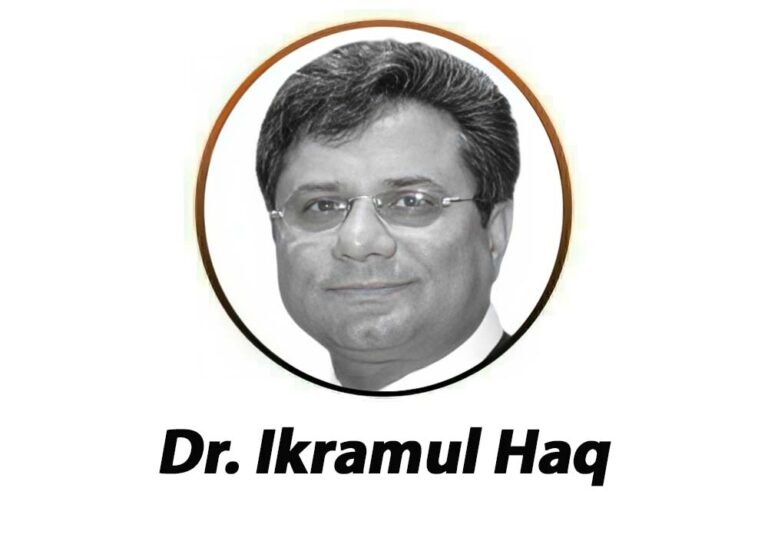
Dr. Ikramul Haq, Advocate Supreme Court, Adjunct Faculty at Lahore University of Management Sciences (LUMS), member Advisory Board and Visiting Senior Fellow of Pakistan Institute of Development Economics (PIDE), holds an LLD in tax laws. He was full-time journalist from 1979 to 1984 with Viewpoint and Dawn. He also served Civil Services of Pakistan from 1984 to 1996. He is author of over 3500 articles on variety of subjects, and many books that included, Pakistan: From Hash to Heroin and its sequel Pakistan: From Drug-trap to Debt-trap.

Similar Posts

  • Pro-America or Pro-Israel

    There is a moment in every negotiation when the mask slips and the real hierarchy of loyalties reveals itself. It happened again recently, in the quiet grammar of a policy condition. If a deal with Iran is good for America, if it stops a war, secures a region, spares American blood and treasure, then it should be pursued on its own terms. It should not need to be laundered through a second question, but what does Israel get out of it? The moment that second question enters the room, the first one has already been answered, and not in America’s favour. This is not a rhetorical trick. It is a structural tell. A foreign policy genuinely organised around American interests does not require the ratification of an ally before it proceeds. It calculates costs, weighs risks, and acts. The insertion of an Israeli veto, soft, implicit, but unmistakable, into decisions that are framed as being about American security is not an alliance functioning normally. It is a client relationship wearing the costume of a partnership, and increasingly, the costume does not fit. I do not say this as someone hostile to alliances. Alliances are the ordinary furniture of statecraft, and no serious analyst begrudges Washington its relationships. What I begrudge, what any honest observer of the last two decades of American foreign policy must eventually begrudge, is the peculiar one-directionality of this particular relationship, in which American strategic autonomy is perpetually available for negotiation, but Israeli strategic autonomy is not. Successive administrations, Democratic and Republican alike, have discovered that the fastest way to kill a sound policy is to let it wander anywhere near Jerusalem’s objections. The Biden administration played this game with a kind of practiced fluency, dressing subservience in the language of “shared values” and “unbreakable bonds.” That the current administration appears to be playing the identical game, merely with a different set of talking points, should trouble anyone who once believed that a change in party might also mean a change in posture. The deeper dishonesty, though, sits beneath the day-to-day theatre of negotiation. It is the elephant that everyone in the room has agreed, by unspoken consensus, not to see. Iran is treated as the singular proliferation emergency of the Middle East, the country whose enrichment levels must be monitored down to the percentage point, whose every centrifuge is a matter of international alarm, whose nuclear ambitions justify sanctions regimes, covert sabotage, and the standing threat of military strikes. And yet a few hundred kilometers away sits a state that has possessed nuclear weapons for more than half a century, has never signed the Non-Proliferation Treaty, has never submitted to an inspection regime of any kind, and whose arsenal is discussed in Western capitals only in the passive voice, if it is discussed at all. Israel’s bomb is an open secret that everyone has agreed to keep. This is not a minor inconsistency. It is the load-bearing hypocrisy of the entire non-proliferation architecture in West Asia. You cannot credibly claim to be pursuing a weapons-of-mass-destruction-free Middle East while exempting, by unspoken convention, the one state in the region that actually has the weapons in question. Every argument marshalled against Iran’s nuclear programme, that a nuclear-armed state destabilizes its neighbors, that it invites arms races, that it holds regional security hostage to the judgment of a single government, applies with at least equal force to Israel, and applies to a country that has, unlike Iran, already used overwhelming force against multiple neighbors within living memory. The asymmetry is not a technical oversight. It is a choice, made and remade by every administration that has declined to place Israel’s arsenal on the table. What this reveals, I think, is that the “Iran obsession,” as it might fairly be called, was never really about proliferation at all. If it were, the conversation would begin with disarmament architecture applied evenhandedly across the region, inspections offered and demanded in both directions, and a serious reckoning with the double standard that has calcified into policy over fifty years. Instead, the Iran file functions as a proxy for a different question entirely, whose security calculus gets to define American Middle East policy. And on that question, the answer has been remarkably consistent regardless of who occupies the Oval Office. None of this is a case for indulging Tehran’s own record, which carries its own list of grievances worth prosecuting honestly, its human rights abuses, its regional proxies, its own history of destabilizing behavior. Clear-eyed criticism of Iran is entirely compatible with clear-eyed criticism of the double standard applied to Israel; the two are not in tension, and pretending otherwise is its own kind of evasion. But a foreign policy that claims the mantle of principle while practicing this degree of selective vision is not principled. It is theatre, and increasingly unconvincing theatre, performed for a domestic audience that is growing visibly tired of the script. The unpopularity of this arrangement is no longer a fringe sentiment. It shows up in polling, in generational splits within America’s own political coalitions, in the rising discomfort even among constituencies that have historically been the most reliable defenders of the relationship. People are noticing the pattern: that policies justified as serving American interests keep bending, at the last moment, toward a different set of interests altogether. They are asking, reasonably, who is actually driving the car. There is also a historical dimension to this that deserves more attention than it usually receives. The pattern of conditioning American policy on Israeli comfort did not begin with Iran, and it will not end there. It runs through decades of vetoed resolutions at the United Nations, through arms transfers that continued uninterrupted even amid documented humanitarian catastrophe, through the quiet understanding that certain questions simply are not to be raised in polite Washington company. Each individual instance can be explained away with its own set of justifications, security concerns, historical debts, domestic political realities. But taken together, across administrations

  • Beyond Public Finance: Towards  Constitutional Po…

    The fourth part of this series argued that reforms fail when their design ignores the constitutional rules, institutional incentives and political interests that determine implementation. Pakistan’s problem, however, goes deeper than the capture of individual tax measures. The state itself has gradually become accustomed to obtaining resources through rents rather than creating the conditions for sustained production. A rent is an economic benefit obtained through control over a privilege, resource, regulation or strategic position rather than through corresponding productive activity. Rent-seeking begins when individuals, institutions and organised groups devote their energies to obtaining such benefits from the state instead of producing goods, improving services, developing technology or competing in open markets. Pakistan’s political economy has long rewarded access more generously than enterprise. Access to state land, subsidised credit, protected markets, statutory exemptions, import licences, public contracts, regulatory concessions, tax amnesties, administered prices and preferential treatment has frequently generated returns exceeding those available from productive investment. The result is an economy in which political connections can matter more than innovation, and proximity to authority can be more valuable than efficiency. This system is sustained at two interconnected levels. Domestically, privileged groups compete for benefits distributed through state power. Externally, the state repeatedly seeks resources by converting Pakistan’s strategic location and security relevance into financial assistance, debt rollovers, deposits, concessional oil arrangements and diplomatic support. The interaction between these two levels is central to understanding Pakistan’s continued dependence. External financing is not inherently harmful. Developing countries require foreign capital, technology and access to markets. Borrowing can finance infrastructure and productive capacity that generate future income sufficient to service the debt. Strategic partnerships can provide security and economic opportunities. The problem arises when external inflows substitute for domestic transformation. Pakistan has repeatedly treated foreign exchange availability as proof of economic recovery. Reserves rise after an IMF disbursement, bilateral deposit, commercial loan or rollover. The immediate threat of default recedes. The exchange rate stabilises and the government declares that confidence has returned. The underlying productive structure, however, may remain unchanged. The IMF completed the third review of Pakistan’s Extended Fund Facility in May 2026, permitting immediate disbursements of approximately US$1.1 billion under the EFF and US$220 million under the Resilience and Sustainability Facility.  Total disbursements under the two arrangements consequently reached about US$4.8 billion. The Fund also reported progress in rebuilding reserves and achieving the agreed primary surplus. These developments provide necessary breathing space. They do not constitute economic independence. Recent events offer an unusually clear illustration. Pakistan reportedly requested a US$10 billion exchange-stabilisation facility from the United States after playing a diplomatic role in the Middle Eastern conflict. Economists quoted by Reuters questioned whether fresh financing would address the reforms Islamabad had repeatedly avoided. One analyst described the proposed support as “geopolitical rent”. Pakistan had earlier repaid US$3.5 billion to the United Arab Emirates and obtained a US$3 billion Saudi backstop to help fill the resulting gap.  The episode is not remarkable because Pakistan sought assistance during a difficult external shock. Responsible governments must protect reserves and manage emergencies. Its significance lies in the familiar institutional response: once again, strategic usefulness is expected to generate the liquidity required to postpone a deeper restructuring of the economy. However, fresh liquidity can purchase time. It cannot manufacture productivity. Pakistan’s external relationships have repeatedly followed this pattern. During the Cold War, the country received assistance because of its strategic position. The Afghan war transformed Pakistan into a frontline state and brought large flows of military and economic support. The post-2001 “war on terror” renewed the same bargain under different circumstances. Regional conflicts, security alliances and diplomatic mediation continue to create opportunities for financial support. Each inflow temporarily relaxes the pressure for reform. It also strengthens those institutions capable of negotiating and managing the strategic bargain. The constitutional consequence is profound. A state financed substantially through its citizens must negotiate with them. It requires a productive economy capable of generating taxable income and a political order capable of securing broad consent. A state able to obtain resources externally can delay that negotiation. This is one reason why taxation and representation cannot be separated. Dependence upon external rents weakens the fiscal relationship between citizen and state. Governments remain less accountable to taxpayers when foreign creditors, strategic partners and captive domestic sectors provide the resources necessary for survival.  The burden of adjustment is then transferred to those lacking political protection. Salaried persons face deduction before receiving their income. Documented businesses encounter withholding taxes, minimum taxes, advance taxes and delayed refunds.  Consumers pay indirect taxes and levies through electricity, fuel, telecommunications and ordinary purchases.  Powerful sectors negotiate exemptions, reduced rates, amnesties or deferred enforcement. External rents and domestic privileges are therefore not separate distortions. They reinforce each other. The article, “The age of implosion: exhaustion and the hollow core”, recently published in Business Recorder, offers a useful metaphor for this condition. It argues that financial movement can create the appearance of vitality while the productive foundations of the economy continue to weaken. Loans, deposits and other inflows may keep institutions operating outwardly even when their inner capacity is being exhausted.  The metaphor requires institutional precision. Pakistan has not ceased functioning. Taxes are collected, budgets are passed, debt is serviced, imports continue and administrative structures remain active. The state survives through a combination of borrowing, external support, remittances, taxation of captive sectors and periodic transfer of costs to future generations. This should not be mistaken for resilience. It is deferred adjustment.  The official Pakistan Economic Survey 2025–26 continues to organise the country’s performance through conventional categories of growth, investment, trade, fiscal development, public debt and social indicators. These measurements are necessary, but they do not fully capture the political mechanisms determining why available resources flow towards consumption, protection and rent extraction rather than productivity, human development and technological advancement.  A rent-based economy also shapes the behaviour of the private sector. Businesses rationally adapt to the incentives created by the state. Where profits depend upon tariff protection, regulatory discretion, government contracts,

  • Rebuilding Hope Through Resilient Schools in Sindh

    The devastating floods of 2022 severely affected the education system of Sindh, damaging thousands of schools either fully or partially. In order to tackle such climate crises and floods, the Government of Sindh, in collaboration with international donors and partners such as the Asian Development Bank, Japan International Cooperation Agency (JICA), UNICEF, and others, has designed a comprehensive and well-planned strategy to reconstruct and repair the flood-affected schools across the province in order to provide conducive learning environment and quality education to the children whose education suffered due to the catastrophic floods. According to the data of the Sindh Education Department, during the floods of 2022, around 19,821 schools were affected, impacting very badly the infrastructure and education system of the province. The media, citing official sources, reported that major reconstruction projects were initiated with significant financial allocations. Under these initiatives, thousands of schools were selected for rehabilitation and reconstruction, and work is continuing in different districts of Sindh. Around 1.4 million students are expected to benefit from the restoration of educational facilities and the reopening of repaired schools. Under the Provincial Annual Development Programme (ADP), 2405 schools were included for repair and rehabilitation. Similarly, maintenance and repair schemes were also launched to restore basic facilities in schools. Under these schemes, classrooms, compound walls, washrooms, drinking water facilities, and other essential requirements were fulfilled to ensure the resumption of education. For flood affected schools, the Sindh School Education Investment Programme for Flood-Affected Areas (SSEIP-FA) was launched with the support of the Asian Development Bank. The project is considered one of the major initiatives for the restoration of education in the province. Under this programme, 1,607 schools are being rehabilitated across the targeted districts of Sindh. The initiative aimed at rebuilding climate-resilient infrastructure, including classrooms, and the provision of quality education to the children. The plan is expected to end by 2027. Apart from this, the Government of Japan and the Japan International Cooperation Agency (JICA) have also been major partners in the drive of repair and reconstruction of flood-hit schools, making the infrastructure climate-resilient and stronger enough to face and combat floods and other disasters. JICA, in this context, believes that this initiative is part of the United Nations Sustainable Development Goals (SDGs), including Goal 4 (Quality Education), Goal 5 (Gender Equality), and Goal 13 (Climate Action). The programme includes the reconstruction of educational facilities, additional classrooms, and the provision of water, sanitation, and hygiene (WASH) facilities, apart from the repair and reconstruction of flood-affected schools. JICA has also supported the upgrading of 20 primary girls’ schools into elementary schools in rural areas of Sindh. Under this project, the Government of Japan provided grant assistance of 1,686 million Japanese Yen. The project aims to promote girls’ education and improve access to education facilities in remote areas of the province.The Embassy of Japan in Pakistan says that the programme ultimately aims to specially promote girls’ education and support students in remote areas of Sindh. It is commonly observed that the Government of Sindh, with the support of international donor agencies such as UNICEF, the Asian Development Bank, JICA, and the European Union, has repaired, reconstructed, and upgraded thousands of schools in the province. It is a fact that the climate crisis has badly impacted the infrastructure and education system of the province. Amidst these challenges, the efforts of the Government of Sindh, particularly the determined initiatives led by the Minister Education Department have begun to bring rays of hope and meaningful change.The rehabilitation of flood-affected schools is a major challenge, keeping in mind the huge number of damaged schools and financial constraints. A closer analysis indicates that some schools, particularly in remote areas of the province, are still awaiting reconstruction and repair, but one can’t deny the fact that, despite certain challenges and financial constraints, the Education Department of Sindh, in collaboration with the mentioned international partners, has been striving to rebuild infrastructure, provide a conducive learning environment to children, and especially focusing on promoting girls’ education in the province. The Education Department is well aware of the issues and challenges and believes that, the support of parents, civil society, and teachers, is of vital significance to improve the quality of education and provide a conducive learning environment to the children of the province. The rebuilding of the schools in Sindh following the floods of 2022 is not only about concrete-made walls and ceilings, but, in fact, it is the rebuilding of hope for a sustainable future and hope to combat the climate crisis.

  • Colors of the Rain, Soul of Thar

    Thar a name that instantly evokes images of thirst, golden dunes, drought, Marvi, peacocks, the Karoonjhar Hills, rainwater ponds, love, and endless waiting. More than Pakistan’s largest desert, Thar is a living testament to patience, simplicity, love, and humanity’s timeless bond with nature. Here, every moment of life is connected to the sky. Even as the people of Thar walk upon the earth, their eyes remain fixed on the heavens, for their livelihood, livestock, crops, and happiness all depend upon the mercy of the clouds. As if giving voice to the very heart of Thar, Shaikh Ayaz wrote: “Whether it rains or not, Thar remains Thar; But when it rains, fresh blood begins to flow through every vein of life.” The greatest festival of Thar begins with the arrival of the rains. When the first raindrop falls upon the sun-scorched sands, the fragrance rising from the earth carries centuries of longing. It is a scene beyond the power of words. It feels as though the heart of the desert begins to beat again, every grain of sand takes a breath, and every withered plant offers gratitude to the Creator. Shah Abdul Latif Bhittai immortalized Thar through the voice of Marui in his poetry. To Marui, the sands of Thar were more precious than gold because they represented her identity. Shah’s message still echoes across every dune, village, and heart in Thar—that love for one’s homeland is the truest expression of human identity. Whenever Shaikh Ayaz wrote about Thar, his words carried the music of nature itself. For him, the monsoon was not merely a season—it was a revolution. A revolution that transformed barren sands into gardens, thirst into hope, and sorrow into joy. For most of the year, the people of Thar struggle against drought, scorching heat, water scarcity, unemployment, and poverty. Thousands of families migrate to irrigated regions in search of work. Women walk miles every day carrying water. Without grazing land, livestock become weak, and many young people leave for distant cities in search of livelihoods. Yet the moment the monsoon clouds appear on the horizon, lamps of hope begin to glow in every heart. Rain does not merely bring water it opens a new chapter of life. Within days of rainfall, the endless dunes transform into carpets of emerald green. The songs of peacocks, the calls of cuckoos, herds of goats, caravans of camels, and the fragrance of wildflowers carried by the breeze create a symphony that no modern city can ever reproduce. Rain-fed ponds fill with fresh water. Children leap with joy. Herders lead their animals to lush grazing lands. Thari women, dressed in brilliantly colored traditional attire, sing ancient folk songs. The entire landscape becomes a celebration of life. If there is one place where nature reveals its complete magnificence during the rainy season, it is the Karoonjhar Hills of Nagarparkar. When dark monsoon clouds embrace the granite peaks, seasonal waterfalls cascade down the rocks, and sparkling streams descend like ribbons of silver, it seems as though nature herself is painting with every color imaginable. Karoonjhar is more than a mountain it is a symbol of Thar’s history, culture, folklore, and resilience. Standing for centuries, these ancient hills have silently witnessed the rise and fall of civilizations, kings, ascetics, and the enduring stories of the people of the desert. During the rainy season, the famous Gaddi Hill in Mithi transforms into a lively cultural gathering. Families arrive in large numbers to enjoy the pleasant weather. Children delight in swings, visitors savor local cuisine and tea, artisans display handmade crafts, musicians perform on the rabab and algoza, and the warm hospitality of the people of Thar leaves every guest feeling at home. The construction of better roads from Mithi to Nagarparkar has significantly increased the number of visitors, yet much more remains to be done to develop tourism sustainably. Hidden beneath the sands of Thar lies a civilization thousands of years old. The Bhodesar Temples, Gori Temple, Virawah, ancient Jain monuments, historic wells, and old trade routes all stand as silent witnesses to the region’s glorious past. Sadly, many of these invaluable heritage sites still lack proper protection. Time, harsh weather, and neglect continue to erode them. If preserved according to international standards, Thar could become one of South Asia’s most remarkable cultural tourism destinations. However, alongside the beauty brought by the rains, another reality is emerging one that may threaten Thar’s future. Illegal occupation of natural grazing lands, the conversion of sand dunes into agricultural fields, and increasing environmental degradation are disturbing the delicate ecological balance of the desert. Livestock farming has always been the backbone of Thar’s economy. If natural grazing lands disappear, thousands of families will lose their primary source of income. Development that destroys nature is not progress—it is an injustice to future generations. Over the past two decades, climate change has increasingly affected Thar. Irregular rainfall, sudden cloudbursts, prolonged droughts, and extreme heat are steadily altering the region’s fragile ecosystem. The people of Thar still lack many basic necessities. Clean drinking water, quality healthcare, education, and employment opportunities remain scarce in many areas. While the rains temporarily ease their hardships, lasting solutions depend upon thoughtful and sustainable development. Tourism That Can Transform the Economy Thar possesses extraordinary tourism potential. Its breathtaking landscapes, rich cultural heritage, folk music, handicrafts, religious harmony, the majestic Karoonjhar Hills, desert safaris, camel caravans, and traditional cuisine offer experiences unlike anywhere else in the world. To unlock this potential, several important steps are needed: Historic and cultural heritage sites across Thar and Sindh should be preserved and restored, recognizing them not merely as relics of the past but as the identity of future generations. Modern visitor information centers should be established at major historical and cultural attractions to educate tourists about the region’s history, traditions, and natural beauty. Local youth should receive professional training as tour guides, creating employment opportunities while enabling them to confidently present their homeland’s heritage to the world. Tourism should be developed

  • The Stories of Pakistan’s Unsung Heros

    Every 14th of August we hear the same national narrative. Speeches recall 1947, flags are hoisted, and anthems are played at midnight. The symbolism matters. It reminds us of the cost of independence and the idea of Pakistan. Yet symbolism without substance risks becoming ritual. If we are to understand what independence means in 2026, we must look beyond the ceremony and toward the quiet, persistent work that sustains the nation through every crisis. That work is rarely televised. It is carried out by teachers in under-resourced schools, by health workers walking door to door, by engineers keeping the grid alive during heatwaves, by farmers adapting to erratic weather, and by young people building livelihoods from laptops in small towns. These are the stories of resilience that deserve a central place in our understanding of Pakistan, 79 years after its founding. Resilience is not an abstract virtue. It is a measurable response to constraint. Pakistan has faced recurring fiscal stress, energy shortfalls, climate shocks, and security challenges. In each case, state capacity alone has been insufficient. What has prevented collapse is a dense network of civic and professional effort that fills gaps, innovates under pressure, and restores basic function. Consider education. Official data continues to show millions of children out of school and low learning outcomes. At the same time, thousands of low-fee private schools, community learning centers, and volunteer tutoring initiatives operate in the same neighborhoods. They do not appear in headlines, but they keep children literate, prepare them for exams, and create a pathway, however narrow, to higher education. The same pattern appears in health. Lady Health Workers and polio teams travel on foot in heat and in risk, maintaining immunization coverage and maternal counseling in areas where clinics are distant or overburdened. Their work is repetitive, underpaid, and essential. Without it, disease surveillance and primary care would deteriorate far more rapidly. Economic resilience is visible in the informal sector and in the emerging digital economy. Pakistan’s labor market has never been able to absorb all new entrants through formal jobs alone. In response, millions have created their own employment: workshops, transport, retail, agriculture processing, and services. In the last decade, a new layer has appeared. Freelancers in Lahore, Karachi, Islamabad, Peshawar, Quetta, Multan, and Faisalabad now earn foreign exchange by writing, designing, coding, and providing remote services. They pay no rent for office space, require little imported capital, and learn through online courses. This is not a substitute for industrial policy, but it is a real expansion of opportunity. It represents a form of independence: the ability of an individual to earn without waiting for a large institution to hire them. The state’s role here should be to reduce friction, ensure reliable electricity and internet, and simplify taxation and payment systems, so that this energy is not wasted. Climate resilience is now inseparable from national security. Floods in 2010, 2014, and 2022 displaced millions and damaged infrastructure worth billions. Drought and heatwaves threaten wheat and water. The response has included both engineering and community adaptation. Farmers are experimenting with drought-tolerant varieties and more efficient irrigation. Urban volunteers organize tree planting and waste management in their streets. Provincial and federal programs have attempted large-scale afforestation and watershed management. Progress is uneven and often underfunded, but the impulse is clear: adapt or lose. The most effective adaptations are local, because they are designed around specific soil, rainfall, and social networks. National policy can support them by providing data, credit, and technical extension, but it cannot replace the judgment of people who live on the land. What ties these examples together is a refusal to wait for perfect conditions. Resilience in Pakistan is not optimism. It is a practical calculation that problems will persist, and that action must proceed anyway. This attitude is visible in small businesses that maintain generators and solar panels to cope with load-shedding, in parents who pool money to hire a tutor, and in journalists and lawyers who document cases despite pressure. It is not heroic in the cinematic sense. It is tedious, repetitive, and often thankless. That is precisely why it matters. Nations are built not only in founding moments but in the accumulation of ordinary competence over decades. As we mark 79 years, the task is to recognize this resilience and to institutionalize it. Recognition means collecting data that captures informal work, community schools, and local adaptation, and then designing policy around them. Institutionalization means protecting merit in recruitment, ensuring predictable funding for primary services, and removing regulatory obstacles for small enterprises and freelancers. It also means telling a different story about Pakistan. The dominant story is one of crisis and rescue. The more accurate story is one of persistence and incremental gain. Both are true. But a country that only narrates its crises will train its citizens to expect failure. A country that also narrates its resilience will train its citizens to contribute. Independence, therefore, is not a date. It is a practice. It is the practice of showing up to teach, to heal, to build, to adapt, and to hold institutions accountable when they fall short. The midnight speech reminds us why we began. The morning work determines whether we continue. If we wish to honor 1947, we should honor those who, without fanfare, keep Pakistan functioning every day between 15th August and the next 14th. Their work is not perfect, and it is not sufficient on its own. But it is the foundation on which any serious reform must rest. To see it, to name it, and to support it is the most patriotic act available to us now.

  • The Intellectual Sovereignty Crisis: Higher Educat…

    As Pakistan prepares to celebrate another Independence Day, standard national rituals will once again take center stage. Flag-hoisting ceremonies, parades, and patriotic broadcasts will dominate the public square. Yet, nearly eight decades after gaining political freedom, a quiet but deeply uncomfortable question persists: can a nation truly consider itself sovereign if its collective mind remains dependent on the ideas, technologies, and scientific outputs of others? ​True independence has never been merely a matter of drawing borders, raising flags, or maintaining standing armies. History teaches a relentless lesson: physical sovereignty is only a shell. It requires intellectual and scientific self-reliance to give it genuine substance and endurance. Without a thriving culture of critical inquiry, rigorous research, and technological innovation, political freedom gradually degrades into a ceremonial phrase. ​Today, Pakistan faces a severe, structural crisis within its higher education system—one that poses a direct threat to its national sovereignty and economic survival. Not a single Pakistani university currently features among the top 200 or 300 institutions in major global academic rankings, such as QS or Times Higher Education. This is far more than an embarrassing statistic for university administrators. It is an alarm bell signaling deep vulnerabilities in national security, economic resilience, and the country’s collective capacity to navigate a complex world. ​We live in an era where global power and national influence are defined by knowledge economies, artificial intelligence, quantum computing, and rapid technological innovation. Meanwhile, Pakistan’s universities are collapsing under the combined weight of severe budget cuts, outdated curricula, heavy-handed bureaucratic interference, and deeply flawed research incentives. Unless our academic institutions move away from acting as simple credential-issuing factories and transform into centers of genuine learning and problem-solving, Pakistan’s economic and political sovereignty will remain precarious. A country that relies permanently on foreign intellect, imported technology, and international financial institutions to address its core domestic problems cannot claim to be truly self-reliant. ​This decline is not a matter of subjective opinion; it is confirmed by hard empirical evidence. Over 250 public and private universities operate across Pakistan, yet the state allocates a meager 0.24 to 0.28 percent of its Gross Domestic Product (GDP) to higher education. This represents a small fraction of the 2 percent minimum recommended by UNESCO for developing nations attempting to build sustainable economies. Regional peers made strategic investments in research and technology decades ago, turning their universities into powerful engines of industrial growth. In contrast, persistent funding cuts in Pakistan have left public-sector universities financially paralyzed, with many administrators openly struggling to pay staff pensions or procure basic laboratory chemicals and equipment. ​Even more damaging than the financial deficit is the systemic decay in research quality. While university faculty publish thousands of papers every year to meet promotion targets under the Tenure Track System, the vast majority of these publications carry little to no global impact or citation value. A desperate chase for publication numbers, driven by artificial metrics and a reliance on low-tier journals, has fostered a superficial academic culture disconnected from real-world application. Our university research rarely addresses the pressing structural challenges facing the nation, whether in climate adaptation, agricultural productivity, public health, water management, or industrial manufacturing. ​The most tragic consequence of this intellectual and institutional stagnation is the unprecedented wave of brain drain draining the nation’s potential. According to official emigration statistics, over two million educated and skilled young Pakistanis—including doctors, software engineers, data scientists, chemists, and academics—have left the country in recent years. They are not emigrating simply in pursuit of higher salaries; they are fleeing a system characterized by political nepotism, lack of merit, poor infrastructure, and a hostile environment for creative thought. When a state fails to retain its best minds, it surrenders its future. Universities continue to churn out hundreds of thousands of graduates annually, but a vast proportion remain unemployable because their education has failed to equip them with critical thinking skills or modern technological competencies. Without a functional, collaborative link between universities, local industry, and government policymakers—the classic Triple Helix model—talks of economic self-reliance remain empty political rhetoric. ​Reclaiming intellectual sovereignty requires a candid national assessment and decisive, structural policy changes. First, state funding for higher education must be incrementally raised to at least 1.5 percent of GDP over a defined roadmap. Crucially, at least half of these new funds should be explicitly ring-fenced away from brick-and-mortar civil construction and directed toward modernizing scientific laboratories, subscribing to international scientific databases, and establishing dedicated national centers for artificial intelligence, biotechnology, renewable energy, and cybersecurity. ​Second, university governance requires immediate, radical overhaul. The Higher Education Commission and individual university senates must be insulated from bureaucratic red tape and political appointments. Vice-Chancellors and senior academic leaders should be selected through transparent, merit-based international searches, prioritizing proven scientific achievement and visionary management over political connections or administrative seniority. ​Third, the criteria for evaluating faculty performance must be completely overhauled. The current practice of rewarding sheer publication volume should be replaced with a system that prioritizes research quality, international citations, industrial patents, technology transfers, and solutions that solve tangible domestic problems. ​Finally, Pakistan must systematically engage its vast academic diaspora. Rather than lamenting brain drain, the state should build a structured “Brain Gain” program. By offering competitive joint research grants, flexible digital teaching platforms, and adjunct faculty positions, Pakistan can enable its top scholars abroad to transfer cutting-edge global science back into domestic universities without requiring them to relocate permanently. ​Patriotism in the twenty-first century cannot be measured by emotional slogans, ceremonial rallies, or flag-hoisting displays. It requires building objective competence in science, technology, and critical thought. If our universities fail to become spaces of innovation, inquiry, and problem-solving, Pakistan will remain perpetually dependent on foreign aid, external loans, and imported knowledge. Modern national defense is built not only along physical borders, but within classrooms, research laboratories, and libraries. Reforming higher education is not a luxury or a secondary policy goal; it is the single most logical path toward securing a dignified, sovereign, and prosperous future for the nation.

Leave a Reply

Your email address will not be published. Required fields are marked *