pakistan seeks strategic
| | |

Pakistan seeks strategic economic ties with Saudi …

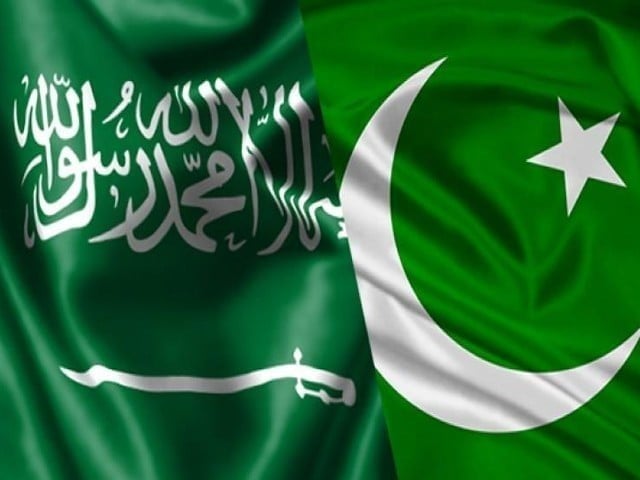
ISLAMABAD: Prime Minister Shehbaz Sharif has expressed Pakistan’s desire to transform its longstanding relationship with Saudi Arabia into a mutually beneficial strategic economic partnership, in line with the vision of Saudi Crown Prince and Prime Minister Mohammed bin Salman.

The Prime Minister made the remarks during a meeting with a high-level Saudi business delegation headed by Prince Mansour bin Mohammad Al Saud, Chairman of the Saudi-Pak Joint Business Council, at the Prime Minister’s House in Islamabad.

During the meeting, Prime Minister Shehbaz conveyed his regards to Saudi King Salman bin Abdulaziz Al Saud and Crown Prince Mohammed bin Salman. He highlighted the deep-rooted brotherly relations between the two countries and stressed the need to expand bilateral trade, investment and economic cooperation.

The prime minister expressed hope that Prince Mansour’s latest visit would build upon earlier discussions and lead to the signing of memoranda of understanding and agreements in several sectors. He described the current period as an ideal opportunity to strengthen cooperation through both government-to-government and business-to-business partnerships.

The Saudi delegation showed interest in investment opportunities across a wide range of sectors, including agriculture, ports, highways, airport outsourcing, real estate, energy, power distribution and information technology. Prime Minister Shehbaz welcomed the proposals and assured the delegation of Pakistan’s support for mutually beneficial investment ventures.

Prince Mansour thanked the prime minister for the warm reception and reaffirmed the Saudi government’s and business community’s commitment to expanding business-to-business ties with Pakistan. During its visit, the delegation is also scheduled to hold meetings with senior government officials and representatives of the private sector.

PM Condemns Pishin Terrorist Attack

Meanwhile, Prime Minister Shehbaz Sharif strongly condemned the terrorist attack on labourers working on a road construction project in the Suranan area of Pishin district.

The prime minister expressed sorrow over the loss of lives and extended condolences to the families of the victims. He denounced the targeting of hardworking citizens as a cowardly act and reaffirmed the government’s determination to combat terrorism.

He stressed that the nation remained united against terrorism and that terrorists and their facilitators would not be permitted to undermine peace and stability in the country. The prime minister also prayed for the departed souls and for strength and patience for the bereaved families.

Similar Posts

  • | |

    Taylor Swift wedding dress sparks bridal fashion buzz

    Taylor Swift’s closely guarded wedding dress has already begun influencing the bridal fashion industry, even though the design has yet to be publicly revealed. Bridal companies are preparing for a possible surge in demand for gowns inspired by the pop star’s wedding look. Swift reportedly wore a Christian Dior creation during a private celebration at Madison Square Garden on July 3. Details of the dress have remained tightly controlled, leaving fans and designers waiting for images of the outfit. David’s Bridal is among the companies preparing for the potential trend. The retailer’s design team has reportedly developed around two dozen concepts based on styles associated with Swift. The designs explore elements such as Hollywood glamour and drop-waist silhouettes. The company expects to move quickly once more details about Swift’s dress become available. Search interest for Swift-inspired wedding dresses has also reportedly increased on the retailer’s website. Designers are considering several possibilities for the next major bridal trend. These include embellished ball gowns, minimalist dresses with subtle detailing and shorter outfits that could be worn during a wedding reception or ceremony change. Design teams are also watching for details beyond the dress itself. Swift’s hairstyle, makeup, colours, floral decorations and veil could all influence future bridal collections. Other major bridal brands are also monitoring the situation. Spanish bridal label Pronovias said it could take inspiration from the silhouette, fabrics and overall style associated with Swift’s wedding appearance. The company has previously drawn inspiration from high-profile celebrity and royal weddings. Designers at luxury bridal houses are particularly interested in whether Swift chooses an unusual colour, fabric or distinctive veil. Such details could quickly spread through the wedding fashion market if they attract attention from brides. New York-based Jenny Yoo is taking a more cautious approach and waiting for the dress to be revealed before making design decisions. The Justin Alexander Group is also considering the possibility of incorporating Swift-inspired elements into its upcoming collections. The company is currently working on designs for its spring and summer 2028 range. If Swift’s dress generates strong demand, bridal companies could attempt to bring similar styles to stores earlier than their usual production schedules. Independent bridal retailers are expected to take a less direct approach. Rather than reproducing Swift’s dress, they may highlight existing gowns that share similar features with the celebrity’s eventual look. The fashion frenzy also raises intellectual property questions. Legal experts say US copyright rules generally do not protect the basic cut, shape or silhouette of clothing. This can allow designers to create gowns influenced by a particular aesthetic. However, distinctive decorative details such as embroidery, beadwork or other original elements may receive legal protection. Brands could also face trademark or unfair competition issues if they falsely imply that a Swift-inspired gown is officially connected to the singer or Dior. For this reason, bridal companies are expected to draw inspiration from broader trends rather than directly market dresses using Swift’s or Dior’s names.

  • |

    Alliance Française de Lahore exhibits ‘What…

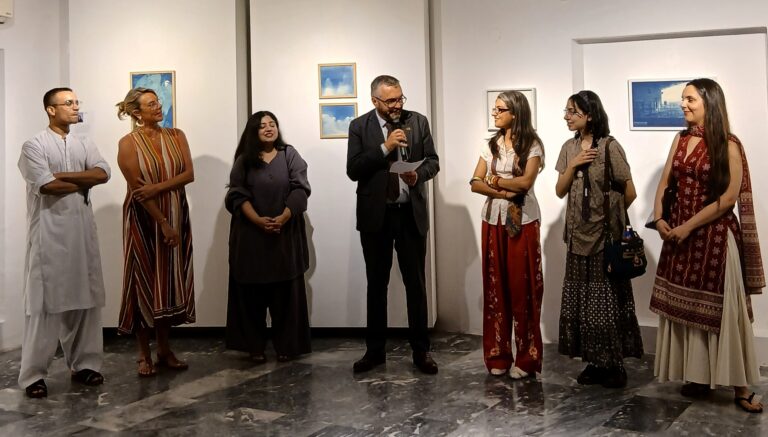
    LAHORE — The gallery at Alliance Française de Lahore opened its doors to art enthusiasts on August 10, 2026. The exhibition presented “What’s Remains”  curated by Anne Sophie Français. The evening paired thought-provoking artworks installations with a lively Kathak dance showcase. The multidisciplinary art offered attendees a rich space and human experience. The art exhibition was curated as a inquiry into what lingers after a place is traversed or a voice is silenced. “What’s Remains“ features new works by three emerging Pakistani visual artists: Rabya Khalid, Sarim Syed and Yumna Salman. They worked across diverse mediums ranging from cyanotypes and charcoal drawings to intricate textile sculptures. Rabya Khalid anchors her compositions in rich cyanotype blues overlaid with soft pastels and color pencils. Rabya focuses on urban architectural features. Water towers, elevated rooftops and quiet watchtowers dominate her skyline studies. Her works cast functional city infrastructure as silent or watchful witnesses to human activity. Sarim Syed utilized delicate charcoal rendering. Sarim creates dreamlike, atmospheric landscapes that occupy the boundary between remembering and forgetting. Her works evoke the lingering sensation of places once inhabited, capturing moments suspended between presence and absence. Yumna Salman brings a tactile, social critique to the gallery space. Yumna knots loose threads onto rigid metal wire mesh. Her labor-intensive textile installations reinterpret traditional weaving techniques to question inherited social norms, gender roles and collective memory. She turned each deliberate knot into an act of quiet resistance. Following the gallery preview, the evening changed into a vibrant 7:30 PM Kathak performance. The performance featured dedicated dance students. They celebrated an intensive month of rhythm, classical movement and expressive storytelling. The fluid footwork and rhythmic precision of the dancers created a unified dialogue with the silent, lingering themes of the surrounding artwork. Alliance Française de Lahore continues to act as an essential platform for emerging talent. The institution provides artists a non-commercial environment to showcase work, inspire public dialogue and strengthen cultural ties between Pakistani and Francophone creative communities. “What’s Remains” invites viewers to engage with stories that endure through art, memory and movement.

  • | |

    HRW says Israeli strike that killed journalist was war crime

    Human Rights Watch (HRW) has accused Israel of carrying out a deliberate airstrike that killed Lebanese journalist Amal Khalil, saying the attack may amount to a war crime under international law. In a report released on Wednesday, the international rights organisation said the strike targeted Amal Khalil and her camerawoman, Zainab Faraj, while they were covering Israeli military operations in southern Lebanon earlier this year. Amal Khalil, a reporter for the Lebanese newspaper Al-Akhbar, was killed in an Israeli airstrike on April 22 in the town of Al-Tayri. Her colleague, camerawoman Zainab Faraj, was seriously injured in the same attack. According to HRW, the available evidence suggests the Israeli military knew journalists were inside the building before launching the strike. The organisation said information gathered during its investigation indicates the attack was intentional and violated international humanitarian law. The report also referred to requests made by the United Nations Interim Force in Lebanon (UNIFIL) and the International Committee of the Red Cross for access to the area. HRW said these requests support evidence that authorities were aware of the presence of journalists at the location. Human Rights Watch further stated that Amal Khalil remained alive for some time after the strike. However, it alleged that Israeli forces prevented rescue workers from reaching the site, delaying emergency medical assistance that could have improved her chances of survival. The organisation said deliberately targeting journalists performing their professional duties and blocking humanitarian access are serious violations of international law. It added that such actions could constitute war crimes and should be investigated independently. HRW called for a transparent and impartial investigation into the incident and urged those responsible to be held accountable. It also stressed that journalists covering armed conflicts are civilians protected under international humanitarian law and must not be targeted during military operations.

  • | | | |

    Krabi Leads Thailand in Staycation Booking Growth on Traveloka

    Krabi – Krabi recorded Thailand’s highest growth in staycation accommodation bookings on Traveloka, with bookings more than doubling compared to the same period last year. This increase demonstrates strong traveler confidence in Krabi as a leading destination for short-term getaways. ​The booking data confirms Krabi’s ongoing popularity, supported by its renowned beaches, islands, natural attractions, […]

  • | |

    US imposes 10 per cent tariff on Pakistan over forced-labour enforcement

    The United States has levied a 10 per cent tariff on Pakistani goods under a broader Section 301 trade action targeting 60 economies for their failure to adequately prohibit and enforce bans on imports produced with forced labour. According to the Office of the U.S. Trade Representative (USTR), the final action followed investigations directed by President Donald Trump in March, encompassing public hearings and consultations with numerous governments. Ambassador Jamieson Greer stated that trading partners must match the enforcement standards the United States has upheld, noting that decades of moral persuasion have failed to eradicate forced labour from global supply chains. Pakistan is grouped in the 10 per cent tariff bracket alongside nations such as India, Bangladesh, Mexico, and the United Kingdom. These countries either imposed a prohibition on forced-labour imports, committed to one through a trade agreement, or introduced a partial restriction regime, while other investigated economies face tariffs of up to 12.5 per cent. The new duties arrive at a critical juncture for Islamabad. Pakistan has recently positioned itself as a key mediator in the US-Iran conflict and deepened its security partnership with Saudi Arabia, including the deployment of air-defence assets. However, the conflict has already strained Pakistan’s economy, with shipping disruptions in the Strait of Hormuz driving up domestic petroleum prices amid high inflation. Textiles and apparel, a primary focus of the USTR’s forced-labour investigation, represent a significant portion of Pakistan’s exports to the US. Industry groups are expected to evaluate the impact of these tariffs on market competitiveness in the coming days. The USTR noted that product exemptions will apply in limited cases, including critical raw materials and goods that cannot be sourced reasonably from elsewhere. Islamabad has yet to issue a formal response to the tariff imposition.

  • |

    Solar boom needs battery storage, grid reforms to sustain momentum

    Islamabad: Pakistan’s rapid expansion of solar energy has already generated billions of dollars in savings, but experts and policymakers on Tuesday warned that battery storage, grid modernization and supportive policies are now essential to sustain the country’s clean energy transition. Speaking at the Solar, Storage and Flexibility 2026 Conference, Federal Minister for Power Awais Leghari said Pakistan’s energy mix is already 50% clean and is targeted to reach 90% by 2035. He stressed that local manufacturing of battery storage systems and the introduction of a daytime Time-of-Use (ToU) tariff would be key to integrating growing solar generation into the national grid. Addressing the conference, PPP Vice President Senator Sherry Rehman said solar energy has already saved Pakistan US$12 billion, with another US$6.3 billion in savings expected this year. She said the country now faces an energy management challenge rather than a generation shortfall, calling for major investments in battery storage, smart grids and modern transmission infrastructure. Rehman said one in every five Pakistani households now uses solar energy and urged international climate finance to prioritize distributed renewable energy, battery storage and affordable financing for households and small businesses instead of focusing mainly on large utility-scale projects. She also opposed the proposed 18% GST on solar equipment, saying it would have slowed Pakistan’s clean energy transition, and called for targeted subsidies, microfinance and supportive regulations to expand access to renewable energy, particularly in underserved and off-grid communities. Renewable energy experts noted that Pakistan has installed an estimated 38 gigawatts of distributed solar capacity, while imports of lithium-ion Battery Energy Storage Systems (BESS) surged 220% in 2025, signalling rapidly growing demand for energy storage. Global renewable energy leaders, including Global Solar Council CEO Sonia Dunlop and Renewable Energy Council Asia Pacific representative John Grimes, described Pakistan’s consumer-led solar revolution as a model for other countries but stressed that a comprehensive battery storage policy and modern electricity grid are now critical to maintaining the momentum.

Leave a Reply

Your email address will not be published. Required fields are marked *