screens can harm

How screens can harm your neck and back

In today’s digital world many people spend hours looking down at their phones working on computers or watching videos.

While screens are now an important part of daily life spending too much time in the wrong position can put extra pressure on the neck shoulders and back. This can lead to more than tired eyes. Sitting with your head bent forward for long periods may cause neck pain, stiffness muscle tension and back problems.

Why does looking down cause pain?

An adult’s head weighs around 10 to 12 pounds. When you bend your head forward for a long time the muscles in your neck and upper back have to work harder to support it. Over time this extra pressure can cause pain stiffness and muscle fatigue.

Poor sitting posture can also affect your movement and balance and may contribute to headaches.  People who spend many hours at a desk attend online meetings or frequently use laptops and phones may be more likely to experience these problems.

Common warning signs

Some common symptoms include.

•Neck and shoulder stiffness

•Tired or sore muscles

•Frequent headaches

•Ongoing neck or back pain

•Pain spreading into the arms

•Numbness or a pins and needles feeling

•Weakness in the hands or arms

If these symptoms continue or become worse it is important to speak with a healthcare professional.

Keep your screen at eye level

When working on a laptop try to keep the screen close to eye level.  This can reduce the need to bend your neck downward.

A laptop stand along with a separate keyboard and mouse can make this easier. The same idea applies to smartphones. Instead of constantly looking down hold your phone closer to eye level to reduce strain on your neck.

Improve your sitting posture

Try to sit with your back straight and shoulders relaxed and slightly back. Avoid pushing your head forward while using a phone or computer.

Small changes in posture can make a big difference when you spend many hours in front of a screen.

Follow the 20-20-20 Rule

For screen users the 20-20-20 rule can be helpful every 20 minutes, look at something about 20 feet away for 20 seconds.

This mainly helps reduce eye strain and also gives you a short break from your usual sitting position.

Keep your body moving

Avoid staying in the same position for hours. Stand up walk around and stretch regularly.

Regular exercise and activities such as yoga can also help improve flexibility strength and overall body movement.

Don’t ignore persistent pain

Technology is difficult to avoid in modern life but using it in a healthier way can help reduce unnecessary strain on your neck and back.

If pain keeps returning becomes severe or is accompanied by numbness or weakness do not simply ignore it.  Consider getting checked by a qualified healthcare professional.

Similar Posts

  • Man breaks fish finger record

    A 32 year old man from the UK has earned a Guinness World Records title after eating 15 fish fingers in just one minute. Nathan Davis decided to chase a world record after recently winning more than $130,000 on a TV game show. He said he chose fish fingers because he had already taken part in several informal eating challenges and felt confident with the food. After setting the record Davis said he was happy to become a Guinness World Record holder even if it was for eating fish fingers. He added that if the fish fingers had been allowed to cool a little more he believed he could have eaten even more. Still he said he was pleased with his achievement.

  • |

    Google Pixel 11 Pro XL features leaked ahead of launch

    San Francisco: Key features of the Google Pixel 11 Pro XL have reportedly been leaked with major upgrades expected in its camera and AI technology. According to a report by Geeky Gadgets, details about the design and key features of Google’s upcoming flagship smartphone have emerged ahead of its launch. Google is preparing to introduce new devices at its hardware event on August 12. According to the leaked information, the Pixel 11 Pro XL is expected to receive significant upgrades in several areas, including the camera, artificial intelligence, processor and connectivity. The leaks have attracted considerable attention from technology enthusiasts. Google is reportedly planning major improvements to the phone’s design, camera, performance and AI capabilities. According to the leaked details, the phone’s camera bar has been redesigned and will reportedly include an LED notification ring. Early leaks referred to this feature as “Pixel Glow” but recent reports suggest its possible official name could be “Highlight.” Available in five colours The Pixel 11 Pro XL is reportedly expected to be available in five colours: green, light green, silver, midnight and red. The phone is expected to feature a 6.8-inch LTPO OLED display with support for a 120Hz refresh rate. Reports also suggest that it will have a 13-megapixel ultra-wide selfie camera on the front. The design is also expected to receive some changes. The Pixel 11 Pro XL may feature a durable aluminum frame and Gorilla Glass Victus 3 which could provide greater protection against scratches and accidental drops. Major camera improvements The Pixel 11 Pro XL is expected to have a triple rear-camera setup. According to the leaks, it may include a 50-megapixel main camera, a 48-megapixel ultra-wide camera and a 48-megapixel periscope telephoto camera. The telephoto camera is reportedly expected to provide 5x optical zoom. The phone may also feature a 120x Pro Zoom option in its software, designed to capture distant objects and scenes with greater detail. With the help of Google’s Gemini AI technology, the camera could offer improved low-light photography, scene recognition and real-time image processing. A new mode called “Motion Capture” is also reportedly being developed. It could use AI to track moving people or objects and maintain focus on them. Improved performance with Tensor G6 The phone is also expected to feature Google’s new Tensor G6 processor which could provide improved performance for multitasking, gaming, video editing and AI-powered applications. The Tensor G6 is expected to offer enhanced capabilities for on-device machine learning, real-time language translation and intelligent text suggestions. The leaked reports also claim improvements in battery performance. The phone could feature an adaptive power-management system that adjusts energy consumption according to usage patterns to help extend battery life. Range of AI features The Pixel 11 Pro XL is expected to include several new AI-powered features. These may include an Animal Rescue feature designed to help identify and locate lost pets. Other expected features include advanced voice recognition, personalized app suggestions based on user habits, improved security, on-device encryption and real-time threat detection. A new Focus Mode could allow users to temporarily silence unnecessary notifications so they can concentrate on important tasks. Reports have also mentioned improved speakers, spatial audio and potentially advanced augmented reality (AR) features. Although most of the information currently available about the Pixel 11 Pro XL is based on leaks and speculation, it suggests that Google is focusing heavily on AI technology alongside hardware improvements in its new flagship smartphone. Google is expected to officially announce the phone’s final specifications and price at its launch. Until then, the reported details should be considered leaks and speculation rather than confirmed information.

  • |

    How Agatha Christie rewrote literary history

    Few storytellers in human history have captured the collective imagination quite like Agatha Christie. She’s crowned globally as the undisputed Queen of Crime. Her staggering literary output transformed detective fiction from a niche genre into an international phenomenon. Decades after her passing, her narratives continue to dominate bookshelves, theater stages and modern adaptations. The Birth of a Literary Legend Her extraordinary career kicked off in 1920 with the publication of The Mysterious Affair at Styles. This landmark debut did far more than announce the arrival of a talented new voice; it introduced the world to Hercule Poirot. With his meticulous habits, grand mustache, and reliance on his famous “little grey cells,” the Belgian detective quickly became a favorite among mystery enthusiasts. Over a writing career spanning more than half a century, Christie continued to shape the modern mystery landscape. She introduced a diverse ensemble of sleuths, most notably Miss Jane Marple. The deceptively gentle village spinster whose profound understanding of human flaws allowed her to solve the most baffling crimes. Together, Poirot and Marple helped define the Golden Age of detective fiction, establishing plot mechanisms, fair-play clues, and twist endings that writers still emulate today. Unprecedented Global Scale The  volume of Christie’s work is remarkable: 66 detective novels and 14 short story collections. However, her legacy is defined just as much by her unprecedented commercial reach. Holding the title of the best-selling fiction writer in history, her works have accumulated an estimated two billion copies sold worldwide. Her stories have transcended cultural and linguistic boundaries, earning her the distinction of being the world’s most-translated individual author, with her books available in more than 100 languages. Her estate notes that her total readership and circulation figures are surpassed by only two literary pillars in recorded history: the Bible and the plays of William Shakespeare. Record-Breaking Milestones Among her immense bibliography, specific works stand out as unprecedented triumphs. Her 1939 masterpiece, And Then There Were None, perfected the locked-room survival mystery. The novel alone has sold roughly 100 million copies, placing it among the highest-selling individual books ever written. Christie’s storytelling genius was hardly confined to prose. In 1952, she premiered The Mousetrap on the London stage. What began as a theatrical production turned into a record-shattering phenomenon, becoming the longest-running play in world history and proving that her ability to keep an audience guessing translates effortlessly across mediums. A Cultural Imprint   What sets Christie apart from her contemporaries is her masterclass approach to narrative design. She approached her plots like intricate logic puzzles, seamlessly weaving red herrings alongside genuine clues. Rather than relying on overt gore, she focused on psychological motives, human vulnerabilities, and the secrets hidden beneath respectable facades. By combining brilliant puzzle-box mechanics with immortal characters, Agatha Christie constructed a literary kingdom that remains unrivaled in the annals of fiction.

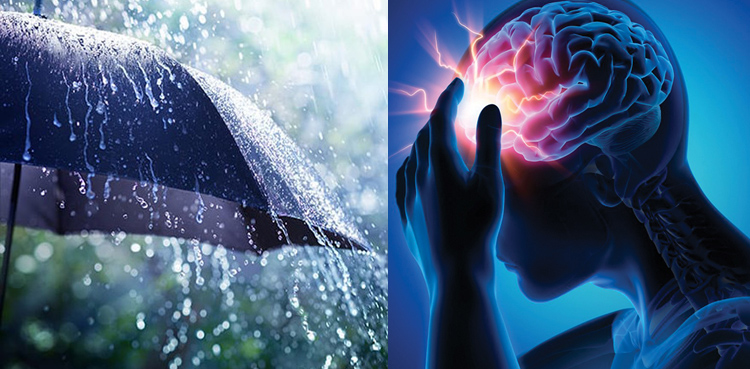
  • Monsoon may raise stroke risk

    The rainy season brings relief from extreme heat and makes the weather pleasant but it can also create health challenges for some people. Health experts say sudden weather changes high humidity and increased chances of infections during the monsoon season may be risky for people who already have conditions like high blood pressure diabetes high cholesterol or heart problems. Neurology experts explain that changes in temperature and humidity can affect the body’s natural system and may cause blood pressure levels to become unstable. This can increase the risk of stroke, especially among people with existing heart or blood vessel problems. During the rainy season cases of viral infections cold cough stomach problems and dehydration often increase. These conditions can put extra stress on the body and disturb blood sugar and blood pressure control. Reduced physical activity poor sleep and improper use of medicines can also increase health risks. Doctors advise people to remember the BE FAST rule to identify early signs of stroke. B – Balance: Sudden loss of balance or coordination E – Eyes: Sudden vision problems F – Face: One side of the face becomes weak or droops A – Arms: Weakness in one arm or leg S – Speech: Difficulty speaking or understanding words T – Time: Get emergency medical help immediately Experts say quick treatment can save lives and reduce the chances of long term disability. Health professionals recommend that high risk people regularly check their blood pressure and blood sugar take medicines on time stay physically active eat a balanced diet reduce salt intake avoid smoking and drink enough water. Experts also highlight that the monsoon season itself is not dangerous. The real risk comes from ignoring existing health conditions. Keeping blood pressure diabetes cholesterol and heart diseases under control throughout the year can greatly reduce the risk of stroke and other complications.

  • Unbearable heat in Turbat

    Hani Rasheed Through the columns of your esteemed newspaper, I wish to highlight the unbearable heat in Turbat. Every summer, temperatures rise to dangerous levels, making life extremely difficult for residents. Students, labourers, elderly people, and patients suffer the most. Long hours of load shedding and water shortages make the situation even more unbearable. The authorities should take urgent measures to ensure an uninterrupted electricity supply, improve water availability, and plant more trees to reduce the effects of extreme heat. Public awareness about staying safe during heatwaves should also be promoted. The people of Turbat deserve timely action before this severe weather causes more health problems. I hope the concerned authorities will address this issue without delay

  • Remembering Maryam Mirzakhani

    When Maryam Mirzakhani approached complex mathematical problems, she did not rush to find immediate solutions. Instead, she unrolled large sheets of paper across her floor, sat down with markers, and drew intricate shapes, loops, and abstract surfaces. A ritual so visual that her young daughter described her rigorous research simply as painting. Behind those quiet, methodical sketches was one of the most brilliant mathematical minds of her generation. A scholar whose work reshaped our understanding of spatial geometry and dynamic systems forever. Born and raised in Tehran, Iran, Mirzakhani’s early childhood ambitions centered on literature rather than numbers. She devoured books and dreamed of writing novels. However, during her high school years, her focus shifted dramatically as she discovered the creative, puzzle-like nature of advanced mathematics. Her extraordinary talent surfaced on the world stage when she represented Iran at the International Mathematical Olympiad, winning gold medals in back-to-back years at ages 17 and 18, including a flawless top score in her second appearance. After completing her undergraduate studies at Sharif University of Technology in Tehran, Mirzakhani moved to the United States to pursue graduate research. At Harvard University, under the mentorship of Fields Medalist Curtis McMullen, she tackled complex problems in theoretical geometry that had baffled researchers for decades. She earned her PhD at age 27, producing a doctoral dissertation so groundbreaking that it yielded multiple papers published in top-tier mathematical journals. Her career progressed rapidly, leading to a full professorship at Stanford University by the age of 31. Mirzakhani’s work specialized in theoretical areas such as hyperbolic geometry, Riemann surfaces, and moduli spaces. She’s expert in abstract concepts that involve understanding the geometry and dynamic possibilities of complex curved surfaces. While her research was firmly rooted in pure mathematics, it held profound implications for theoretical physics, quantum field theory and cryptography. In 2014, at the age of 37, Mirzakhani achieved a historical milestone. She was awarded the Fields Medal, officially known as the International Medal for Outstanding Discoveries in Mathematics. Widely regarded as the equivalent of the Nobel Prize for mathematics, the honor is presented only once every four years to exceptional scholars under 40. Mirzakhani became both the first woman and the first Iranian ever to receive the award since its establishment in 1936. Despite national and international acclaim, Mirzakhani remained famously modest. She often referred to herself as a slow mathematician. She emphasized that true insight comes from patience, resilience, and a willingness to feel lost before finding a breakthrough. To her, mathematics was not about fast calculations, but about deep, enduring understanding. Tragically, her life was cut short. Diagnosed with breast cancer in 2013, she continued her scholarly pursuits while fighting the disease. By 2016, the cancer had spread to her liver and bones. On July 14, 2017, Mirzakhani passed away at Stanford Hospital at the age of 40. Her passing sparked widespread tributes across the globe, with academic institutions, world leaders, and fellow scientists celebrating her contributions. Today, her legacy endures as a testament to human curiosity. Her life is an enduring inspiration for women pursuing careers in science and mathematics worldwide.    

Leave a Reply

Your email address will not be published. Required fields are marked *