takes notice lawmakers
| |

PM takes notice of lawmakers’ absenteeism

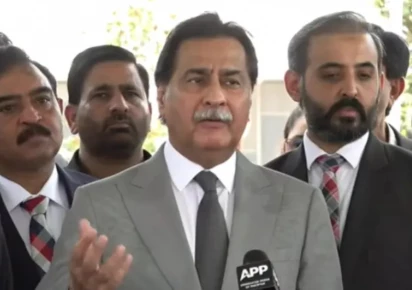
ISLAMABAD: National Assembly Speaker Sardar Ayaz Sadiq has said Prime Minister Shehbaz Sharif has taken notice of the low attendance of lawmakers during parliamentary sessions.

Speaking to the media outside the National Assembly on Tuesday, Sadiq said some federal ministers had raised the issue of members’ absence with the prime minister. He said the government and lawmakers were now paying attention to improving attendance.

The speaker’s comments came after a session of the National Assembly witnessed a low presence of members, with a large number of seats remaining vacant during proceedings.

Sadiq said maintaining the required quorum was not solely the responsibility of the speaker. He said both the government and opposition benches had a duty to ensure that their members attended parliamentary proceedings.

He expressed hope that attendance would improve when the next session is held, which is expected to take place later this week.

According to the speaker, the government had conveyed that it recognised the seriousness of the issue and intended to improve lawmakers’ presence in future sessions.

Sadiq urged members from both sides of the House to remain present during proceedings. He said parliamentary sessions provided limited time for debate, questions, discussions and legislation, and lawmakers should make full use of the opportunity.

He noted that poor attendance affected both sides of the House. The government could not properly complete its legislative agenda, while opposition members also lost the opportunity to raise issues and scrutinise government policies.

The speaker also commented on Jamiat Ulema-e-Islam-Fazl (JUI-F) chief Maulana Fazlur Rehman’s intention to adopt a more active approach towards legislation.

Sadiq welcomed the move, saying stronger opposition participation could improve parliamentary accountability. He said constructive pressure from opposition parties could also encourage the government to introduce reforms.

Regarding resignations submitted by Pakistan Tehreek-e-Insaf (PTI) members from standing committees, the speaker said he had not accepted any of the resignations.

He said parliamentary committees were continuing to function and could perform more effectively if opposition members regularly participated in their meetings.

Asked about the possibility of the united opposition moving a no-confidence motion against him or Prime Minister Shehbaz Sharif, Sadiq said it was a constitutional and democratic right of the opposition.

He said the National Assembly would facilitate the opposition if it decided to exercise that right.

Sadiq also spoke about efforts to reduce political tensions between the government and opposition. He said several attempts had been made to bring the two sides to the negotiating table.

He said he, Prime Minister Shehbaz Sharif, the law minister and Rana Sanaullah had repeatedly offered dialogue.

Similar Posts

  • |

    Punjab health survey data sparks security concerns

    By Kashif Malik ​LAHORE – A potential threat to national integrity has surfaced under the guise of a health census, sounding alarm bells in the corridors of power and security agencies. According to sources, the Department of Health and Population, in collaboration with the World Bank, has allegedly granted global organizations access to the complete data of Punjab’s 125.8 million population and sensitive institutions under the multi-billion rupee ‘Community Outreach Initiative (COI)’ program. Sources revealed that Secretary Health and Population Nadia Saqib facilitated the inclusion of this sensitive information into the app, bypassing standard security protocols. ​For this mega digital drive, 60,000 Community Health Inspectors (CHIs) have been equipped with modern digital tablets for fieldwork. Across the province, these inspectors are not only gathering detailed personal data—including names of heads of households, employment, professions, vehicles, agricultural landholdings, and individual family member details—but are also generating and uploading online ‘Polygon’ locations through satellite mapping. This system will effectively provide the World Bank with unhindered access down to every street and building across the province. Sources disclosed that alongside the general populace, sensitive institutions and military cantonments have also been marked in this digital drive, posing a profound and critical security risk to national defense and integrity. The biggest revelation to surface is that the inclusion of polygon locations via geo-tagging was carried out at the behest of an international NGO. Furthermore, the software responsible for collecting this highly sensitive national data of over 120 million citizens was handed over to a third-party private vendor rather than a government entity, with the vendor’s identity and contract details being kept strictly confidential. ​ According to security and defense experts, granting any foreign entity, NGO, or private vendor access to the detailed profiling of over 120 million individuals, along with satellite and polygon mapping of the country’s defense and sensitive installations, is tantamount to compromising national sovereignty. Following these sensational revelations, deep concern has spread through security circles, prompting urgent demands for an immediate security audit of the project.

  • | |

    Pakistan intensifies efforts to secure release of …

      Deputy Prime Minister and Foreign Minister Ishaq Dar on Thursday chaired a high-level meeting to assess Pakistan’s ongoing efforts to secure the safe and early release of 10 Pakistani nationals being held hostage aboard the oil tanker MT Honour 25 after it was hijacked by pirates off the coast of Somalia. The tanker, which was operating under the Somali flag, was travelling from Oman to Somalia when it was seized by pirates on April 21. A total of 17 crew members were on board the vessel, including 10 Pakistani citizens. Since the incident, the families of the Pakistani hostages have repeatedly appealed to the government to intensify efforts for their loved ones’ safe recovery. During the meeting, officials briefed the deputy prime minister on the latest developments surrounding the hostage situation and the measures being taken to secure the release of the Pakistani nationals. Dar directed all relevant authorities and stakeholders to maintain close and regular coordination while further strengthening diplomatic efforts with both national and international partners. The foreign minister placed particular emphasis on continued communication with Somali authorities and relevant international organisations. He said sustained diplomatic engagement was essential to creating conditions that could facilitate the safe recovery and repatriation of the hostages. Dar also expressed solidarity with the families of the detained Pakistanis and assured them that the government was closely monitoring the situation. He stressed that all possible efforts were being made to achieve a positive outcome and expressed hope that ongoing diplomatic contacts would ultimately result in the safe return of all 10 Pakistani citizens. Last month, Dar spoke by telephone with his Somali counterpart, Abdisalam Abdi Ali, to convey Pakistan’s serious concern over the hostage situation. During the conversation, Dar emphasised the need to protect the health and safety of the hostages, secure their early release and ensure their safe return to Pakistan. The Somali foreign minister assured Dar that his government was continuing sincere efforts to help secure the hostages’ release as soon as possible. The latest meeting in Islamabad comes amid growing concerns about the deteriorating conditions reportedly being faced by the Pakistani nationals aboard the vessel. In video and audio messages, some of the hostages have described severe shortages of essential supplies. They said food and medicines had run out and claimed that they were receiving only one serving of boiled rice each day. They also reported that clean drinking water was no longer available, forcing them to consume contaminated water. According to the hostages, the lack of safe water has already caused illnesses among several crew members, further increasing concerns about their health. One hostage said their lives remained under constant threat and that gunfire could be heard almost every day in the surrounding area. The situation has renewed attention on piracy along Somalia’s coastline and its potential threat to international shipping. Somali pirate attacks reached their highest level in 2011, when armed groups operated as far as 3,655 kilometres from Somalia’s coastline. At its peak, Somali piracy posed a major threat to one of the world’s busiest maritime trade routes, disrupting commercial shipping and placing hundreds of seafarers at risk. Pakistan’s government is now seeking to strengthen diplomatic and international cooperation to ensure the safe release of the 10 Pakistani nationals. Authorities remain engaged with Somalia and other relevant stakeholders as efforts continue to bring the hostages home safely.

  • | |

    Noor Hassan’s Pakistan exit remark sparks fury

    Pakistani actor Noor Hassan has sparked a heated discussion on social media after sharing a post about his decision to leave Pakistan. The actor, who has built a strong reputation through several popular television dramas, recently took to Instagram to share a picture along with a caption suggesting that he found greater peace after moving away from his home country. His remark quickly caught the attention of social media users, with many interpreting it as a criticism of the conditions in Pakistan. The statement has since generated a wide range of reactions, reflecting the growing debate among Pakistanis about life opportunities, security, freedom and quality of living. Some users strongly criticised Hassan for speaking negatively about Pakistan after gaining recognition and success in the country’s entertainment industry. They argued that celebrities who achieve fame locally should not publicly portray the country in a negative manner. Others, however, defended the actor and said his statement should be viewed in the context of the difficulties faced by ordinary citizens. They pointed to concerns surrounding economic pressures, limited opportunities, governance issues and what they described as a lack of basic rights. Several commenters also connected Hassan’s remarks to the broader issue of brain drain, arguing that many skilled professionals and young people consider moving abroad because they believe they can find better career prospects and living conditions elsewhere. The contrasting reactions have turned the actor’s social media post into a wider conversation about whether leaving Pakistan necessarily means rejecting one’s homeland or simply seeking a more peaceful and stable life. Noor Hassan is known for his performances in a number of well-known television projects, including Humsafar, Maat, Muqaddar, Meer Abro and Aseer Zadi. He has also received appreciation for his recent performance in the drama Noor Jahan. While some viewers continue to disagree with his remarks, others believe the discussion highlights genuine frustrations experienced by people who are considering opportunities outside Pakistan.

  • | |

    Pakistan keeps petrol and diesel prices unchanged …

    The Government of Pakistan has decided to keep petrol and diesel prices unchanged for the next two days after implementing fuel price increases over five consecutive days. The Petroleum Division of the Ministry of Energy issued an official notification confirming that current prices will remain in effect on July 26 and 27, 2026. According to the notification, the price of petrol will remain at Rs. 335.18 per litre, while high-speed diesel (HSD) will continue to be sold at Rs. 383.46 per litre during the two-day period. The decision comes after a series of recent adjustments to petroleum prices under the government’s revised pricing mechanism. Authorities said no further changes would be made during the specified period, providing temporary stability for consumers following multiple increases. The latest notification confirms that the existing fuel rates announced on July 25 will remain effective through July 27. Officials from the Petroleum Division stated that the move is in line with the government’s current fuel pricing policy. Just a day earlier, the government had raised petrol prices by Rs. 3.66 per litre and high-speed diesel prices by Rs. 4.80 per litre. Those increases followed another hike in which petrol became Rs. 4.40 per litre more expensive and diesel increased by Rs. 3.62 per litre. Before the latest revisions, petrol was priced at Rs. 331.52 per litre, while high-speed diesel was available at Rs. 378.66 per litre on July 24. The recent adjustments reflect ongoing fluctuations in petroleum pricing driven by changes in international oil markets and domestic pricing policies. Fuel prices play a significant role in Pakistan’s economy, influencing transportation costs, industrial production, and the prices of essential goods and services. Any increase or decrease in petroleum prices has a direct impact on businesses and household budgets across the country. The government’s decision to maintain current prices for two days is expected to provide short-term certainty for consumers and businesses. However, future revisions will continue to depend on global oil prices, exchange rate movements, and the government’s fuel pricing framework. Motorists and businesses are advised to follow official announcements from the Petroleum Division for any future changes in fuel prices. The current notification confirms that petrol and diesel rates will remain unchanged until the end of July 27, unless a new directive is issued by the government.

  • | |

    Karachi lights up for Pakistan-Saudi-Turkey defenc…

    KARACHI: Karachi lit up in a striking display of friendship and solidarity after Pakistan, Saudi Arabia and Türkiye signed a defence agreement in Makkah, with prominent government and historic buildings decorated in the colours and flags of the three countries. The city’s landmarks were transformed with special lighting, creating a festive atmosphere as Pakistanis welcomed the development involving the two brotherly Muslim countries. The Sindh Assembly building became one of the most prominent symbols of the occasion, with the national flags of Pakistan, Saudi Arabia and Türkiye displayed prominently on the building. The Sindh Secretariat was also illuminated with specially arranged lights reflecting the colours associated with the three nations. The decorations gave the government complex a distinctive appearance and drew attention from people passing through the area. Another major attraction was Karachi’s historic Frere Hall, which was illuminated with colourful lights to mark the defence agreement. The landmark’s nighttime appearance quickly caught the attention of residents and visitors, adding a celebratory touch to the city. Flags of Pakistan, Saudi Arabia and Türkiye were also displayed along important roads and at other prominent locations across Karachi. The coordinated decorations were aimed at expressing solidarity with the three countries and highlighting their longstanding fraternal ties. The development comes as Pakistan, Saudi Arabia and Türkiye seek to strengthen cooperation in areas of mutual interest. The defence agreement signed in Makkah has drawn considerable attention in Pakistan, particularly because of the close political, economic and strategic relationships among the three countries. For Karachi, however, the agreement was reflected not through speeches or official statements alone but through the city’s skyline and landmarks. From the Sindh Assembly to Frere Hall, the green, red and national colours created a powerful visual message of friendship. The illuminated landmarks offered residents a memorable glimpse of the occasion, turning parts of Karachi into a colourful tribute to the growing bonds among Pakistan, Saudi Arabia and Türkiye.

  • | | |

    Punjab fixes wheat release price at Rs3,800 per ma…

    The Punjab government has fixed the new wheat release price at Rs3,800 per maund following approval from the provincial cabinet. According to a spokesperson for the Punjab Food Safety and Consumer Protection Department, a formal notification has been issued to implement the decision. The spokesperson said the federal government has directed Punjab to immediately procure wheat from the Pakistan Agricultural Storage and Services Corporation (PASSCO). The province has been approved to receive 300,000 metric tons of wheat under the arrangement. The department has already received 200,000 metric tons of wheat, while PASSCO has set its wheat price at Rs4,150 per maund. Officials said the move aims to ensure an uninterrupted supply of wheat and flour across the province while maintaining price stability in the market. The Punjab government also reiterated its commitment to ensuring that bread (roti) remains available to the public at Rs15 per piece. According to the spokesperson, Punjab had requested 800,000 metric tons of wheat, but only 533,440 metric tons have been allocated. Meanwhile, the Ministry of National Food Security has instructed the Punjab government to promptly submit its wheat procurement schedule along with the required advance payment to complete the purchase process.

Leave a Reply

Your email address will not be published. Required fields are marked *