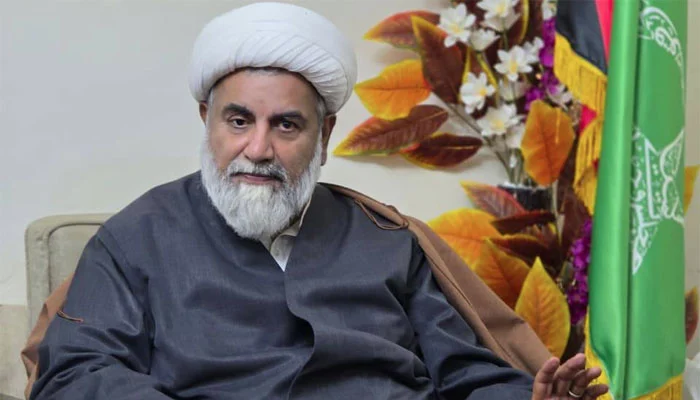
raja nasir abbas
| |

Raja Nasir Abbas condemns PIMS hospital tragedy, q…

ISLAMABAD: Leader of the Opposition in the Senate Allama Raja Nasir Abbas has described the PIMS Hospital incident as an extremely painful and unbearable tragedy, expressing deep concern over the loss of lives and the suffering of affected families.

Speaking to the media after arriving at the Pakistan Institute of Medical Sciences (PIMS), Raja Nasir Abbas criticized the government’s response to the incident and questioned whether removing a health secretary could be considered an adequate action in response to such a serious tragedy.

He said that simply removing a senior health official would not address the underlying issues that led to the incident. According to him, the government must look beyond administrative changes and take practical measures to prevent similar incidents from occurring in the future.

“Do you think that by removing one health secretary, you have done your job?” he questioned while speaking to the media.

The Senate opposition leader also expressed sympathy for the families who lost their children in the incident. He asked people to imagine the pain and suffering of parents whose children were burned to death.

“What must the parents whose children were burned to death have gone through?” he asked, while condemning what he described as the actions and handling of the situation by the authorities.

Raja Nasir Abbas said that such incidents raise serious questions about the quality of public services and the government’s responsibility toward citizens. He stressed that people rely on state institutions for essential services, particularly healthcare and education, and expect these institutions to provide safe and reliable facilities.

The opposition leader also drew a comparison between the public education and healthcare systems and the growing reliance on private institutions.

He said that when government schools fail to meet people’s expectations, families are often forced to turn toward private educational institutions. Similarly, when people do not receive satisfactory treatment or adequate medical facilities at government hospitals, they are compelled to seek treatment from private hospitals.

He argued that this trend places an additional financial burden on ordinary citizens, particularly families who cannot afford expensive private healthcare or education.

Raja Nasir Abbas emphasized that government institutions should be strengthened so that citizens can receive essential services without having to depend on private alternatives. He suggested that authorities need to identify weaknesses within public-sector institutions and take effective steps to improve their performance.

His comments came during his visit to PIMS, where he spoke about the incident and the concerns surrounding the hospital’s safety and management. The tragedy has prompted questions about safety arrangements, institutional accountability and the government’s responsibility for protecting patients and their families.

The opposition leader’s remarks also highlighted the broader issue of public confidence in government institutions. When public hospitals fail to provide adequate care or safe facilities, people who cannot afford private treatment are particularly vulnerable.

He called for greater accountability and better management of public-sector institutions, arguing that administrative decisions alone cannot resolve systemic problems.

The incident has intensified debate over hospital safety and emergency preparedness, with calls for authorities to investigate what happened and determine whether negligence or shortcomings contributed to the tragedy.

Raja Nasir Abbas maintained that the government must take meaningful measures rather than limiting its response to the removal of individual officials. He stressed that improving public hospitals and ensuring the safety of patients should remain a priority.

He further expressed solidarity with the bereaved families and condemned the circumstances surrounding the deaths, saying that the suffering of parents who lost their children could not be ignored.
Similar Posts

  • | |

    Belgium’s largest wildfire in decades double…

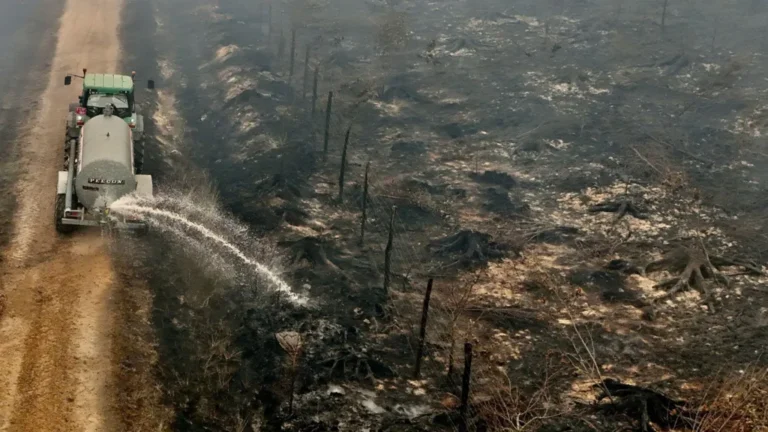
    A wildfire officials describe as the largest in Belgium’s recent history more than doubled in size within 24 hours, local authorities said Sunday, as hundreds of firefighters entered a third day battling flames tearing through the country’s largest nature reserve. The blaze has forced the evacuation of two villages near Hautes Fagnes, a protected reserve close to Belgium’s eastern border with Germany. Local farmers have hauled water tankers toward the park to assist firefighting crews, while water bombing aircraft and helicopters sent from Sweden and the Netherlands have joined the effort from the air. The Belgian fire is one of several burning across Europe this weekend. At least two people died in forest fires on a Greek island off the coast of Athens on Sunday, part of a broader pattern of blazes spreading across the continent. Belgian officials said intense heat combined with the reserve’s difficult terrain, a mix of bog like wetlands, moorland and forest, has made the fire especially hard to contain. According to figures reported by a French news agency citing local officials, the fire grew from 80 hectares, or about 200 acres, on Friday to 850 hectares by Saturday morning, before expanding further to 3,000 hectares by early Sunday. Belgian Interior Minister Bernard Quintin said two fronts of the fire, one advancing toward Jalhay and the other toward Monschau, have now been brought under control. Authorities said conditions remain difficult overall and that they continue to rely heavily on aerial support to bring the fire under control, though no homes have been damaged so far. Two water bombing aircraft arrived from Sweden on Sunday afternoon to reinforce four helicopters, two Belgian and two Dutch, already working the fire. Nicolas Yernaux, a spokesman for regional authorities in Wallonia, said Saturday that the blaze ranks as the largest the country has seen in recent history. He said firefighters have allowed portions of the heathland to burn because those areas are extremely difficult to reach. Rescue teams have been unable to access the location where the fire started, leaving its cause unknown for now. Additional forest fires have broken out in Croatia, Spain and Serbia since Friday, following a summer of extreme heat that has left large parts of Europe either burning or scorched brown. In southwestern France, local officials in the Landes region said a separate wildfire forced the evacuation of 650 residents on Saturday. That fire first broke out Thursday and reignited Saturday, prompting authorities to deploy more than 500 firefighters to bring it under control. The EU’s climate monitoring service, Copernicus, has confirmed that western Europe just experienced its hottest June to July period on record, a finding that aligns with the wave of wildfires now spreading across multiple countries on the continent.

  • |

    Fatima Zehra says better facilities could have earned gold

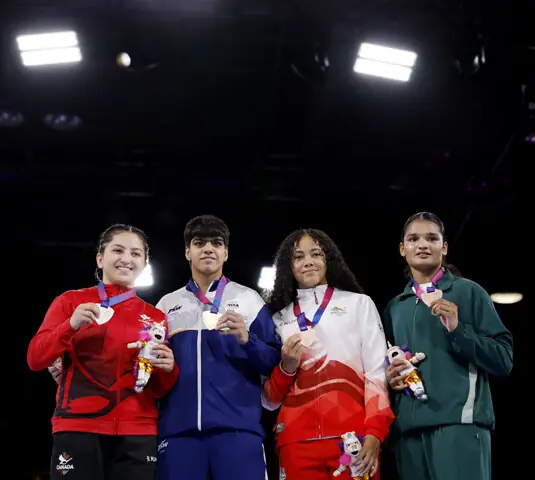
    Pakistan’s trailblazing boxer Fatima Zehra believes she had the potential to win a gold medal at the Commonwealth Games if she had access to the same level of training facilities and international exposure as many of her competitors. The 22-year-old made history by becoming the first Pakistani woman to win a boxing medal at the Commonwealth Games after claiming bronze in the women’s 60kg category. Although she narrowly missed out on a place in the final, Fatima described the achievement as a proud moment for herself and for Pakistan. Reflecting on her campaign, Fatima said her main objective before the tournament was to secure a medal, while also hoping to progress to the final. She admitted that the competition was extremely challenging, with many of her opponents benefiting from extensive international training and experience. Her journey ended in the semi-finals, where she faced Canada’s Marie-Bathoul Al-Ahmadieh. Fatima acknowledged that her opponent’s speed and international experience proved decisive, making it difficult to overcome the challenge. Despite the defeat, she expressed satisfaction with her bronze medal, saying it was earned against some of the strongest boxers in the competition. She also noted that competing at such a high level allowed her to gain valuable experience by observing other elite athletes and learning from every bout. Fatima highlighted the gap between Pakistan’s sporting infrastructure and that of leading boxing nations. She pointed out that several countries, including regional rivals, organized overseas training camps in the United States before the Games, while Pakistan’s preparations took place entirely at home. According to Fatima, world-class coaching facilities, modern training environments, and regular international competition are essential if Pakistani athletes are to consistently challenge for top honors on the global stage. She believes greater government investment in sports development would significantly improve the country’s chances of success. The young boxer also acknowledged the role played by the Pakistan Army, the Pakistan Boxing Federation, and her coach, Raheel Adnan, crediting them for their guidance and support throughout her preparation. She said their encouragement was instrumental in helping her achieve the historic milestone. Looking ahead, Fatima has already shifted her focus to the upcoming Asian Games, which are scheduled to take place in Japan in September. She hopes the experience gained at the Commonwealth Games will strengthen her performances against Asia’s top competitors. Fatima previously won a bronze medal at the 2025 Islamic Games in Saudi Arabia, and she is determined to build on that success by aiming for an even stronger finish at the Asian Games. Her boxing journey has not been without challenges. She revealed that although boxing now runs in her family, her parents initially opposed her decision to pursue the sport. After competing at the Punjab level, she was forced to step away from boxing because of her family’s concerns. However, her coach Raheel Adnan convinced them to give her another opportunity, a decision that ultimately changed her career. Today, her family fully supports her ambitions, and her two sisters, Dua and Aiman, along with her younger brother Naday Ali, have also taken up boxing. Fatima secured her historic Commonwealth Games bronze after defeating New Zealand’s Jordan Wilson by a unanimous 5-0 decision in the quarter-finals. Under tournament rules, both losing semi-finalists were awarded bronze medals, marking a landmark achievement for women’s boxing in Pakistan.

  • |

    Jeff Bezos throws weight behind $2.6B AI startup fixing the chip material crunch

    Jeff Bezos has placed his bet on CuspAI, an artificial intelligence startup working to discover and design advanced materials for the next generation of computer chips. The investment aims squarely at the material shortage behind the ongoing chip crisis that has rattled the tech industry over the past several months. This is not  CuspAI’s first big funding win. Back in July, the company closed a $450 million Series B round, pushing its valuation to $2.6 billion. That round pulled in heavyweight backers, including Bezos Expeditions, AMD Ventures, Nvidia, and Meta. CuspAI was founded in 2024 with a much narrower focus. Originally, the company built AI tools to identify and test materials for water purification and carbon capture projects. Since then, its mission has grown considerably. By expanding into AI infrastructure and chip materials, the startup now positions itself as a possible fix during a period of serious supply chain strain. One of CuspAI’s key advantages lies in finding substitutes. The company’s AI can search for alternative materials that mimic the properties of scarce elements like tantalum, gallium, and iridium. These elements are becoming harder to source as demand climbs, particularly with the explosion of AI infrastructure worldwide. The International Energy Agency has already flagged concerns that data centre demand for gallium could outpace supply within the next few years. Adding to the pressure, rising geopolitical tension between the US and China over rare earth minerals continues to complicate global supply chains. Analysts have pointed to this rift as a growing risk factor for tech manufacturers everywhere. Beyond securing fresh funding, CuspAI has also launched something bigger: the AI Materials Foundry. This initiative brings together more than 45 major industry players under one coalition, including tech giants like Nvidia, Samsung, Meta, and Hyundai Motor Group. The goal is to pool resources and expertise as the industry races to solve its materials bottleneck. With Bezos now backing the effort directly, CuspAI’s profile in the AI and semiconductor space is only expected to grow. As chip shortages continue to challenge manufacturers worldwide, the company’s approach of using AI to hunt for alternative materials could prove critical in keeping production on track.

  • |

    UN Security Council begins informal voting to choose next secretary general

    The United Nations Security Council will begin its first round of informal voting on Thursday to measure support for candidates seeking to become the next UN secretary general. The confidential ballots mark the start of a selection process that will eventually determine who succeeds Antonio Guterres when his second five year term ends later this year. Seven candidates from different regions are currently competing for the position. They include Argentina’s Rafael Grossi, who heads the UN nuclear watchdog, former Chilean President Michelle Bachelet, former Costa Rican Vice President Rebeca Grynspan, former Ecuadorian Foreign Minister Maria Fernanda Espinosa, former Guyanese Foreign Minister Carolyn Rodrigues-Birkett, former Senegalese President Macky Sall and Ugandan diplomat Olara Otunnu. Additional candidates are still allowed to enter the race before the selection process concludes. The next secretary general will take charge of the United Nations at a time when the organization faces mounting criticism over its effectiveness and structure. Calls for reform have increased as member states push for a more efficient institution, arguing that the UN must reduce bureaucracy, eliminate overlapping responsibilities among its agencies and improve its ability to respond to global crises. The first stage of the selection process involves informal straw polls conducted behind closed doors among the Security Council’s 15 members. During these secret ballots, council members indicate whether they encourage, discourage or have no opinion on each candidate. The votes are non binding but provide an early indication of which candidates have the strongest support and which face significant opposition. At this stage, all Security Council members use identical ballots, meaning diplomats can see the overall level of support for each candidate without knowing whether opposition comes from one of the council’s five permanent members. Those permanent members are China, France, Russia, the United Kingdom and the United States, each of which holds veto power over the final recommendation. As the selection process moves forward, the permanent members will use ballots in a different color during later rounds of voting. This allows diplomats to determine whether any candidate has received a negative vote from a veto holding country, information that often plays a decisive role in narrowing the field. There is currently no clear favorite to replace Guterres. Previous UN leadership contests have required several rounds of voting over many weeks before a consensus candidate emerged. Diplomats expect this year’s process could continue throughout the summer and possibly into late September or early October if no candidate gains broad enough support. If the Security Council remains divided, the process could take even longer. Once the council agrees on a single candidate, it will formally recommend that person to the 193 member UN General Assembly. The recommendation requires at least nine votes in favor and no veto from any of the five permanent members. The General Assembly then votes to confirm the appointment, a step that has traditionally been considered a formality after the Security Council reaches agreement. The current president of the Security Council is the Democratic Republic of the Congo. Its ambassador to the United Nations, Zenon Mukongo Ngay, confirmed that the first round of straw polls will take place on Thursday morning. He also said that Ugandan candidate Olara Otunnu will participate in the voting despite not taking part in the informal public hearings completed by the other candidates. According to his biography, Otunnu played an important role in shaping the current selection process. He states that he introduced the system of informal straw polls while serving as president of the Security Council in 1981. That method has since become a key part of the process used to identify the candidate most likely to secure broad international support before the final appointment is made.

  • | |

    Gohar Rasheed criticises Aurat March posters

    Actor Gohar Rasheed, known for his versatility and outspoken nature, has sparked a fresh round of public debate after sharing his views on Aurat March during a recent podcast appearance, taking particular issue with what he described as vulgar posters that appear at the annual women’s rights march. Rasheed drew a comparison between two things he sees as similarly problematic. He said that women should not be objectified, and in that spirit, item numbers in films should not exist because they reduce women to objects. He then extended that same logic to certain placards that appear at Aurat March, arguing that some posters cross a line into vulgarity and do not represent an appropriate way to communicate ideas or demands. He said the same points could be made in a more sophisticated manner without resorting to language or imagery that he found objectionable. The remarks touched on one of the most consistently contested topics in Pakistani public life. Aurat March, held annually on March 8 in major cities across Pakistan to mark International Women’s Day, has been a flashpoint for debate since its earliest editions. Supporters argue it is a necessary and long-overdue platform for women to voice demands around safety, equality and rights. Critics, including Rasheed, have frequently taken issue with specific posters that appear at the marches, arguing that certain slogans or images do not reflect the broader values of Pakistani society. The response online was immediate and divided, as it tends to be whenever the march becomes the subject of public commentary. Some users agreed with Rasheed. One person wrote: “He is right. Now Aurat Marchers will go against him,” anticipating the backlash while expressing support for the sentiment. Others pushed back sharply. One commenter wrote: “I wish he was this offended by violence against women and child rape,” arguing that the energy directed at posters would be better channelled toward the far graver issues women face daily. Another said: “Three men mansplaining what women should do or not do,” pointing to the irony of male voices deciding what is and is not an appropriate mode of feminist expression. The division in the comments reflects the genuine complexity of the debate. For those who support Aurat March unconditionally, the criticism of posters is a distraction from the march’s core purpose and represents the kind of policing of women’s expression that the march itself is pushing back against. For those who share Rasheed’s view, the concern is that certain forms of communication within the march alienate potential allies and hand critics easy ammunition to dismiss the broader cause. What is clear from the reaction is that this is a conversation Pakistan has not finished having, and that every public voice that enters it, whether from the entertainment industry or elsewhere, adds another layer to a debate that touches on deeply held values about gender, expression and what it means to advocate for change.

  • |

    England fast bowler John Turner retires at just 25

    England fast bowler John Turner has announced his shock retirement from professional cricket at the age of 25, bringing the curtain down on a promising five-year career. Turner, who represented England in two ODIs and two T20Is in 2024, made the difficult decision after a prolonged battle with injuries kept him away from professional cricket since June last year. The Hampshire fast bowler suffered a stress fracture in his back, an injury that forced him to spend more than a year on the sidelines. Despite having two years remaining on his Hampshire contract and holding an England and Wales Cricket Board development contract until the end of last year, Turner decided that it was time to move on. Explaining his decision, Turner said the repeated injuries had made him think seriously about his future both as a cricketer and beyond the sport. “Playing professional and international cricket was always my dream,” Turner said, describing representing Hampshire and England as the fulfilment of childhood ambitions. He admitted that retirement was one of the toughest decisions of his life but said he believed it was the right moment to take on a new challenge. Turner made his first-class debut for Hampshire in 2021 and described his five years with the club as the best period of his life. He also thanked Hampshire’s management, coaches, teammates and supporters for their unwavering backing. His retirement brings a surprisingly early end to the career of a bowler who had once earned an international opportunity at just 23.

Leave a Reply

Your email address will not be published. Required fields are marked *