red sea shipping
|

Red Sea shipping slows after Houthi attack on Saudi Arabia, data shows

SINGAPORE – Ship traffic through Bab el-Mandeb fell on Sunday, July 26, after Yemeni Houthis attacked Saudi oil installations along the Red Sea coast, while transit through the Strait of Hormuz stayed low over the weekend, shipping data from Kpler showed on Monday, July 27.

Eleven commodity vessels passed through the Bab el-Mandeb strait on Sunday, the lowest level in months, the data showed.

Red Sea traffic has been disrupted off the coast of Yemen since last week by the Tehran-aligned Houthis, who want to blockade Saudi exports, expanding the US-Iran conflict that has already choked oil supply through the Strait of Hormuz.

Must Read

Houthis claim attacks on Saudi tankers, raising Red Sea chokepoint risk


Houthis claim attacks on Saudi tankers, raising Red Sea chokepoint risk

Seven of the vessels that passed through Bab el-Mandeb were oil tankers with three of them entering the Red Sea. Two of them are very large crude carriers (VLCCs) heading to the port of Yanbu to load Saudi crude while the third is a Russian-linked ship, the data showed.

The four vessels that exited the Red Sea on Sunday included the Hong Kong-flagged VLCC New Explorer carrying 2 million barrels of Saudi and Emirati crude for eastern China’s Ningbo port, a tanker carrying 1 million barrels of Russian crude for China and a tanker with about 750,000 barrels of Saudi crude onboard for Pakistan, the data showed.

This is the third Chinese VLCC to exit the Red Sea via the Bab el-Mandeb strait. Associated Maritime Hong Kong, the manager for the New Explorer, did not immediately respond to a request for comment outside office hours.

Houthi military spokesperson Yahya Saree said the group struck sites belonging to Saudi state oil company Aramco in the cities of Jizan and Yanbu on Saturday.

Hormuz

Fewer than 10 commodity vessels passed through the Strait of Hormuz daily over the weekend even though the US and Iran have paused strikes in the Middle East, shipping data from Kpler showed.

Must Read

Few tankers enter Hormuz to load oil – data


Few tankers enter Hormuz to load oil – data

Seven vessels transited on Sunday including three Iranian-linked oil products tankers that exited the Strait, the data showed.

On Saturday, there were only three vessels that passed through with their transponders switched off. These include a VLCC heading to Qatar to load oil, a liquefied petroleum gas tanker going to the Ruwais port in the United Arab Emirates to load a cargo and a tanker carrying Qatari naphtha that was heading to Japan, the data showed.

On Friday, seven vessels passed, mostly exiting the Gulf, including two VLCCs carrying crude from Iraq and the UAE and a tanker carrying fuel oil. – Rappler.com

Similar Posts

  • | | |

    Pakistan highlights mediatory role in US-Iran conf…

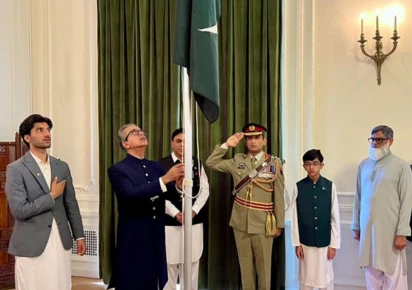
    Pakistan’s Permanent Representative to the United Nations, Ambassador Asim Iftikhar Ahmad, has highlighted Pakistan’s mediatory efforts in the US-Iran conflict, saying the country remains committed to promoting peace and stability amid growing global tensions. Speaking at an Independence Day ceremony at Pakistan House in New York, Ahmad said Pakistan continued to seek peaceful solutions to conflicts and reaffirmed its commitment to sovereignty, security and socio-economic development. He paid tribute to Quaid-e-Azam Muhammad Ali Jinnah, describing him as a visionary leader who played a historic role in creating Pakistan. Reflecting on the country’s journey since 1947, he praised the resilience and achievements of Pakistanis despite major challenges. Ahmad also praised the armed forces for defending the country and protecting its people, particularly during the May 2025 conflict with India. He highlighted the contributions of Pakistanis around the world, including innovators, athletes and artists, and recognised the work of Saima Saleem and Aleena Majeed at Pakistan’s UN mission. The ambassador said Pakistan had overcome major economic and structural challenges over the decades and continued to show resilience in the face of adversity.

  • |

    Trump cuts childhood vaccine recommendations as doctors warn of health risks

    US President Donald Trump signed an executive order on Monday calling for fewer childhood vaccinations, limiting core federal guidance to immunisations against 11 diseases. Trump stated the adjustments would offer children “gold-standard” protection while bringing US policies in line with foreign nations that recommend fewer routine shots. The executive directive advises breaking up the combined measles, mumps, and rubella (MMR) vaccine into three distinct doses administered across separate clinical visits. Health Secretary Robert F. Kennedy Jr. has long advocated for reductions in the pediatric vaccine schedule. Medical researchers and global health bodies have repeatedly debunked claims championed by Kennedy alleging a causal link between routine childhood vaccines and autism. The American Academy of Pediatrics and pharmaceutical manufacturer Merck sharply criticised the executive action. “We are evaluating our next steps,” stated Richard Hughes IV, lead legal counsel for the American Academy of Pediatrics. Merck noted there is no published scientific evidence demonstrating clinical advantages to unbundling the MMR vaccine, warning the mandate could induce delayed or skipped immunisations. Republican Senator Bill Cassidy, a practicing physician, publicly broke with the administration over the decree. “I’m a doctor. This executive order is wrong. The president does not have the expertise to make these changes,” Cassidy said. Cassidy cautioned that unbundling combination shots will force children to endure a higher volume of individual injections to secure identical protection.

  • |

    Bangladesh signals interest in joining Pakistan-Saudi Arabia-Türkiye defence framework

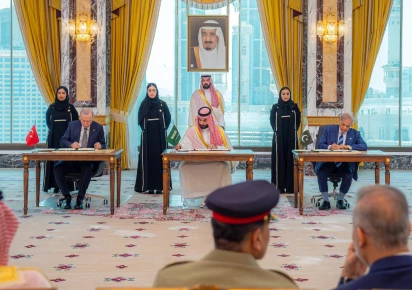
      DHAKA: Bangladesh has indicated that it is open to joining the Makkah Joint Defence Agreement signed by Pakistan, Saudi Arabia and Türkiye, as Dhaka looks to broaden its strategic partnerships while maintaining a foreign policy centred on national interests. According to the state-run Bangladesh Sangbad Sangstha (BSS), Bangladesh Prime Minister’s Adviser for Foreign Affairs Humayun Kobir said the country maintained a positive outlook towards the possibility of becoming part of an economic or defence framework involving Saudi Arabia, Pakistan and Türkiye. Kobir said any decision regarding participation would be considered in light of Bangladesh’s national interests as well as changing global economic and trade dynamics. He stressed that Dhaka was pursuing a balanced foreign policy under its “Bangladesh First”approach, with national priorities remaining at the heart of its international engagement. He said Bangladesh was also working to strengthen its bilateral relationship with Pakistan through normal diplomatic channels. According to Kobir, the two countries were particularly focusing on expanding trade and improving people-to-people contacts and connectivity. The Bangladeshi adviser’s remarks come amid signs of improving diplomatic engagement between Dhaka and Islamabad. He also said Prime Minister Tarique Rahman’s proposed visit to Riyadh, following an invitation from Saudi Crown Prince and Prime Minister Mohammed bin Salman was expected to be finalised after the summer. The possibility of Bangladesh joining the defence framework comes shortly after Pakistan, Saudi Arabia and Türkiye signed the Makkah Joint Defence Agreement in Makkah on August 7. Under the agreement, an armed attack against any one of the three participating countries is to be treated as an attack against all three. The pact also provides a framework for greater defence cooperation, coordination and collective deterrence among the signatories. The agreement has attracted regional and international attention because of its potential to expand security cooperation among key Muslim-majority countries. Turkish Foreign Minister Hakan Fidan has described the arrangement as technically comparable to NATO’s Article 5 principle of collective defence, while emphasising that the agreement is not aimed at Iran or any other specific country. Ankara has also suggested that the framework could potentially be expanded to include additional regional states. Egypt has previously been mentioned as a possible participant in the broader security arrangement. Pakistan has similarly maintained that the agreement is defensive in character and is not directed against any particular country. Islamabad has also indicated that the framework remains open to states that are willing to support its principles and objectives. Deputy Prime Minister and Foreign Minister Ishaq Dar has said the agreement does not seek to replace existing bilateral or multilateral defence and security arrangements. Instead, he said, it provides an additional platform for cooperation based on mutual respect, shared interests and peaceful resolution of disputes. Bangladesh’s latest position suggests that Dhaka is carefully assessing emerging regional partnerships while seeking to preserve strategic flexibility. Its potential participation could further broaden the Makkah agreement’s regional significance and strengthen cooperation among Pakistan, Saudi Arabia, Türkiye and other interested countries. For Bangladesh, however, any decision to join would ultimately depend on how the proposed framework aligns with its national interests, foreign policy priorities and assessment of the evolving regional and global security environment.

  • |

    India warns border tensions could affect ties with China

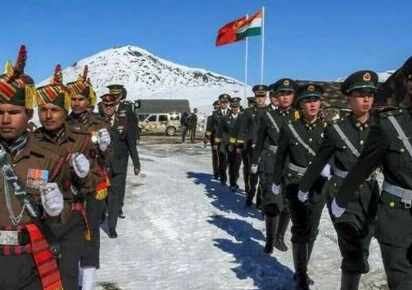
      India has stressed that maintaining peace along its disputed border with China is essential for improving relations between the two Asian powers. The statement comes amid reports of renewed encounters between Indian and Chinese troops in a remote part of the Himalayas. India’s latest remarks mark the second time in less than a week that New Delhi has addressed concerns over the border. The two countries have been attempting to rebuild relations after deadly clashes in 2020 severely damaged diplomatic ties. The issue is particularly significant ahead of the BRICS summit, scheduled to take place in New Delhi from September 12 to 13, where Chinese President Xi Jinping is expected to participate. Speaking at a regular media briefing on Tuesday, Indian Foreign Ministry spokesperson Randhir Jaiswal said New Delhi considers border matters with China extremely serious. He stressed that the situation along the disputed frontier would have a direct impact on the broader relationship between the two countries. Jaiswal said India had consistently communicated to Beijing that the condition of the border was closely connected to the overall state of bilateral relations. His comments came in response to questions about reports of a recent military encounter between troops from both countries. China’s Foreign Ministry and Defence Ministry did not immediately respond to requests for comment regarding the reported developments. According to news , Indian and Chinese military patrols reportedly came into contact in late July near Taksing, a remote village in Arunachal Pradesh’s Upper Subansiri district. The area lies along the border with Tibet and is located in the eastern Himalayas. China claims Arunachal Pradesh as part of what it describes as southern Tibet, referring to the region as Zangnan. India strongly rejects Beijing’s claim and maintains that Arunachal Pradesh is an integral part of Indian territory. The reported encounter allegedly occurred around 2.5 kilometres inside territory controlled by India. Chinese personnel reportedly withdrew from the area initially but returned in early August and set up two tents. However, Indian defence officials have rejected reports suggesting that the developments represent a significant increase in military tensions. The defence spokesperson responsible for Arunachal Pradesh described the reports as unverified and lacking sufficient evidence. A residents’ welfare organisation in the region had earlier raised concerns in a July 26 letter sent to local authorities. The group claimed that Chinese personnel were increasing their presence and moving into strategically important areas near the border. Reuters reviewed the letter. Military patrols from India and China occasionally encounter one another along their disputed 3,488-kilometre frontier. Such confrontations are not unprecedented, although they do not happen regularly. Relations between the two countries deteriorated sharply after a deadly confrontation in the western Himalayas in 2020. Twenty Indian soldiers and four Chinese troops were killed during the clashes, leading both sides to deploy tens of thousands of troops and large quantities of military equipment along the frontier. Tensions gradually began to ease after Indian Prime Minister Narendra Modi and Chinese President Xi Jinping held talks in 2024. The two leaders agreed to take steps to end the prolonged military standoff and work toward reducing tensions. Despite those efforts, the latest reports highlight the continuing sensitivity of the border dispute and the importance of maintaining stability as India and China attempt to restore their broader relationship.

  • | | | |

    Iran rules out US talks until demands are met

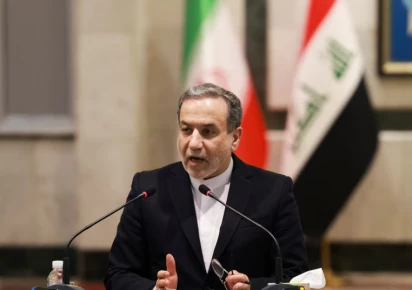
    Iran has ruled out direct negotiations with the United States for now, saying Washington must first comply with the terms of an interim agreement reached in June. Iranian Foreign Minister Abbas Araghchi said on Sunday that Tehran and Washington were not holding direct talks. He said messages were still being exchanged through intermediaries. Araghchi also reiterated Iran’s position on the Strait of Hormuz. He said the strategic waterway would not reopen simply because Iran and Oman reached an agreement on shipping arrangements. According to Iranian reports, Tehran and Muscat are close to finalising an understanding on a temporary shipping route. However, Iran says the route can only be used after other conditions are met. The Strait of Hormuz has remained at the centre of the wider conflict. Iran has repeatedly linked its reopening to demands directed at Washington. Iranian officials have called for an end to US threats and military action. They have also demanded the lifting of sanctions and blockades and the release of Iranian assets. Iran’s Revolutionary Guard has separately warned that the strait will remain closed until Tehran’s conditions are accepted. The force accused its opponents of shifting their focus toward reopening the vital waterway. The strait is one of the world’s most important energy routes. A significant share of global oil and gas shipments normally passes through it. Oman, meanwhile, said discussions with Iran over arrangements for shipping through the waterway had been positive and constructive. Muscat also urged all sides to avoid actions that could undermine the negotiations. Iranian President Masoud Pezeshkian has suggested that the current situation could provide an opportunity for an agreement. He said Iran remained united and strong despite the ongoing conflict. The diplomatic uncertainty comes as tensions continue to affect commercial shipping in the region. The United Arab Emirates said Iran had attacked a vessel linked to its state-owned oil company while it was travelling through the Strait of Hormuz. No injuries were reported. The United Kingdom Maritime Trade Operations agency also reported that a vessel caught fire after being struck by an unidentified projectile. The fire was later brought under control, with no environmental damage reported. Iranian authorities have not immediately commented on the individual incident. Saudi Arabia reports fires at energy facilities Tensions have also spread across the Gulf. Saudi Arabia said firefighters had extinguished a blaze at an Aramco facility in Jizan. The Saudi Energy Ministry said there were no fatalities. Yemen’s Houthi movement claimed responsibility for an attack on the site, saying it had used a drone in response to alleged Saudi strikes in Yemen. A separate explosion was also reported in the industrial area of Jubail. Regional sources said gas facilities were targeted and that a fire broke out. The exact cause remained unclear. It was not immediately established whether the incidents in Jizan and Jubail were connected. US defence industry ordered to increase weapons production Meanwhile, the United States has asked its defence industry to accelerate weapons production amid shortages linked to the war with Iran. US Deputy Defence Secretary Steve Feinberg reportedly instructed defence companies to submit plans aimed at speeding up deliveries and increasing production of critical military equipment. The demand comes amid reports of pressure on US ammunition supplies, including stocks of Patriot missile interceptors. The Trump administration has maintained that the United States has substantial weapons reserves and that additional supplies are being manufactured and delivered. The conflict has also triggered threats from armed groups in the region. The leader of Iraq’s Harakat Hezbollah al-Nujaba, Akram al-Kaabi, has threatened retaliation for US-Saudi strikes on sites belonging to Iraq’s Popular Mobilisation Forces. The group has warned that further military action could lead to a response. Iranian military officials, meanwhile, have claimed that the United States and Israel failed to achieve their objectives against Iran. They have praised the country’s military preparedness and vowed to continue resisting pressure. With the Strait of Hormuz still closed and negotiations remaining indirect, the prospect of restoring normal shipping remains uncertain. Iran insists that reopening the waterway depends on Washington accepting its conditions. The United States, meanwhile, has linked the lifting of its blockade to Iran fulfilling commitments under any future agreement.

Leave a Reply

Your email address will not be published. Required fields are marked *