trump says hormuz
| | | |

Trump says Hormuz reopening near, warns Iran of consequences

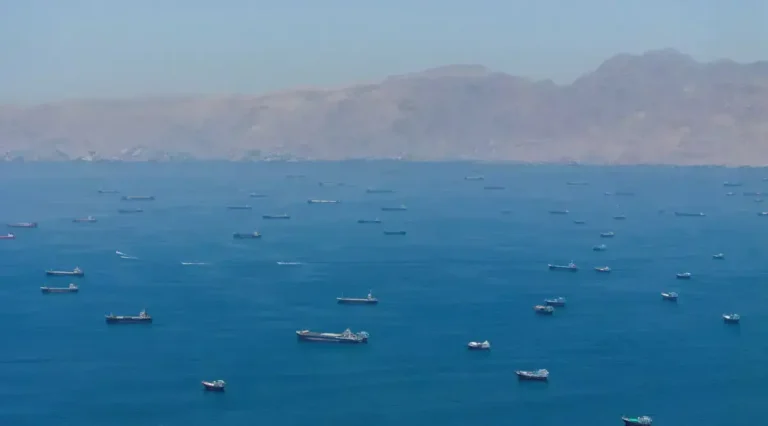
US President Donald Trump has said the Strait of Hormuz could reopen “very soon” as diplomatic efforts with Iran continue, while warning that Tehran would face a strong military response if negotiations fail.

Speaking during an interview with Fox News, Trump expressed optimism about the ongoing talks, saying discussions had made significant progress. He claimed Iranian representatives had requested negotiations at a time when the United States was preparing for a large-scale military operation.

According to Trump, Washington agreed to engage in dialogue after receiving signals from Tehran that it was willing to negotiate. He stressed that the United States remains committed to preventing Iran from acquiring nuclear weapons and said abandoning the talks would have serious consequences.

The US president said negotiators spent the entire day in discussions and described the atmosphere as positive. He added that a successful agreement could help restore normal shipping through the Strait of Hormuz, one of the world’s most important energy routes.

Trump also suggested that reopening the strategic waterway would ease pressure on global energy markets. He said lower oil prices could eventually translate into cheaper fuel costs for consumers and urged energy companies to reduce gasoline prices if market conditions improve.

Speaking later to reporters in California, Trump said developments with Iran were moving in the right direction and indicated that greater clarity on the negotiations could emerge within the next 48 hours.

Diplomatic efforts are reportedly being supported by regional mediators, including Oman and Qatar. Discussions are focused on restoring safe maritime navigation through the Strait of Hormuz while reducing tensions between Washington and Tehran. However, Iranian officials have maintained that progress depends on an end to US threats and continued respect for Iran’s sovereignty.

The Strait of Hormuz is a vital global shipping lane through which a significant share of the world’s oil and liquefied natural gas exports passes. Any disruption to traffic through the waterway has immediate consequences for international energy markets and global trade.

Financial markets reacted positively to reports of progress in the negotiations. Oil prices declined while Asian stock markets advanced on expectations that a diplomatic breakthrough could reduce regional tensions and restore uninterrupted shipping.

Meanwhile, reports from Israel indicated growing concern over Washington’s diplomatic approach. Some Israeli officials reportedly believe the United States is prioritising a negotiated settlement with Iran, although no official Israeli government statement has confirmed those claims.

Similar Posts

  • | |

    Pakistani passport ranks fourth weakest globally

    Pakistan’s passport has been ranked the fourth weakest in the world in the latest Henley Passport Index. The Pakistani passport stands at 101st place in the global ranking. Its holders can access 29 destinations without obtaining a visa in advance or through visa-on-arrival facilities. The Henley Passport Index evaluates passports based on the number of destinations their holders can enter without securing a visa before travelling. The index covers 199 passports and 227 travel destinations. The latest ranking shows that Pakistan’s passport remains ahead of only three passports. These belong to Iraq, Syria and Afghanistan. The ranking highlights the limited international mobility available to Pakistani passport holders compared with citizens of many other countries. Pakistan’s neighbouring countries have performed better in the latest index. China ranks 60th globally. India is placed at 81st. Iran stands at 96th. Despite its low overall ranking, Pakistani citizens can travel to several destinations without obtaining a visa before departure. Visa-free access is available for Pakistani passport holders to Barbados, the Cook Islands, Dominica, Haiti, Micronesia, Montserrat, Rwanda, St Vincent and the Grenadines, The Gambia, Trinidad and Tobago, and Vanuatu. Pakistani travellers can also obtain visas upon arrival in a number of countries. These include Burundi, Cambodia, the Comoro Islands, Djibouti, Guinea-Bissau, Madagascar, the Maldives, Mozambique, Nepal, Niue, Palau, Samoa, Senegal, Sierra Leone, Timor-Leste and Tuvalu. In addition, Pakistani citizens can obtain electronic travel authorisations for Kenya, Seychelles and Sri Lanka. The passport ranking is widely used as an indicator of international travel access. A higher position generally means that passport holders can enter more destinations without obtaining a visa in advance. Singapore continues to hold the strongest passport in the latest ranking. It tops the index with access to 192 destinations. Japan, South Korea and the United Arab Emirates share second place. Their passport holders can access 188 destinations. Sweden ranks third, with access to 187 destinations. The latest figures underline the significant gap between Pakistan and the countries at the top of the global passport ranking.

  • |

    Three reasons Haroon is winning hearts in Aik Mohabbat Aur

    Haroon Malik has emerged as one of the most admired characters in Aik Mohabbat Aur because of his thoughtful personality and balanced approach to relationships. Rather than being portrayed as a flawless hero, Haroon is shown as an ordinary man who makes mistakes, learns from them, and grows through his experiences. His realistic nature has made him relatable to viewers, and several of his actions have highlighted positive values that are often missing in television dramas. A genuine bond with Pari One of Haroon’s most heartwarming qualities is the relationship he shares with Pari. Instead of trying to immediately take on the role of a father figure, he focuses on becoming someone she can trust and enjoy spending time with. He treats her with kindness, patience, and respect, allowing their connection to develop naturally. Haroon listens to Pari, joins in her playful moments, and makes her feel valued without expecting anything in return. Their relationship is built on friendship, understanding, and trust rather than obligation. This gentle approach allows Pari to accept him on her own terms, making their bond feel authentic and emotionally touching. Standing up for Maham Another defining moment for Haroon is the way he handles Maham’s difficult situation. While others choose to ignore her emotional struggles or dismiss them as private family matters, Haroon recognizes that she deserves to be heard. Instead of blindly supporting his brother, Faris, he acknowledges Maham’s pain and encourages the family to confront the real issues. Haroon also challenges his parents to understand that providing financial security alone does not excuse harmful behavior. He emphasizes that emotional well-being is equally important and that remaining silent in the face of abuse only allows the problem to continue. His willingness to hold both his brother and family accountable demonstrates maturity, fairness, and compassion. Respecting Khushbakht’s emotions Haroon’s relationship with Khushbakht Naaz is another reason audiences appreciate his character. Although he develops strong feelings for her, he never pressures her to return his affection immediately. Instead, he patiently gives her the time and space she needs to process her emotions. Even after their marriage, Haroon expresses his care through thoughtful actions rather than dramatic declarations. He values small moments of happiness and understands that love cannot be forced. His calm and respectful approach helps Khushbakht gradually become comfortable with him, especially after the emotional challenges she has experienced in the past. Rather than demanding love, Haroon chooses to earn trust through consistency, patience, and genuine kindness. This refreshing portrayal of romance has resonated with many viewers, setting him apart from more traditional television heroes. As Aik Mohabbat Aur continues, Haroon’s character proves that strength can be found in empathy, respect, and emotional intelligence. His relationships with Pari, Maham, and Khushbakht showcase a man who values understanding over control and compassion over pride. These qualities not only make him an engaging character but also reflect the evolving storytelling seen in modern Pakistani dramas. Written by Faiza Iftikhar and directed by Farooq Rind, Aik Mohabbat Aur features a talented cast including Ahad Raza Mir, Maya Ali, Samiya Mumtaz, Noorul Hasan, Munazza Arif, Saqib Sameer, Omair Rana, Hajra Yamin, Sachal Afzal, Fajar Sheikh, Qudsia Ali, Shamyl Khan, Abbas Ashraf, Rehan Sheikh, Dodi Khan, and several other notable actors.

  • |

    Houthi Red Sea blockade threat raises fears of wider global energy disruption

    A new threat by Yemen’s Houthi movement to impose a maritime blockade on Saudi Arabia has raised concerns about global energy supplies as tensions across the Middle East continue to escalate. The announcement comes at a time when shipping through the Strait of Hormuz has already been disrupted, increasing fears that two of the region’s most important oil routes could be affected at the same time. The Iran aligned Houthi group said it plans to target Saudi Arabia through a blockade in the Red Sea. While the group has not explained how it intends to enforce the measure, the warning has intensified concerns over the security of international shipping and energy exports. The Bab el Mandeb Strait at the southern entrance to the Red Sea is one of the world’s most important maritime routes. It connects the Red Sea with the Gulf of Aden and serves as a key passage for oil shipments travelling between the Middle East, Europe and Asia. Since disruptions in the Strait of Hormuz, Saudi Arabia has redirected much of its crude oil exports to its Red Sea port of Yanbu. From there, shipments bound for Europe pass through the Suez Canal, while cargo heading to Asian markets travels south through the Bab el Mandeb Strait. Industry data shows that oil exports from Yanbu have increased sharply over the past year, making the Red Sea an increasingly vital route for global energy markets. Millions of barrels of petroleum now pass through the Bab el Mandeb every day, helping to stabilise international oil supplies despite ongoing tensions elsewhere in the region. Analysts warn that any serious disruption in the Red Sea could significantly affect global energy prices by restricting another major export route from the Gulf. Saudi Arabia is reportedly considering expanding its pipeline network to the Red Sea coast to reduce dependence on vulnerable sea lanes. The Houthis have been involved in conflict with Yemen’s internationally recognised government for more than a decade and have previously launched missile and drone attacks against Saudi Arabia. Although a truce reached in 2022 reduced fighting, tensions have risen again following recent military strikes around Sanaa. The latest escalation began after Yemen’s recognised government said it had targeted Sanaa airport to prevent an Iranian aircraft from landing. The Houthis blamed Saudi Arabia for the attack and responded by firing missiles towards Abha airport in southern Saudi Arabia. A senior Houthi official later warned that continued escalation could lead to the closure of the Bab el Mandeb Strait. Although the Houthis maintain that they make their own military decisions, the United States has long accused Iran of supplying the group with weapons, funding and training. The Houthis reject claims that they act as an Iranian proxy. The movement previously disrupted international shipping after the outbreak of the Gaza war in late 2023. It launched attacks on commercial vessels in the Red Sea, saying the operations were intended to support Palestinians. Those attacks forced many major shipping companies to reroute vessels around southern Africa, increasing transport costs and delaying deliveries worldwide. Although Red Sea traffic had begun recovering after attacks eased, shipping through the Suez Canal remains well below previous levels. The latest Houthi threat has renewed fears that instability could once again disrupt one of the world’s busiest trade routes. During the recent conflict involving Iran, the Houthis played a more limited military role than other armed groups aligned with Tehran. However, their latest announcement suggests they may now be prepared to increase pressure on regional rivals, raising fresh concerns over the security of global energy supplies and international trade.

  • | |

    Danish-Anmol’s Nishtar teaser sets screens on fire

    Pakistani actors Danish Taimoor and Anmol Baloch are set to share the screen in an upcoming drama serial, Nishtar, which is expected to be another major television project for the two stars. The first teaser of the drama has been released, giving viewers a glimpse into what appears to be an intense story filled with power, ambition, pride and romance. Danish Taimoor will reportedly play a powerful and confident young man whose life revolves around wealth, influence and authority. His character appears to have a strong personality and an attitude shaped by his privileged background. Anmol Baloch, meanwhile, will portray a fearless woman who enters his life and challenges his established way of thinking. The teaser suggests that her arrival could become a turning point for the central character and dramatically change the direction of his life. The drama has been written by renowned writer Maha Malik and directed by Seraj Ul Haq, who is known for his work on popular television projects. Abdullah Kadwani and Asad Qureshi are serving as producers. The project features a large ensemble cast, including Usman Peerzada, Haroon Shahid, Yousuf Bashir Qureshi, Shahnawaz Zaidi, Mahmood Aslam, Nida Mumtaz, Ali Dayyan Walji, Muhammad Faizan Sheikh, Ramsha Salahuddin, Syed Afzal Ali, Fatima Gohar, Ayesha Gul, Laiba Rehman Butt, Zarafshan Amir, Annie Zaidi, Muhammad Asad Gojar and Talia Jan. Danish Taimoor is among Pakistan’s well-known television actors and has appeared in several successful dramas over the years. His performances in projects such as Deewangi, Kaisi Teri Khudgarzi, Jaan Nisar and Ishq Hai have earned him a large following. Anmol Baloch has also gained recognition through her performances in dramas including Siyani, Sirf Tum and Iqtidar. Her pairing with Danish Taimoor has already generated interest among television audiences. The teaser has sparked excitement among fans, particularly those looking forward to seeing Danish return in an intense role. Many viewers have also expressed curiosity about the chemistry between the two lead actors.

  • | | |

    Israeli rabbi sparks outrage with denial of Palest…

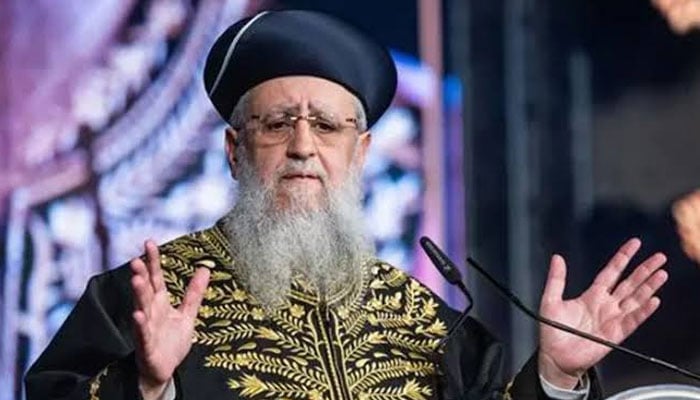
    JERUSALEM: An Israeli chief rabbi has sparked widespread controversy after reportedly denying the existence of the Palestinian people and asserting that Gaza and the occupied West Bank belong exclusively to Jews. Chief Rabbi David Yosef was quoted as saying that there was no Palestinian nation in the past and that Palestinians have no rights to the land. His reported remarks have drawn attention amid the continuing conflict in Gaza and growing international concern over the humanitarian situation. Yosef also reportedly claimed that Gaza and cities in the West Bank belong to Jews and suggested that Gaza would eventually be destroyed and populated by Jewish people. The comments come as Israeli military operations in Gaza continue, with Palestinian officials reporting further deaths and injuries. The conflict has caused widespread destruction, displacement and a severe humanitarian crisis. The remarks have also renewed scrutiny of developments in the occupied West Bank, where tensions between Palestinians and Israeli settlers remain high. According to reports, Palestinian residents and farmers in areas including Hebron have faced incidents involving Israeli settlers. One reported incident involved a Palestinian farmer’s donkey being tied to a vehicle and dragged, resulting in the animal’s death. The latest statements have added to concerns over rhetoric surrounding the future of Palestinian territories. Palestinian leaders and rights advocates have long opposed attempts to deny Palestinian national identity or rights, while the international community continues to debate the political future of Gaza and the West Bank. The comments also come as diplomatic efforts over the conflict remain under intense scrutiny. The humanitarian situation in Gaza has made the question of civilian protection and the future governance of the territory increasingly urgent. For Palestinians, statements denying their existence or connection to their homeland are particularly sensitive, coming after decades of conflict, displacement and political uncertainty. The controversy surrounding Yosef’s remarks is therefore likely to fuel further debate over Palestinian rights, Israeli settlement policies and the prospects for a lasting political settlement in the region.

  • |

    Electricity tariff may rise by Rs2.50 per unit as July FCA pushes recovery above Rs34bn

    ISLAMABAD: Electricity consumers across Pakistan could face an additional burden of around Rs2.50 per unit as the government moves to recover more than Rs34 billion through the July 2026 monthly Fuel Charges Adjustment (FCA), according to sources. The proposed increase is expected to affect consumers of distribution companies (Discos) as well as K-Electric, with the final adjustment to be determined by the National Electric Power Regulatory Authority (Nepra) after reviewing the relevant power purchase and generation costs. Sources said the expected positive FCA for July has largely been driven by higher electricity consumption during the peak summer season and greater reliance on expensive generation sources. Among the key factors behind the anticipated increase are the use of liquefied natural gas (LNG) procured from the spot market and furnace oil to meet additional electricity requirements, particularly during periods of high demand. June FCA already approved The expected July adjustment comes after Nepra approved a positive FCA of Re0.7503 per unit for electricity consumed in June 2026. The adjustment was lower than the Rs1.20 per unit sought by the Central Power Purchasing Agency-Guaranteed (CPPA-G). Under the FCA mechanism, variations in fuel costs and other electricity generation and purchase-related expenses are passed on to consumers through periodic adjustments. For July, CPPA-G will submit its relevant claims to Nepra, which will examine the costs and determine the admissible adjustment before issuing separate decisions for the respective distribution companies. Multiple costs to be examined The regulator is expected to assess several components included in the FCA claim before determining the final amount recoverable from consumers. Separate adjustments will subsequently be calculated for each Disco after taking into account electricity purchased through CPPA-G, bilateral arrangements with small power producers and captive power producers, as well as electricity supplied under net-metering arrangements. The final impact on consumers could therefore vary depending on the individual power procurement mix and applicable tariff structure of each distribution company. Expensive generation raises concerns The expected tariff increase has emerged at a challenging time for Pakistan’s industrial sector, where electricity prices remain a major concern for manufacturers and exporters. Industrial consumers are already facing pressure from elevated production costs, while exporters are also dealing with uncertainty caused by deteriorating security and economic conditions in the Middle East. The latest FCA discussion has also brought the issue of partial-loading charges under scrutiny. During a recent hearing, Nepra raised questions over approximately Rs4.9 billion in partial-loading costs and asked CPPA-G to explain the reasons behind the additional expenditure and measures being considered to control it. Solar power changes demand pattern CPPA-G told the regulator that the partial-loading charges were not primarily the result of inefficient operation by power plants. Instead, the agency attributed the costs largely to changes in electricity consumption patterns caused by the rapid expansion of rooftop solar generation. According to CPPA-G, daytime demand from the national grid has declined as more consumers generate electricity through rooftop solar systems. Conventional power plants are consequently required to operate below their optimum capacity during solar-generation hours. However, demand rises again in the evening when solar generation falls, forcing grid-connected power plants to increase generation quickly. This change in the daily demand curve has created additional operational costs for the power system. The authority noted that partial-loading charges recorded in June 2026 were around Rs1 billion higher than the corresponding amount in June 2025, highlighting the growing financial impact of the changing electricity demand pattern. Plant shutdowns could increase costs The Independent System and Market Operator (ISMO) also informed the regulator that shutting down power plants during periods of lower demand would not necessarily provide a cheaper solution. According to ISMO, taking plants completely offline to avoid partial-loading charges could result in substantial start-up expenses when the units are required again to meet evening demand. The issue has therefore become increasingly important as the rapid growth of distributed solar generation continues to alter the traditional pattern of electricity consumption. Exporters seek cheaper fuel options Amir Sheikh, a prominent textile exporter, called for the removal of the levy imposed on high-speed diesel and furnace oil-related generation costs, arguing that furnace-oil-based power plants could offer an alternative to expensive RLNG-fired generation under certain circumstances. He maintained that allowing more flexible use of available generation sources could help reduce the overall cost of electricity, particularly during periods when LNG prices remain elevated. Sheikh also proposed a change in the way FCA-related surcharges are calculated. He suggested that the additional charges should be recovered on the basis of projected electricity consumption rather than only through the conventional mechanism, similar to the approach followed under quarterly tariff adjustments (QTA). Falling demand creates another challenge Another concern raised during the discussion was the continuing decline in electricity demand and its possible implications for future tariff adjustments. Rehan Javed highlighted the potential impact of lower electricity consumption on the power sector’s financial structure, particularly as fixed system costs are spread over a smaller volume of electricity sales. The Ministry of Energy’s Power Division, however, said the decline in demand was largely linked to the increasing number of consumers using net-metering facilities. The ministry maintained that although distributed solar generation was changing electricity consumption patterns, its impact on future quarterly tariff adjustments would not necessarily be as severe as feared by industrial consumers. Government seeks to avoid costly LNG purchases The Power Division further explained that electricity demand was being managed in a manner designed to reduce dependence on expensive RLNG spot-market cargoes. Officials said excessive reliance on spot LNG during the summer could significantly increase power generation costs and ultimately translate into higher electricity tariffs for consumers. The government is therefore attempting to balance electricity availability, fuel costs and demand management while dealing with the changing structure of Pakistan’s power market. If Nepra ultimately approves an FCA close to the expected Rs2.50 per unit, consumers could face another substantial increase in their electricity bills. The final adjustment, however, will depend on Nepra’s assessment of CPPA-G’s July claim and the costs deemed

Leave a Reply

Your email address will not be published. Required fields are marked *