mills 8220on liberty8221
|

Mill’s “On Liberty” in the era of censorship

In his 1859 political treatise On Liberty, Victorian philosopher John Stuart Mill issued this timeless warning. The greatest threat to humanity is not monarchical despotism, but the tyranny of the majority enforced through state power.

The Harm Principle

At the heart of Mill’s philosophy lies the Harm Principle. The radical assertion that authority can only be legitimately exercised over a member of a civilized community against their will to prevent harm to others. Beyond this minimal threshold, individual autonomy over mind, body, and speech must remain absolute.

Re-reading Mill today reveals a truth. His warnings are no longer abstract political theory. They provide a precise mirror for contemporary state overreach. This overreach is illustrated by the erosion of civil liberties in Indian-administered Kashmir and the systemic suppression of media outlets like Al Jazeera.

The Harm Principle and the Disfranchisement of Kashmir

Mill argued that suppressing individual self-determination degrades both the citizen and the state. In Kashmir, the unilateral revocation of constitutional autonomy, prolonged blackouts, and detentions of political leaders represent a case of majoritarian coercion. A state strips millions of their basic political rights under the justification of order or national integration. So, it violates the core of Millian liberty: consent and self-governance.

Mill cautioned against treating entire populations as passive subjects incapable of directing their own political destiny. By denying Kashmiris the freedom to assembly, political self-expression, and uninhibited digital communication, state machinery replaces organic democratic engagement with enforced compliance. In Mill’s framework, a government that fears the peaceful political expression of its people reveals the fragility of its own moral authority.

Ban on Al Jazeera

Mill’s second chapter, dedicated to freedom of thought provides the intellectual critique of state censorship. He argued that silencing an opinion is a unique crime against humanity because it presumes the state possesses infallibility. Even if an perspective is deemed antagonistic, banning it deprives the public of testing truth against error.

This principle directly challenges the recent enforcement of the Al Jazeera Law, under which the Israeli government shut down the Qatari broadcaster’s local operations, confiscated equipment, and blocked access to its platforms. Citing national security threats, state authorities effectively declared themselves the sole arbiters of acceptable news coverage. Mill would argue that invoking national security to silence reporting—especially during conflicts where independent oversight is most vital—is a classic instrument of state self-protection, not public safety. When a state decides which facts citizens and the international community are allowed to hear, it undermines the very foundation of a free society.

Why Mill Matters Today


On Liberty remains an indispensable framework because it demonstrates that liberty is not a luxury granted by governments, but an essential condition for truth and justice. Whether in the militarized silence enforced upon Kashmir or the legislative bans silencing journalists, the modern state increasingly employs legal mechanisms to enforce conformity. Mill reminds us that a society that trades fundamental liberties for state-defined security ultimately preserves neither.
Similar Posts

  • |

    Pashtun identity in modern South Asia

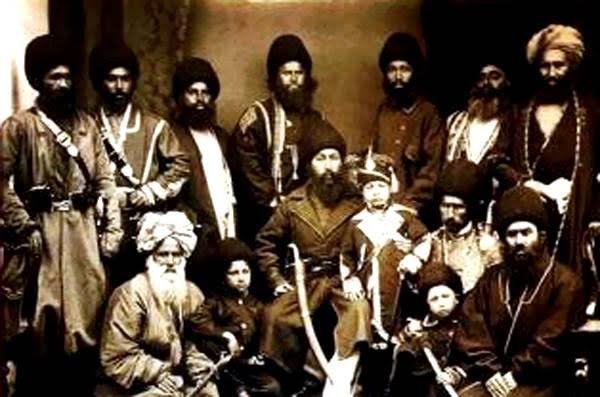
    The Pashtuns represent one of the most populous indigenous groups across South and Central Asia, predominantly in Afghanistan and Pakistan. Their social backbone relies on interconnected lineages, extended families, clans, and tribal alliances rather than a centralized political authority. From major confederations like the Durrani and Ghilzai to influential communities such as the Yusufzai, Afridi, Mohmand, Khattak, Wazir, and Mahsud, Pashtun society is a rich tapestry of overlapping regional, religious, and civic loyalties. At the core of their culture is Pashtunwali, an ancient honor code governing daily life through principles of hospitality, courage, asylum, and restorative justice. Historically, community issues and disputes were negotiated collectively through jirgas, or assemblies of local elders, maintaining order through consensus. Empire Builders and Cultural Crossroads Beyond tribal structure, Pashtuns have repeatedly reshaped the political landscape of the Indian subcontinent and Central Asia. Sultanate Dynasties: The Lodi dynasty established its rule over the Delhi Sultanate, paving the way for intricate South Asian governance structures. Administrative Reforms: Imperial leader Sher Shah Suri founded the Sur Empire in North India, pioneering sweeping reforms in taxation, infrastructure development, and currency. Empire Founding: In the 18th century, Mirwais Hotak challenged Safavid Persian dominance, while Ahmad Shah Durrani established the Durrani Empire in 1747, laying the groundwork for modern Afghanistan. This history is far more than military conquest. Pashtun territories served as vital crossroads where Persian, Turkic, Indian, and Islamic traditions converged. Consequently, their heritage spans beyond warrior traditions. It thrives in rich oral poetry, musical compositions, complex embroidery, craftsmanship, and trade networks. The Borderlands and Modern Challenges The 19th century brought prolonged conflict with British imperial forces along the northwestern frontier. A pivotal turning point arrived with the demarcation of the Durand Line in 1893. By drawing an artificial boundary between Afghanistan and British India (now Pakistan), the British divided ancestral Pashtun communities, establishing a geopolitically sensitive frontier that continues to spark debate and shape regional politics today.   In recent weeks, administrative re-alignments and border disputes in provinces like Balochistan and Khyber Pakhtunkhwa have reignited local debate. Prominent political and tribal leaders have voiced strong resistance to state restructuring, asserting that top-down administrative decisions risk erasing historical identities. Through renewed calls for broad political dialogue rather than bureaucratic divisions, modern Pashtun communities continue to rely on unified assemblies to safeguard their cultural heritage, self-determination, and historical voice in a changing region.

  • |

    Longing for other lives

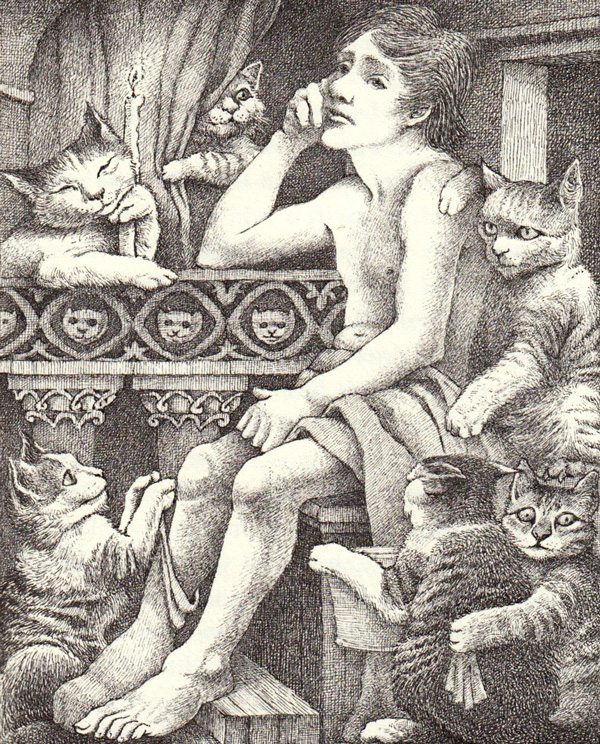
    You might be driving along a quiet stretch of highway at dusk and notice a remote house set against the rolling hills. Its porch light glowing softly against the fading twilight. It happens in an instant. Your mind steps inside for a fleeting moment. You picture yourself standing in that kitchen, tending to a warm pot of soup, learning the rhythms of the local wildlife and forget the press of unread emails. Or perhaps it happens when you see a cozy cottage on a distant coast. Might be an apartment perched above a neighborhood bookstore. Or a tiny rural train station where only a few passengers wait. For a few seconds, you inhabit that alternate life. But as quickly as the thought arrives, reality hits back. For many people, these sudden bursts of romantic daydreaming trigger a wave of subtle unease. It is common to treat such longings like a mild psychological symptom. It is an indicator that something in our current existence is lacking. We wonder if we made wrong turns along the path, selected the wrong career or settled into the wrong neighborhood. We assume that fantasizing about a simpler life means we are secretly desperate to escape our reality. However, a change in perspective shows that this assumption may misinterpret how the human mind functions. Understanding Fernweh: The Opposite of Homesickness The key to re-evaluating this feeling lies in a concept from the German language: fernweh. The word is translated literally as far-pain. Fernweh describes a deep, aching yearning for distant places. It stands as the emotional mirror image of homesickness. While homesickness pulls us back toward the familiar, fernweh pushes toward the unfamiliar. Fernweh is neither a practical plan for relocation nor a symptom of dissatisfaction. It exists in a unique middle ground. It is more than a mere desire to escape reality, yet far less than a literal plan to manifest a new lifestyle. When we treat longing as a sign of discontent, we force ourselves into an unnecessary dilemma. We start assuming we must either change our lives or suppress our thoughts entirely. In reality, these brief mental excursions rarely end with us packing a suitcase. Instead, they leave us returning to our daily routine feeling subtly expanded, as if our capacity for wonder has been stretched open. The Multiple Selves and the Purpose of Imagination The alternative selves we envision during daydreams: the quiet caretaker of a lighthouse, the keeper of a village shop, or the isolated writer in a secluded cabin, are not criticism on our present choices. They do not demand that we abandon our jobs or start over from scratch. Rather, these imagined lives serve as quiet reminders that human beings are inherently complex. The person managing household budgets, answering routine emails and searching for misplaced keys is not the entirety of who we are or who we could be. Human imagination evolved specifically to explore endless possibilities without requiring us to physically execute every scenario. Seeing Distant Peace as Invitation Instead of seeing distant places as destinations we failed to reach, we can view them as invitations. They invite us to reconnect with our curiosity, our creativity and our capacity for reinvention. They reassure us that another way of seeing the world remains entirely possible, even within the routine of daily living.   Ultimately, longing for another life or a distant land does not mean you chose the wrong life. It simply demonstrates that your imagination remains curious and alive. As long as a distant porch light or a road over a hill can capture your wonder, you can take comfort in a profound truth. The truth is your internal life will always be far larger than the single outer life you happen to inhabit.

  • | | |

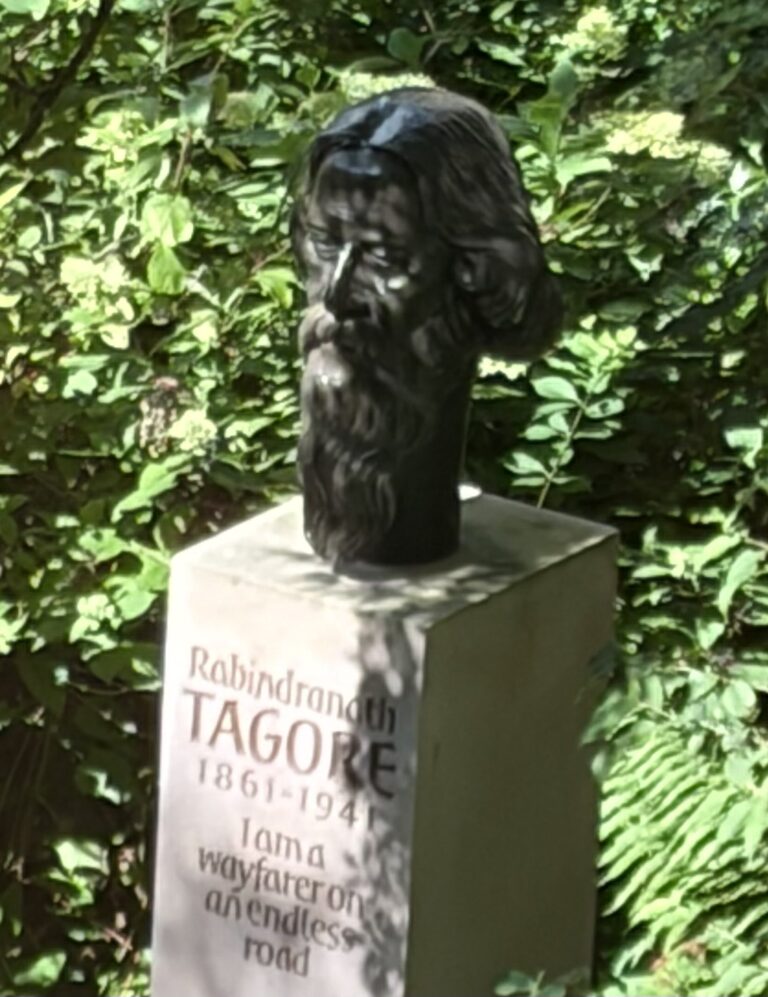
    Rabindranath Tagore’s statue in Edinburgh

    The Sandeman House garden in Edinburgh holds a bronze statue of Asia’s first Nobel laureate in Literature, Rabindranath Tagore. Inscribed upon the pedestal supporting his likeness are his famous words, “I am a wayfarer on an endless road.” A Cross-Cultural Bridge Travelers often seek out Scotland’s capital for its ancient castles, gothic architecture, and literary heritage tied to the likes of Sir Walter Scott or Robert Louis Stevenson. However, discovering Tagore’s presence in this peaceful courtyard offers a cross-cultural bridge. The statue, unveiled to commemorate the deep-seated connections between Scotland and India. It is particularly the intellectual dialogue between Scottish polymath Patrick Geddes and Tagore himself. This monument serves as a physical testament to a global humanism that transcends geographic boundaries. Tagore’s India Tagore was far more than a celebrated poet and author. He was an uncompromising philosopher, musician, visual artist, and social reformer whose thoughts shaped modern South Asia and beyond. At the heart of his vast body of literature lies a profound critique of borders, nationalism, and sectarian division. Tagore envisioned an India, and indeed a world, defined by radical openness. In his mind, India is a sanctuary where diverse faiths, ethnicities, and cultures could coexist in mutual respect. He rejected narrow chauvinism in favor of an inclusive internationalism, advocating for a world where the mind is without fear and the head is held high. Tagore’s Literary Legacy In the contemporary geopolitical landscape, Tagore’s ideals feel relevant. Across the globe, modern youth face a climate marked by rising social polarization, cultural fracturing, and ideological echo chambers. In response, a growing movement of young activists, writers, thinkers, and students are turning back to Tagore’s literary legacy as a blueprint for unity. They are rediscovering his essays and poetry not merely as historical artifacts, but as active tools to reclaim a society rooted in pluralism and dialogue. By reimagining Tagore’s vision for a modern era, today’s generation is fighting to restore an environment where freedom of thought, artistic expression, and inclusivity thrive over division. His stance on education emphasized learning in harmony with nature and breaking down rigid academic and social silos. Young scholars and community organizers are channeling this exact ethos, utilizing art, literature, and grassroots civic engagement to rebuild cross-cultural bridges in an increasingly fragmented world. Message of Universal Brotherhood   Standing before Tagore’s statue in Edinburgh’s quiet garden, one is reminded that his journey as a “wayfarer” was never meant to be walked alone. His message of universal brotherhood, preserved in stone far from his native Bengal, serves as a timeless compass. For the youth striving to cultivate a more empathetic and open world, Tagore’s endless road remains wide open, inviting everyone to walk forward together.

  • The Cost of Carelessness

    Through the columns of your newspaper, I would like to draw attention to the growing problem of carelessness in our society. Many accidents and difficulties could be prevented if people and authorities took their responsibilities seriously. Careless driving, ignoring traffic rules, poor road conditions, and negligence by concerned departments are putting innocent lives at risk. People often drive at high speed, use mobile phones while driving, or ignore traffic signals. At the same time, damaged roads and a lack of proper safety measures make the situation worse. The cost of such carelessness is very high. Families lose their loved ones, people suffer injuries, and society faces unnecessary financial and emotional burdens. These problems cannot be solved unless everyone understands their responsibility. I urge the authorities to strictly enforce traffic rules, improve road conditions, and take action against negligence. Citizens should also follow safety rules and act responsibly.

  • Healthy weight may protect male fertility study

    Male infertility is becoming a growing health concern around the world and new research suggests that excess body fat may be one of the reasons behind the rising number of cases. A study from Aarhus University found that higher levels of body fat can negatively affect male reproductive health and reduce fertility. The researchers followed 1,058 young men, who were about 18 years and 9 months old when the study began. They measured body fat body weight and muscle mass to understand how body composition affects fertility. According to the researchers a healthy body fat percentage for men is generally between 8% and 19%, while 20% or higher is considered elevated. The study found that men with higher body fat had on average a 23% lower sperm count than those with healthier body fat levels. The researchers also found that excess body fat may disrupt hormones that play an important role in sperm production and overall reproductive health. Hormonal changes caused by obesity can reduce both sperm  quality and fertility. Experts say maintaining a healthy weight through regular exercise a balanced diet enough sleep and stress management can support both overall health and reproductive health. Avoiding smoking limiting alcohol and managing long term medical conditions may also help improve fertility. The findings were published in the journal Human Reproduction. The study supports earlier findings from the World Health Organization, which reported in 2023 that about 17.5% of adults worldwide experience infertility at some point in their lives. The WHO also noted that infertility affects people in high middle and low income countries making it a global public health challenge. Researchers say that while infertility can have many causes keeping body fat at a healthy level may be an important step in protecting male fertility and improving reproductive health.

  • Organic eggs may have higher environmental impact

    A new study by researchers at the University of Oxford suggests that producing organic and free range eggs may have a greater impact on the environment than eggs produced by hens kept in conventional cage systems. According to the research if all egg production switched to organic and free range farming carbon emissions could increase by about 60%. The amount of land needed for egg production would also nearly double. The researchers estimated that producing only organic and free range eggs would release around 2.316 million tonnes of carbon dioxide equivalent greenhouse gases. In comparison producing eggs only from caged hens would generate about 1.184 million tonnes. The study explains that while organic and free range systems are often considered better for animal welfare they require more hens to produce the same number of eggs.  This is because hens kept in cage systems generally lay eggs more efficiently. Researchers also warned that organic and free range farming may require more land and could have a greater impact on water pollution. The study’s lead author, Dr. Harriet Bartlett said that future decisions about egg production should carefully balance three important factors animal welfare environmental impact and the need to produce enough food.

Leave a Reply

Your email address will not be published. Required fields are marked *