houston hosts major
|

Houston hosts major Muharram haleem feast


HOUSTON: Friends of Karachi Houston, a prominent Pakistani-American community organization, hosted a grand Haleem feast on August 2, 2026, to mark Muharram-ul-Haram, continuing a tradition that has brought the community together for the past 12 years.

More than 2,000 people attended the annual community gathering, making it one of the largest Muharram-related Haleem events held in Texas, according to the organizers. The event attracted a diverse cross-section of the Pakistani-American community, including former federal and provincial ministers, former members of the National and Provincial Assemblies, political leaders, social workers, business figures and community representatives.

Members of the US Congress also attended the gathering, along with representatives and office-bearers from both the Republican and Democratic parties. Their participation highlighted the event’s growing importance as a platform for community engagement and cultural connection.

The gathering also brought together Pakistanis from different schools of thought and backgrounds, reflecting the spirit of unity and brotherhood associated with Muharram. Families, community members and guests gathered to enjoy traditional Pakistani Haleem while reconnecting with their cultural roots.

Guests praised the organizers for the event’s arrangements and the authentic taste of the Haleem. Many attendees said the gathering gave them a strong sense of connection with Pakistan and made them feel as though they had briefly returned to their homeland.

The annual feast has become a much-anticipated event for the Pakistani community in Houston. Over the years, it has provided an opportunity for people to come together, celebrate their shared cultural heritage and strengthen relationships within the wider community.

At the conclusion of the event, the Friends of Karachi Houston administration thanked all guests, volunteers and supporters whose contributions helped make the gathering successful. The organizers also reaffirmed their commitment to continuing the tradition in the coming years and bringing the community together with the same spirit of service, solidarity and brotherhood during Muharram.
Similar Posts

  • |

    Will Scharf named Trump’s new White House counsel

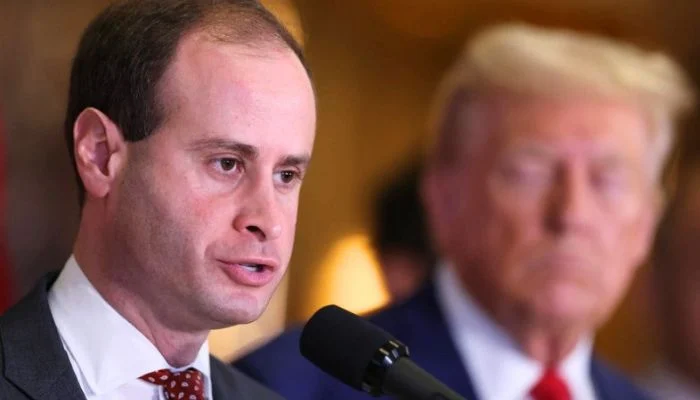
    US President Donald Trump has appointed Will Scharf as the next White House counsel and assistant to the president. Scharf, who currently serves as White House staff secretary, will take over the legal post on September 1, 2026. He will replace David Warrington, who is set to leave the administration and enter the private sector. Scharf is a lawyer and political adviser with close ties to Trump. Before joining the White House, he represented Trump in several major legal matters. He was also involved in the presidential immunity case that reached the US Supreme Court. Scharf previously worked as a federal prosecutor. He also served as a law clerk for federal appeals court judges, giving him experience in both government and federal litigation. His new position will place him at the centre of the Trump administration’s legal strategy. As White House counsel, Scharf will advise the president on legal issues and oversee matters involving executive privilege, judicial appointments and relations with the Justice Department. He will also be involved in responding to legal challenges facing the administration. The position is considered particularly important as Trump prepares for growing political and legal pressure ahead of the 2026 midterm elections. Scharf joined Trump’s legal team in 2023. He worked on the federal election interference case brought by former Special Counsel Jack Smith. His involvement continued as the case reached the Supreme Court. In 2024, the Supreme Court ruled that presidents have broad immunity from criminal prosecution for official acts. The decision became a major development in the legal battles surrounding Trump. After Trump returned to the White House in January 2025, Scharf was appointed staff secretary. In that role, he managed documents and other materials sent to the president for review. He also frequently appeared with Trump during executive-order signing ceremonies. Scharf has also chaired the National Capital Planning Commission. During his tenure, he was involved in the approval process for Trump’s proposed White House ballroom project, which has faced controversy and scrutiny. His appointment comes at a politically sensitive time for the administration. The White House is dealing with legal and political challenges while preparing for increased congressional scrutiny before the midterm elections. Trump praised Scharf after announcing the appointment. He described him as “tough, strong, and smart” and highlighted his experience as a federal prosecutor and his work on Trump’s legal cases.

  • | |

    2,300 Israeli settlers storm Al-Aqsa

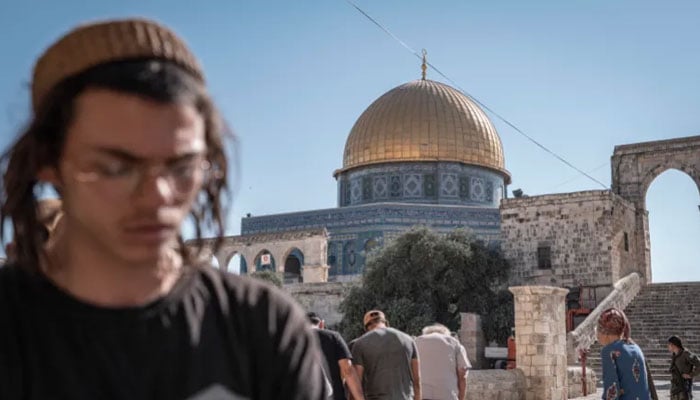
    Around 2,300 Israeli settlers entered the Al-Aqsa Mosque compound in occupied East Jerusalem on Wednesday morning, according to Palestinian officials and international media reports. Palestinian authorities described the mass entry as one of the largest such incursions this year. The incident took place as Jewish settlers marked Tisha B’Av, a religious day of mourning that commemorates the destruction of ancient Jewish temples, according to Jewish tradition. The site holds deep religious significance for both Muslims and Jews. Muslims refer to it as the Al-Aqsa Mosque compound, while Jews call the area the Temple Mount. Israel’s far-right National Security Minister Itamar Ben-Gvir also entered the compound under heavy police protection. His presence at the sensitive holy site has previously drawn strong criticism from Palestinians and sparked concerns over rising tensions in Jerusalem. The Jerusalem Governorate said the number of Israeli settlers entering the compound could increase further by sunset. Palestinian officials also reported that Israeli forces imposed tight security restrictions around the entrances to Al-Aqsa and across the Old City of Jerusalem. Large numbers of Israeli security personnel deployed throughout the area, while Palestinian worshippers faced restrictions on accessing the mosque. According to the governorate, only a limited number of Palestinians managed to reach Al-Aqsa for the dawn prayer. Palestinian officials further alleged that Israeli forces assaulted several worshippers and local residents during the heightened security measures. The latest incident comes amid continued tensions surrounding access to and control of the Al-Aqsa Mosque compound, one of the most sensitive religious and political flashpoints in the Israeli-Palestinian conflict.

  • | | |

    Iran says Pakistan ties gaining greater importance

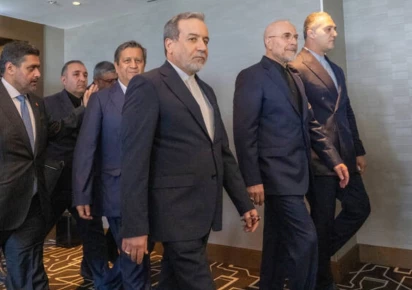
    TEHRAN: Iran has described its relationship with Pakistan as increasingly important, saying Islamabad has played a significant role as a mediator since the outbreak of the regional conflict. Iranian Foreign Ministry spokesperson Esmaeil Baghaei said the two neighbouring countries were maintaining close diplomatic contacts. He also confirmed that Iranian Foreign Minister Abbas Araghchi and Parliament Speaker Mohammad Bagher Ghalibaf had been invited to visit Islamabad. Baghaei said the two officials would travel to Pakistan at a suitable time. He did not announce a specific date for the visit. He described reciprocal visits between the two countries as a natural part of their growing bilateral relationship. The Iranian official also played down concerns that the recently signed defence agreement between Pakistan, Saudi Arabia and Turkiye was aimed at Tehran. Pakistan, Saudi Arabia and Turkiye signed the Makkah Joint Defence Agreement on August 7. The agreement seeks to strengthen collective defence cooperation and provides for a joint response if any member comes under attack. Baghaei said Tehran did not consider the agreement a direct threat to Iran. He said regional countries were increasingly seeking security arrangements based on their own regional realities rather than relying entirely on external powers. He maintained that regional cooperation could contribute to stability if such arrangements remained inclusive and focused on preventing conflict. Baghaei also said Iran was not prepared to resume direct negotiations with the United States while Tehran believed Washington was violating an interim agreement. The Iranian government has also linked the reopening of the Strait of Hormuz to a number of demands. These include compensation for damage caused during the conflict and an end to the US naval blockade of Iranian ports. Meanwhile, Iran and Oman are continuing discussions on arrangements for commercial shipping through the Strait of Hormuz. Baghaei said the talks were progressing in a constructive manner. He said the two sides had reached an understanding on a proposed map for shipping traffic and were working on several technical details. According to the Iranian official, the proposed arrangement would establish mechanisms for safer maritime movement. It would also address environmental protection and maritime crimes. He stressed that the discussions with Oman were focused on ensuring safe international shipping and were separate from broader political disputes. Baghaei nevertheless reiterated that Tehran would not allow the full reopening of the strategic waterway unless its conditions concerning Washington were addressed. In a separate development, Iran has appointed former Islamic Revolutionary Guard Corps commander Mohsen Rezaei to a senior position in the Supreme National Security Council. Rezaei has replaced Mohammad Baqer Zolqadr as secretary of the body responsible for coordinating Iran’s security and foreign policy. No official reason was immediately given for the change. It also remains unclear whether the appointment will lead to any major shift in Iran’s security policy. Rezaei, 71, commanded the Revolutionary Guards from 1981 to 1997. He later served for more than two decades as secretary of Iran’s Expediency Discernment Council and also held the position of vice president for economic affairs. Iran’s Supreme National Security Council brings together senior military, intelligence and government officials. It is formally chaired by the president, while the supreme leader retains ultimate authority over major state matters. A separate decree appointed Rezaei as the supreme leader’s representative on the council. Zolqadr was instead named as a political adviser. The developments come as Iran faces heightened regional tensions and continues efforts to manage its relations with neighbouring countries and major international powers.

  • Global humanitarian crisis

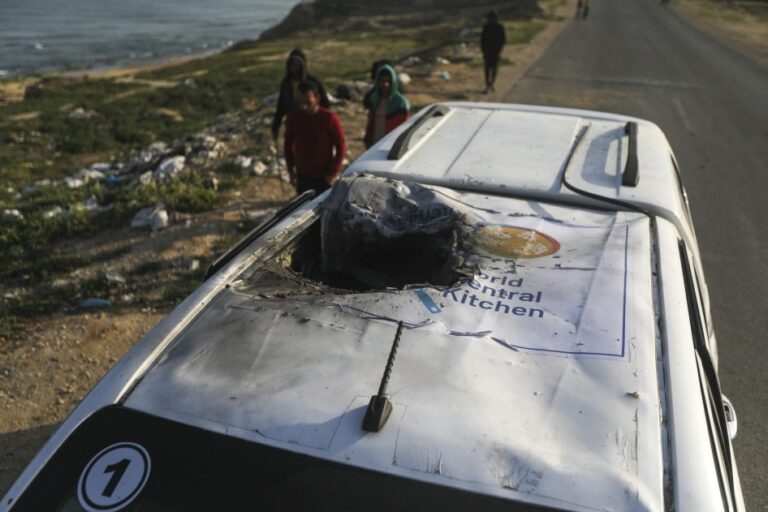
    Across multiple war zones around the globe, military hostilities and direct attacks on aid workers are pushing millions of civilians to the brink. Frontline personnel operating in Ukraine, the Middle East and Sudan are struggling to deliver basic survival services under increasingly perilous conditions. Strikes on Essential Infrastructure and Relief Assets in Ukraine Violence across Ukraine continues to inflict heavy civilian casualties. It claimed lives and injuring children across nine major regions, including Kyiv, Kharkiv, Odesa and Zaporizhzhia. The intense shelling has directly hindered humanitarian operations beyond damaging residential neighborhoods and essential municipal utilities. A recent strike in the city of Dnipro destroyed a primary World Health Organization (WHO) supply warehouse. The attack wiped out crucial medical inventory earmarked for frontline healthcare facilities. Meanwhile, emergency personnel in the Kherson region reported damage to a civilian evacuation transport and a direct hit on a World Food Programme (WFP) partner truck carrying essential food supplies. Despite these continuous risks, relief organizations remain active on the ground, delivering immediate trauma care, psychological support, and essential survival provisions to impacted communities. Rising Hostilities and Explosive Hazards Across the Middle East The security landscape in southern Lebanon and Gaza remains extremely volatile. Peacekeepers with the UN Interim Force in Lebanon (UNIFIL) monitored hundreds of artillery rounds and dozens of airspace incursions by Israeli forces over a single weekend. Direct fire incidents were recorded near UN observer positions in Meiss ej Jebel, alongside sightings of naval activity along the coast. Crucially, peacekeepers are working to clear hazardous remnants of war, having uncovered loaded rocket launchers, unexploded shells, and improvised explosive devices scattered across southern villages. In Gaza, ongoing military activity continues to imperil non-combatants and expand basic survival needs. Unexploded ordnance represents one of the most severe long-term dangers to returning residents and reconstruction crews. Specialist teams have identified and marked more than 1,000 explosive items across the Gaza Strip since late 2023. These clearance operations are vital for allowing workers to clear heavy rubble, restore water infrastructure, and safely access damaged facilities. To prevent further civilian casualties, mine safety specialists conducted targeted educational workshops reaching over 63,000 individuals in the past month alone. Sudan’s Escalating Displacement and Extreme Budget Drought In Africa, Sudan’s protracted conflict is driving mass displacement while relief budgets rapidly dry up. Severe insecurity around El Obeid in North Kordofan State has uprooted thousands of residents seeking sanctuary, forcing aid agencies to scramble to supply two million liters of drinkable water to roughly 133,000 displaced individuals facing acute shortages. Further west, intense fighting in the Sirba locality of West Darfur displaced around 18,000 civilians in a single week, sending thousands fleeing across the border into neighboring Chad. Compounding the human toll is a crippling financial deficit. The global humanitarian appeal for Sudan remains underfunded at just 41 percent, having received only $1.2 billion of the required $2.9 billion. This severe shortage has already forced the closure of multiple health centers in Central Darfur, leaving an estimated 75,000 displaced people completely cut off from basic healthcare services. Growing Risks of Regional Spillover in Yemen   The fragile stability in Yemen is also facing its most precarious moment since the 2022 truce. UN Envoy Hans Grundberg warned that recent escalations risk dragging the nation into a broader regional conflict, erasing years of diplomatic progress. Relief agencies emphasize that without immediate de-escalation, sustained diplomacy, and dedicated financial backing from international donors, global humanitarian networks will remain severely stretched, leaving millions of vulnerable civilians without access to life-saving assistance.

Leave a Reply

Your email address will not be published. Required fields are marked *