deadly heatwave sweeps
| |

Deadly heatwave sweeps South Korea, claims 16 live…

SEOUL: South Korea is grappling with one of the most intense heatwaves in its recorded history, with at least 16 people losing their lives and more than 2,000 others suffering from heat-related illnesses as extreme temperatures continue to grip the country.

According to South Korean authorities, the nation recently recorded its highest temperature in 122 years of weather observations, with the southern city of Yangsan reaching a scorching 42.5°C.

For the first time, officials have issued an extreme heat warning for the capital, Seoul, highlighting the severity of the ongoing weather conditions.

President Lee Jae Myung has instructed government agencies to step up emergency measures to protect vulnerable groups, including the elderly, outdoor workers, and people with underlying health conditions. He also directed officials to closely monitor the country’s electricity supply as soaring demand for cooling systems places added pressure on the power grid.

Climate experts say the unprecedented heat is being driven by a combination of persistent high-pressure weather systems and the growing impact of climate change, which has intensified extreme weather events across the region.

Authorities continue to urge residents to limit outdoor activities, stay hydrated, and take precautions as the record-breaking heatwave shows little sign of easing.

Similar Posts

  • | |

    NAB chairman grilled over bureau’s performance

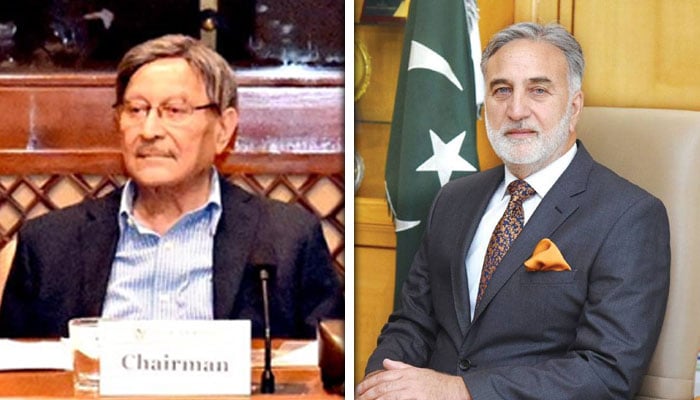
    A meeting of the Senate Standing Committee on Law and Justice was held under the chairmanship of Senator Farooq H Naek, where National Accountability Bureau (NAB) Chairman Nazir Ahmed Butt appeared before the committee on its instructions. During the meeting, Senator Farooq H Naek remarked that the NAB chairman had perhaps appeared before the committee for the first time. In response, Nazir Ahmed Butt said that it was his first appearance before the committee as NAB chairman. He added that he had appeared before the committee several times while performing his previous responsibilities. The NAB chairman said he had been assigned the responsibility in 2023. He recalled that ministers he met during his tenure repeatedly complained that the bureaucracy was afraid to make decisions and was therefore reluctant to work. During the meeting, NAB Director General Operations briefed the committee on the bureau’s powers and performance. The official said NAB had received 505,799 complaints since its establishment. He said NAB also operates as an investigative agency under the Anti-Money Laundering Act, 2010. According to the briefing, NAB has so far completed 12,147 inquiries, conducted 7,339 investigations and filed 4,105 references. The DG Operations further told the committee that NAB had been allocated Rs22.556 billion over the past three-and-a-half years. Despite the expenditure, the bureau reported significantly higher recoveries during the same period. The committee was informed that NAB had recovered Rs1.069 trillion over the past three-and-a-half years. The briefing highlighted the bureau’s role in investigating corruption, financial crimes and other cases falling under its legal mandate. The committee members discussed NAB’s powers, investigations, recoveries and its overall performance during the meeting. The NAB chairman and officials responded to questions from the committee and provided details about the bureau’s operations and financial performance.

  • | |

    Rain inundates homes, shops in Rawalpindi

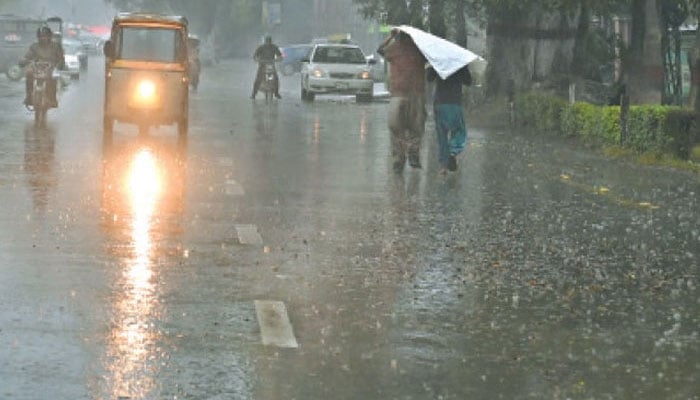
    Heavy rain in Rawalpindi has caused flooding in several low-lying areas, creating difficulties for residents. Water entered homes in Sadiqabad and Dhoke Elahi Bakhsh. Residents faced problems as rainwater accumulated inside residential areas. Several major roads were also affected. Rainwater collected on Murree Road, Rawal Road and Dhoke Khaba, disrupting traffic and making movement difficult. The situation became more difficult as WASA drainage teams had yet to reach some affected areas. Residents were waiting for authorities to clear the accumulated water. Water also entered shops in some areas, causing inconvenience to traders and residents. Meanwhile, the rain in Rawalpindi and Islamabad later stopped. Following the end of the rainfall, the water level in Nullah Lai began to fall. At Kattarian, the water level dropped to around 14 feet. At the Gawalmandi Bridge, the water level was recorded at around 16 feet. The rainfall has highlighted the vulnerability of low-lying areas in Rawalpindi to urban flooding. Residents have called for timely drainage operations to prevent rainwater from entering homes and businesses. The weather department has also forecast rain at some places in Punjab, Balochistan and Khyber Pakhtunkhwa. Authorities are expected to remain alert in areas vulnerable to flooding and water accumulation.

  • |

    Real Madrid hails FIFA U-turn on World Cup investor plan

    Spanish giants Real Madrid have welcomed FIFA’s decision to abandon a controversial plan that would have opened the door to private investment in the World Cup. FIFA president Gianni Infantino was forced into an embarrassing reversal on Friday. The climbdown came after strong pushback from European football’s governing body UEFA, along with several other confederations who had raised objections to the proposal. In an official statement, Real Madrid called the decision good news for football, its institutions, and the millions of fans who follow the sport worldwide. The club specifically thanked UEFA, along with various confederations and federations, for standing firm and responsibly opposing the project. According to the statement, this collective show of unity and sense of duty helped protect the game at a crucial moment. Notably, Real Madrid was once a founding member of the failed European Super League breakaway project, a venture that had strained its relationship with UEFA for years. However, the two parties reached an agreement back in February 2026, aimed at benefiting European club football and putting past tensions to rest. The controversy at the centre of this latest episode began on Tuesday. FIFA had revealed plans to set up a commercial subsidiary responsible for running its biggest events, including the World Cup and Club World Cup. This subsidiary was designed to be open to private investment, something Infantino claimed could generate as much as $4.2 billion for the organisation. UEFA led the charge against the proposal from the very beginning. The organisation made clear it would boycott all FIFA competitions if the plan went ahead. It also stated openly that it had lost confidence in Infantino’s leadership, adding to the mounting pressure the FIFA chief has faced in recent days. Given Real Madrid’s past history with breakaway football projects, their public support for UEFA in this instance carries added weight. It signals a continued effort by the club to align itself with the sport’s traditional governing structures, rather than commercial ventures that risk disrupting football’s existing institutions. For now, the scrapped plan appears to have averted a serious rift within global football’s governing bodies. Still, with UEFA having openly questioned Infantino’s leadership, uncertainty may continue to surround his position at FIFA in the coming months, even as this particular controversy comes to a close.

  • | |

    Punjab cybercrime crackdown, 28 suspects arrested

    LAHORE: Authorities have arrested 28 suspects in Lahore, Faisalabad and Multan as part of a major crackdown on organised online fraud, exposing alleged schemes that relied on impersonation, fake investment opportunities and fabricated official identities to deceive citizens. The arrests were made during a province-wide operation by the National Cyber Crime Investigation Agency (NCCIA) Punjab, directed by Punjab Director Muhammad Ali Wasim, officials said. Investigators also seized 24 mobile phones and a laptop, which are now being examined for evidence that could lead to other members of the alleged network. The investigation has revealed how fraudsters allegedly manipulated trust to convince victims to hand over large sums of money. Millions allegedly lost in Lahore scam In Lahore, 18 suspects were arrested in separate operations. Investigators said the suspects allegedly impersonated relatives, visa agents, government officials and personnel associated with the Punjab Safe Cities Authority. In one case, suspects allegedly posed as both a relative and a visa agent and persuaded a victim to transfer Rs25.86 million. The case has highlighted how scammers can combine apparently familiar identities with urgent requests to make their schemes appear legitimate. Rs54.66m trading fraud uncovered Three suspects were arrested in Faisalabad in connection with alleged online trading fraud and unauthorised access to a company email account. According to investigators, a victim was shown fabricated trading records, digital-wallet balances and purported profit statements to create the impression that substantial returns were being generated. After being persuaded to invest, the victim allegedly lost Rs54.66 million, investigators said. The case demonstrates the growing sophistication of investment scams, where criminals allegedly use manipulated digital information to make fraudulent platforms appear genuine. Multan arrests expose impersonation tactics In Multan, seven suspects were arrested for allegedly posing as relatives, bank employees and individuals claiming to be based in Britain. Officials said victims were approached with various demands, including payments supposedly required for prize money, customs clearance, taxes and visa renewals. Such tactics typically create a sense of urgency, leaving victims with little time to verify the identity of the caller or the authenticity of the demand. Digital evidence now under forensic examination NCCIA investigators are examining the seized devices through forensic analysis. Financial transactions, call records and digital communications are also being reviewed to establish the full extent of the alleged operation and identify other people who may be connected to it. The crackdown comes amid growing concern over online financial fraud in Pakistan. The NCCIA’s own statistics identify financial fraud as a major category of reported cybercrime. The latest arrests underscore a simple but increasingly important warning: an apparently familiar voice, official-looking message or promising investment opportunity may not be what it seems. Authorities are expected to continue the investigation as they trace the alleged network and follow the digital and financial trails left behind.

  • |

    Walking through time: A personal journey inside Na…

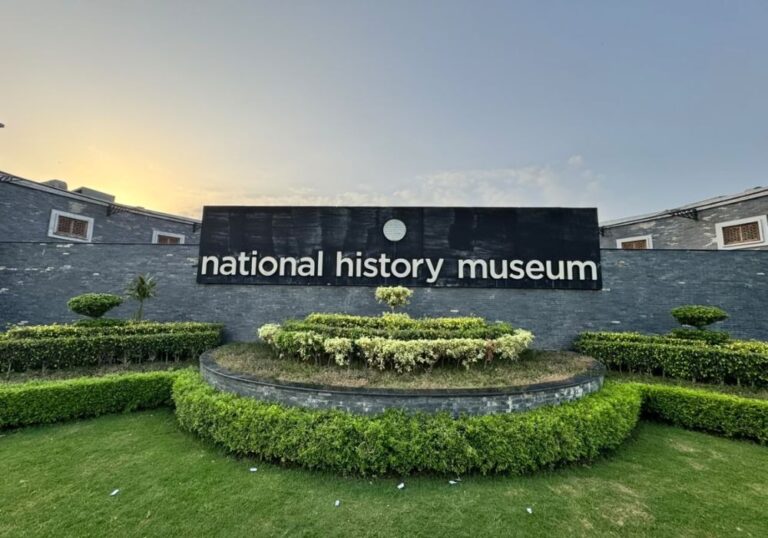
    The rain had just stopped when I reached Lahore’s National History Museum. The roads were quieter than usual, the air felt fresh and, for the first time in weeks, I wasn’t in a hurry. I had postponed this visit for years, ever since a brief stop during my internship at the Lahore Museum left me wishing for more time. This Sunday, I finally had it. I have also realised something over the past few weeks. Waiting for friends before exploring new places often means never going at all. So I decided to spend the afternoon on my own, following nothing except curiosity. As I entered the museum, Floor Supervisor Tabish welcomed me and arranged a guided tour with Muhammad Shamsher, a PhD scholar in History who also serves as one of NHM’s guides. His explanations never sounded like a lecture. Instead, he connected historical events with the people behind them, making every gallery feel like part of one continuing story. Growing up, I believed museums were places where objects sat behind glass while visitors quietly read information panels. That idea came from childhood visits to museums in Islamabad, Taxila and Harappa, and later from my internship at Lahore Museum. The National History Museum challenged that idea completely. Through digital displays, sound, projection and interactive exhibits, history became something to experience rather than simply observe. Every gallery encouraged visitors to slow down and become part of the story unfolding around them. One exhibit that caught my attention focused on the making of Minar-e-Pakistan. Like many Pakistanis, I had always admired the monument without knowing much about the person who designed it. The museum introduced architect Nasreddin Murat-Khan and displayed photographs that offered a glimpse into the creative process behind one of Pakistan’s most recognisable landmarks. It reminded me how often we celebrate monuments while forgetting the people who imagined them. The journey then moved towards Partition, where history became deeply personal. The restored railway carriage, once part of the North Western Railway, stood quietly inside the gallery. Visitors could step inside and experience a virtual reality presentation recreating the migration of 1947. I had watched countless documentaries and films about Partition, but sitting inside that carriage created an entirely different feeling. The sounds, voices and uncertainty surrounding the experience made history feel much closer than any textbook ever could. The museum then shifted from the birth of Pakistan to the challenge of building a new country. One gallery recreated the early government offices established after independence. I found myself studying old files, furniture and official records, imagining the enormous responsibility carried by those tasked with running a newly created nation. Nearby, early Pakistani passports were displayed inside glass cases. Different in design from today’s passports, they represented the same hope of a country beginning to define its identity. Another section I found especially engaging was Camera from the Past. Visitors could stand before a vintage-style camera and have their photograph taken, creating a small connection between the present and the past. The gallery also highlighted photographer Aziz Ahmed Azmi, whose images documented Pakistan’s early years. Looking at his work, I realised that photographs often become history long after the moment they capture has passed. Perhaps the gallery where I spent the most time was Popular Culture. Having studied Mass Communication with a specialisation in Theatre, Film and Television and continuing to work in journalism, I naturally found myself drawn towards the colourful Lollywood posters and displays celebrating Pakistan’s cinematic heritage. Reading about Azra, the country’s first colour film, and Zinda Laash, Pakistan’s first horror film, reminded me how rich our film history is, even if many younger audiences know little about it today. Before leaving, I also explored Husn-e-Hunar, an exhibition celebrating Pakistan’s traditional craftsmanship. Alongside literature, music and cultural displays, it served as a reminder that a nation’s identity is shaped not only by political events but also by its artists, craftsmen and storytellers. When I stepped back outside, I realised I had spent far longer inside the museum than I had planned. I didn’t leave with pages of notes or dozens of photographs. Instead, I left with a greater appreciation for how history can be presented when museums invite visitors to participate rather than simply observe. The National History Museum doesn’t just preserve Pakistan’s past. It encourages visitors to pause, ask questions and discover the stories that continue to shape the country today.

  • |

    Alia Bhatt backs Delhi student protest, says, “The future is theirs”

    Alia Bhatt has joined the growing list of Bollywood stars speaking up for the students protesting in Delhi. The actress shared a heartfelt note on Instagram after the demonstrators faced police action during Monday’s march. She admitted the past few days had left her emotionally shaken, but also filled with hope. Bhatt described each protesting student as carrying more than personal ambition. She said they represent years of family sacrifice, hard work, and dreams of a better future. She went on to praise their courage in strong terms. Bhatt said their determination should push everyone to ask whether the country is truly listening to the generation shaping its tomorrow. She ended her note with a message dedicated entirely to the students, closing with “Jai Hind.” Bhatt is not the first major star to speak out. Salman Khan broke his silence a day earlier, sharing his own message of support on social media. Khan called the protest peaceful and praised the students for their bravery. He expressed sadness that the movement had turned violent and said his heart went out to the injured students and their families. He described the paper leak controversy as a serious issue and appreciated the way the country’s youth had united for a fairer education system. Khan also made a pointed request. He said the movement should remain free from political interference and that all credit should go strictly to the students who organized it. Other celebrities have joined the show of solidarity as well. Huma Qureshi and her brother Saqib Saleem visited the protest site at Jantar Mantar early Thursday morning, arriving around 2 am to stand with the demonstrators in person. Several more names from the film industry have voiced support in recent days. These include Rajkummar Rao, Prakash Raj, Naseeruddin Shah, Anupam Kher, Shabana Azmi, and Javed Akhtar. The wave of celebrity support comes as the student-led protest, backed by the Cockroach Janta Party, continues to gain national attention. The movement began over anger surrounding the NEET paper leak and has since grown into a broader push for accountability in India’s education system. With more public figures expected to react, the protest continues to dominate conversations both online and offline across the country.

Leave a Reply

Your email address will not be published. Required fields are marked *