healthy weight may

Healthy weight may protect male fertility study

Male infertility is becoming a growing health concern around the world and new research suggests that excess body fat may be one of the reasons behind the rising number of cases.

A study from Aarhus University found that higher levels of body fat can negatively affect male reproductive health and reduce fertility.

The researchers followed 1,058 young men, who were about 18 years and 9 months old when the study began.

They measured body fat body weight and muscle mass to understand how body composition affects fertility. According to the researchers a healthy body fat percentage for men is generally between 8% and 19%, while 20% or higher is considered elevated.

The study found that men with higher body fat had on average a 23% lower sperm count than those with healthier body fat levels.

The researchers also found that excess body fat may disrupt hormones that play an important role in sperm production and overall reproductive health.

Hormonal changes caused by obesity can reduce both sperm  quality and fertility.

Experts say maintaining a healthy weight through regular exercise a balanced diet enough sleep and stress management can support both overall health and reproductive health.

Avoiding smoking limiting alcohol and managing long term medical conditions may also help improve fertility.

The findings were published in the journal Human Reproduction.

The study supports earlier findings from the World Health Organization, which reported in 2023 that about 17.5% of adults worldwide experience infertility at some point in their lives.

The WHO also noted that infertility affects people in high middle and low income countries making it a global public health challenge.

Researchers say that while infertility can have many causes keeping body fat at a healthy level may be an important step in protecting male fertility and improving reproductive health.

Similar Posts

  • Grapes could be good for your joints

    Joint pain affects millions of people around the world and becomes more common as people get older. A new study from China suggests that eating grapes regularly may help support joint health. Researchers reviewed previous studies to understand how a natural plant compound called resveratrol affects the joints. This compound is found in grapes and berries. For many years scientists have studied resveratrol because of its strong antioxidant and anti-inflammatory properties. It is also believed to help protect cells and slow down the aging process. The researchers found that resveratrol may help reduce long term inflammation which is one of the main causes of joint problems such as arthritis. Although the body does not absorb resveratrol easily and most of it is processed by the liver earlier studies suggest it may still help protect joints from damage and reduce pain. The researchers said more studies are needed before medicines or supplements based on resveratrol can be developed. However adding grapes and berries to your diet may be a simple way to support healthier joints as part of a balanced lifestyle.

  • | | |

    Reason, passion and desire

    We often like to view ourselves as unified, consistent individuals guided by singular motives. Yet, almost everyone has experienced an intense internal conflict. It’s wanting to spend on a impulse buy while knowing it defies financial logic. Or feeling overcome with regret immediately after giving in to a temptation. Over two millennia ago, the ancient Greek philosopher Plato set out to explain this psychological friction in Book IV of his masterwork, the Republic. Plato proposed that our psyche is composed of three distinct yet interacting forces rather than treating the human mind or psuche (soul) as a monolithic entity. Plato developed the concept of the tripartite soul. Further, he offered a framework that remains remarkably relevant to modern understandings of human behavior, self-control and moral choice. The Three Components of the Psyche Plato divides the human mind into three primary elements, each responsible for different aspects of our drives and behavior. 1. The Appetitive Element (To Epithumetikon) The appetitive part is the largest and most primal component of human nature. It encompasses our basic instinctual desires, including physical appetites for food, drink, comfort, and sensual pleasure, as well as material wants. Because these cravings are immediate and self-interested, the appetitive drive is inherently impulsive. Left unchecked, it seeks gratification regardless of long-term consequences. 2. The Spirited Element (To Thumoeides) The spirited element represents our emotional drive, passion, and sense of honor. It is the source of courage, pride, and righteous indignation when we witness or experience injustice. Unlike raw bodily appetite, the spirited part is closely tied to our moral identity and self-image. When functioning healthily, spirit acts as an ally to reason. It generates feelings of shame or self-directed anger when we surrender to harmful appetitive urges. 3. The Rational Element (To Logistikon) The rational element is the calculating and reflective mind. It seeks truth through logic, forethought, and critical reflection. What sets rationality apart from the other two components is its scope. While appetite and spirit focus on fulfilling specific, immediate goals, the rational mind evaluates what is best for the entire person in the long run. The Conflict Within: Why the Soul Divides To demonstrate that these three elements are truly distinct, Plato relies on an early formulation of the principle of non-contradiction: a single entity cannot simultaneously move in opposite directions in the exact same respect. Therefore, when a person experiences contradictory impulses such as feeling an intense thirst yet consciously choosing not to drink due to illness or health concerns, different parts of the mind must be in opposition. A classic illustration of this psychological war is the story of Leontius. While walking, Leontius felt a compulsive curiosity to look at execution corpses lying on the ground. Simultaneously, he felt disgust and moral repulsion. Eventually, his base appetite won out, causing him to rush over while angrily cursing his own eyes. This reaction demonstrates the spirited part of the soul becoming angry at the appetitive part for overriding rational judgment. From Conflict to Harmony Plato’s goal was not to suggest that humans should eradicate desire or emotion altogether. Instead, he argued that mental health and moral integrity, what he called justice of the soul, require a proper hierarchy. Reason must govern, serving as the wise leader that understands the big picture. Spirit must protect and enforce reason’s guidance with courage and conviction. Appetite must operate within temperate limits established by reason.   When these three components function in balance, an individual achieves psychological harmony. Conversely, when base desires or untamed emotions usurp the throne, inner turmoil and destructive behaviors follow. Plato’s tripartite framework ultimately serves as a timeless reminder that self-mastery is not about suppressing who we are, but about bringing our competing drives into a balanced, reason-guided unity.

  • |

    Rare 1858 volume returned to Australian library after 150 Years

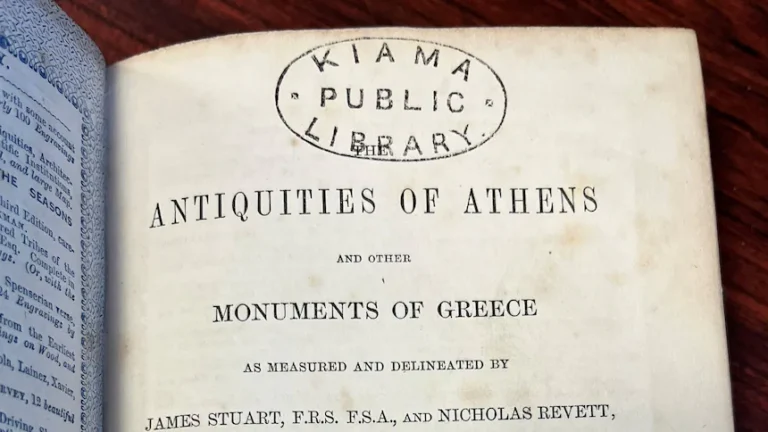
    A home renovation in Australia recently uncovered a piece of literary history that had been missing for a century and a half. A homeowner in the coastal community of Kiama, located south of Sydney in New South Wales, was tearing down wall structures. Amidst, he stumbled upon a sealed fireplace. Inside an old wooden tea crate behind the brickwork was an antique book that belonged to the town’s local library. The volume, titled Antiquities of Athens, was published in London in 1858. Staff at the Kiama Library realized that the book had been missing since 1870s. Library officials described the return as completely unprecedented. While they occasionally receive books that are a few decades late during estate cleanouts, they had never seen a volume missing for over a century. The book itself is a notable historical work. It was originally authored by British architects James Stuart and Nicholas Revett to document classical Greek architecture. Book No. 506. A part of Kiama Library’s inaugural catalog which comprised roughly 1,000 items when the library first opened its doors in 1872. Despite enduring around 150 years encased inside a chimney cavity, the physical volume appeared in a surprising condition. Mild water exposure near the margins and natural weathering consistent with a century of neglect. However, the pages and original library stamps remained clearly legible. How the book ended up sealed behind a fireplace wall remains open to speculation. During the 19th and early 20th centuries, homeowners used unwanted household items as insulation or filler material when bricking over chimney flues. When Kiama Library manager Michelle Hudson examined the interior cover of the returned tome, she discovered the original set of lending regulations printed inside. Among those provisions was a penalty clause dictating an overdue fee of three British pence per week. Doing the math to adjust that Victorian-era fine for inflation over 150 years results in an eye-watering figure: roughly  $28,000 Australian dollars (approximately $19,500 USD). Luckily for the current homeowner who handed it over, the library has no intention of collecting. In fact, even if staff wanted to hold someone accountable, identifying the original borrower is impossible. The library’s paper borrow ledgers from the 1870s were lost or discarded long ago. It left a complete mystery as to who last checked out the book. The volume provides a fascinating glimpse into Victorian-era social norms and public library regulations. A borrower was forbidden from checking out another book until any previously borrowed item was returned and all associated fines were cleared. Hudson playfully speculated that this rule might explain why the original patron never brought the book back. Once the fine started accumulating, returning it became too costly. Households could borrow up to three books at a time, but only if at least six members of the family were verified as capable of reading. The regulations specifically prohibited lending books to individuals who arrived at the library in a state of intoxication. Modern library policies focus on patron code of conduct rather than testing family literacy rates. However, these antique guidelines serve as a memorable reminder of how public institutions functioned in colonial Australia. Antiquities of Athens will not be re-entering general circulation returning home after a century and a half in exile. Library staff plan to place the volume on permanent display within their local history archive. It is aimed to preserve it as both a physical artifact of Victorian publishing and a symbol of local history. As Hudson quipped, the library is thrilled to have its 506th catalog entry back on the shelves. Also, they have no intention of risking another 150-year wait to see it again.  

  • Rabi ul Awwal to begin on August 15

    The moon for Rabi ul Awwal 1448 AH was not sighted in Pakistan. As a result the first day of Rabi ul Awwal will be on Saturday, August 15, while 12 Rabi ul Awwal will fall on Wednesday August 26. The Ministry of Religious Affairs has also issued an official notification. The Central Ruet-e-Hilal Committee held a meeting in Islamabad on Thursday to look for the new moon. The meeting was chaired by Committee Chairman Maulana Abdul Khabir Azad. Meetings of zonal Ruet-e-Hilal committees were also held in different parts of the country. After the meeting Maulana Abdul Khabir Azad announced that no reliable moon sighting was reported from anywhere in Pakistan. Therefore Rabi ul Awwal will begin on August 15. Rabi ul Awwal is the third month of the Islamic calendar and has special importance for Muslims. 12 Rabi ul Awwal is observed as Eid Milad-un-Nabi ﷺ across Pakistan. On this occasion people arrange gatherings Quran recitation, Naat sessions, and Durood-o-Salam. Mosques, homes and streets are also decorated. Religious scholars use the occasion to remind people about the life, character teachings and Sunnah of Prophet Muhammad ﷺ. They emphasize that the true message of the occasion is to follow his teachings and bring his good example into daily life.

  • |

    Walking through time: A personal journey inside Na…

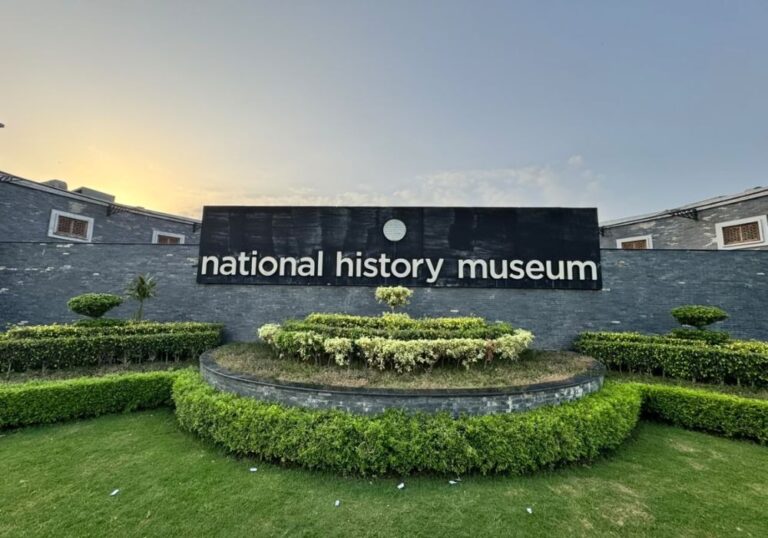
    The rain had just stopped when I reached Lahore’s National History Museum. The roads were quieter than usual, the air felt fresh and, for the first time in weeks, I wasn’t in a hurry. I had postponed this visit for years, ever since a brief stop during my internship at the Lahore Museum left me wishing for more time. This Sunday, I finally had it. I have also realised something over the past few weeks. Waiting for friends before exploring new places often means never going at all. So I decided to spend the afternoon on my own, following nothing except curiosity. As I entered the museum, Floor Supervisor Tabish welcomed me and arranged a guided tour with Muhammad Shamsher, a PhD scholar in History who also serves as one of NHM’s guides. His explanations never sounded like a lecture. Instead, he connected historical events with the people behind them, making every gallery feel like part of one continuing story. Growing up, I believed museums were places where objects sat behind glass while visitors quietly read information panels. That idea came from childhood visits to museums in Islamabad, Taxila and Harappa, and later from my internship at Lahore Museum. The National History Museum challenged that idea completely. Through digital displays, sound, projection and interactive exhibits, history became something to experience rather than simply observe. Every gallery encouraged visitors to slow down and become part of the story unfolding around them. One exhibit that caught my attention focused on the making of Minar-e-Pakistan. Like many Pakistanis, I had always admired the monument without knowing much about the person who designed it. The museum introduced architect Nasreddin Murat-Khan and displayed photographs that offered a glimpse into the creative process behind one of Pakistan’s most recognisable landmarks. It reminded me how often we celebrate monuments while forgetting the people who imagined them. The journey then moved towards Partition, where history became deeply personal. The restored railway carriage, once part of the North Western Railway, stood quietly inside the gallery. Visitors could step inside and experience a virtual reality presentation recreating the migration of 1947. I had watched countless documentaries and films about Partition, but sitting inside that carriage created an entirely different feeling. The sounds, voices and uncertainty surrounding the experience made history feel much closer than any textbook ever could. The museum then shifted from the birth of Pakistan to the challenge of building a new country. One gallery recreated the early government offices established after independence. I found myself studying old files, furniture and official records, imagining the enormous responsibility carried by those tasked with running a newly created nation. Nearby, early Pakistani passports were displayed inside glass cases. Different in design from today’s passports, they represented the same hope of a country beginning to define its identity. Another section I found especially engaging was Camera from the Past. Visitors could stand before a vintage-style camera and have their photograph taken, creating a small connection between the present and the past. The gallery also highlighted photographer Aziz Ahmed Azmi, whose images documented Pakistan’s early years. Looking at his work, I realised that photographs often become history long after the moment they capture has passed. Perhaps the gallery where I spent the most time was Popular Culture. Having studied Mass Communication with a specialisation in Theatre, Film and Television and continuing to work in journalism, I naturally found myself drawn towards the colourful Lollywood posters and displays celebrating Pakistan’s cinematic heritage. Reading about Azra, the country’s first colour film, and Zinda Laash, Pakistan’s first horror film, reminded me how rich our film history is, even if many younger audiences know little about it today. Before leaving, I also explored Husn-e-Hunar, an exhibition celebrating Pakistan’s traditional craftsmanship. Alongside literature, music and cultural displays, it served as a reminder that a nation’s identity is shaped not only by political events but also by its artists, craftsmen and storytellers. When I stepped back outside, I realised I had spent far longer inside the museum than I had planned. I didn’t leave with pages of notes or dozens of photographs. Instead, I left with a greater appreciation for how history can be presented when museums invite visitors to participate rather than simply observe. The National History Museum doesn’t just preserve Pakistan’s past. It encourages visitors to pause, ask questions and discover the stories that continue to shape the country today.

  • Fenugreek seeds for healthier hair

    Many common kitchen ingredients can be useful for beauty and self care and fenugreek seeds are one of them.  They are often used in home remedies to help keep hair healthy and strong. Fenugreek seeds contain nutrients such as protein, iron and other compounds that may support hair and scalp health.  They can help nourish dry hair strengthen the roots and make hair look softer and shinier. Here are some simple ways to use fenugreek seeds for hair care. For dry hair Fenugreek can help add moisture to dry and dull hair.  Mix one tablespoon of ground fenugreek with two to three tablespoons of warm coconut oil.  Apply it to your hair after shampooing leave it for about 30 minutes, and then wash it out. For stronger hair Soak two tablespoons of fenugreek seeds overnight and blend them into a smooth paste.  Apply the paste from the roots to the ends before shampooing. This can help nourish weak and brittle hair. For dandruff Fenugreek may also help keep the scalp clean and reduce dandruff.  Mix three tablespoons of soaked fenugreek with half a teaspoon of lemon juice. Apply the mixture to your scalp leave it for around 15 minutes and then wash your hair. For shinier hair You can also use fenugreek water as a final hair rinse. Strain the water from soaked fenugreek seeds and pour it over your hair after washing. It can leave dry and dull hair feeling softer and looking shinier.

Leave a Reply

Your email address will not be published. Required fields are marked *