israeli airstrikes kill
|

Israeli airstrikes kill 18 in Gaza as ceasefire hopes face fresh setback

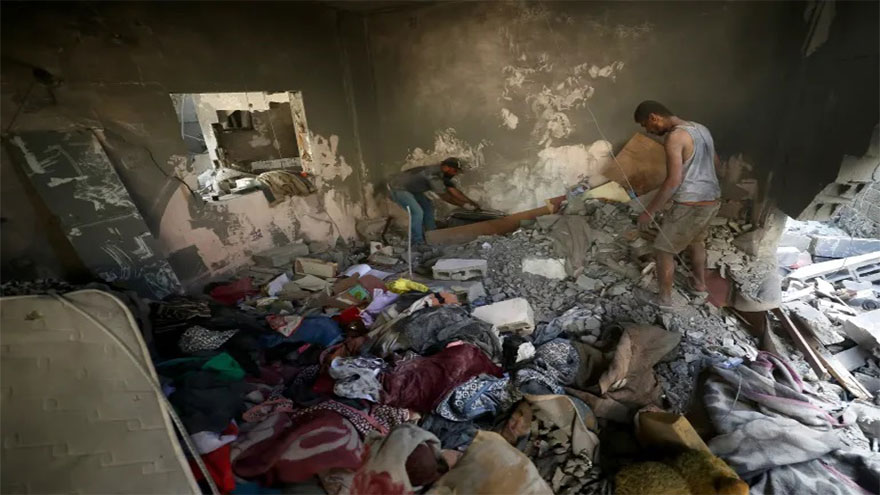
Gaza: Israeli airstrikes struck multiple areas across the Gaza Strip for the second consecutive day on Sunday, leaving at least 18 Palestinians dead and several others injured, according to Palestinian health officials. The renewed violence came despite recent diplomatic efforts led by the United States aimed at advancing last year’s ceasefire agreement and reducing tensions in the region.

Medical officials reported that Israeli fighter jets carried out strikes in Gaza City, Deir al-Balah in central Gaza, and Khan Younis in the south. The attacks marked one of the deadliest days in recent weeks, with residential buildings, tents sheltering displaced families, and civilian vehicles among the locations hit.

The escalation occurred only days after US President Donald Trump announced what he described as a significant breakthrough in efforts to revive the ceasefire agreement. His statement suggested that Hamas and other Palestinian armed groups had agreed in principle to disarm, raising hopes of progress toward ending the prolonged conflict.

However, Israeli officials quickly expressed skepticism over the proposed disarmament plan. Israeli Energy Minister Eli Cohen, a member of Prime Minister Benjamin Netanyahu’s security cabinet, said Israel was prepared to give Hamas an opportunity to surrender its weapons but doubted the group would follow through.

Speaking to Israel’s Army Radio, Cohen stated that no agreement had been reached to halt Israeli military operations in Gaza. He added that if Hamas refused to disarm, Israel could seek full control of the territory, where Israeli forces already maintain control over roughly 70 percent of the enclave.

He emphasized that dismantling Hamas remained Israel’s primary objective under its understanding with the United States, describing it as a prerequisite for any lasting political arrangement.

Later in the day, Doron Spielman, spokesperson for the Israeli Prime Minister’s Office, confirmed that Israel had conveyed its concerns to US officials regarding the proposed roadmap. According to Spielman, Israel insists that Hamas must completely and verifiably disarm before any further steps toward implementing the ceasefire can move forward.

Civilian Areas Among Targets

Palestinian emergency services reported widespread destruction following Sunday’s airstrikes.

In Deir al-Balah, at least four people were killed after an apartment building was struck. Another Israeli attack in the Mawasi area near Khan Younis injured five people and ignited fires in tents housing displaced families.

A Palestinian couple and their nine-year-old son were killed when their home in Mawasi was hit. In Gaza City, another couple and their child lost their lives after an apartment was targeted.

Medical teams also reported that two people were killed in a strike on a tent located near the Egyptian representative mission in Gaza City. Later in the day, two more fatalities were reported in the eastern Zeitoun neighborhood following another airstrike.

In northern Gaza, one person was killed near Jabalia, while a separate strike targeting a vehicle near Saraya Square in Gaza City claimed at least three additional lives.

Israeli Military Defends Operations

The Israeli military said one of its operations in Deir al-Balah targeted two commanders belonging to Hamas’ elite “Nukhba” force.

It also stated that strikes carried out in Gaza City and Jabalia were aimed at what it described as Hamas military operatives, although officials said assessments were still underway regarding the outcomes of those attacks.

US-Led Peace Initiative Continues

Despite the renewed violence, diplomatic efforts to preserve the ceasefire remain ongoing.

The US-led Board of Peace, responsible for overseeing implementation of the ceasefire agreement, released a 15-point roadmap outlining the final stages required to fully enforce the deal.

Nickolay Mladenov, the board’s chief envoy for Gaza, expressed concern over the latest escalation, saying the attacks came while mediators were actively working with Palestinian factions to secure agreement on the proposed roadmap.

In a statement posted on social media, Mladenov said discussions with regional partners and international mediators were continuing to reduce tensions and create conditions necessary for implementing President Trump’s peace initiative.

He stressed that achieving a lasting peace would require sustained commitment from all parties involved.

Hamas Accuses Israel of Undermining Talks

Hamas maintained that it remained open to negotiations but insisted Israel must first end its military campaign and withdraw forces from Gaza in accordance with the ceasefire agreement before any discussion on surrendering weapons could proceed.

Senior Hamas official Basem Naim said the movement had demonstrated “considerable flexibility” during negotiations but accused Israel of escalating attacks in an attempt to weaken diplomatic efforts and impose new realities on the ground through military force.

Meanwhile, former senior Fatah official Mohammed Dahlan, who is based in the United Arab Emirates, claimed that Jared Kushner, President Trump’s son-in-law and a senior adviser involved in the US initiative, had informed him that discussions were underway with Israeli officials to halt the attacks.

According to Dahlan, contacts between US officials and regional mediators continue, but the success of the agreement now depends largely on Israel ending its ongoing military operations in Gaza.

The US State Department has not immediately commented on Dahlan’s remarks, while Israeli authorities have yet to issue a formal response.

Casualties Continue to Rise

According to Gaza health authorities, at least 1,230 Palestinians have been killed in Israeli strikes since the ceasefire agreement reached in October. Hamas has not released figures regarding the number of its fighters killed during the same period.

Israeli officials, meanwhile, report that four Israeli soldiers have been killed since the ceasefire came into effect.

Similar Posts

  • | |

    Pentagon faces shortage of missile defense interceptors

    The US Department of Defense is facing a growing shortage of missile defense interceptors after months of sustained military operations in the Middle East, raising concerns among American defense planners about the Pentagon’s ability to maintain its current pace of operations and protect US forces in the event of another major conflict. According to a report by Fox News, data compiled by the Center for Strategic and International Studies (CSIS) indicates that US stocks of Patriot air defense interceptors have fallen sharply. Before the recent escalation in regional conflicts, the United States reportedly held around 2,300 Patriot interceptors. That figure has now dropped to fewer than 827. The Pentagon has also seen a significant reduction in its stockpile of interceptors used by the Terminal High Altitude Area Defense (THAAD) system. CSIS data cited in the report shows that the number of THAAD interceptors has declined from approximately 452 to fewer than 278. The decline in these critical missile defense stocks has prompted questions about the US military’s ability to respond to multiple threats at the same time. Defense planners are particularly concerned about the possibility of a new crisis emerging in another strategic region, such as the Indo-Pacific, while American forces remain engaged in the Middle East. CSIS has warned that rebuilding depleted interceptor inventories could take at least three years. The lengthy replenishment timeline reflects the difficulty of rapidly expanding production of sophisticated missile defense systems, which require specialized components, advanced manufacturing capabilities and extensive testing. The shortage could create additional pressure on US military leaders as they balance the need to defend American troops and military installations overseas with the requirement to maintain sufficient reserves for future conflicts. To address the growing gap, the Pentagon has included $18.2 billion in its broader $67 billion emergency funding request for fiscal year 2026. The proposed funds would support the replenishment of Patriot interceptors, Tomahawk cruise missiles used by the US Navy and additional interceptors for the THAAD missile defense system. The Pentagon’s spending plans also highlight a broader effort to rebuild weapons inventories that have come under pressure from sustained military operations and rising global security demands. US defense officials have increasingly focused on expanding domestic production capacity and ensuring that the military can replace weapons at a faster rate. According to the report, nearly half of the weapons included in the Army’s preliminary fiscal year 2027 budget requests fall into the relatively lower-cost category, with each weapon costing $600,000 or less. The approach reflects efforts to strengthen stockpiles of systems that the military can procure in larger quantities while continuing to invest in more advanced and expensive defense technologies. The interceptor shortage underscores a wider challenge for the United States as it seeks to prepare for potential conflicts on multiple fronts. While missile defense remains a key component of US military strategy, the depletion of interceptor stocks could limit Washington’s flexibility if it faces simultaneous threats in the Middle East, Europe or the Indo-Pacific. Defense analysts say the issue also highlights the importance of maintaining adequate reserves during prolonged conflicts. Replenishing stocks may take years, meaning decisions about the use of missile defense interceptors could become increasingly important as the Pentagon seeks to protect US personnel and strategic assets while preserving its ability to respond to future crises.

  • | |

    Over 1,300kg explosives used in deadly Tank attack…

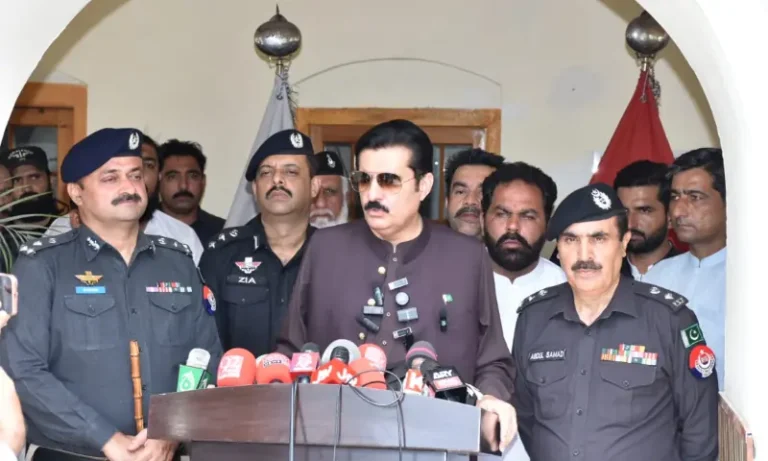
    DERA ISMAIL KHAN, July 26: Khyber Pakhtunkhwa Governor Faisal Karim Kundi has revealed that more than 1,300 kilogrammes of explosives were used in the recent attack on a security checkpost in Tank. The governor made the remarks while speaking to journalists at the Regional Police Office in Dera Ismail Khan. He had attended a security briefing on the law and order situation in the region. Kundi described the attack on the Manji Khel checkpoint as a major and tragic security incident. He said 15 people, including 14 security personnel, lost their lives in the attack. Personnel from the Pakistan Army, police and Forest Department were among those who were martyred, he said. The governor said the huge quantity of explosives used in the attack reflected the seriousness and scale of the militant threat facing the province. He called for a united national strategy to counter terrorism. He said the federal and provincial governments, security forces and the public must work together to defeat militant groups. Kundi said Pakistan was facing security challenges from both internal and external sources. He praised the sacrifices made by security forces to protect the country and its people. The governor also alleged that terrorist groups were using Afghan territory to carry out attacks against Pakistan. He further claimed that weapons left behind in Afghanistan by international forces were being used in attacks, particularly in Khyber Pakhtunkhwa. Kundi said neither the people nor the security forces would be intimidated by such attacks. He praised the courage of injured personnel whom he met during his visit. He said the recommendations presented by regional police officials would be conveyed to the federal government. He also said he would raise the issue of improving compensation and support packages for injured security personnel with Interior Minister Mohsin Naqvi and the provincial government. The governor stressed that supporting the families of martyred and injured personnel was a collective responsibility. He assured them that the government would continue to support them. Kundi also called for stronger coordination between the federal and provincial governments. He said Islamabad and Peshawar must work closely to tackle the growing security threat. He urged authorities to expand intelligence-based operations across Khyber Pakhtunkhwa. He said he would discuss the matter with the provincial chief minister. According to the military’s media wing, militants had attempted to breach the perimeter of the joint police checkpost in Tank. Security forces responded quickly and killed 12 attackers. The attackers also drove an explosives-filled vehicle into the checkpoint’s perimeter wall. The resulting blast caused extensive damage to the infrastructure. The Tank attack comes as Khyber Pakhtunkhwa continues to face a persistent threat from militant violence. In another recent operation in South Waziristan, security forces foiled a suicide attack and killed four terrorists, including the would-be suicide bomber. Kundi said restoring peace in Khyber Pakhtunkhwa and surrounding areas remained a national priority. He praised police personnel for continuing to perform their duties despite difficult security conditions.

  • | |

    Forensic probe advances Momina Iqbal case

    New developments have been reported in the ongoing case involving actor Momina Iqbal and PML-N lawmaker Saqib Chadhar. Momina recently shared a post on social media suggesting that forensic evidence has strengthened her case. She described the latest progress as another step toward justice. The case is being investigated by the National Cyber Crime Investigation Agency (NCCIA). It involves allegations of cyber harassment, intimidation and threats. Momina had approached the authorities after accusing Saqib Chadhar and his wife, Samira Chadhar, of harassment and other alleged offences. During the latest court proceedings, the investigation officer informed the Lahore sessions court that the investigation involving Saqib Chadhar had been completed. The officer also told the court that Samira Chadhar had submitted her mobile phone to the NCCIA. The device is reportedly being examined as part of the forensic investigation. Momina’s lawyer, Adnan Ahsan, asked the court to withdraw the interim bail granted to the accused. He argued that allowing them to remain free could pose a security concern for the actor. The investigation has focused heavily on digital evidence. Mobile phones and other electronic material have been examined as authorities work to establish the facts surrounding the allegations. The dispute became a legal matter after Momina accused the couple of harassment and threats. The allegations reportedly include cyber harassment, stalking, intimidation and blackmail. The accused have denied the allegations and obtained interim pre-arrest bail while the legal proceedings continue. Momina’s latest statement has drawn attention to the progress of the investigation. However, her reference to the accused being “proven guilty” reflects her position and does not constitute a final judicial verdict. The court will ultimately determine the legal status of the allegations after considering the investigation and evidence presented before it. The forensic examination of digital devices remains an important part of the case. Investigators are expected to assess the material recovered during the probe before the matter proceeds further.

  • | |

    Isla Fisher shares hilarious dating rules after sp…

    Isla Fisher is embracing her single era with a healthy dose of humor. The Australian actress recently revealed some of her biggest dating “icks,” and her brutally honest rules are already giving fans plenty to laugh about. Fisher, 50, has been in the spotlight following the end of her marriage to comedian Sacha Baron Cohen. The former couple, who were together for more than two decades, announced in 2024 that they had filed for divorce. Their divorce was finalized in June 2025. They share three children and have continued to prioritize their family while navigating life after marriage. (EW.com⁠) Now, Fisher appears to be having fun with the idea of dating again. During a recent appearance on KIIS FM’s The Smallzy Show, the actress was asked about the little things that can instantly turn her off. Her answer was anything but serious. One of Fisher’s biggest complaints? Backpacks. “Backpack, period,” she joked, explaining that she would immediately lose interest if a man showed up wearing one in a particular way. She admitted that simply carrying a backpack is not necessarily a problem. However, things change when a man clips the straps together across his chest. According to Fisher, that small detail is enough to make her say goodbye. But backpacks are not her only dating deal-breaker. Deck shoes also made the list. Fisher described the shoes as already being “a bit of an ick” before revealing the specific habit that really bothers her. She said she recently saw someone wearing deck shoes with the heel folded down, turning them into something resembling casual plimsolls. Her reaction was immediate and hilarious. “Repulsive,” she declared. The comments offer a glimpse into Fisher’s playful personality as she enters a different chapter of her life. Earlier, she had been candid about how difficult her separation was, describing it as one of the hardest experiences she had faced. She also credited her close female friends with helping her rediscover her strength and identity outside of a relationship. (Us Weekly⁠) Fisher has also been focusing on her acting career. Her latest projects include Spa Weekend, while she continues to take on new opportunities in film and comedy. Whether she is seriously dating or simply enjoying being single, Fisher’s hilarious list proves one thing: romance may be complicated, but her dating “icks” are surprisingly simple. For now, men with backpacks and badly worn deck shoes might want to take notes.

  • | |

    DIG East Dr. Farrukh: A model of public-friendly p…

    Karachi: While addressing ABAD — the Association of Builders and Developers of Pakistan — on Wednesday, Inspector General Sindh Mr. Javed Alam Odho once again reaffirmed the commitment to resolve the Mir Raza murder case on merit and without pressure. He admitted mistakes had been made by the police department, but reassured that all measures would be taken to correct them. He also claimed that the crime rate in Karachi had dropped by 14 percent. He also urged for reforms and need of more professional training in Medico-legal system of police. But all those numbers and all those assurances fall flat in the face of one unresolved case. The fact that a builders’ association felt compelled to raise the Mir Raza issue speaks volumes. It is not ABAD’s mandate, yet its leaders did it anyway — because the mistrust between citizens and Karachi Police has grown too deep to ignore. That mistrust exists not because of a lack of competent leadership at the top, but because subordinate SSPs failed to deliver where it mattered most. A Meeting That Set the Standard  I saw this gap first-hand in my initial meeting with DIG East, Dr. Farrukh Ali Lanjhar. He came across as accessible, direct, and willing to listen — the kind of officer who says, “call me when you need me.” When I requested time from DIG East Dr. Farrukh Lanjhar for an interview, I expected a formal reply or a future date. Instead, he politely asked me to walk into his office and join him for a cup of tea. I was pleasantly surprised by the cordiality. I walked in expecting bureaucracy. What I found was courtesy, and a senior officer who was ready to resolve the issue of a female journalist without making her feel like a petitioner. Does the Police Force Lack Role Models?  The meeting was also a wake-up call. At the ASP/SP level, many officers still treat citizens as subjects of a colony and themselves as masters, not servants. I often wonder what fuels this snobbery and arrogance. Is it clearing the CSS? But given our quota system and an exam that has been reduced to testing memory and English rather than intellect or judgment, that in itself is no great achievement. If it were, every government department would be running like a multinational — either making huge profit or excelling in service delivery. Is it the training we inherited from the British Raj, designed to produce a ruling elite? Or is it the culture of imitating seniors who remain inaccessible and aloof? Yet we do have exceptions. DIG East Dr. Farrukh Lanjhar, DIG Traffic Pir Mohammad Shah, DIG CTD Capt. (R) Azfar Mahesar, DIG RRF Usman Ghani Siddiqui, DIG Amir Farooqui, SSP Qamar Jiskani, SSP Saud Magsi, SSP Zeeshan Siddiqui, and above all IG Sindh Javed Alam Odho. Within the same flawed system that all of us are part of, they choose to serve as public servants. The impression they leave is exactly what I witnessed the other day. Can’t they be role models? Because the legacy you leave either lives on or haunts you. We still remember good officers long after they retire, like former ADIG Hyderabad Range, Dr. Jameel. AIG Ameer Sheikh will be spoken of in those terms. Ten years from now, who else will be remembered with the same respect? There were many who were pharaohs of their time, but no one now remembers them with respect after they leave office. A Glimpse of Reforms in East  During our discussion, Mr. Lanjhar also spoke about the reforms he has pushed in East Zone. He said more than 1,000 personnel have been pulled out of desk pools and deployed in the field where they are actually needed. To enforce accountability, he has introduced biometric attendance to eliminate ghost employees. The zone is also moving toward an advanced facial recognition system to ensure that no one can mark false attendance and every officer on the roster is truly on duty. The Mir Raza Murder Case  When asked to comment on the Mir Raza murder case, which falls under his jurisdiction, he responded softly: “A new committee has been constituted,” he said, “and I do not wish to comment before its findings are made public.” However, he assured that he would address all queries once the committee submits its report. As we wrapped up a meeting that ran longer than expected, Dr. Farrukh Lanjhar spoke openly — about the shortcomings of the media, about his personal experiences across different districts and roles, and about the reforms needed to make police more public-friendly. Especially Thana culture, which he called the main “interface” of the police force. Before I left, he said simply: “Don’t you worry, Madam. We will remain in touch. You can call me whenever and wherever needed to resolve your issue.” It left me thinking. Often, just listening with patience to the complaint of the aggrieved party can bring down the temperature of frustration and distrust toward police. That is exactly what was missing in the initial handling of the Mir Raza murder case. The first inquiry committee, in which SSP East Zubair Sheikh was allegedly accused of incompetence and of pushing a suicide theory (by the family), failed on that count. He did not take into account the point of view of the victim’s parents. Neither he nor SSP SIU Samiullah Soomro were able to convey to the grieving family that the police were with them, and that they would do everything to ensure they got the justice they deserved. It was that simple. Had SSP East, Zubair Sheikh, treated it with the same seriousness that DIG East showed toward my complaint — on a far smaller scale — perhaps IG Sindh, Javed Alam Odho would not have had to stand before the media and accept mistakes on behalf of his force. That is why we have a full hierarchy in place. If every SSP did his job, including answering the

  • |

    Why August 12 total solar eclipse is so special?

    The last total solar eclipse occurred two years ago and once again millions of people will have the opportunity to witness this rare celestial event. This year’s eclipse is particularly special because some observers will see the total solar eclipse at sunset making it an exceptionally rare and breathtaking sight. According to NASA, the total solar eclipse will occur on August 12 but only a limited number of countries will experience totality. People in Greenland, Iceland, northern Spain and a small part of Portugal will be able to witness the total eclipse. In Spain, the eclipse will coincide with sunset creating a spectacular view that is expected to captivate skywatchers. A partial solar eclipse will also be visible across many other parts of Europe and Africa including most European countries and several regions of North Africa. Russia will enjoy another rare phenomenon as a partial eclipse will be visible at both sunrise and sunset. On the remote Taymyr Peninsula, the partial eclipse will begin at sunrise while in another part of the country it will be seen at sunset. Solar eclipses occurring at sunset are extremely rare which is one of the reasons why this year’s event is considered so unique. According to Pakistan Standard Time (PST), the partial solar eclipse will begin at 10:34 PM, the total eclipse will start at 12:12 AM and the event will conclude at 2:58 AM.

Leave a Reply

Your email address will not be published. Required fields are marked *