government reviews splitting
|

Government reviews splitting LESCO, MEPCO before privatisation

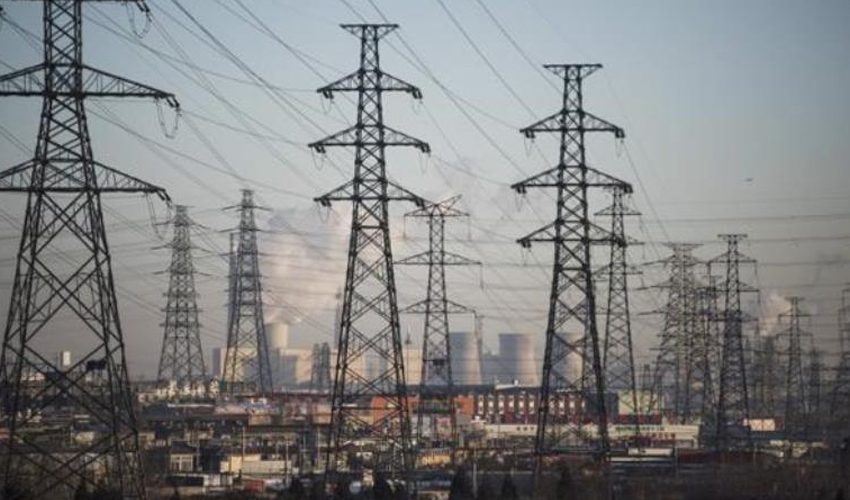
The Ministry of Privatisation has established a high-level Technical Committee to examine the feasibility of dividing the Lahore Electric Supply Company (LESCO) and Multan Electric Power Company (MEPCO) into two or three smaller power distribution companies before their proposed privatisation, according to informed sources.

The move is part of the government’s broader strategy to reform Pakistan’s power distribution sector and make state-owned electricity companies more attractive for private investment. LESCO and MEPCO currently serve the largest geographical areas and consumer bases among the country’s distribution companies (DISCOs), prompting officials to assess whether restructuring them into smaller entities could improve operational efficiency and facilitate the privatisation process.

Technical Committee Constituted

The committee is headed by Sajid Akram, Adviser (Power) at the Privatisation Commission. Other members include Ghulam Rasool, Joint Secretary at the Privatisation Commission; Imran Hafeez, Additional Director Tariff at the National Electric Power Regulatory Authority (NEPRA); and Abid Lodhi, Managing Director of the Power Planning and Monitoring Company (PPMC).

The committee has been tasked with conducting a comprehensive review of the proposal and submitting recommendations to the government after evaluating its technical, operational and strategic implications.

Weak Performance Raises Concerns

Officials familiar with the matter said that both LESCO and MEPCO have consistently faced operational challenges, particularly in controlling electricity theft, reducing transmission and distribution losses, and improving bill recovery. These issues have affected their financial performance and have remained a major concern for policymakers pursuing reforms in the power sector.

Recent audit reports for the fiscal year 2024-25 also highlighted unsatisfactory performance by both companies, reinforcing the need for structural reforms before moving ahead with the privatisation programme.

MEPCO: Pakistan’s Largest Distribution Company

MEPCO was incorporated in 1998 as a public sector company and operates under a permanent electricity distribution licence issued by NEPRA. The company is wholly owned by the Government of Pakistan through the Ministry of Energy.

Serving nearly 8.76 million consumers across 13 districts of southern Punjab, MEPCO is the country’s largest electricity distribution company in terms of customer base. Its extensive network includes more than 82,000 kilometres of distribution lines and over 780 grid stations, supplying electricity across a vast region bordering three provinces.

The company has initiated several modernisation projects, including the deployment of Advanced Metering Infrastructure (AMI), commonly known as smart metering, and digital billing systems aimed at improving transparency, reducing losses and enhancing customer services.

LESCO Serving Over Seven Million Consumers

LESCO also began operations in 1998 and supplies electricity to approximately 7.05 million consumers across Lahore, Kasur, Sheikhupura, Nankana Sahib and Okara. Its consumer base includes domestic, commercial, industrial, agricultural and bulk supply customers.

The company’s operational network is divided into eight circles supervised by Superintending Engineers and 41 divisions managed by Executive Engineers to oversee field operations.

In recent years, LESCO has accelerated efforts to modernise its infrastructure through the installation of smart meters, with plans to convert its entire consumer base to the Advanced Metering Infrastructure by 2029.

However, the company continues to face significant operational hurdles, including shortages of transformers and electricity meters, resulting in delays in providing new connections and replacing faulty equipment. These issues have drawn criticism from regulators and consumers alike.

Committee’s Terms of Reference

According to the approved Terms of Reference (ToRs), the Technical Committee will:

Assess the feasibility of splitting LESCO and MEPCO into two or three smaller distribution companies.

Examine the potential advantages and disadvantages of such restructuring in line with the National Electricity Plan, the government’s Power Policy and the ongoing privatisation programme.

Review whether similar committees were constituted in the past and analyse their findings, recommendations and implementation status.

The committee’s recommendations are expected to play an important role in determining whether the government proceeds with restructuring the two major DISCOs before offering them for privatisation.
Similar Posts

  • | |

    Sindh schools adopt facial recognition attendance

    The Sindh government has approved the introduction of a Facial Recognition Attendance Monitoring and Evaluation System (FRAMES) in public schools as part of a broader effort to improve governance, transparency and accountability in the education sector. The decision was taken during a meeting of the School Education Department chaired by Chief Minister Murad Ali Shah. The meeting was attended by Education Minister Sardar Ali Shah, the chief secretary and other senior government officials. During the meeting, the education minister gave a detailed briefing on the proposed system and informed participants that all technical preparations for its implementation have been completed. He said the project is designed to introduce data-driven governance and improve monitoring of teachers and non-teaching staff across government schools. According to the briefing, the first phase of the project will begin in six districts, with one district selected from each division of Sindh. Registration of teachers and non-teaching employees in these districts has already been completed, paving the way for the system’s launch. Chief Minister Murad Ali Shah announced that the new attendance system will become operational in the selected districts from August 17. If the pilot phase is successful, it will be expanded gradually to all districts across the province. Under the FRAMES system, attendance of teachers and school staff will be recorded through facial recognition technology. Officials said the system will automatically record employees’ arrival and departure times, creating a secure, accurate and tamper-proof attendance record. The education department also informed the meeting that geo-tagging of government schools has been completed. Officials said the system has been designed to function effectively even in remote areas with weak internet connectivity, ensuring uninterrupted monitoring throughout the province. Murad Ali Shah said improving teachers’ attendance is essential for raising educational standards and ensuring quality education for students. He said every child has the right to receive quality education, and achieving that goal requires teachers and school staff to perform their duties regularly and responsibly. The chief minister emphasized that the use of modern technology would strengthen accountability and improve discipline within the education system. He said digital monitoring would help eliminate irregularities, increase transparency and provide education authorities with reliable data for decision-making. He directed officials to establish an effective support and monitoring mechanism during the initial implementation phase. He also instructed the education department to provide schools with all necessary technical assistance and training to ensure the smooth operation of the new system. Officials said information collected through the facial recognition platform will help education authorities evaluate attendance patterns, improve administrative oversight and identify areas requiring further reforms. They added that the initiative is expected to enhance institutional discipline, strengthen governance and improve the overall performance of public schools.

  • |

    Pakistan prepares for IMF’s $1 billion fifth tranche

    Islamabad: Talks with the International Monetary Fund (IMF) for the release of the next loan tranche are scheduled to take place in Islamabad next month. However, the rising circular debt in the power sector has emerged as a major challenge for the government. According to details, review talks between Pakistan and the International Monetary Fund (IMF) are expected to be held in Pakistan next month. However, the increase in power-sector circular debt has become a significant challenge for the government. Sources said that the power-sector circular debt has exceeded the IMF-set limit by Rs130 billion. The IMF had set a target of keeping the circular debt in the power sector limited to Rs1,600 billion. According to sources, the circular debt increased further due to rising energy prices amid the US-Iran war. During the talks with the IMF, the government will discuss targets related to energy-sector reforms including circular debt in the electricity and gas sectors. Pakistan will also brief the IMF on its progress toward achieving economic reform targets. According to sources, the Prime Minister has directed the economic team to prepare an alternative plan instead of further increasing electricity prices. Pakistan will brief the IMF on the targets set under the structural benchmarks. If the talks are successful, they will pave the way for the release of the fifth tranche under the current loan programme. According to sources, Pakistan could receive approximately $1 billion as the fifth tranche. In addition, Pakistan may receive around $200 million in additional funding to help address losses caused by climate change.

  • | | |

    Russia, Pakistan advance Moscow-Karachi rail link

    Russia and Pakistan are working to launch a new freight railway service connecting Moscow with Pakistan, Russian Ambassador to Islamabad Albert P. Khorev has said. The proposed rail link is aimed at improving trade connectivity between the two countries and creating a more direct overland route for the movement of goods. In comments published by the Russian newspaper Izvestia on August 8, Khorev said Moscow and Islamabad were jointly working on launching freight railway services along the Moscow-Faisalabad and Moscow-Karachi corridors. The proposed routes would operate in both directions, allowing goods to be transported between Russia and Pakistan through a dedicated rail-based trade network. Khorev said the possibility of including Belarus in the project was also being examined. If the Belarusian side joins the initiative, the route could provide a wider connection across parts of Eastern Europe and South Asia. The project has faced delays because of changing geopolitical conditions in the region. According to the Russian ambassador, heightened geopolitical tensions during 2025 and early 2026 resulted in several postponements to the planned launch. Despite the delays, work on the project is continuing. Khorev said the countries involved are currently finalising a contract covering the required freight railway services. At the same time, officials are identifying companies in the countries along the proposed route that could use the railway network to transport commercial cargo. The identification of potential cargo owners is considered an important step before the service can begin. A stable volume of goods would be needed to make the railway corridor commercially viable. The Moscow-Karachi route could provide Pakistani and Russian businesses with another option for moving goods between the two markets. It could also reduce reliance on traditional maritime routes for certain types of cargo. The Moscow-Faisalabad corridor would provide a direct connection to one of Pakistan’s major industrial and commercial centres. Faisalabad is an important manufacturing hub, particularly for textiles and other export-oriented industries. For Russia, improved rail connectivity with Pakistan could open additional opportunities for trade with South Asia. Pakistani businesses could also gain access to wider markets through connections with Russia and potentially Belarus. The possible involvement of Belarus could further expand the corridor’s geographical reach. It may also strengthen transport cooperation among the countries involved. However, the project still requires the completion of commercial and logistical arrangements before the first freight service can be launched. The parties are therefore focusing on finalising the service contract and securing interest from companies that can provide regular cargo for the route. The proposed railway initiative is part of broader efforts by Russia and Pakistan to strengthen economic and transport cooperation.

  • |

    Nimra Khan clarifies marriage status after viral Instagram reel

    Pakistani television actress Nimra Khan has addressed speculation about her marriage after an emotional Instagram post sparked rumours that she and her husband had separated. The actress, who enjoys a strong social media presence with more than 4.7 million followers on Instagram, clarified the situation after fans began questioning her relationship status following a recent reel that many interpreted as a sign of personal turmoil. Nimra, who announced her marriage in June 2026, had shared photos from her wedding and nikah ceremony in Paris with her followers. The images were widely celebrated by fans, making her recent social media activity all the more noticeable. The rumours began after Nimra posted a reflective Instagram reel featuring a heartfelt message about resilience and self-worth. In the video, she encouraged people to remain strong even when life becomes difficult, others stop understanding them, or they feel alone. She expressed that a person should never abandon themselves, regardless of the challenges they face. According to the actress, once someone learns to become their own source of strength, no obstacle or criticism can truly defeat them. She added that it is important for people to realise they are enough for themselves and should value their own inner strength. While the message resonated with many of her followers, others assumed it hinted at problems in her personal life. The speculation intensified when some social media users noticed that her wedding photographs were no longer prominently visible on her Instagram profile. One follower commented on the post, asking if everything was alright and suggesting that the actress had removed her wedding pictures, fuelling rumours that her marriage had ended. Responding directly to the comment, Nimra dismissed the divorce speculation and assured her followers that there was no reason for concern. She explained that everything was fine and clarified that she had not deleted her wedding photographs. Instead, she had simply moved them lower on her Instagram profile. According to the actress, the decision was made to protect her personal life from the effects of the “evil eye,” a belief commonly held in many cultures that excessive public attention or envy can bring misfortune. Nimra also thanked the fan for expressing concern and offering prayers, appreciating the support shown by her followers. Her clarification quickly put an end to the growing rumours, with many fans expressing relief and sending messages of love and good wishes. The incident once again highlighted how emotional or motivational social media posts are often interpreted as reflections of a celebrity’s private life, leading to widespread speculation. In Nimra’s case, a message intended to inspire self-confidence and emotional resilience was mistakenly linked to her marriage, prompting the actress to publicly clear the air. With her response, Nimra Khan has reassured fans that her marriage remains intact and that there is no truth to the divorce rumours circulating online. Her explanation also served as a reminder that not every inspirational post on social media reflects a personal crisis, and appearances on social platforms do not always tell the full story.

  • Singapore Airlines Cancels Flights as Super Typhoon Bavi Disrupts Travel

    SINGAPORE – Travelers across the globe are facing major disruptions as Super Typhoon Bavi churns through East Asia. The massive storm has already hit parts of Japan and is now barreling toward Taiwan and China. In response to the dangerous weather conditions, airlines are grounding planes to keep all passengers safe. Singapore Airlines has announced […]

  • | | | |

    Rome talks continue despite fresh Israel-Lebanon c…

    JERUSALEM: Fresh violence erupted along the Israel-Lebanon border on Wednesday after two Israeli soldiers were killed during a military operation in southern Lebanon, prompting retaliatory Israeli airstrikes even as diplomatic talks aimed at reducing tensions continued in Rome. The latest escalation comes despite a US-brokered security arrangement reached in June, which was intended to ease hostilities between Israel and Lebanon following months of cross-border clashes. According to Israeli authorities, the two soldiers were killed and four others wounded when an explosion ripped through a building they had entered during a security sweep inside southern Lebanon. Israeli Army Radio, citing a security source, reported that investigators were still trying to determine whether the explosive device had been planted before or after the ceasefire agreement. Soon after the incident, the Israeli military described the explosion as a “blatant ceasefire violation” and launched a series of retaliatory strikes targeting areas in southern Lebanon. Lebanese officials said one civilian was killed and at least 12 others were injured after Israeli strikes hit the town of Tibnin, around 25 kilometres from Mansouri. Before the attack, the Israeli military issued an evacuation warning for residents in the area—the first such online warning directed at Lebanon in more than a month. However, Israel’s tone appeared to soften a day later. In a statement mourning the soldiers, Defence Minister Israel Katz did not directly accuse Hezbollah or refer to a ceasefire violation, signalling that Israeli authorities may be seeking to avoid a wider military escalation. Israel continues to maintain a buffer zone inside southern Lebanon, saying its forces are operating there to eliminate threats posed by the Iran-backed Hezbollah movement and to enhance border security. Meanwhile, diplomatic efforts remain underway in Rome, where Israeli and Lebanese officials are participating in talks that began on Tuesday and are scheduled to continue through Thursday. The negotiations are focused on strengthening the June security arrangement and preventing further violence along the volatile frontier. The renewed bloodshed underscores the fragile nature of the ceasefire and highlights the challenges facing mediators seeking lasting stability in the region. While both sides have expressed interest in preventing a broader conflict, sporadic violence continues to threaten the progress made through recent diplomatic initiatives. With negotiations still in progress and tensions remaining high, regional observers fear that any further incidents along the border could quickly undermine the fragile peace and derail ongoing efforts to maintain security between the neighbouring countries.

Leave a Reply

Your email address will not be published. Required fields are marked *